
Choosing the right idioms book requires aligning the text’s pedagogical structure with your current language proficiency and practical communication goals. Rather than memorizing alphabetical lists, successful learners select books that present figurative language in natural contexts, offer immediate opportunities for practice, and match their daily study habits. By focusing on these structural elements, you can find a resource that transitions idioms from passive recognition to active, natural usage.
Assessing Your English Proficiency and Learning Goals
Before purchasing an idioms book, you must accurately determine your current language level. Idiomatic expressions vary wildly in complexity, frequency, and cultural nuance. Attempting to study advanced, obscure idioms before mastering high-frequency conversational expressions often leads to frustration and unnatural speech patterns.
Beginner language learners should focus on foundational idioms that have clear, high-frequency usage in daily life. At this stage, look for books that introduce basic expressions, such as ‘piece of cake’ or ‘break a leg,’ alongside literal explanations and simple illustrations. The goal for beginners is to recognize these expressions when they hear them and understand that they cannot be interpreted literally.
Products mentioned in this guide
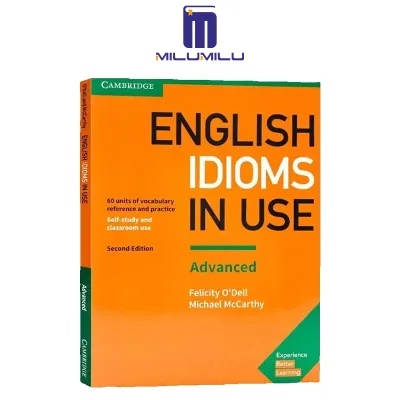
![[3 books /set ] Advanced Cambridge English Idioms in Use Advanced English Idioms in 3 volumes](https://img.lazcdn.com/g/p/4f25bfe92478091d21cf070b8eb44554.jpg_400x400q80.jpg_.webp)
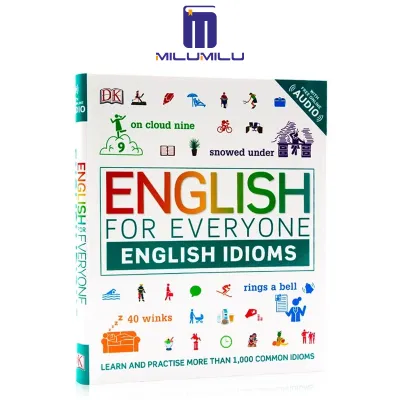
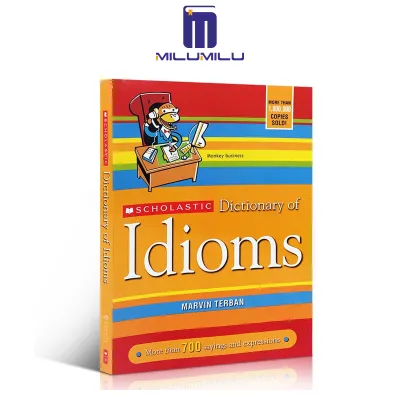
Prices are valid at publication and may change. Please refer to the product page for the latest price.
Intermediate learners are ready to expand their vocabulary into specific thematic areas, such as emotions, travel, and daily routines. At this level, you should seek books that group idioms by topic rather than listing them alphabetically. This thematic structure helps your brain build semantic connections, making it easier to recall the right expression during spontaneous conversations.
Advanced learners require a deeper understanding of stylistic precision, historical origins, and register awareness. If you are an advanced student, look for books that explain the subtle differences between closely related idioms and provide detailed notes on tone. Your goal is to understand exactly when an idiom is appropriate to use and, more importantly, when it might sound outdated or overly informal.
Your specific learning goals must also dictate your choice of book. If your primary objective is casual conversation, a book focusing on modern slang and informal dialogue is ideal. Conversely, if you are preparing for professional communication or academic writing, you need a book that highlights corporate idioms and formal equivalents, as using casual slang in a business proposal or academic essay can undermine your credibility.
To evaluate a book before buying, perform a quick self-assessment on a sample page. Read through ten idioms listed in the book; if you already know more than eight of them, the book is too easy and will not offer enough growth. If you know fewer than two, the book is likely too challenging, and you will struggle to apply the expressions correctly without constant reference to the glossary. Aim for a book where you recognize about half of the expressions, providing a balanced mix of reinforcement and new learning.
Essential Features to Evaluate in an Idioms Book
An effective idioms book is more than just a collection of definitions; it is a structured learning tool. When evaluating potential books, look closely at how the content is organized and presented. The pedagogical design of the book directly impacts how well you retain and apply what you learn.

Contextual learning is the most critical feature of any vocabulary book. Avoid books that present idioms in isolated, alphabetical lists with single-sentence definitions. Instead, look for texts that introduce idioms within short stories, dialogues, or simulated news articles. Seeing an idiom used in a natural paragraph helps you understand its grammatical behavior, its emotional tone, and the specific situations where it fits naturally.
Practice exercises are essential for moving idioms from your passive vocabulary into your active vocabulary. A high-quality book should include a variety of exercise types, such as fill-in-the-blank sentences, matching activities, error correction, and open-ended writing prompts. Ensure the book includes a comprehensive answer key at the back so you can self-correct your work and identify areas that require review.
Supplementary audio resources are highly beneficial for mastering the natural rhythm and stress patterns of idiomatic English. Many modern language books include access to downloadable audio files, companion websites, or QR codes that link to audio tracks. Listening to native speakers use the idioms helps you master correct pronunciation and intonation, which is crucial because misplacing the stress in an idiomatic phrase can make it incomprehensible to listeners.
Cultural notes and usage warnings are another hallmark of a superior idioms book. Language is dynamic, and expressions that were common decades ago may sound bizarre or outdated today. A good book will explicitly flag archaic idioms, explain regional differences, and clearly mark the register of each expression, indicating whether it is formal, informal, or colloquial. This prevents you from making embarrassing social blunders, such as using casual slang in a formal meeting.
Finally, evaluate the book’s layout, typography, and indexing. A clean, uncluttered design with clear headings and visual aids supports long-term memory retention. A robust index at the back of the book is also indispensable, allowing you to quickly look up specific keywords or themes when you encounter an unfamiliar expression in your daily reading or listening.
Matching Book Formats to Your Study Routine
Your study routine and lifestyle should heavily influence the format of the idioms book you choose. A book that does not align with your daily habits is likely to sit on your shelf unused, regardless of how well-written it is.
Thematic and story-based books are ideal for learners who prefer a casual, narrative-driven approach to study. These books typically present a short story or dialogue in each chapter, followed by explanations of the idioms used. If you enjoy reading during your daily commute or prefer studying in short, fifteen-minute blocks, this format allows you to absorb idioms naturally without feeling like you are performing dry academic drills.
Dictionary-style reference books are best suited for analytical learners who want a comprehensive database of expressions. These books are designed for quick lookups rather than cover-to-cover reading. They offer precise definitions, historical origins, and multiple example sentences for thousands of idioms. If you frequently read English literature, watch news broadcasts, or work in an environment where you encounter unfamiliar expressions daily, keeping a high-quality idiom dictionary on your desk is an excellent way to clarify doubts on the spot.
Exam-focused workbooks are specifically designed for students preparing for standardized English proficiency tests or formal academic examinations. These books align closely with exam syllabi and focus on the precise grammatical structures required to score well. They emphasize error correction, formal alternatives to common idioms, and writing practice. If your primary goal is to pass an exam or improve your academic writing, this structured, high-stakes format is the most efficient path forward.
Consider how much time you can realistically dedicate to writing practice. If you prefer hands-on learning, a physical workbook with dedicated writing spaces is highly effective. If you prefer passive review and auditory learning, a book that pairs short text explanations with extensive audio tracks will better suit your lifestyle.
Purchasing and Verifying Language Books in Singapore
When sourcing idioms books in Singapore, you must pay close attention to regional English variations and curriculum alignment. Singapore’s education system and professional sectors primarily follow British English standards, though American English is widely used in international business. Ensure the book you select matches the specific regional variant you need to learn, as spelling, vocabulary, and idiomatic usage can differ significantly between British and American English.
Always check the publication year and edition of the book before purchasing. Language evolves rapidly, and older editions may contain outdated expressions that are no longer relevant. Look for books published or updated within the last ten years to ensure you are learning contemporary English that native speakers actually use today.
To find these books locally, visit physical bookstores in major retail hubs or specialized educational suppliers across Singapore. Browsing in person allows you to physically inspect the layout, read sample chapters, and assess the difficulty level before spending your money. When comparing prices, which typically range from S$15 to S$45 depending on the publisher and format, check local online marketplaces and specialized book distributors to see if they offer competitive pricing or bundle deals.
Before committing to a purchase, make use of the National Library Board (NLB) resources in Singapore. The NLB physical branches and their digital catalog offer an extensive selection of language learning books and e-books. Borrowing a book for a few weeks allows you to test its curriculum, complete a few chapters, and determine if the teaching style truly suits your learning habits before you invest in a personal copy.
Frequently Asked Questions (FAQ)
How many idioms should I aim to learn per week?
For most language learners, aiming to master five to ten idioms per week is a realistic and sustainable target. Attempting to memorize dozens of expressions in a single week often leads to cognitive overload and rapid forgetting. Instead of focusing on sheer quantity, prioritize deep understanding and active usage.
To ensure long-term retention, apply the principles of spaced repetition. Review your newly learned idioms one day after first encountering them, then again after three days, a week, and a month. Write your own practice sentences using the idioms in different contexts, and try to use them in conversations or writing as soon as possible. Mastering five idioms so thoroughly that you can use them naturally is far more valuable than passively recognizing fifty expressions that you cannot use correctly.
Are digital idiom books as effective as physical copies?
Digital idiom books offer distinct practical advantages, particularly regarding portability and searchability. With an e-book, you can carry an entire library of language resources on a single device, making it easy to study during your daily commute. Digital formats also allow you to search instantly for specific keywords, highlight text, and access built-in dictionaries to look up unfamiliar words immediately.
However, physical books remain highly effective for active learning and writing practice. The tactile experience of physically writing answers in a workbook helps reinforce memory and reduces screen fatigue. If your chosen book relies heavily on fill-in-the-blank exercises and sentence construction, a physical copy is often more practical. For reference dictionaries and reading-heavy thematic books, the digital format is highly convenient and efficient.

Community discussion
Share your experience or ask a question. Comments are reviewed before publication.