
Selecting the right lion dance drum is one of the most critical decisions for any troupe, as it serves as the heartbeat of the entire performance. The drum does not merely provide a backing beat; it directs the lion’s movements, signals shifts in tempo, and commands the attention of the audience. To choose the ideal drum, your group must evaluate several key dimensions: stylistic alignment with your troupe’s lineage, the physical dimensions and weight of the instrument relative to your drummers, the acoustic projection required for your primary performance venues, and the durability of the materials under local environmental conditions.
In Singapore’s tropical climate, where high humidity and sudden weather shifts are common, material choices and construction quality become even more critical to prevent warping, detuning, and premature wear. Taking a systematic approach to these factors ensures your investment supports your performers and lasts for years of rigorous training and public celebrations.
Identify the Right Drum Style for Your Troupe's Tradition
Lion dance traditions are broadly divided into Southern (‘Nanshi’) and Northern (‘Beishi’) styles, each utilizing distinct musical accompaniment. Southern lion dance drums are typically larger, heavier, and produce a deep, thunderous boom that anchors the powerful, grounded stances of the Southern lion. Northern drums tend to be more compact, higher-pitched, and designed to match the rapid, acrobatic, and playful movements of the Northern lion.
Products mentioned in this guide
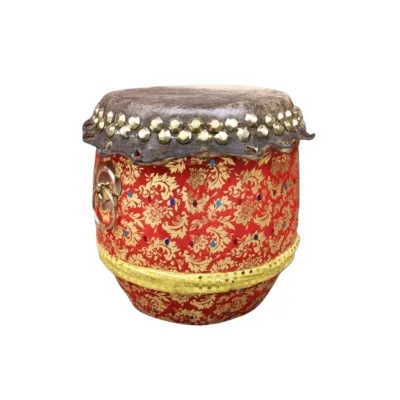

Prices are valid at publication and may change. Please refer to the product page for the latest price.
The fundamental design of the drum dictates the tempo and energy of the performance. A Southern drum’s broad head allows for a wide range of tones depending on where the drummer strikes—yielding deep bass in the center and sharp, metallic-like rim shots on the wooden shell or metal rivets. This versatility is essential for communicating complex choreographic cues to the performers inside the lion costume, guiding them through dramatic transitions from sleep to high-energy play.
Before browsing catalogs, consult with your troupe’s master or senior instructors to identify the specific rhythmic patterns and lineage your group follows. Different schools of Southern lion dance (such as Hok San or Fut San) have preferred drum sizes and tonal characteristics that complement their specific footwork and expressions. Purchasing a drum that aligns with these established traditions ensures seamless training and performance consistency across generations.
Match Drum Size and Weight to Your Drummers
Drumhead Diameter The diameter of the drumhead directly impacts the striking surface area and the physical reach required by the drummer. Standard Southern lion dance drums are often measured in inches, typically ranging from 20 inches to 26 inches or more across the head. A larger drumhead offers a larger sweet spot and a deeper resonance, but it requires the drummer to have a wider arm span and greater physical strength to strike the center consistently with proper form.

Shell Depth and Height The physical profile of the drum shell determines how it sits on its stand and how the drummer must position their body. A deeper shell increases the internal air volume, creating a richer, more resonant sound, but it also raises the striking surface height. Drummers must maintain a stable, low stance (such as the horse stance) to generate maximum power from their core; therefore, the drum’s height on its stand must allow the drummer’s elbows to bend at an ergonomically optimal angle to prevent shoulder strain.
Weight and Portability Performance groups must balance the acoustic benefits of a heavy, solid-wood drum with the practical realities of transport. If your troupe frequently performs in street parades, festive processions, or mobile community events, a massive, solid-wood drum can quickly exhaust the road crew and drummers. For stationary stage performances or competitive arenas, a heavier, more stable drum is preferred as it will not shift or slide under the force of aggressive, high-velocity striking.
Ergonomic Matching Repetitive, forceful drumming over extended training sessions can lead to chronic strain injuries if the instrument is poorly matched to the player. Ensure your primary drummers can comfortably reach all areas of the drumhead and the rim without overextending their lower back or straining their wrists. Providing a range of drum sizes within your troupe’s inventory allows younger or smaller-statured drummers to train safely on smaller models before graduating to full-sized performance drums.
Evaluate Sound Projection for Indoor and Outdoor Venues
Tone and Pitch The acoustic character of your drum should complement the narrative style of your routines. Traditional, story-driven routines (‘Cai Qing’) often rely on deep, resonant bass tones that evoke a sense of mystery, power, and gravity as the lion navigates obstacles. Conversely, modern, high-pole acrobatic sequences require a sharper, higher-pitched drum sound that cuts through the air instantly, matching the rapid-fire leaps and sudden drops of the performers.
Volume and Projection Consider where your troupe performs most frequently. Outdoor venues, such as bustling street festivals, temple courtyards, or open-air community plazas, present immense ambient noise from traffic, crowds, and accompanying cymbals and gongs. To be heard clearly, you need a drum with exceptional forward projection and high volume. Indoor venues, such as shopping mall atriums, school halls, or corporate banquet rooms, require a more controlled resonance to prevent the acoustics from becoming a muddy, overwhelming wall of noise that drowns out the performance details.
Sustain and Decay The length of time a sound lingers after a strike—known as sustain—affects the clarity of rapid rhythmic patterns. A drum with too much sustain can cause consecutive strikes to blend together, resulting in a chaotic sound profile that makes it difficult for the lion dancers to distinguish specific cues. Choosing a drum with a relatively quick decay ensures that fast-paced, intricate rhythms remain crisp, defined, and highly intelligible, even in acoustically challenging spaces.
Inspect Shell Materials and Hardware for Longevity
Shell Construction Traditional lion dance drums feature shells carved from solid wood blocks, such as jackfruit wood, camphor, or redwood, which are highly prized for their natural resonance and durability. However, Singapore’s constant high humidity and temperature fluctuations can cause solid wood to expand, contract, or even split if not properly seasoned and sealed. Modern laminated wood or synthetic fiberglass shells offer excellent dimensional stability and resistance to moisture, making them practical alternatives for troupes seeking low-maintenance instruments that perform consistently year-round.
Drumhead Materials The drumhead material is the single most critical factor for tone and durability. Natural buffalo hide is the traditional standard, offering an unmatched deep, warm, and organic tone that matures over time. However, natural hide is highly sensitive to humidity; it absorbs moisture from the air, which can cause the head to sag and lose pitch in damp conditions, requiring regular tensioning or drying. Synthetic drumheads, while sometimes lacking the complex overtones of natural hide, are virtually impervious to weather changes, maintaining their tension and pitch whether performing in a sudden outdoor downpour or an air-conditioned indoor hall.
Hardware and Fittings The immense physical force exerted on a lion dance drum demands robust hardware. Inspect the metal rivets or tacks that secure the drumhead to the shell; they must be evenly spaced, driven deep, and free of rust or structural play. The carrying rings and side handles must be securely bolted through the shell with interior backing plates, as these points bear the entire weight of the drum during transport and must not pull out or strip the wood over time.
Finish and Craftsmanship Examine the exterior of the drum shell closely for signs of high-quality craftsmanship. The joints between wood staves (if laminated) must be perfectly flush with no visible gaps, glue squeeze-out, or hairline fractures. A high-quality, multi-layered protective lacquer or varnish finish is essential to seal the wood against moisture penetration, prevent splinters, and protect the decorative painted designs or traditional red cloth wraps from wearing away during handling.
Test the Drum and Verify Purchase Conditions
In-Person Testing Protocol When evaluating a drum in person, begin by striking the center of the head with a pair of standard wooden mallets at varying dynamic levels, from soft taps to full-force blows. Listen closely for a clear, focused fundamental pitch without any muddy undertones or hollow rattling. Next, strike the drumhead near the edges and around the perimeter to ensure the tension is uniform across the entire surface; uneven tension can lead to premature tearing and inconsistent projection.
Visual and Tactile Inspection Run your hands along the drumhead to check for consistent thickness, dry rot, or thin spots in the hide, which are common points of failure. Peer inside the drum through the bottom opening (if accessible) to inspect the interior shell walls for cracks, knots, or poor reinforcement. Shake the drum gently to verify that no internal hardware, braces, or decorative elements are loose or vibrating sympathetically.
Online Purchasing Verification If purchasing from an online specialty retailer or overseas cultural supplier, you must rely on detailed specifications and clear policies. Request high-resolution photos or video demonstrations of the exact drum being played to verify its acoustic character. Confirm that the seller offers robust shipping protection, as large drums are highly susceptible to transit damage, and verify their return or exchange policy in case the instrument arrives with structural defects or does not match the advertised specifications. Generally, entry-level training drums may range from S$300 to S$600, while professional-grade, solid-wood performance drums can exceed S$1,500 depending on the craftsmanship and material quality.
Essential Accessories A complete performance setup requires more than just the drum itself. Verify whether the purchase includes a heavy-duty drum stand, which must be constructed from thick iron or steel tubing with a wide, stable base to prevent tipping. Additionally, check for the inclusion of properly balanced wooden mallets (drumsticks) and a padded, water-resistant transport cover to protect the drumhead and shell from scratches and moisture during transit.
Frequently Asked Questions (FAQ)
How do I maintain the drumhead in a humid climate?
To preserve a natural buffalo hide drumhead in Singapore’s humid climate, store the instrument in a well-ventilated, air-conditioned room whenever possible to keep moisture levels low. Avoid leaving the drum in direct sunlight, damp storage lockers, or the trunks of vehicles for extended periods, as extreme heat and humidity fluctuations can warp the wood and stretch the hide. Always follow the manufacturer’s specific care instructions, which may recommend applying a light coat of specialized oil or wax to natural hides to repel moisture, or using protective fabric covers when the drum is not in use.
Can I use a standard drum stand for a lion dance drum?
No, standard musical drum stands (such as those designed for orchestral or snare drums) are not suitable for lion dance drums. Lion dance drums are exceptionally heavy, often weighing between 15 to 30 kilograms or more, and they are subjected to intense, downward and lateral striking forces during a performance. Using an incompatible stand poses a severe safety risk, as the stand can buckle, slide, or tip over mid-performance, potentially injuring the drummer, the lion dancers, or the audience. Always verify the stand’s load capacity and footprint with the retailer, and ensure it is specifically designed with reinforced bracing and non-slip rubber feet to withstand the vigorous playing style of traditional lion dance drumming.
Community discussion
Share your experience or ask a question. Comments are reviewed before publication.