
Starting your personal finance journey can feel overwhelming, especially when confronted with dense economic jargon and complex investment formulas. The key to building lasting financial literacy lies in choosing a money book that matches your current knowledge level while providing practical, actionable steps. For readers in Singapore, this journey requires a dual approach: mastering universal financial principles and learning how to adapt them to a unique local landscape shaped by public housing, national savings schemes, and specific tax structures.
The best money management books for beginners are those that demystify cash flow, explain the psychology behind spending, and offer clear frameworks for saving and investing. Rather than looking for a single magic volume, a beginner should seek out books that build foundational habits before progressing to technical wealth-building strategies. By focusing on accessible language, structured exercises, and realistic goals, you can establish a solid financial foundation that serves you for decades.
Key Criteria for Selecting a Beginner-Friendly Finance Book
When browsing the personal finance section of a bookstore or digital library, it is easy to be swayed by sensational titles promising rapid wealth. To find a book that actually helps you build sustainable habits, you must look past the marketing and evaluate the core educational approach of the author.
Products mentioned in this guide
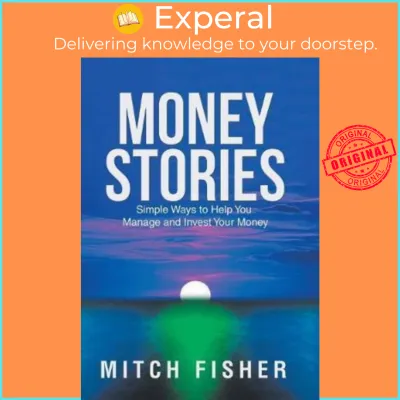
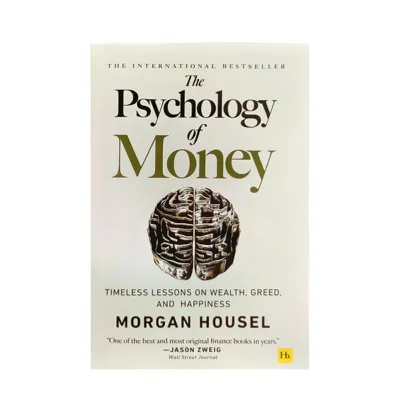
Prices are valid at publication and may change. Please refer to the product page for the latest price.
First, assess how the author handles financial terminology. A beginner-friendly book should introduce terms like inflation, compound interest, and asset allocation using clear, real-world analogies rather than academic jargon. If the first chapter requires you to constantly look up definitions, the book may be too advanced for an initial read. Look for authors who define terms immediately within the text or provide a comprehensive glossary.
Second, prioritize books that offer actionable frameworks over pure theory. Reading about the importance of saving is far less effective than a book that provides a step-by-step worksheet, a template for tracking expenses, or a specific rule of thumb for allocating your monthly income. The presence of end-of-chapter exercises, diagnostic questions, or downloadable templates indicates that the book is designed to be a practical manual rather than a passive narrative.
Finally, pay close attention to the author’s tone. The ideal personal finance guide should feel encouraging, empathetic, and realistic. Avoid books that rely on fear-mongering, guilt-tripping you over minor daily expenses, or making aggressive promises of overnight riches. A constructive money book acknowledges that financial journeys are highly personal and that building wealth is a gradual process requiring patience and consistent behavioral adjustments.
Essential Financial Topics to Prioritize in Your Reading
Before diving into complex investment strategies or advanced tax planning, a beginner must master the foundational pillars of personal finance. Attempting to learn about stock market valuation before understanding how to manage your monthly cash flow is like trying to build a house without a foundation.

A logical learning sequence begins with cash flow management, which teaches you how to track and control your income and expenses. From there, you should progress to debt reduction strategies, followed by the establishment of an emergency fund to protect against unexpected life events. Only after these defensive measures are in place should you transition to basic investing concepts.
Crucially, the most effective beginner books place a heavy emphasis on behavioral finance and money psychology. Understanding why we spend, how our upbringing shapes our financial decisions, and how to overcome cognitive biases is far more important than memorizing technical investment metrics. Once you master the psychological aspect of saving and budgeting, implementing the technical steps becomes significantly easier.
Budgeting, Saving, and Cash Flow
Day-to-day money management is the engine of your financial life. When selecting a book to help with this stage, look for authors who present budgeting not as a restrictive chore, but as a tool for aligning your spending with your personal values.
The book should introduce various budgeting methodologies to accommodate different personality types. For instance, some readers thrive on the precision of zero-based budgeting, where every dollar is allocated a specific job. Others may prefer the simplicity of the envelope system or a percentage-based approach, such as the 50/30/20 rule. A good beginner book explains these options objectively, allowing you to choose the system that fits your lifestyle.
Additionally, ensure the text provides practical advice on tracking daily expenses without causing burnout. It should guide you through the process of setting realistic, short-term savings goals—such as saving your first S$1,000—which builds the momentum needed to tackle larger financial milestones.
Investing Basics and Long-Term Wealth
Once your cash flow is stable, your reading should introduce the concepts of growing your wealth over time. An introductory investment book should demystify the market and focus on long-term, passive strategies rather than active trading.
Look for books that explain the mechanics of compound interest in simple terms, demonstrating how early, consistent contributions can grow significantly over decades. The text should also cover the relationship between risk and reward, helping you assess your personal risk tolerance. Key concepts like diversification and asset allocation should be explained as protective measures against market volatility, rather than complex mathematical formulas.
Be highly skeptical of books that promise quick returns, secret day-trading formulas, or highly speculative asset strategies. A reliable beginner’s guide emphasizes that investing is a long-term discipline focused on steady, diversified growth rather than timing the market or chasing volatile trends.
Debt Management and Credit Building
Managing liabilities is just as important as building assets. If you are carrying high-interest debt, your reading material must offer structured, psychologically sound plans to help you regain control.
Look for books that compare popular debt repayment strategies, such as the debt snowball method (paying off the smallest balances first for psychological wins) and the debt avalanche method (prioritizing the highest interest rates to minimize total cost). A good book explains how these methods affect your motivation and cash flow, helping you decide which path fits your psychological profile.
Furthermore, the book should explain the mechanics of credit scores and how lenders evaluate your creditworthiness. Understanding how interest rates compound against you over time is crucial for making informed decisions about major loans, such as home mortgages or education loans.
Adapting Global Finance Concepts to the Singapore Context
The vast majority of popular personal finance books are written by authors based in the United States or the United Kingdom. While the core principles of compound interest, budgeting, and behavioral psychology remain universal, the specific execution of these ideas often relies on financial systems that do not exist in Singapore.
For example, Western books frequently reference retirement accounts like the 401(k) or Individual Retirement Accounts (IRAs), along with tax-advantaged investment vehicles like ISAs. In Singapore, your primary retirement safety net is the Central Provident Fund (CPF). When reading global finance literature, you must learn to translate these concepts. A discussion on automatic retirement contributions should prompt you to evaluate your CPF Ordinary Account, Special Account, and Medisave Account, understanding how interest rates and contribution allocations change as you age.
Similarly, international books often view renting as the default housing option or discuss mortgage structures that differ from local practices. In Singapore, public housing through the Housing & Development Board (HDB) plays a central role in wealth accumulation and retirement planning. You must evaluate how global advice on homeownership applies to HDB flats, Build-To-Order (BTO) applications, and the use of CPF funds for housing loans.
Healthcare subsidies, insurance needs, and tax structures also vary significantly. Singapore’s progressive income tax system and schemes like the Supplementary Retirement Scheme (SRS) require a different optimization strategy than those described in American or British guides. Therefore, as you read global bestsellers, use them to master the underlying principles, but always supplement your knowledge with local government resources, such as MoneySense, or reputable Singapore-based financial platforms to ensure your execution is legally and financially sound.
Choosing the Right Format and Sourcing Your Books
How you consume financial literature can greatly impact how well you retain and apply the information. Depending on your learning style and daily routine, different formats offer distinct advantages.
Physical books are highly recommended for technical guides that contain charts, tables, worksheets, or step-by-step formulas. Having a physical copy allows you to easily flip back and forth, highlight key passages, and write notes in the margins. E-books offer similar benefits with the added convenience of portability and searchability, making it easy to locate specific terms or concepts later.
Audiobooks, on the other hand, are exceptionally well-suited for narrative-driven books focusing on money psychology, behavioral habits, or personal memoirs. Listening to an audiobook during your daily commute or while exercising can be an efficient way to absorb conceptual ideas. However, they can be challenging to follow when the author begins explaining complex numerical calculations or referencing detailed diagrams.
When sourcing your books, utilize the National Library Board (NLB) of Singapore, which offers an extensive collection of physical books, e-books, and audiobooks through its digital platforms. If you prefer to own your copies, purchase them from established local bookstores or reputable online marketplaces to ensure you receive legitimate, complete editions. Always verify the publication date or edition of the book; while core principles are timeless, books discussing specific tax laws, investment platforms, or economic statistics can quickly become outdated.
Building a Reading Plan for Financial Literacy
To avoid information overload, it is crucial to approach your financial reading with a structured plan. Trying to read multiple dense finance books simultaneously can lead to confusion and analysis paralysis, preventing you from taking action.
Start by selecting just one foundational book that focuses on money psychology and behavioral habits. This helps you understand your personal relationship with money and establishes the mindset needed to sustain new habits. Once you have finished this book and reflected on its concepts, transition to a practical, how-to guide that focuses on budgeting, cash flow, and debt management.
As you read, pair your learning with immediate, practical application. If a chapter discusses tracking expenses, pause your reading to download a budgeting app or set up a simple spreadsheet to review your bank statements from the past three months. If a section explains interest rates, take the time to check the interest rates on your current savings accounts.
Establish a realistic reading pace, such as one chapter per week, to allow yourself ample time to digest the information and implement the suggested changes. Remember that financial literacy is not a race to see how many books you can finish; it is a gradual process of transforming knowledge into consistent, daily habits that secure your financial future.
Frequently Asked Questions (FAQ)
Do I need to read books specific to Singapore?
No, you do not need to limit yourself exclusively to Singapore-specific books. Universal financial principles—such as living below your means, understanding compound interest, diversifying investments, and managing the psychology of spending—apply regardless of geography. However, because international books reference foreign tax laws, retirement accounts, and housing markets, you should use them to learn the core concepts and then consult local resources to understand how to apply those concepts within Singapore’s regulatory framework.
How many finance books should a beginner read at once?
It is highly recommended to focus on one book at a time. Personal finance is an active subject that requires implementation, not just passive reading. By focusing on a single book, you can fully digest its frameworks, complete its exercises, and apply its lessons to your actual bank accounts before introducing potentially conflicting advice from another author. If you wish to read multiple books over a year, alternate between conceptual books on money psychology and technical, step-by-step guides.
Are audiobooks as effective as physical copies for learning finance?
The effectiveness of the format depends entirely on the book’s content. Audiobooks are highly effective for narrative-driven books that explore the history of money, behavioral psychology, and personal anecdotes. However, for books that serve as practical manuals—containing budgeting templates, compound interest tables, investment formulas, or step-by-step worksheets—physical books or e-books are far superior, as they allow you to study visual aids and easily reference specific pages.
Community discussion
Share your experience or ask a question. Comments are reviewed before publication.