
Selecting the right music manuscript book depends entirely on your instrument’s notation style and your writing goals. A standard single staff book is ideal for monophonic instruments like the flute, violin, or vocals, whereas keyboard players require a grand staff book that pairs treble and bass clefs. Guitarists, bassists, and drummers benefit most from specialized formats like tablature grids or percussion staves. Matching your physical book to your instrument ensures that your transcriptions, compositions, and practice notes remain organized, legible, and easy to read on a music stand.
Identify Your Core Notation Requirements
Before purchasing a music manuscript book, analyze how your instrument produces sound and how you intend to document that music. Monophonic instruments, which play one note at a time, require a different visual layout than polyphonic instruments capable of sounding multiple notes simultaneously. If you are writing simple melodies, a basic layout with ample spacing is sufficient. However, if you are arranging complex chords, counterpoint, or multi-part harmonies, you will need a layout that supports vertical alignment across multiple staves.
You also need to determine whether you require standard musical notation, tablature, or a hybrid of both. Standard notation is universal but can be slow to write for instruments like the guitar, where tablature offers a more direct representation of finger placement. Additionally, consider whether your writing process involves adding lyrics, chord symbols, or extensive performance annotations. Songwriters often need extra vertical space between staves to write text, while jazz musicians may require wide margins for chord diagrams.
Products mentioned in this guide
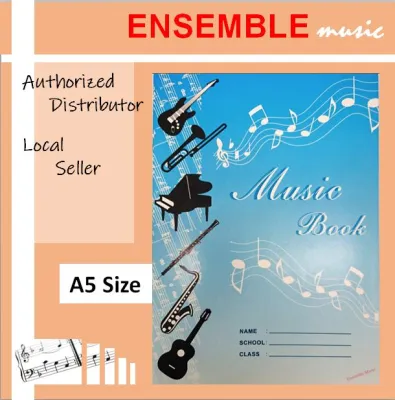
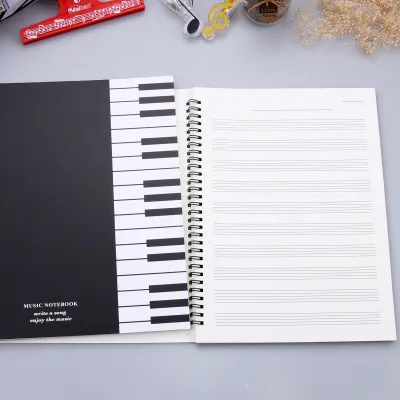
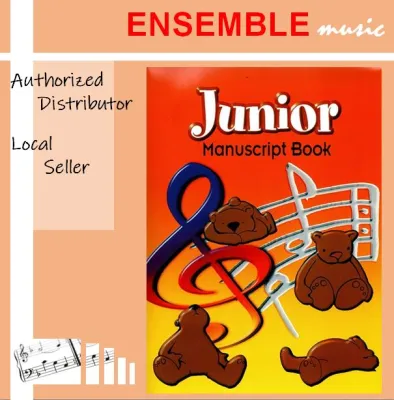
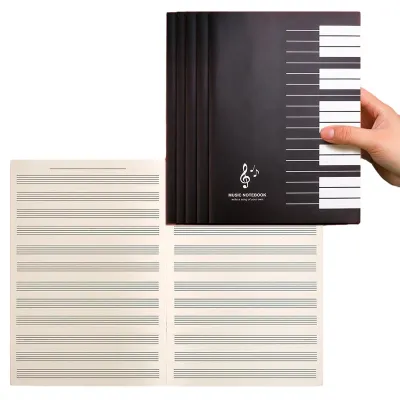
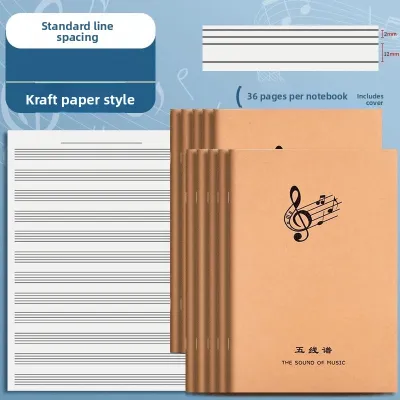
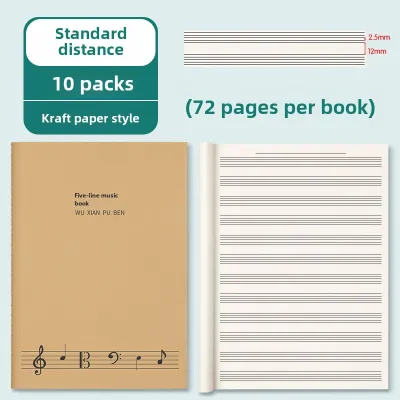
Prices are valid at publication and may change. Please refer to the product page for the latest price.
Single Staff Books for Melodic Instruments and Vocals
For musicians playing wind, brass, or orchestral string instruments, a standard single staff book is the traditional choice. These books feature evenly spaced, individual five-line staves running horizontally across the page. This clean layout is perfect for transcribing solo melodies, writing out scale exercises, or documenting orchestral parts. Because there are no pre-linked staves, you have complete freedom to use whatever clef your instrument requires, whether it is treble, alto, tenor, or bass.

Vocalists and songwriters should look for single staff books designed with integrated lyric lines. These formats typically feature wider spacing between each staff to accommodate handwritten lyrics without crowding the musical notes. This extra vertical clearance prevents your handwriting from overlapping with the ledger lines of the staff below, preserving the legibility of both the text and the music.
If you are a lead sheet writer or a jazz soloist, look for single staff variations that offer extra-wide staves or blank spaces directly above the lines. This layout provides dedicated room for writing chord symbols and drawing custom fretboard diagrams. Having this designated space ensures that your harmonic framework remains clearly separated from the melodic line, making it much easier to sight-read during a performance.
Grand Staff Books for Piano and Polyphonic Instruments
Keyboard players, organists, and harpists require a grand staff book to accommodate the wide pitch range and polyphonic nature of their instruments. A grand staff consists of two five-line staves joined together by a brace: a treble clef on top for the right hand and a bass clef on the bottom for the left hand. Writing keyboard music on a single staff is highly impractical, as it leads to an excessive number of ledger lines that are difficult to read quickly.
For those involved in choral arranging, string quartets, or small ensemble scoring, multi-staff layouts are indispensable. These books group three, four, or more staves together with brackets, allowing you to write out separate parts for soprano, alto, tenor, and bass voices, or individual instruments in a chamber group. This parallel layout is crucial for visualizing how different musical lines interact harmoniously over time, making it much easier to spot voice-leading errors.
When selecting a grand staff book, pay close attention to the spacing between the braced staves. Ensure there is adequate room for complex fingering numbers, pedal markings, and expression dynamics. If the staves are packed too closely together, your performance notes will inevitably clash with the notes on the adjacent staff, leading to visual clutter that can disrupt your playing flow.
Specialized Formats for Fretted Instruments and Percussion
Fretted instrument players, such as guitarists and bassists, often find standard notation books inefficient for daily practice and quick transcription. Instead, look for six-line tablature books for guitar or four-line versions for bass guitar. These specialized books represent the physical strings of the instrument, allowing you to write numbers directly on the lines to indicate fret positions. This format is highly intuitive and bypasses the need to translate pitch to fretboard geography on the fly.
For a more comprehensive approach to learning and composition, consider hybrid layouts that feature standard notation directly above a matching tablature staff. This dual-format layout is highly favored by music teachers and students alike. It allows you to document the precise rhythm and classical notation on the top staff while providing the exact fingerings and string positions on the bottom staff, offering the best of both worlds.
Drummers and percussionists also require specialized notation grids rather than standard melodic staves. Drum kit notation maps specific percussion voices—such as the snare, bass drum, hi-hat, and cymbals—to designated lines and spaces on a modified staff. Look for manuscript books designed specifically for percussion, which often feature neutral clefs and pre-formatted grids that make it simple to write out complex polyrhythms and drum fills clearly.
Evaluate Paper, Binding, and Layout Features
The physical construction of a music manuscript book is just as important as its internal layout. First, assess the thickness and quality of the paper. In humid climates like Singapore, thin paper can easily absorb moisture from the air, making it more susceptible to ink feathering and bleed-through. If you prefer writing with fountain pens, gel pens, or heavy markers, look for high-density, acid-free paper (typically 100 gsm or higher) to ensure your notes do not bleed through to the reverse side of the page.
Next, compare the binding types to ensure the book remains functional in your practice space. Spiral or wire-bound books are highly recommended for use on music stands because they can lay completely flat and even fold back on themselves. Standard glued or saddle-stitched bindings often resist staying open, requiring you to crease the spine or use heavy page clips, which can damage the book over time and distract you during a performance.
Finally, choose between portrait and landscape orientations based on your writing environment and musical style. Portrait orientation is the standard for most music stands and is excellent for vertical reading, such as choral scores or grand staff piano music. Landscape orientation, on the other hand, provides longer horizontal staves, which is ideal for writing long, continuous musical phrases or fitting more measures onto a single line, making it a popular choice for film scoring and orchestral sketching.
Decide Between Physical Manuscript Books and Digital Alternatives
In an increasingly digital world, musicians must decide whether a physical manuscript book or a digital scoring application best serves their creative workflow. Physical books offer an unmatched tactile experience that fosters quick sketching and deep focus. Writing by hand engages tactile memory, helping you internalize musical structures and melodies more effectively. Furthermore, a paper notebook requires no battery, does not suffer from software glitches, and provides a screen-free environment that minimizes digital distractions.
On the other hand, digital notation software and tablet apps offer powerful functional advantages. Digital tools allow for instant playback, effortless editing, automatic transposition, and seamless sharing with other musicians. They also solve the problem of physical storage, allowing you to archive thousands of scores in a single cloud-based library. However, the learning curve for these programs can sometimes interrupt the immediate flow of inspiration.
For many modern composers and students, a hybrid approach yields the best results. You can use a physical music manuscript book to quickly sketch out raw melodies, chord progressions, and structural ideas away from screens. Once the core composition is established on paper, you can transfer the music into a digital notation program to finalize the engraving, generate individual instrumental parts, and create clean, professional PDFs for distribution.
Frequently Asked Questions (FAQ)
Can I use a standard single staff book for guitar if I do not know tablature?
Yes, you can absolutely use a standard single staff book for guitar. Standard musical notation is a universal language that applies to almost all instruments, including the guitar, which is typically written in the treble clef one octave higher than pitch. However, standard notation does not indicate which string or fret to use for a specific note. Because the guitar has multiple locations to play the exact same pitch, using standard notation alone requires a strong understanding of fretboard geography and sight-reading skills.
What is the best binding type for a music manuscript book used on a stand?
The best binding type for a music stand is spiral or wire-O binding. This design allows the pages to turn a full 360 degrees and lie completely flat without any resistance, ensuring the book will not accidentally flip shut while you are playing. If you prefer a book without exposed metal coils, look for specialized lay-flat glued bindings. These are engineered to remain open on a flat surface or music stand without damaging the spine, providing a sleek look while maintaining excellent usability.
Are there manuscript books designed specifically for left-handed writers?
While standard music manuscript books are technically ambidextrous because the staves are symmetrical, left-handed writers often face challenges with ink smudging as their hand moves from left to right across the page. To mitigate this, left-handed musicians should look for manuscript books with fast-drying paper coatings or spiral bindings located at the top of the page rather than the side. Top-bound landscape books are particularly comfortable, as they completely remove the binding obstacle from the writer’s hand path.
Community discussion
Share your experience or ask a question. Comments are reviewed before publication.