
Choosing the right music stand is more than a matter of holding sheet music; it is a fundamental decision that directly impacts your playing posture, practice efficiency, and the safety of your instruments. The ideal stand must seamlessly integrate with your specific instrument, accommodate your physical practice space, and support your natural playing position without causing physical strain. Whether you are a traveling violinist needing a highly portable setup or a pianist looking for a heavy-duty desk to support thick anthologies, understanding the structural differences and mechanical features of various stands will help you make an informed choice. By evaluating your daily routine, the weight of your reading materials, and your physical environment, you can select a stable, durable platform that enhances your musical focus and protects your valuable gear.
Identify Your Core Needs: Instrument, Space, and Posture
Before exploring specific product designs, you must evaluate the physical demands of your sheet music and performance materials. Heavy orchestral folios, thick spiral-bound anthologies, and multi-page scores require a robust, wide desk with a deep lip to prevent pages from sliding or folding over. Conversely, solo guitarists or vocalists who primarily read from single sheets or lightweight chord charts can often manage with a much lighter, minimalist setup. If you use a digital tablet for your music, the stand must not only support the weight of the device but also offer a secure surface that prevents the tablet from slipping off during page turns.
Your physical practice environment plays an equally critical role in determining the best stand architecture. In a dedicated home studio or a permanent rehearsal room, a heavy, solid-back orchestral stand provides unmatched stability and can remain permanently assembled. However, if you practice in a small, shared living room or frequently commute to rehearsals and gigs, space constraints will dictate your choice. In these scenarios, a highly collapsible stand that can be quickly folded and tucked into a closet or a gig bag is essential for maintaining an organized, clutter-free environment.
Products mentioned in this guide
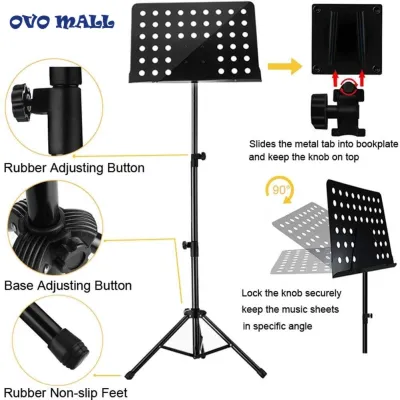
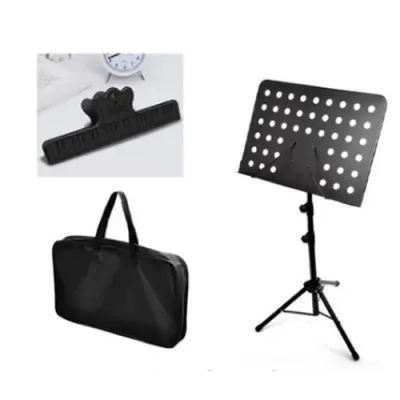
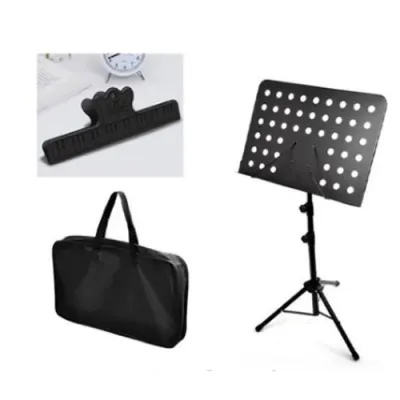
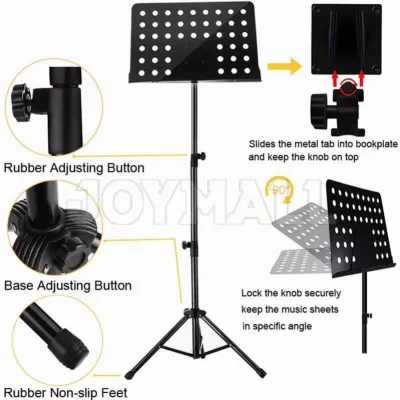
![[SINGAPORE SELLER] Foldable & Adjustable Quran Stand / Adjustable Rehal / Music Stand / Reading Book Stand](https://img.lazcdn.com/g/p/923b883d7d779b05c6c1f404acefb0c7.png_400x400q80.png_.webp)
Prices are valid at publication and may change. Please refer to the product page for the latest price.
Finally, your primary playing posture must guide the height and angle adjustments of your stand. Musicians who practice exclusively while seated, such as cellists or classical guitarists, require a stand that can adjust to relatively low heights while maintaining a comfortable viewing angle. Standing performers, such as vocalists, flutists, or conductors, need a stand that extends significantly higher to keep the music at eye level. If you frequently transition between sitting and standing during long practice sessions, you will benefit from a highly adjustable stand with smooth, reliable locking mechanisms that allow for rapid height transitions without compromising stability.
Compare the Main Types of Music Stands
Selecting the right music stand requires a clear understanding of the primary design categories available on the market. Each structural style is engineered to balance specific trade-offs between portability, weight capacity, overall stability, and ease of adjustment for different playing environments.

Folding and Portable Wire Stands
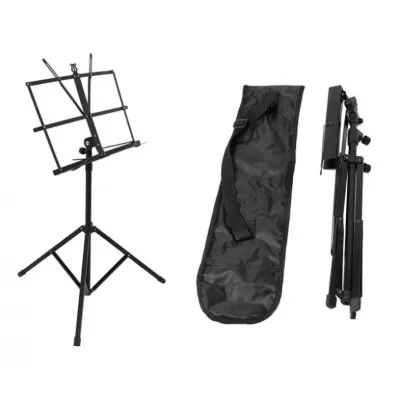
Lightweight, collapsible wire stands are the traditional choice for traveling musicians, students, and gigging professionals who prioritize mobility above all else. These stands feature a highly articulated design, allowing the entire structure—including the desk—to fold down into a compact, cylindrical shape that easily fits into a backpack or a dedicated carrying bag. This extreme portability makes them invaluable for commuting to rehearsals, performing in outdoor settings, or navigating tight backstage areas where space is at a premium.
However, the very features that make wire stands highly portable also introduce distinct structural limitations. The open, skeleton-like design of a wire desk offers minimal support for heavy books, thick binders, or individual loose sheets, which can easily slip through the gaps or cause the desk to bow under excessive weight. Additionally, the lightweight materials and narrow tripod bases of these stands make them highly susceptible to tipping, especially on uneven outdoor surfaces, high-traffic stage environments, or when subjected to sudden drafts of wind.
Solid-Back and Orchestral Stands
Solid-back and orchestral stands represent the standard for dedicated home practice spaces, recording studios, and professional ensemble environments where stability is paramount. Featuring a solid, unyielding metal or plastic desk and a heavy-duty vertical shaft, these stands are engineered to support heavy orchestral scores, thick reference books, and multiple accessories without flexing or wobbling. The solid backing also provides a continuous, flat surface that makes it easy to write annotations on your sheet music during rehearsals.
The trade-off for this exceptional stability is a significantly larger physical footprint and increased overall weight. Unlike wire stands, orchestral models do not fold into a compact shape; the desk is typically a single, rigid piece that must be detached or left fully assembled, making transport more cumbersome. When choosing an orchestral stand, it is also important to compare the adjustment mechanisms. Some models utilize a friction-based clutch system that allows you to change the height simply by pushing or pulling the shaft, while others rely on manual tension knobs or collar locks to secure the stand in place.
Desktop and Specialty Stands
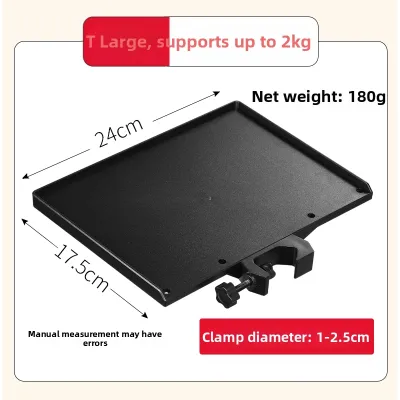
For musicians working within highly constrained environments or utilizing specific instrument configurations, desktop and specialty stands offer tailored solutions. Desktop models eliminate the floor stand entirely, featuring a compact, low-profile desk with an integrated kickstand or clamp that rests directly on a table, desk, or keyboard console. This design is highly beneficial for keyboardists, synthesists, and audio engineers who need to position sheet music or reference guides directly behind their instruments without cluttering their floor space.
Specialty stands also include clip-on or instrument-mounted alternatives, often referred to as lyres, which attach directly to brass or woodwind instruments for marching band performances or mobile gigs. While these compact options excel at saving space and keeping music within your immediate field of view, they possess clear ergonomic limitations. Desktop models lack the comprehensive height and angle adjustments of full-sized floor stands, which can lead to neck strain if you are forced to look down at a flat surface for extended practice sessions.
Key Features to Evaluate Before Buying
When comparing specific music stands on your shortlist, you must carefully evaluate several mechanical and structural details to ensure they align with your daily workflow. Begin by checking the physical dimensions of the music desk, paying close attention to the depth of the bottom lip. A shallow lip may fail to secure thick books or digital tablets, while a lip that is too deep can obscure the bottom lines of your sheet music. Additionally, look for integrated page retention mechanisms, such as spring-loaded page arms or wire clips, which are essential for holding pages open and preventing them from blowing away during outdoor performances.
The design of the stand’s base is another critical factor that influences both stability and floor footprint. Tripod bases with folding legs are highly common and offer excellent stability on uneven floors, provided the leg spread is sufficiently wide. However, they can create a tripping hazard in tight spaces or crowded orchestra pits. Circular, heavy cast-iron bases offer a much smaller floor footprint and exceptional tipping resistance, making them ideal for permanent studio setups, though they are significantly heavier and more difficult to transport.
Finally, consider how well the stand integrates with your essential practice accessories. Many modern musicians rely on additional tools during practice, such as clip-on LED lights, metronomes, tuners, pencil trays, or secondary smartphone mounts. Ensure the stand’s shaft and desk frame are robust enough to support the added weight of these accessories without tilting or sliding downward. A high-quality stand should feature durable, non-slip joints and a sturdy finish that resists scratching from clip-on attachments, ensuring your setup remains secure and organized.
Match the Stand to Your Practice Setup
To finalize your purchase decision, you must align the specifications of the stand with your actual practice routine, physical requirements, and long-term durability expectations. Start by prioritizing your primary use case: if ninety percent of your playing occurs at a dedicated desk in your home, investing in a premium, heavy-duty orchestral stand will provide a far better long-term experience than struggling with a lightweight portable model. Conversely, if you are constantly traveling between lessons, rehearsals, and performances, a high-quality, reinforced folding stand should be your primary focus.
Before purchasing, always verify the manufacturer’s official specifications for maximum load capacity and adjustable height range. Ensure the maximum height is sufficient to keep your music at eye level when standing, especially if you play a tall instrument like the double bass or trombone. Similarly, check that the minimum height allows for comfortable reading when seated in your preferred practice chair. Comparing these measurements against your physical setup will prevent the frustration of receiving a stand that is either too short or structurally inadequate for your needs.
Lastly, evaluate the long-term reliability of the stand by reviewing the warranty terms, return policies, and verified user feedback regarding joint durability. Pay close attention to comments discussing whether the tightening collars, clutch mechanisms, or adjustment knobs tend to wear out or strip over time. A well-constructed music stand is a long-term investment in your musical practice; choosing a model with robust metal joints and replaceable parts will ensure it remains a stable, reliable partner throughout your musical journey.
Frequently Asked Questions (FAQ)
How do I stop my music stand from slipping down during practice?
If your music stand gradually slips downward during practice, the issue is typically caused by worn clutch pads, stripped threads, or loose tension knobs within the adjustment collar. Begin by inspecting the locking mechanism for visible wear, debris, or oil buildup, which can reduce friction and cause the shaft to slide. Clean the shaft with a dry microfiber cloth to remove any residue, and ensure all knobs are tightened securely without over-tightening, which can strip the plastic threads. Additionally, verify that the total weight of your sheet music, binders, and attached accessories does not exceed the manufacturer’s specified load limit, as overloading is a primary cause of mechanical slippage. If the internal clutch mechanism is permanently worn or damaged, contact the manufacturer to check for available replacement parts, or consider upgrading to a more robust stand if the structural integrity is compromised.
Can I use a wire stand for heavy sheet music books?
Using a standard folding wire stand for heavy sheet music books is generally not recommended due to structural and safety limitations. The lightweight wire construction and narrow desk design are not engineered to support the weight of thick anthologies or heavy binders, which can cause the desk to bow, tilt backward, or collapse entirely. Furthermore, individual pages or thin books can easily slip through the large open gaps of a wire desk, disrupting your practice flow. If you must use a wire stand in a pinch, you can place a rigid piece of cardboard, a solid plastic folder, or a custom acrylic insert across the wire desk to create a continuous backing surface. However, this is only a temporary, conditional workaround; for regular practice with heavy books, upgrading to a solid-back orchestral stand is the safest and most reliable solution to protect your music and prevent accidental tipping.
What is the best height for a music stand to prevent neck strain?
To prevent neck and shoulder strain during extended practice sessions, the music stand should be positioned so that the center of the desk aligns naturally with your line of sight. Ideally, the top of the sheet music should be just below eye level, allowing you to read the notation clearly while still keeping your instrument and the conductor, if applicable, in your peripheral vision. This positioning prevents you from having to look sharply downward, which puts excessive strain on your cervical spine, or tilting your head backward, which can compress the neck muscles. When transitioning between seated and standing postures, always take a moment to dynamically adjust both the height and the tilt angle of the desk to maintain this optimal alignment. If you experience persistent neck, back, or shoulder pain despite adjusting your stand, consult an ergonomics professional, physical therapist, or qualified music instructor to evaluate your overall playing posture and setup.
Community discussion
Share your experience or ask a question. Comments are reviewed before publication.