
Selecting the right Myanmar-to-English dictionary is a foundational step in mastering the language, whether you are a complete beginner or an advanced speaker. The most effective tool does not simply list the maximum number of words; instead, it aligns precisely with your current reading comprehension, specific communication goals, and preferred study environment. By diagnosing your proficiency level and primary use case, you can select a dictionary that supports your language journey without overwhelming you with unnecessary complexity or falling short of your academic and professional needs.
Assess Your Current Myanmar Language Proficiency
Evaluating your current language level prevents the frustration of choosing a resource that is either too simplistic or incomprehensible. For beginners, the primary challenge is navigating an unfamiliar script and phonetic structure. If you are just starting, look for dictionaries that prioritize phonetic romanization alongside the Myanmar script. This allows you to learn pronunciation and basic vocabulary without being halted by reading speed. A beginner-friendly resource should offer straightforward, direct translations of high-frequency words without burying you in complex grammatical sub-entries.
As you transition to an intermediate level, your needs shift from simple word matching to sentence construction and contextual accuracy. Intermediate learners require dictionaries that include clear part-of-speech indicators, common idioms, and contextual example sentences. At this stage, understanding how a verb conjugates or how a noun pairs with specific classifiers is crucial. The dictionary must act as a bridge, helping you move away from literal translations toward natural expression.
Products mentioned in this guide
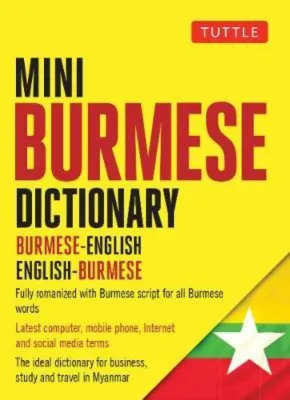
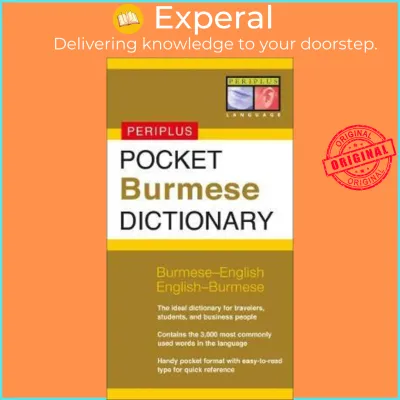
Prices are valid at publication and may change. Please refer to the product page for the latest price.
Advanced learners, on the other hand, require a comprehensive reference tool that can decode literary texts, formal news broadcasts, and technical documents. If you are operating at this level, your chosen dictionary must feature extensive definitions, historical etymologies, and specialized jargon. It should also clearly distinguish between the colloquial (spoken) and literary (written) registers of Myanmar, which differ significantly in grammar and vocabulary.
Define Your Primary Use Case and Environment
Your daily environment and specific communication goals dictate the practical features your dictionary must possess. For daily conversation and travel, speed and practicality are paramount. If you are navigating local markets, ordering food, or engaging in casual social interactions, you need a tool that prioritizes high-frequency spoken vocabulary. In these scenarios, a bulky academic volume is impractical; instead, a compact pocket dictionary or a fast mobile application with offline capabilities is ideal.

In professional and workplace settings, the stakes are higher, requiring precise and formal communication. If you are using Myanmar for business correspondence, legal consultations, or regional enterprise coordination, your dictionary must cover formal terminology. It should help you draft professional emails, understand contract terms, and use appropriate honorifics. A dictionary with dedicated business glossaries or formal register indicators will prevent costly communication errors in a corporate environment.
For academic study and literary analysis, depth and structural explanation are non-negotiable. If you are studying the language at a university level, analyzing classical literature, or translating historical documents, you require an exhaustive reference work. This environment demands detailed explanations of grammatical particles, sentence-ending markers, and archaic terms. Your dictionary should serve as an authoritative linguistic guide rather than a quick translation aid.
Match Dictionary Features to Your Learning Needs
Once you understand your level and use case, you can evaluate specific dictionary features to ensure a productive study experience. First, examine the script and romanization systems used. Beginners must verify that the phonetic transliteration is consistent and easy to read. For intermediate and advanced learners, ensuring that the Myanmar script is rendered in standard, modern Unicode fonts is critical. Older digital resources may use legacy encodings that display incorrectly on modern devices, leading to confusion and reading errors.
Second, prioritize the presence of bilingual example sentences. A word in Myanmar can have multiple meanings depending on the context and the particles that accompany it. Example sentences demonstrate how words function in real-world syntax, helping you avoid awkward, literal translations. This feature is particularly important for mastering verbs and prepositions, which rarely map one-to-one between English and Myanmar.
Finally, look for valuable supplementary tools in the appendices. Many high-quality dictionaries include grammar summaries, lists of common classifiers, numbers, and cultural notes. Because Myanmar culture is deeply reflected in its language through honorifics and social registers, having access to these cultural explanations within your dictionary can significantly accelerate your sociolinguistic competence.
Choose the Right Format for Your Study Habits
The medium of your dictionary should match your daily routine and study habits. Print dictionaries remain highly valued for focused, distraction-free study. When sitting at a desk in a library or home office, flipping through a physical book encourages cognitive engagement and accidental learning as you encounter adjacent words. A well-bound print dictionary is a long-term investment, often costing between S$20 and S$60, and does not suffer from battery depletion or software compatibility issues.
Digital applications and software offer unmatched convenience for active, on-the-go learners. Mobile apps allow for instant search, often supporting handwriting input or optical character recognition to look up words simply by pointing your camera at the text. Many digital tools also feature audio pronunciations recorded by native speakers, which is invaluable for mastering the tonal nuances of Myanmar. Ensure the app offers offline access so you can use it without relying on mobile data.
Online web platforms are best suited for desktop research and writing tasks. If you are translating documents or drafting emails on a computer, a web-based dictionary allows you to copy and paste text seamlessly. These platforms are often updated more frequently than print or offline apps, ensuring access to contemporary vocabulary and neologisms. However, they require a stable internet connection, making them less reliable when traveling in remote areas.
Frequently Asked Questions (FAQ)
Do I need a bidirectional dictionary for my studies?
Whether you need a bidirectional dictionary depends on whether your tasks are active or passive. If you are primarily reading, listening, and comprehending Myanmar text, a unidirectional (Myanmar-to-English) dictionary is sufficient. However, if you are actively writing, speaking, or translating from English into Myanmar, a bidirectional dictionary is essential. It allows you to look up English concepts and find the correct Myanmar equivalents, along with the necessary grammatical context to use them accurately.
How can I verify the accuracy of a digital dictionary?
To verify the reliability of a digital dictionary, check the credentials of the publisher or development team. Look for platforms backed by recognized academic institutions, university presses, or established linguistic organizations. Additionally, read user feedback on online marketplaces to check for font compatibility issues, translation accuracy, and how frequently the database is updated to reflect modern usage.

Community discussion
Share your experience or ask a question. Comments are reviewed before publication.