
Selecting the right Myanmar to English dictionary requires balancing your current language proficiency with your practical learning goals. Whether you are a professional working in a multicultural business environment, a student pursuing Southeast Asian studies, or a traveler preparing for a trip, the right reference tool bridges the gap between the unique phonetic and grammatical structures of the Myanmar language and English. By evaluating format, script support, and vocabulary depth, you can find a resource that supports your learning journey without causing unnecessary frustration.
Because the Myanmar language features its own distinct script, tonal system, and grammatical registers, a standard word-for-word translation tool is rarely sufficient for long-term progress. The ideal dictionary should not only provide definitions but also guide you through pronunciation, usage context, and script variations. Taking the time to assess your specific needs before purchasing a print volume or downloading a digital application will save you time and ensure you build a reliable linguistic foundation.
Identify Your Proficiency Level and Use Case
Defining your primary goal is the first step in narrowing down your dictionary options. Casual learners who need to navigate daily conversations, order food, or travel require a very different tool than academic researchers or professional translators. If your focus is on quick, practical communication, a compact dictionary that emphasizes phonetic spelling and common phrases will serve you better than a heavy, academic volume filled with obscure literary terms.
Products mentioned in this guide
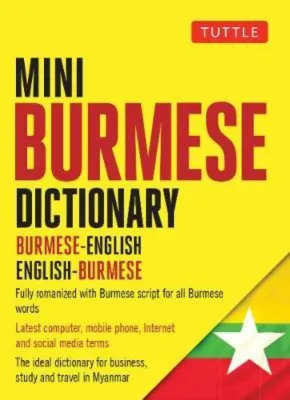
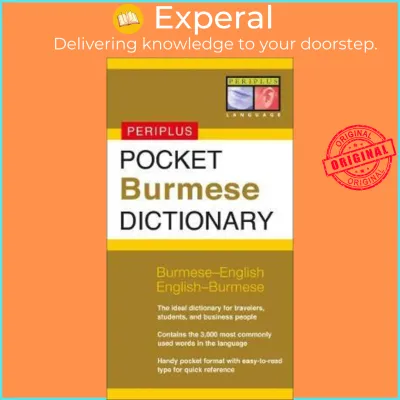
Prices are valid at publication and may change. Please refer to the product page for the latest price.
For those engaged in formal academic study, the requirements are much more stringent. You will need a dictionary that provides complete Myanmar script entries, detailed grammatical classifications, and clear distinctions between colloquial and literary registers. The Myanmar language utilizes different vocabulary and sentence endings depending on the level of formality, and an academic dictionary must clearly mark these differences to prevent you from using overly formal language in casual speech or vice-versa.
Professional translation and business use demand the highest level of detail and accuracy. In these scenarios, you must look for dictionaries that offer extensive contextual examples, idiomatic expressions, and specialized terminology. A professional-grade resource helps you understand the subtle nuances of words, ensuring that your translations capture the exact intent, tone, and legal or technical precision required in professional documents.
Your current familiarity with the Myanmar script also dictates the type of dictionary you should choose. Beginners often rely heavily on romanization, which uses the Latin alphabet to represent Myanmar sounds. While this is helpful for immediate spoken communication, intermediate and advanced learners must transition to dictionaries that use the actual Myanmar script to ensure accurate reading comprehension and correct pronunciation of tonal variations.
Compare Dictionary Formats: Print, App, and Online
Print dictionaries remain highly valued for structured, distraction-free study. They are excellent for deep reading sessions at home, in a library, or at a study desk, allowing you to flip through pages and naturally encounter related words. The physical act of looking up a word in a print volume can also aid memory retention. However, print books are heavy, take up physical space, and lack interactive features such as audio pronunciations or instant search bars.

Mobile applications offer unparalleled convenience and portability for learners on the go. Whether you are commuting on the MRT or traveling, a mobile dictionary allows for instant lookups and often includes helpful features like search history, bookmarking, and audio clips of native speakers. When choosing an app, it is vital to check device compatibility, storage requirements, and whether the database is fully accessible without an active cellular connection.
Online web portals are highly suitable for desktop research, writing, and translation work. These platforms often feature larger, community-updated databases that reflect modern slang and neologisms faster than print editions. They also allow you to easily copy and paste text between documents. The primary limitation of online portals is their absolute dependence on a stable internet connection, making them less reliable in remote areas or during international travel.
Many successful language learners adopt a hybrid approach to balance these trade-offs. They use a lightweight mobile app for quick lookups and pronunciation checks during daily activities, while keeping a comprehensive print dictionary on their study desk for intensive reading and writing practice. This combination ensures you have the right tool available regardless of your environment or study focus.
Key Features to Check Before You Buy or Download
Before investing in a print dictionary or paying for a premium digital application, verify the publication or update date. Languages evolve, and older dictionaries may lack contemporary vocabulary, digital terms, or modern business expressions. Conversely, if your goal is to read classical Myanmar literature, an older, historically authoritative academic dictionary will be far more useful than a modern conversational guide.
For digital dictionaries and mobile apps, verifying script standards and compatibility is critical. Ensure the application supports modern Unicode standards rather than legacy encoding systems. Unicode compatibility ensures that the Myanmar script displays correctly across all modern devices, operating systems, and web browsers without rendering errors, broken characters, or overlapping diacritics.
Phonetic transcriptions and audio guides are essential features for mastering pronunciation. Look for dictionaries that provide clear phonetic spellings, ideally using the International Phonetic Alphabet (IPA) or a highly consistent, documented romanization system. If you are downloading an app, prioritize those that offer high-quality audio recordings by native speakers rather than synthetic, computer-generated text-to-speech voices.
Contextual examples and grammatical notes are what separate a basic word list from a true learning tool. A high-quality dictionary should provide example sentences demonstrating how a word is used in a sentence, along with its part of speech, common collocations, and register markers. This context prevents common errors, such as using a noun as a verb or applying a formal word in an informal setting.
Finally, review the authorization source and content completeness of the dictionary. Reputable academic presses, university departments, or established language institutions generally produce the most reliable and thoroughly proofread content. Be cautious of self-published digital tools or free apps with unverified databases, as they often contain typographical errors, incorrect translations, or incomplete entries that can stall your learning progress.
Selection Framework by Learning Stage
During the beginner stage, your primary objective is to build a core vocabulary of high-frequency words and get comfortable with basic pronunciation. Look for pocket-sized print dictionaries or simple mobile apps that feature prominent romanization alongside the Myanmar script. Visual dictionaries that pair words with illustrations, as well as resources that include practical phrasebook sections for daily scenarios, are highly beneficial at this level.
As you transition to the intermediate stage, you should actively move away from relying on romanization. Choose a dictionary that prioritizes the Myanmar script and offers bilingual definitions with clear grammatical notes. At this phase, you need to understand how words function within sentences, so look for resources that provide intermediate-level example sentences and highlight common verb-noun pairings and particles.
Advanced learners and researchers require comprehensive, unabridged dictionaries that cover a wide range of literary, historical, and formal vocabulary. At this level, the dictionary should offer detailed etymologies, regional variations, and complex grammatical explanations. Many advanced users benefit from bilingual-monolingual hybrid dictionaries, which provide definitions in both English and Myanmar to help you think directly in the target language.
For professional translators, court interpreters, or business specialists, standard bilingual dictionaries are rarely sufficient on their own. At this stage, you must supplement your primary dictionary with specialized glossaries focusing on your specific field, such as legal, medical, financial, or technical terms. Look for publications from official professional bodies or academic institutions that detail precise administrative and technical terminology.
Frequently Asked Questions (FAQ)
Do I need a dictionary that supports both Myanmar script and romanization?
Romanization is highly beneficial for absolute beginners because it allows you to start speaking and understanding basic words without first mastering the complex Myanmar script. It provides an immediate phonetic guide to the tonal system and pronunciation. However, relying on romanization for too long can hinder your progress, as it cannot perfectly represent all the subtle phonetic distinctions and tonal markers of the language. As you progress past the basic level, you should transition to a dictionary that focuses primarily on the Myanmar script to build accurate reading and writing skills.
How can I verify if a digital dictionary works offline?
To verify offline capability, carefully read the product description in the app store or on the developer’s official website before downloading. Look for explicit mentions of an offline database or offline mode. After installing the application, test its functionality by putting your device into airplane mode and searching for several words. Keep in mind that some apps require you to manually download additional language packs or database files within the settings menu while connected to Wi-Fi before the offline search feature becomes fully functional.
Are bilingual dictionaries sufficient for professional translation?
Standard bilingual dictionaries are generally not sufficient for professional translation because they often lack the deep contextual nuances, register distinctions, and highly specialized terminology required in professional fields. While they are excellent for general comprehension, professional work requires a precise understanding of how words function in specific legal, medical, or technical contexts. To ensure accuracy, professional translators should supplement their primary bilingual dictionary with specialized subject-matter glossaries, monolingual Myanmar dictionaries, and parallel reference texts.

Community discussion
Share your experience or ask a question. Comments are reviewed before publication.