
Selecting the right N-Level Ten Year Series (TYS) is a foundational step in preparing for your national examinations in Singapore. Because the Singapore-Cambridge GCE N-Level examinations are split into distinct academic pathways, purchasing the wrong edition can lead to wasted study hours on topics you do not need to know, or worse, missing critical components of your actual syllabus. To make an accurate choice, you must align your purchase with your specific exam stream, verify the current syllabus code, and select the subject-specific formats that best support your revision style.
The Ten Year Series is not a single uniform book but a collection of past-year national examination papers compiled by approved publishers. These books are updated annually to include the most recent year’s papers while removing the oldest year in the cycle. Choosing the correct volume requires looking beyond the cover design to inspect the syllabus code, the stream designation, and the quality of the worked solutions provided. By taking a systematic approach to your purchase, you ensure that every practice session directly contributes to your exam readiness.
Confirming Your Exam Stream: N(A) vs N(T) Requirements
Before browsing the shelves of any bookstore or online marketplace, you must clearly identify whether you are registered for the Normal (Academic) or Normal (Technical) curriculum. The N(A) and N(T) streams are governed by entirely different syllabi, assessment objectives, and grading structures. Attempting to study from the wrong stream’s past papers will result in a mismatch of difficulty levels, question formats, and subject content.
Products mentioned in this guide
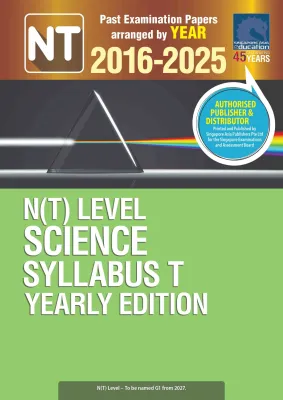
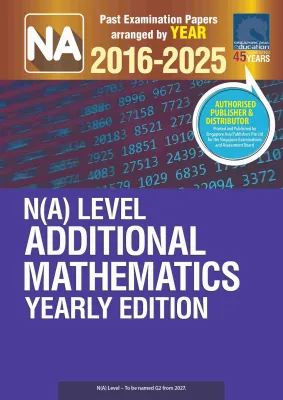
Prices are valid at publication and may change. Please refer to the product page for the latest price.
The Normal (Academic) stream generally features a more theoretical curriculum designed to prepare students for subsequent academic pathways, such as the O-Levels or direct polytechnic admission programmes. Consequently, N(A) papers require deeper conceptual explanations, multi-step problem-solving, and structured essay writing. The Normal (Technical) stream, on the other hand, focuses on practical, technical, and vocational applications of knowledge. N(T) examination papers reflect this by utilizing more structured, guided questions, practical scenarios, and functional language assessments.
Using cross-stream papers for targeted exam preparation introduces significant risks. If an N(T) student attempts N(A) papers, they may encounter complex theoretical topics that are completely outside their syllabus, leading to unnecessary frustration and anxiety. Conversely, if an N(A) student relies on N(T) papers, they will not be sufficiently challenged by the rigorous, open-ended question formats that characterize the N(A) examinations. This mismatch can leave critical gaps in your preparation that only become apparent during the actual exam.
To avoid these pitfalls, verify your official stream registration and subject combinations directly with your school before making any purchases. Your school’s subject registration slip or portal will list the exact subject titles and, crucially, the four-digit syllabus codes assigned by the Singapore Examinations and Assessment Board (SEAB). Keep this list on hand when shopping, as publishers clearly print these syllabus codes on the covers or introductory pages of authentic Ten Year Series books.
Selecting the Correct Ten Year Series by Subject
Different subjects require distinct approaches to revision, and this is reflected in how various Ten Year Series editions are structured. When selecting your books, you must evaluate the specific features of each subject edition to ensure they provide the exact support you need for your learning style.

For Mathematics, the distinction between N(A) and N(T) editions is particularly stark. N(A) Mathematics covers algebraic manipulation, geometry proofs, and data analysis at a level that bridges toward O-Level expectations, whereas N(T) Mathematics emphasizes practical numeracy, financial calculations, and basic mensuration. When choosing a Mathematics TYS, do not just look at the questions; flip to the back of the book to inspect the solutions. A high-quality edition must provide step-by-step worked solutions that explain the logical progression of each formula, rather than simply listing the final numerical answer. This allows you to identify exactly where your calculations went wrong during self-timed practice.
English Language editions require a different set of evaluation criteria. Because language papers assess skills rather than rote memorisation, the value of an English TYS lies heavily in its answer keys and model answers. Look for editions that include comprehensive model essays for continuous writing tasks, complete with annotations explaining why the essay is effective. For the comprehension section, the answer key should explain how to extract clues from the text to answer literal, inferential, and vocabulary-in-context questions. Additionally, check if the edition provides transcripts or audio access for the listening comprehension component, as well as sample prompts and strategies for the oral communication examination.
For Sciences and Humanities, you must navigate the distinction between combined and pure subject options. In the N(A) stream, many students take Combined Sciences—such as Physics/Chemistry or Chemistry/Biology—which are assessed differently from individual pure sciences. Ensure you purchase the specific combined science volume that matches your exact subject pairing. Similarly, for Humanities, you must verify that the elective components in the book match your school’s curriculum, whether you are taking Social Studies combined with Geography, History, or Literature. Check the table of contents to confirm that all your elective modules are fully covered in a single volume or if they require separate purchases.
Verifying Edition Accuracy and Syllabus Alignment Before Purchase
Syllabi are subject to periodic reviews and updates by the Ministry of Education and SEAB to ensure the curriculum remains relevant. This means that a Ten Year Series printed several years ago may contain topics that have since been removed, or lack new topics that have recently been introduced. Verifying edition accuracy before you buy is essential to keep your revision aligned with current standards.
Your first step should be to cross-reference the publication year and the edition number against the latest SEAB syllabus updates. Publishers typically print the specific syllabus years covered by the book on the front cover or the title page. Ensure the book covers the most recent examination cycle up to the previous year. If you are sitting for the exams, your TYS should ideally include papers up to the preceding year. Be cautious of clearance sales offering older stock, as these books may follow outdated syllabi that do not reflect the current exam format or topic weightage.
Another critical feature to verify is the inclusion of detailed marking schemes and, where available, examiner reports. Authentic marking schemes show you exactly how marks are allocated for method, accuracy, and key terms. Examiner reports are invaluable because they highlight common mistakes made by previous candidates, clarify what examiners look for in high-scoring answers, and point out frequent misconceptions. Having access to these insights allows you to grade your own practice papers objectively and adjust your exam technique accordingly.
Finally, do not overlook the physical quality of the book. The Ten Year Series is designed to be a working document that you will flip through, write in, and carry in your schoolbag daily for several months. Inspect the binding to ensure it can withstand heavy use without pages falling out. Look for books with sufficient paper thickness that prevents ink from bleeding through to the other side when you use highlighters or gel pens. Adequate margin space is also beneficial, as it gives you room to write down personal corrections, formulas, and reminders alongside the printed questions.
Finding Reliable Retailers and Authentic Exam Prep Bundles
To ensure you are purchasing genuine, high-quality study materials, you should source your books from reputable channels. Counterfeit or poorly produced editions may contain typographical errors, missing pages, or incorrect answer keys that can severely disrupt your revision process.
In Singapore, authorized major book retailers, school bookshops, and established educational publishers are the safest sources for authentic Ten Year Series books. School bookshops are particularly reliable because they stock the exact editions recommended by your teachers for your specific stream. If you prefer to shop online or at larger retail outlets, look for established local bookstores that have direct distribution agreements with approved publishers.
You can verify the authenticity of a Ten Year Series book by checking its International Standard Book Number (ISBN) and looking for official publisher logos. Approved publishers often include security features, such as holographic stickers or specific textured covers, to distinguish their official prints from unauthorized reproductions. Cross-referencing the ISBN online can quickly confirm if the book is a registered publication matching the current syllabus year.
When deciding between physical books and digital formats, consider how you plan to conduct your practice sessions. Physical books are highly effective for simulating actual exam conditions, as they allow you to practice handwriting under timed constraints and get used to the tactile feel of turning pages and writing on paper. Digital formats, such as downloadable practice papers or interactive online platforms, offer convenience and portability, making them useful for quick revision on the go. However, for full-length mock exams, practicing on physical paper remains the most realistic way to prepare for the environment of the examination hall.
Frequently Asked Questions (FAQ)
Can I use O-Level past papers to prepare for N(A) exams?
While there is some syllabus overlap between N(A) and O-Level subjects, particularly in Mathematics and Sciences, there is a significant difficulty gap and difference in question formats. O-Level papers generally require a higher level of critical thinking, more complex application of concepts, and faster writing speeds. Using O-Level papers as your primary study material can cause unnecessary friction and discouragement if you encounter topics not covered in your N(A) syllabus. However, if you have already mastered your N(A) Ten Year Series and are looking for extension practice to stretch your abilities—especially if you plan to progress to Secondary 5—selectively practicing basic O-Level questions under the guidance of a teacher can be a useful way to build confidence.
Is an older Ten Year Series edition still useful for current exams?
An older Ten Year Series edition can still be useful, but its utility depends heavily on the stability of the syllabus for that specific subject. For subjects with highly stable curricula, such as Mathematics, older papers remain excellent resources for practicing fundamental calculations and problem-solving techniques. However, for subjects that undergo regular updates, such as Social Studies, Sciences, or English Language, older editions may contain outdated case studies, obsolete facts, or discontinued question formats. If you choose to use an older edition, always cross-reference the table of contents with the current SEAB syllabus online to identify and skip any topics that are no longer examinable.
Community discussion
Share your experience or ask a question. Comments are reviewed before publication.