
Selecting the correct N-Level Ten Year Series (TYS) is one of the most critical steps in preparing for the national examinations. These past-year paper compilations serve as the definitive benchmark for exam readiness, offering direct exposure to actual question formats, marking rubrics, and time constraints. However, purchasing the wrong edition can lead to wasted study hours, confusion over outdated syllabus requirements, or practicing topics that are completely irrelevant to your specific academic track.
To make an informed decision, you must first confirm your exact academic stream—Normal (Academic) or Normal (Technical)—and cross-reference your subject list with the official syllabus codes. From there, you can evaluate whether a topical or yearly format best suits your current stage of revision, while carefully checking publisher features such as step-by-step answer keys and marking guides. Taking a systematic approach to selecting these study aids ensures that every hour of practice directly contributes to exam confidence and academic success.
Identify Your Stream: N(A) vs. N(T) Level Requirements
The secondary school landscape divides the N-Level curriculum into two distinct pathways: the Normal (Academic), or N(A), stream and the Normal (Technical), or N(T), stream. Each pathway is designed with different educational objectives, assessment structures, and post-secondary progression routes in mind. Consequently, the examination papers for these two streams differ significantly in terms of content depth, question style, and overall difficulty.
Products mentioned in this guide
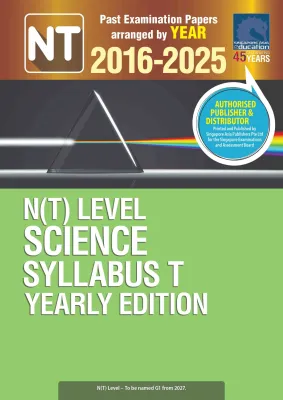
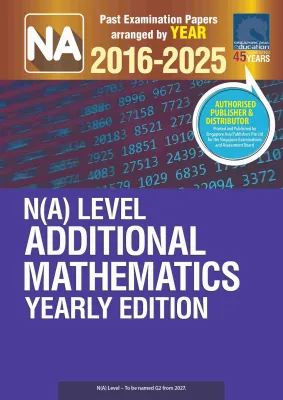
Prices are valid at publication and may change. Please refer to the product page for the latest price.
The N(A) curriculum focuses heavily on academic subjects, preparing students for either the GCE N(A)-Level examinations or lateral transfer pathways to the O-Level track. The exam papers in this stream require a strong grasp of theoretical concepts, analytical writing, and complex problem-solving skills. The questions are structured to test deep conceptual understanding, often requiring multi-step explanations or comprehensive essays depending on the subject.
In contrast, the N(T) curriculum emphasizes practical, technical, and vocational skills, preparing students for technical education pathways. The assessment format for N(T) subjects tends to be more hands-on, practical, and direct. Questions are designed to evaluate functional literacy, real-world mathematical applications, and basic technical knowledge, featuring more structured, short-answer formats rather than long-form theoretical essays.
Because of these fundamental differences, publishers produce entirely separate Ten Year Series volumes for N(A) and N(T) subjects. Attempting to study from the wrong stream’s book can severely disrupt your preparation. An N(T) student using an N(A) book will face overly complex academic theories not tested in their exams, while an N(A) student using an N(T) book will not develop the analytical depth required to pass their papers.
To avoid costly purchasing mistakes, you should always verify your exact stream and subject codes before buying any assessment books. Do not rely solely on the subject name, as titles like “Mathematics” or “Science” exist in both streams but cover entirely different content. Instead, consult your school’s official subject registration list or refer directly to the Ministry of Education (MOE) and Singapore Examinations and Assessment Board (SEAB) syllabus documents to confirm your exact codes.
Select the Correct TYS Edition for Your Subject Combination
Once you have confirmed your academic stream, the next step is to match your specific subject combination with the available Ten Year Series publications. Unlike lower secondary assessment books, which are often generalized, national exam preparation requires highly specialized resources. TYS books are almost always sold as individual volumes for each specific subject, though some publishers may offer bundled packages for core subjects during peak revision seasons.

When browsing physical bookstores or online marketplaces, you must pay close attention to the book covers. Publishers are required to display the official subject title, the target exam stream, and the relevant syllabus years clearly on the front cover. A simple oversight, such as grabbing a book labeled “Science (Physics/Chemistry)” when you are actually registered for “Science (Chemistry/Biology)”, can render the purchase useless for half of your revision needs.
Core Subjects (English, Mathematics, Science)
Core subjects carry the heaviest weight in calculating your aggregate scores for post-secondary admission, making the selection of the correct TYS for these areas exceptionally critical. For Mathematics, the distinction between N(A) and N(T) is vast. The N(A) Mathematics syllabus includes advanced algebraic manipulation, coordinate geometry, and trigonometry topics that do not appear in the N(T) syllabus. Conversely, N(T) Mathematics focuses heavily on practical financial calculations, basic mensuration, and data analysis, requiring a TYS that emphasizes these functional, everyday applications.
Science subjects present another layer of complexity due to the variety of combinations available. You must determine whether you are taking Combined Science or a Single Science subject. Combined Science TYS books are split into specific pairs, such as Physics/Chemistry or Chemistry/Biology, and are compiled into a single volume that reflects the exact weighting of the combined exam. Purchasing individual Single Science TYS books instead of the Combined Science edition will expose you to deeper, more complex questions that exceed the scope of the combined syllabus, leading to unnecessary stress and inefficient study.
For language subjects like English and Mother Tongue, the exam format undergoes periodic revisions to better assess communication skills in a modern context. When selecting a language TYS, you must ensure the book aligns with the current syllabus format, particularly regarding components like oral communication, listening comprehension, and situational writing. Older editions of language TYS books may feature outdated essay prompts or obsolete comprehension question formats that do not match the current marking rubrics used by examiners.
Humanities and Elective Subjects
Humanities and elective subjects require careful scrutiny because their syllabuses are frequently updated to reflect contemporary global issues and educational shifts. For subjects like Social Studies, Geography, History, or Literature, you must ensure the TYS is specifically tailored to the N-Level syllabus rather than the O-Level syllabus. While some publishers combine these resources, using a dedicated N-Level book ensures you are practicing source-based questions and structured essay prompts at the correct difficulty level and within the appropriate time limits.
Niche elective subjects, such as Art, Design and Technology (D&T), Food and Consumer Education (FCE), or specific commercial subjects, present a unique challenge. Because student enrollment in these subjects is relatively small compared to core academic areas, commercial publishers may not always produce a dedicated, widely distributed Ten Year Series. If you cannot find a commercial TYS for a niche elective, do not buy a generic assessment book as a substitute; instead, consult your teachers, who can often provide school-compiled past-year papers or official specimen papers.
Pre-Purchase Checklist for N-Level Ten Year Series
Before finalizing your purchase of any Ten Year Series book, whether at a local retail bookstore, an authorized school bookshop, or an online marketplace, you should run through a comprehensive verification checklist. This step prevents the inconvenience of returning incorrect books and ensures your study materials are fully optimized for the current academic year.
First, perform a strict syllabus code match. Every subject examined by SEAB is assigned a unique four-digit syllabus code (for example, 4044 for N(A) Mathematics). This code is printed on your school’s entry proof and is also clearly displayed on the cover or copyright page of authorized TYS books. Matching this four-digit code is the single most reliable way to guarantee that the book covers the exact curriculum you will be tested on, bypassing any potential confusion caused by similar-sounding subject names.
Second, verify the edition year and the range of exam papers included. The ideal TYS should cover the most recent ten consecutive years of national examinations up to the preceding academic year. Be cautious of older stock sold at a discount, as these books may lack the most recent two or three years of papers, which are often the most accurate indicators of current exam trends and question styles.
Third, evaluate the publisher and the internal format of the book. TYS books are generally organized in one of two ways: topical or yearly. Topical editions group past-year questions by subject chapter, making them excellent for reinforcing learning throughout the school year as each topic is taught. Yearly editions present the actual exam papers in their original chronological order, which is ideal for timed mock exams in the final months leading up to the actual papers. Additionally, look for publishers that provide detailed, step-by-step answer keys with clear marking schemes, as books that only offer final answers without explanations provide very little learning value when you make a mistake.
Finally, if you are purchasing second-hand copies from seniors or online classifieds, perform a thorough physical inspection. Ensure that there are no missing pages, particularly in the answer key or the supplementary formula sheets. Check that previous owners have not written answers directly in the book in pen, as pre-filled answers prevent you from testing yourself objectively. If the book contains pencil markings, ensure they can be cleanly erased without damaging the paper or obscuring the printed text.
Maximizing Your Revision with the Right TYS
Owning the correct Ten Year Series is only half the battle; the true value lies in how systematically you integrate these past-year papers into your daily study routine. To maximize your revision efficiency, you should align your use of the TYS with your current level of subject mastery. Avoid the common mistake of diving straight into full, timed yearly papers at the start of the year when you have not yet covered the entire syllabus.
Instead, begin your revision journey with a topical TYS. As your teacher finishes explaining a specific chapter in class, immediately open your topical TYS and attempt the past-year questions related to that chapter. This approach helps you identify the exact depth of knowledge required for that topic and highlights any gaps in your understanding early on, allowing you to seek help from your teachers before the class moves on to more advanced concepts.
As the national examinations approach and your school completes the syllabus, transition from the topical format to the yearly TYS. At this stage, you should use the yearly papers to simulate actual exam conditions. Find a quiet, distraction-free study space, set a timer to match the official duration of the paper, and complete the entire exam without referring to your textbook or notes. This practice is essential for building the mental stamina needed for the actual exam day and helps you master time management, ensuring you do not leave high-value questions unanswered due to poor pacing.
After completing a paper under timed conditions, the most critical step is the self-evaluation process. Do not simply check your final answers to calculate a score and then move on to the next paper. Use the detailed marking schemes provided in the TYS to analyze exactly where you lost marks. Pay close attention to the specific keywords, units, and structural steps required to secure full marks in open-ended questions. Keep a dedicated mistake log where you write down the questions you got wrong, the correct solutions, and the underlying concepts you need to review, ensuring you do not repeat the same errors in the actual examination hall.
Frequently Asked Questions (FAQ)
Can I use O-Level Ten Year Series to prepare for N(A) Levels?
While the Normal (Academic) pathway is designed to lead toward the O-Level examinations for many students, using an O-Level Ten Year Series as your primary study resource for the N(A) exams is not recommended. The O-Level syllabus covers a broader range of topics, requires a significantly deeper level of conceptual analysis, and features more complex question structures than the N-Level syllabus. Attempting to solve O-Level papers prematurely can lead to unnecessary frustration, confusion over topics that are not in your syllabus, and poor time management practice.
However, if you have already mastered the N(A) syllabus and are consistently scoring high marks in your practice papers, you may consult your subject teachers about using selected O-Level questions. Teachers can identify specific, high-yield O-Level questions that align with the advanced topics in the N(A) syllabus to help stretch your critical thinking skills. Even in this scenario, your primary revision tool should remain the official N-Level TYS to ensure your practice matches the exact format, scope, and difficulty of the paper you will sit for.
Are digital versions of the N-Level TYS available?
Some educational publishers and authorized online learning platforms offer digital versions or interactive online portals featuring past-year exam questions. While these digital formats can be convenient for quick reviews on a tablet or laptop, they should not entirely replace physical TYS books. The actual national examinations are conducted on paper, and practicing on physical sheets is crucial for developing the tactile habits needed for exam success, such as underlining key terms in questions, drawing accurate diagrams, and writing out mathematical workings clearly.
If you choose to use digital resources, always verify that they are sourced from authorized publishers or official educational platforms to ensure the accuracy of the questions and answer keys. Unauthorized digital compilations found on public forums or file-sharing sites often contain scanning errors, missing pages, or incorrect solutions that can severely mislead your revision. For the most effective preparation, use physical TYS books for your timed mock exams, and reserve digital versions for supplementary reading or quick reference when studying on the go.
Community discussion
Share your experience or ask a question. Comments are reviewed before publication.