
To start learning drums at home without taking up an entire room, a beginner should choose a compact, folding electronic drum kit equipped with mesh heads and a physical kick pedal. While ultra-portable silicone roll-up pads are highly affordable and easy to store, they lack the physical rebound and pedal mechanics required to build proper drumming muscle memory. A compact mesh-head kit strikes the ideal balance, offering a realistic playing feel, quiet practice capabilities, and a small footprint that fits neatly into a bedroom or living area.
Selecting the right instrument involves balancing your physical space, budget, and learning goals. By focusing on key hardware specifications, connectivity options, and noise-reduction features, you can find a portable kit that supports your development from a complete novice to an intermediate player without causing friction in your household.
Understanding the Main Types of Portable Drum Kits
Portable drum kits generally fall into three distinct categories, each serving different needs, budgets, and space constraints. Understanding these form factors is the first step in making an informed purchase that aligns with your commitment to learning the instrument.
Products mentioned in this guide

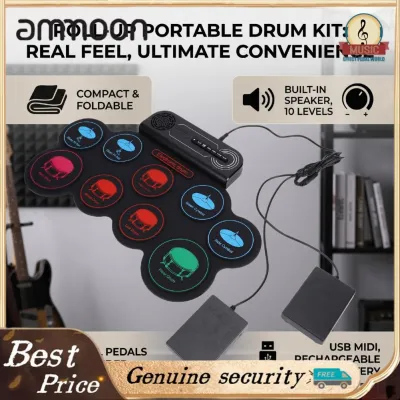
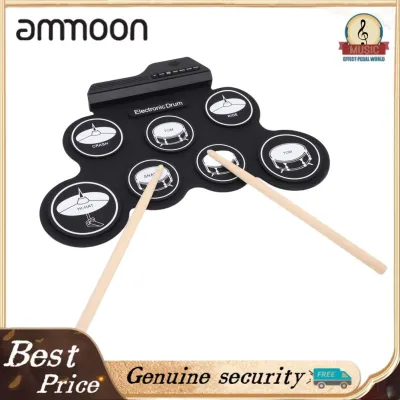
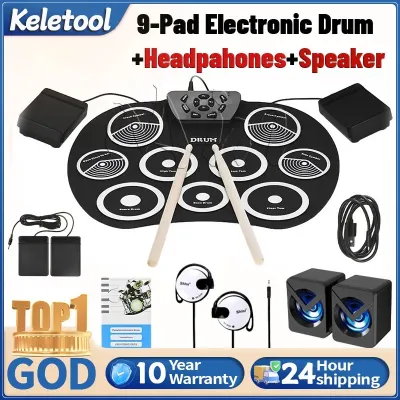
![Donner DED-70 Complete Set 7 Pieces Beginner Electronic Drums Foldable DED 70 Series [PREORDER]](https://img.lazcdn.com/g/p/855629ea0fba78ae6b998d76130c6571.png_400x400q80.png_.webp)
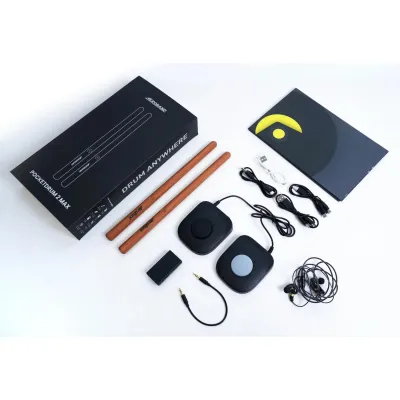
Prices are valid at publication and may change. Please refer to the product page for the latest price.
Roll-up and silicone pad kits represent the most budget-friendly and space-saving option on the market. These kits consist of a flat, flexible silicone mat with printed drum pads that can be rolled up and stored in a drawer when not in use. While they are highly portable and excellent for casual play or introducing young children to basic rhythms, they have significant limitations for serious learners. The flat surface offers virtually no stick rebound, meaning your wrists and fingers must do all the work to lift the stick after a strike. This lack of physical feedback makes it difficult to transition to a traditional drum kit and can lead to wrist fatigue during extended practice sessions.
Compact mesh-head electronic kits are the recommended choice for beginners who are serious about developing proper drumming technique. These kits feature tensionable mesh drumheads mounted on a lightweight, collapsible rack system. Mesh heads closely mimic the natural rebound and feel of an acoustic drumhead, allowing you to practice essential techniques like double-stroke rolls and dynamic accents. While they require a dedicated footprint when set up, many models feature quick-release clamps that allow the frame to fold flat against a wall or fit inside a closet. This category offers the best balance of portability, realistic playability, and long-term usability.
Desktop or finger drum pads are compact, self-contained units featuring a grid of square, velocity-sensitive pads. These devices are primarily designed for music production, finger drumming, and beat-making rather than simulating a full acoustic drum kit. While they are highly portable and excellent for learning rhythm theory, syncopation, and song structure, they do not translate well to traditional drumming. Because they lack the spatial layout of a standard kit and do not typically support standard foot pedal configurations, they will not help you develop the four-limb coordination required to play a physical drum set.
Essential Features for Beginner Learning and Ease of Use
When evaluating portable drum kits, it is easy to get distracted by the number of built-in drum sounds or cosmetic features. For a beginner, the focus should remain on the core hardware and software tools that directly facilitate daily practice and skill acquisition.

A built-in metronome is the single most important tool for any developing drummer. Look for a drum module that offers an easily adjustable metronome with options to change the tempo, time signature, and subdivision (such as eighth notes or triplets). Many beginner-focused modules also include built-in coaching functions or play-along tracks. These features help you develop a steady sense of time by grading your accuracy against the click, turning repetitive practice sessions into engaging, goal-oriented exercises.
Kick drum pedal compatibility is another critical factor that separates toy-grade kits from genuine learning instruments. Many ultra-portable kits use simple, plastic foot switches for the bass drum and hi-hat. These switches offer no physical resistance and feel completely different from a real pedal, making it impossible to learn proper foot techniques like the heel-up or heel-down method. Look for a kit that includes or supports a physical kick drum tower and a standard bass drum pedal. This setup uses a physical beater that strikes a vertical pad, providing the correct resistance and rebound necessary to build foot strength and control.
Velocity sensitivity is the technology that allows a drum pad to respond to how hard or soft you strike it. A kit without velocity sensitivity will trigger the exact same volume level regardless of your playing dynamics, resulting in a flat, robotic sound. True velocity sensitivity ensures that a gentle tap produces a quiet whisper, while a heavy strike delivers a powerful crack. This feature is essential for learning dynamics, ghost notes, and expressive playing, which are fundamental to musicality.
Connectivity Options and Digital Learning Support
Modern electronic drum kits offer a wealth of digital features that can significantly accelerate the learning process. Ensuring your kit has the right connectivity options allows you to integrate educational software, backing tracks, and recording tools into your daily routine.
A USB-MIDI connection is a standard feature on most reputable electronic drum modules. This port allows you to connect the drum kit directly to a computer, tablet, or smartphone using a standard USB cable. Once connected, the drum kit acts as a MIDI controller, allowing you to trigger high-quality drum samples in a Digital Audio Workstation (DAW) or interact with educational software. This connectivity is crucial if you plan to use interactive drumming apps that provide real-time feedback on your timing and accuracy.
Bluetooth capability is increasingly common in modern drum modules, but it is important to understand its limitations. Bluetooth audio allows you to stream backing tracks or lesson videos wirelessly from your phone to the drum module, letting you hear both the music and your drumming through your headphones. However, Bluetooth MIDI can introduce noticeable latency (delay) between the moment you strike a pad and the moment you hear the sound or see the hit register on an app. For real-time playing and monitoring, a wired connection is always superior to avoid the frustration of audio lag.
Before finalizing your purchase, verify the kit’s compatibility with popular drumming tutorial platforms and software. Some manufacturers partner with specific educational apps to offer free trial subscriptions or integrated lesson plans. Ensuring the drum module is class-compliant—meaning it works instantly with external devices without requiring complex driver installations—will save you time and technical frustration during setup.
Managing Space, Setup, and Noise in an Apartment
Practicing drums in a high-density living environment, such as a high-rise apartment, presents unique challenges. Managing the physical footprint of the kit and minimizing noise disturbances are essential for maintaining harmony with family members and neighbors.
Before buying, carefully measure the available floor space in your designated practice area. A typical compact electronic drum kit requires an active footprint of approximately 1.2 metres by 1.2 metres to accommodate the rack, pedals, and a drum throne. If you need to pack the kit away after each session, look for models specifically advertised as having a folding frame. These designs allow you to collapse the left and right sides of the rack inward without needing to disassemble the pads or disconnect the cabling, reducing the storage footprint significantly.
While electronic drums are often marketed as “silent,” this is a relative term. The physical impact of wooden drumsticks striking rubber cymbals and mesh pads creates a distinct acoustic tapping sound that can easily travel through thin walls. Mesh heads are significantly quieter than solid rubber pads, making them the preferred choice for shared living spaces. If you live with others, try to position the kit away from shared walls and practice during reasonable hours of the day.
An even greater challenge in apartment buildings is floor-borne vibration. The downward impact of your foot on the kick drum and hi-hat pedals creates low-frequency vibrations that travel directly through the floorboards, sounding like a heavy hammer to neighbors living directly below you. To mitigate this, place a thick, heavy-duty drum rug or interlocking high-density foam mats beneath the entire kit. For maximum isolation, some players construct a simple sound-isolation platform using tennis balls sandwiched between two sheets of medium-density fibreboard, which effectively decouples the pedals from the building structure.
Pre-Purchase Verification Checklist
To ensure you are investing in a viable musical instrument rather than a short-lived novelty, use this practical checklist to verify the specifications and package contents before making your purchase.
- Verify Pad Sensitivity and Zones: Confirm that the snare drum pad supports dual-zone triggering, which allows you to play both standard head hits and rim shots. Check user reviews or technical specifications to ensure there are no widespread complaints regarding trigger latency or missed hits during fast playing.
- Check Input and Output Jacks: Ensure the drum module features a dedicated 3.5mm or 6.35mm headphone jack for private practice. It should also include a physical auxiliary input (Aux-In) jack, which allows you to connect a phone or music player via a wired cable to play along with your favorite songs without relying on wireless connections.
- Confirm Box Contents: Read the product description carefully to see exactly what is included in the box. Many entry-level electronic drum kits do not include a drum throne (stool), a pair of drumsticks, or a set of headphones. If these items are missing, you will need to allocate additional budget to purchase them separately.
- Assess Build Quality and Adjustability: Look for a rack system made of sturdy metal tubing rather than flimsy plastic joints. The rack should allow you to adjust the height and angle of individual pads to ensure proper ergonomic positioning, which is vital for preventing strain and developing good posture from day one.
Frequently Asked Questions (FAQ)
Can I learn proper drumming technique on a roll-up silicone kit?
No, roll-up silicone kits are not suitable for learning proper drumming technique. Because they lack stick rebound, your hands cannot practice the natural control and finger-control techniques required for traditional drumming. Additionally, the simple foot switches included with these kits do not simulate the physical resistance and mechanics of a real bass drum pedal, which prevents you from developing essential foot coordination.
Do I need an amplifier for a portable electronic drum kit?
An amplifier is not required for personal practice. A good pair of closed-back headphones is the most effective way to hear your playing clearly while keeping the environment quiet for others. You only need to purchase a dedicated drum amplifier (or monitor) if you plan to perform for an audience, practice with other musicians in the same room, or prefer playing without headphones when noise is not an issue.
How should I allocate my budget for a beginner portable kit?
For a reliable, entry-level electronic drum kit that will support your learning for several years, expect to allocate between S$400 and S$800. Avoid toy-grade kits priced under S$150, as they generally lack velocity sensitivity, realistic pedals, and durable build quality. Allocate approximately 70% of your budget to the drum kit itself, 15% to a sturdy, adjustable drum throne and quality drumsticks, and 15% to a comfortable pair of closed-back headphones that provide clear sound isolation.
Community discussion
Share your experience or ask a question. Comments are reviewed before publication.