
Selecting the right PSLE math model assessment books requires looking beyond flashy covers and focusing on how a book structures its visual explanations. The most effective books do not simply present finished diagrams; they teach students how to translate complex text into structured bar models step by step. To build a resilient problem-solving foundation, parents should select books that match their child’s current mastery level, feature comprehensive visual answer keys, and align precisely with the latest Ministry of Education (MOE) syllabus. By focusing on books that emphasize the logic behind model drawing rather than rote memorization, you can help your child develop the critical thinking skills needed to tackle challenging word problems with confidence.
Why the Math Model Method is Crucial for PSLE Problem-Solving
The math model method serves as a critical visual bridge between concrete mathematical concepts and abstract algebraic thinking. In the primary school curriculum, students transition from using physical manipulatives to solving complex equations. Model drawing, particularly bar modeling, allows students to represent abstract numbers and unknown variables as physical blocks. This visual representation makes it easier to conceptualize relationships between different quantities, transforming intimidating text into a manageable geometric puzzle.
By deconstructing complex, multi-step word problems, model drawing helps students identify the correct operations to perform. When faced with long paragraphs of text containing multiple values, fractions, and ratios, a student can easily become overwhelmed. Drawing a model forces the student to read the question systematically, processing one piece of information at a time and representing it visually. This systematic approach breaks down a daunting problem into smaller, logical steps, making the path to the solution much clearer.
Products mentioned in this guide
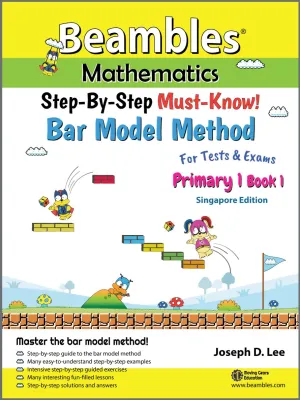
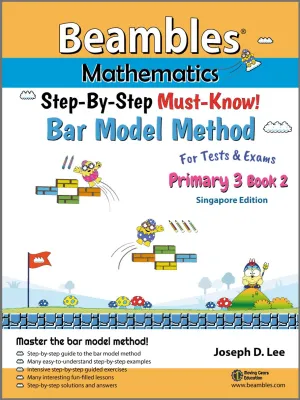
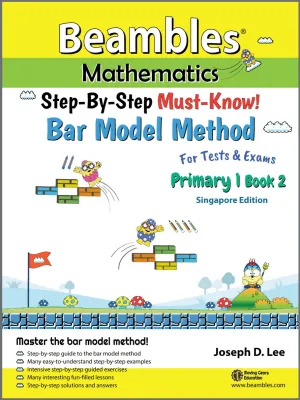
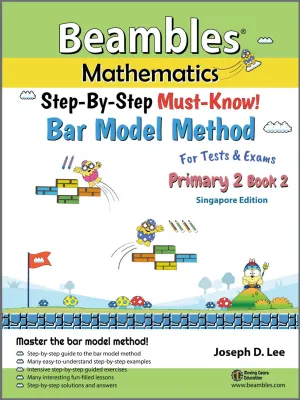
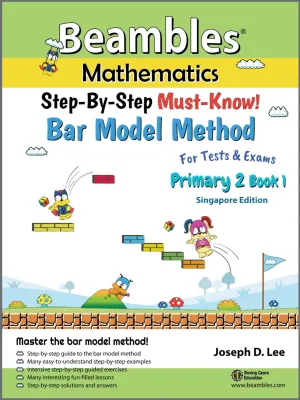
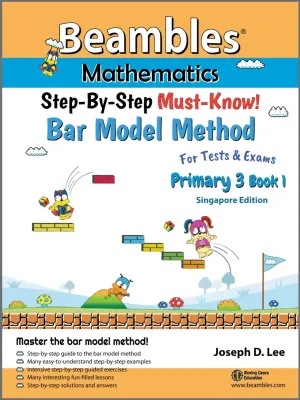
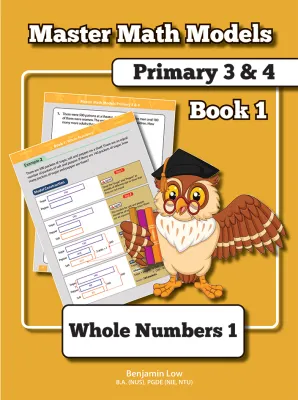
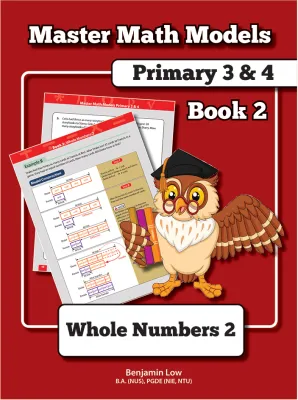
Prices are valid at publication and may change. Please refer to the product page for the latest price.
Visual representation also acts as a powerful self-checking mechanism that helps students avoid common calculation and logic errors. When a model is drawn to scale, even roughly, logical inconsistencies become immediately apparent. For instance, if a student’s calculations suggest that a smaller bar represents a larger number, they can quickly identify that an error has occurred. This visual feedback loop encourages self-correction during the exam, saving precious marks that might otherwise be lost to careless mistakes.
What to Look for in a High-Quality Math Model Assessment Book
When evaluating math model assessment books, the quality of the step-by-step visual solutions is the most critical factor to consider. A high-quality book must explain the “why” behind each drawing step, rather than just presenting a completed model. Look for books that use annotations, arrows, and callout boxes to explain why a bar is divided into specific units or why a bracket is placed in a certain position. This level of detail allows students to study the solutions independently and understand the underlying logic of the model.

Another essential feature is a logical progression of difficulty throughout the book. The material should start with basic part-whole and comparison models before gradually introducing complex heuristic applications. A sudden jump in difficulty without intermediate practice can damage a child’s confidence and lead to frustration. High-quality books often categorize chapters by specific model types or heuristic concepts, allowing students to master one technique before moving on to the next.
Alignment with the latest MOE syllabus and current PSLE question trends is non-negotiable. The syllabus undergoes periodic updates, and exam trends shift toward testing conceptual understanding rather than repetitive drilling. Ensure the book you choose reflects these changes, focusing on non-routine problem-solving and real-world contexts. Outdated books may include topics that have been removed from the syllabus or rely on question formats that are no longer tested.
Finally, pay close attention to the clarity of the language and the layout of the book. The word problems should be written in clear, unambiguous English that matches the style of official exam papers. The layout should provide ample white space for students to draw their models and write out their working steps. Cluttered pages with tiny fonts can cause visual fatigue and make the learning process unnecessarily stressful for young minds.
How to Match Assessment Books to Your Child's Current Level
Choosing the right assessment book requires an honest assessment of your child’s current mathematical abilities and bottlenecks. Buying a book that is too difficult will lead to anxiety, while a book that is too easy will not provide sufficient intellectual growth. You must identify whether your child struggles with the initial translation of text into a model, or if they can draw the model but fail to execute the final calculations.
By targeting the specific gap in your child’s learning process, you can select a book that provides the right amount of scaffolding. This targeted approach ensures that practice sessions are productive and that your child is not overwhelmed by out-of-syllabus challenges or overly complex heuristics before they have mastered the basics.
For Beginners: Building Visual Translation Skills
For students who struggle to convert word problems into visual models, the primary goal is to build foundational translation skills. These beginners need books that focus on single-step problems and basic part-whole and comparison models. The emphasis at this stage should be on learning how to read a sentence and immediately draw a corresponding bar, establishing a strong habit of visual representation.
Look for books that offer highly scaffolded explanations, guided drawing steps, and fill-in-the-blank models. Some beginner-friendly books provide partially drawn models where the student only needs to fill in the numbers or labels. This gentle introduction helps build confidence and demystifies the process of model drawing, showing the child that every sentence in a word problem has a direct visual counterpart.
At this stage, it is crucial to avoid books that jump straight into complex fractions, ratios, or percentages without sufficient visual warm-ups. Introducing these advanced concepts too early can confuse a struggling student and make them reject the model method entirely. Stick to books that reinforce whole-number operations and simple comparisons until the child can draw basic models independently and accurately.
For Intermediate Learners: Tackling Multi-Step Word Problems
Intermediate learners are typically comfortable with basic model drawing but struggle when multiple mathematical concepts are combined. For these students, look for books that focus on integrating fractions, ratios, and percentages into visual models. The problems should require the student to manipulate units and parts, showing how a single bar can be subdivided to represent different fractional values.
Books for intermediate students should place a strong emphasis on key PSLE concepts such as working backwards, before-after scenarios, and internal transfers. These problems require students to draw multiple models representing different stages of a scenario, or to show how items are moved from one group to another. The practice questions should challenge the student to identify what remains unchanged—whether it is an individual quantity, the total sum, or the difference between two quantities.
Ensure the solutions in these books demonstrate how to combine multiple models or use branching techniques to solve complex problems. The explanations should guide the student through the process of redefining units, showing them how to find a common denominator or a shared ratio unit. This training is essential for bridging the gap between simple classroom exercises and the demanding multi-step questions found in Paper 2 of the PSLE.
For Advanced Students: Mastering Heuristics and Complex Models
Advanced students who have mastered basic and intermediate model drawing need materials that challenge their critical thinking and expose them to complex heuristics. Look for books that focus on advanced concepts such as complex overlapping models, constant difference, constant sum, and unchanged quantity. These problems often involve multiple variables and require a high level of spatial and logical reasoning to model accurately.
At this level, the assessment books should integrate multiple heuristics within a single problem, forcing the student to decide which strategy is most efficient. The questions should not be categorized by topic, as this gives away the solution method; instead, they should be presented in a mixed format to simulate actual exam conditions. This setup trains students to analyze a problem from scratch and select the appropriate modeling technique independently.
The solutions in advanced books should feature minimal hand-holding, encouraging the student to deduce the drawing logic on their own. Rather than showing every single intermediate step, the answer key should focus on the pivotal logical transitions in the model. This encourages advanced learners to actively engage with the material, reverse-engineer the solutions when they get stuck, and develop a deeper, more intuitive grasp of mathematical relationships.
How to Guide Your Child Through Math Model Practice Effectively
To make the most of math model practice, it is vital to prioritize quality over quantity during study sessions. Rushing through ten word problems without understanding the underlying structure is far less beneficial than thoroughly analyzing three questions. Encourage your child to slow down, read each question carefully, and focus on drawing an accurate model before attempting any calculations. If the model is correct, the arithmetic usually follows easily.
Teach your child to use the answer key as an active learning tool rather than just a way to check if their final answer is correct. If they encounter a difficult problem, they should look at the first step of the model solution, close the book, and try to draw the rest of the model themselves. This method of reverse-engineering the drawing process helps students understand the structural logic of the problem, turning a moment of frustration into a valuable learning experience.
Establish a consistent routine for reviewing and correcting mistakes, focusing specifically on errors in visual representation. When your child gets a question wrong, analyze whether the mistake was due to a calculation error or a flawed model. If the model was incorrect, have them redraw it on a fresh piece of paper, explaining aloud why they are drawing each bar. This verbalization reinforces their logical reasoning and helps solidify the correct modeling techniques in their memory.
Final Checklist Before Buying Math Model Books in Singapore
Before purchasing any math model assessment books from local bookstores or online marketplaces, use this checklist to ensure you are making a wise investment:
- Verify the Publication Year: Check the copyright or publication page to ensure the book aligns with the most recent MOE syllabus updates. Avoid older editions that may contain obsolete topics or outdated question formats.
- Examine the Answer Key: Open the book to the back and inspect the solutions. Ensure that every word problem has a corresponding visual model diagram in the answer key, rather than just a list of final numerical answers or basic algebraic equations.
- Assess the Paper Quality and Layout: Ensure the pages are printed on high-quality paper that can withstand frequent erasing. There should be sufficient blank space next to each question for your child to draw their models comfortably.
- Check for Scaffolded Explanations: Look for introductory pages or worked examples at the start of each chapter. The book should provide clear, step-by-step guidance on how to construct the models before presenting the practice exercises.
- Match the Difficulty to Your Child's Needs: Do not simply buy the most challenging book available. Select a book that matches your child's current learning stage—whether they need to build basic translation skills, tackle multi-step problems, or master advanced heuristics.
Frequently Asked Questions (FAQ)
Is the math model method still required for the PSLE?
While algebraic methods are fully accepted and awarded marks in the PSLE, the math model method remains the primary heuristic taught in Singapore primary schools. For many students, model drawing is highly preferred because it provides a concrete visual representation of the problem, making it easier to avoid logical errors. PSLE markers award full marks for any mathematically sound method, whether it is algebraic or visual. However, because algebra can be abstract and prone to sign errors for primary school students, mastering the model method remains a highly reliable way to secure problem-solving marks.
How many assessment books should my child complete for math models?
Rather than hoarding multiple repetitive titles, it is far more effective to focus on one or two high-quality, well-structured assessment books. Completing one book thoroughly—including all corrections and re-runs of difficult questions—builds a much stronger foundation than skimming through four or five different books. Once your child has secured their foundational model-drawing skills using these dedicated books, you can supplement their learning with topical school exam papers. This transition allows them to apply their visual modeling skills to a wider variety of real-world exam questions under timed conditions.
Community discussion
Share your experience or ask a question. Comments are reviewed before publication.