
Choosing the right literature on the psychology of money requires aligning your personal financial challenges with the specific focus of the author. Rather than picking up a generic bestseller, your selection should depend on whether you need to curb emotional spending, manage investment anxiety, or understand the systemic biases that influence market trends. By matching your current financial literacy level with the appropriate depth of behavioral economics, you can turn theoretical insights into actionable habits.
Quick Answer: Matching Book Types to Your Financial Goals
To make real progress, you must first identify your primary financial bottleneck. Money psychology is not a single, uniform subject; it spans several distinct sub-genres, each designed to address different behavioral patterns and pain points. Selecting a book without this clarity often leads to reading material that is either too abstract to apply or too basic to challenge your existing habits.
Foundational Behavioral Finance This sub-genre focuses on the universal human biases that dictate how we perceive value, risk, and security. If you find yourself constantly puzzled by why you make irrational financial decisions despite knowing the math, these books help unpack the evolutionary and psychological roots of those choices. They are ideal for readers who want to rebuild their relationship with money from the ground up.
Products mentioned in this guide
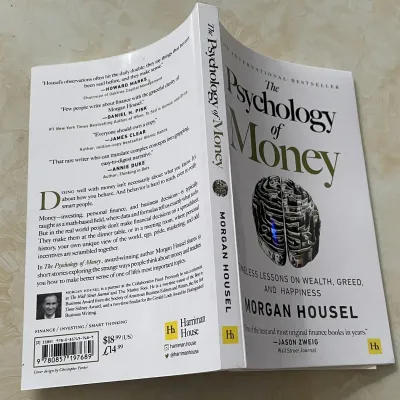
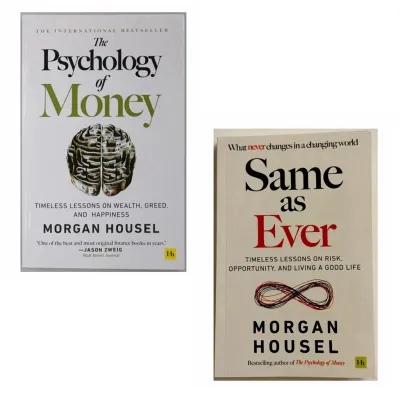
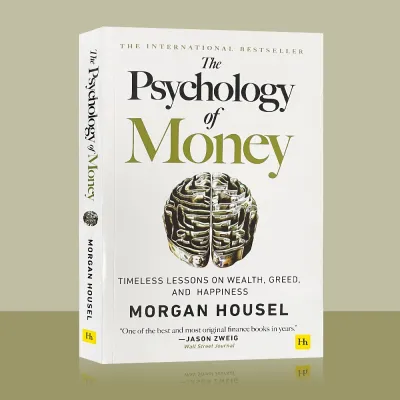
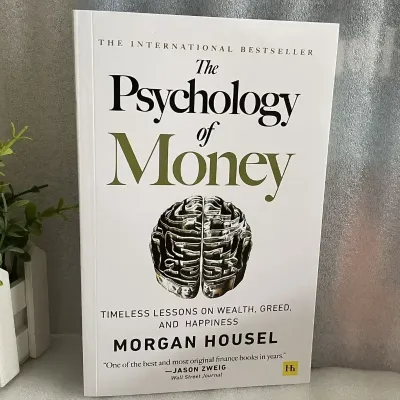
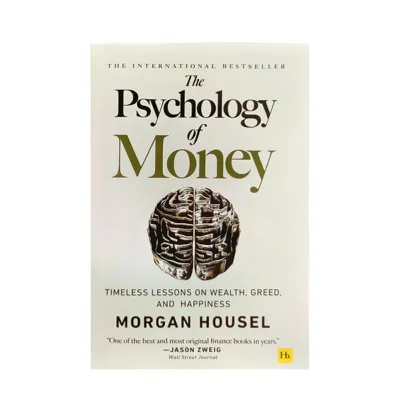

Prices are valid at publication and may change. Please refer to the product page for the latest price.
Personal Habit-Building and Mindset These texts target daily behaviors, focusing on the mechanics of saving, spending, and lifestyle inflation. If your main struggle is emotional spending, difficulty sticking to a budget, or chronic anxiety regarding debt, habit-building literature offers practical frameworks to automate positive behaviors. The goal here is to design an environment that makes financial discipline the path of least resistance.
Advanced Investment Psychology For those who already have a solid grasp of budgeting but struggle with market volatility, investment psychology books analyze cognitive biases like loss aversion, herd behavior, and overconfidence. These books are highly relevant if you tend to panic-sell during market downturns or overextend your portfolio during bull runs. They teach you how to remain objective when the market is driven by fear or greed.
Key Criteria for Evaluating Behavioral Finance Books
The popularity of personal finance has led to an influx of titles on the market, making it essential to evaluate the credibility of a book before investing your time and money. Not all financial advice is grounded in sound research, and relying on flawed premises can lead to poor decision-making.

Verify the Author’s Background and Credentials Start by examining the author’s professional history. Academic researchers in behavioral economics or psychology bring rigorous, peer-reviewed data to the table. Certified financial planners and wealth managers offer practical, client-tested insights derived from real-world financial planning. Financial journalists often excel at translating complex academic papers into engaging, highly readable narratives. Be cautious of authors whose primary qualification is self-proclaimed financial expertise without verifiable professional or academic backing.
Look for Evidence-Based Claims and Citations A reliable book on money psychology should back up its assertions with empirical evidence. Check the bibliography, endnotes, or references section. Authors who cite established psychological experiments, longitudinal financial studies, and historical market data provide a much safer foundation than those who rely solely on personal anecdotes or motivational platitudes. If a book promises a complete mindset transformation based purely on positive thinking, it lacks the scientific backing necessary for structured financial improvement.
Assess the Publication Context and Modern Relevance Economic landscapes change, and while core human psychology remains relatively stable, the tools and environments we use to manage money evolve rapidly. Check the publication date and any subsequent revised editions. A book written before the rise of digital banking, micro-investing apps, or high-frequency trading might still offer valuable psychological truths, but its practical examples may feel outdated. Ensure that the behavioral principles discussed can be directly applied to today’s cashless, highly accessible financial ecosystem.
How to Select the Right Format and Edition
The format in which you consume a book can significantly impact how well you retain and apply its concepts. Because behavioral finance often requires self-reflection and structural changes to your habits, choosing the right medium is a practical decision that deserves careful consideration.
Physical Books for Deep Study and Active Learning Physical copies remain highly effective for books that function as guides or workbooks. If a text contains diagnostic quizzes, behavioral worksheets, or complex charts illustrating market cycles, a physical book allows you to write notes in the margins, highlight key passages, and easily flip back and forth between chapters. This active engagement is crucial when you are trying to map out your personal spending triggers or calculate your risk tolerance.
Digital and Audio Formats for Conceptual Absorption E-books offer convenience and portability, allowing you to carry an entire library on a single device. They are excellent for narrative-driven books that focus on historical anecdotes and broad psychological concepts. Audiobooks are highly suitable for conceptual absorption during daily commutes or workouts. However, if a book relies heavily on visual data, tables, or step-by-step exercises, an audio format can make it difficult to follow along and apply the advice practically.
Verify Edition Details and Regional Adaptations Before purchasing, check the specific edition details. Some publishers release updated editions that include new forewords, post-crisis analyses, or revised chapters that address recent economic shifts. Additionally, pay attention to translation quality if you are buying a translated work. Be aware that many personal finance books are written from a Western perspective; check if the edition you are buying has been adapted with international contexts or if you will need to translate concepts like specific tax-advantaged accounts into local equivalents, such as the Central Provident Fund (CPF) or Supplementary Retirement Scheme (SRS) in Singapore.
Check Device Compatibility and Digital Rights Management If you opt for digital versions, verify the file formats and DRM restrictions. Ensure the e-book is compatible with your specific e-reader or reading application. For audiobooks, confirm that the file is hosted on a platform you regularly use and that the narrator’s pacing and tone are conducive to your learning style.
Building Your Condition-Based Reading Shortlist
Rather than following generic bestseller lists that may not match your current level of financial literacy, you can build a personalized reading plan based on your specific experience and goals. This structured approach ensures you do not end up with a book that is either too simplistic or overwhelmingly technical.
Beginner Level: Emotional Relationships and Habit Formation If you are new to managing your own finances, your primary goal should be understanding your emotional triggers around money. Look for books that explore why we spend when stressed, how childhood experiences shape our financial habits, and how to build basic budgeting routines. The focus at this stage is not on complex investment strategies, but on establishing a stable, low-anxiety relationship with your cash flow.
- What to look for: Simple language, relatable case studies, and actionable daily habits.
- Verification check: Confirm the book does not assume prior knowledge of stock markets or economic theory.
Intermediate Level: Cognitive Biases and Portfolio Psychology For readers who already have a stable budget and are beginning to invest, the focus shifts to managing market-related emotions. At this level, you need to understand cognitive biases such as loss aversion (the pain of losing money being stronger than the joy of making it) and herd mentality (the urge to buy what everyone else is buying).
- What to look for: Explanations of behavioral finance concepts, historical market case studies, and risk management frameworks.
- Verification check: Ensure the text offers practical strategies for maintaining a long-term investment perspective during market fluctuations.
Advanced Level: Behavioral Economics and Market Anomalies If you are an experienced investor or have an academic interest in finance, you can target advanced texts that explore the mathematical and psychological models of decision-making. These books examine how collective human behavior creates market anomalies, pricing inefficiencies, and economic bubbles.
- What to look for: Quantitative data, academic research papers, and detailed analyses of behavioral economics theories.
- Verification check: Verify if the book requires a basic understanding of statistics, microeconomics, or portfolio theory to be fully understood.
Cross-Referencing and Verifying Your Choices Before finalizing your purchase, cross-reference the official publisher summaries with verified reader reviews on independent platforms. Look specifically for reviews written by individuals who share your financial goals. Pay attention to feedback regarding the book’s readability, practical utility, and whether the author’s tone is constructive or overly repetitive.
Where to Buy and Verify Authentic Copies in Singapore
When purchasing physical books in Singapore, ensuring you receive an authentic, high-quality print is essential for a good reading experience. The local market offers several reliable avenues, but readers must remain vigilant against counterfeit copies sold online.
Authorized Local Bookstores and Established Retailers For physical copies, visiting established brick-and-mortar bookstores in Singapore is the most reliable way to guarantee authenticity. Major local chains and independent bookshops carry curated selections of non-fiction and business titles. Purchasing directly from these physical stores or their official online storefronts ensures you are getting genuine editions with high-quality paper, clear printing, and proper binding.
Direct Publisher Channels and Verified Online Sellers If you prefer shopping on online marketplaces or ecommerce platforms, always check the seller’s profile. Look for official brand stores or preferred local distributors. Many major publishers maintain official storefronts on these platforms, offering a secure way to buy directly. Avoid third-party sellers with no established history, extremely low ratings, or those shipping from unverified overseas locations.
How to Spot Counterfeit Books Counterfeit books are a growing issue on digital marketplaces. These unauthorized prints are often produced cheaply, resulting in a poor reading experience. When evaluating a physical book, look out for the following warning signs:
- Print Quality: Blurry text, uneven margins, or ink that smudges easily.
- Paper and Binding: Unusually thin, greyish paper, or a spine that cracks easily upon opening.
- Cover Details: Low-resolution cover art, pixelated logos, or spelling errors in the blurb.
- Price: A price tag that is significantly lower than the standard retail price in Singapore (e.g., a book typically retailing for S$25 to S$35 being offered for S$5).
Verify Stock, Shipping, and Return Policies Before completing your purchase online, confirm the book’s current stock status. Some listings may be pre-orders or ship from international warehouses, leading to long delivery times. Always review the store’s return policy to ensure you can easily exchange the book if it arrives damaged, misprinted, or if you accidentally receive an incorrect edition.
Frequently Asked Questions (FAQ)
Do I need a finance background to understand these books?
No, you do not need a formal background in finance or economics to benefit from most books on the psychology of money. Foundational and intermediate titles are specifically written for general audiences, focusing on human behavior, emotional triggers, and everyday decision-making rather than complex mathematical formulas. They use relatable analogies and real-life stories to explain how our minds interact with wealth. However, if you decide to progress to advanced behavioral economics or quantitative finance texts, having a basic understanding of statistics and market terminology will help you grasp the academic concepts more easily.
Are audiobooks as effective as physical copies for behavioral finance?
The effectiveness of an audiobook depends largely on the book’s structure and your personal learning style. Audiobooks are highly effective for narrative-driven books, memoirs, and broad conceptual overviews where the author uses storytelling to illustrate financial behaviors. They allow you to absorb key ideas during passive times like commuting. However, for books that contain detailed frameworks, step-by-step exercises, budgeting worksheets, or complex charts, a physical book or e-book is generally more practical. These formats allow you to pause, take notes, highlight critical passages, and easily refer back to specific sections as you implement the strategies in your own life.
Community discussion
Share your experience or ask a question. Comments are reviewed before publication.