
Learning to play the guitar has traditionally required hours of repetitive finger drills, deciphering static chord charts, and managing the frustration of slow progress. Smart guitars have transformed this journey by integrating modern technology directly into the instrument. For beginners in Singapore, where busy schedules and compact living spaces are the norm, these instruments offer an engaging, highly interactive path to musical proficiency. By combining physical strings with digital learning ecosystems, smart guitars provide real-time feedback, gamified lessons, and versatile audio options that keep new players motivated. This guide explores the essential features, types, and practical purchasing considerations to help you build a reliable shortlist tailored to your learning goals and living environment.
What Defines a "Smart" Guitar for Beginners?
To choose the right instrument, it is essential to distinguish between a genuine smart guitar and a standard guitar paired with a basic electronic add-on. A standard acoustic or electric guitar relies entirely on external tools for tuning, metronome tracking, and learning. Even when paired with third-party mobile applications, a traditional guitar remains a passive instrument; the app must rely on your mobile device’s built-in microphone to detect pitch, which often leads to lag, missed notes, and frustration in noisy environments.
In contrast, a true smart guitar features integrated hardware and software designed to communicate bidirectionally. These instruments contain onboard sensors, microprocessors, and wireless connectivity modules that transmit your exact physical inputs to a companion application with near-zero latency. Core smart features typically include interactive LED fretboard guidance that lights up to show finger placement, built-in digital tuners and metronomes displayed directly on the instrument, and gamified learning modules that score your accuracy and timing in real time. By linking physical play directly to digital feedback, a smart guitar acts as an active learning partner rather than a passive tool.
Products mentioned in this guide


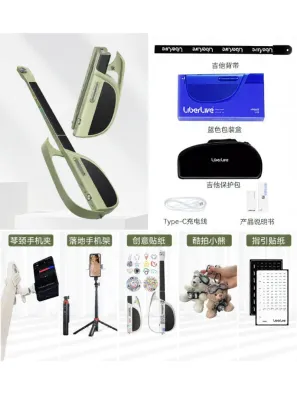
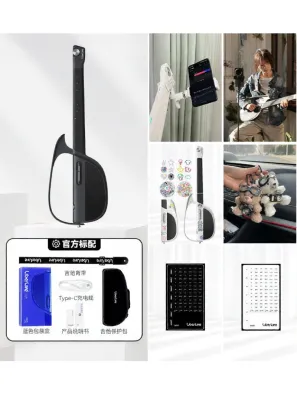


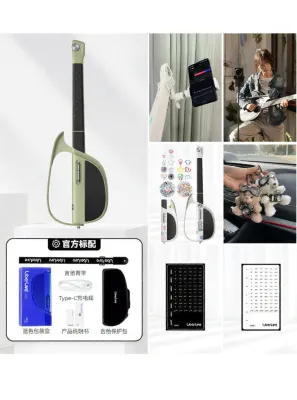
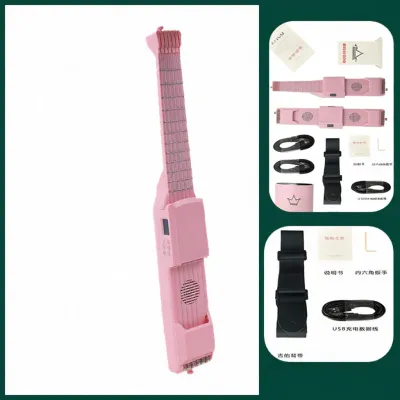
Prices are valid at publication and may change. Please refer to the product page for the latest price.
Essential Features to Evaluate for Beginner Success
When evaluating smart guitars, hardware ergonomics should be your first consideration. Beginners often face physical hurdles like finger soreness and wrist fatigue. To minimize these challenges, look for a guitar with a comfortable neck profile—such as a thin C-shape—and low string action, which refers to a minimal distance between the strings and the fretboard. Low action requires less pressing force, making it easier to press down chords cleanly. Additionally, consider the overall weight and balance of the instrument; lightweight composite or carbon fiber bodies can make extended practice sessions much more comfortable than heavy, traditional solid-wood designs.

The software ecosystem accompanying the guitar is just as critical as the physical hardware. Because the learning experience is driven by a companion app, you must evaluate the subscription model before purchasing. Some manufacturers offer a free basic tier with essential tools, while others require a recurring monthly or annual subscription to access structured lessons, interactive games, and licensed song libraries. Verify whether the app supports offline capabilities so you can still access basic tuning, metronome functions, and pre-loaded exercises when you do not have an active internet connection. A high-quality, regularly updated song library that aligns with your musical preferences will keep you engaged over the long term.
Finally, pay close attention to audio output options. For beginners, the ability to practice silently is invaluable. Ensure the smart guitar features a dedicated headphone jack (either 3.5mm or 6.35mm) so you can practice at any hour without disturbing others. Bluetooth and USB connectivity are also highly beneficial. Bluetooth audio input allows you to stream backing tracks or lesson audio from your phone directly through the guitar’s built-in speaker or headphones. Meanwhile, a USB-C or MIDI output enables you to connect the instrument directly to a computer or tablet, allowing you to record your progress in digital audio workstations without needing an external audio interface.
Types of Smart Guitars to Consider
There are several distinct types of smart guitars available, each catering to different learning styles, living situations, and musical goals. LED-guided smart guitars are highly effective for visual learners. These instruments feature physical LEDs embedded along the fretboard that illuminate in real time to show you exactly where to place your fingers for chords, scales, and melodies. This visual feedback loop eliminates the need to constantly look back and forth between a screen and your hands, helping you build muscle memory and finger dexterity much faster than traditional methods.
For those who prefer a classic aesthetic and organic sound, app-connected acoustic-electric hybrids are an excellent choice. These guitars retain the traditional look, feel, and natural acoustic resonance of a standard guitar but incorporate smart preamps, built-in effects (such as reverb, delay, and chorus that project directly from the soundhole without an external amplifier), and Bluetooth connectivity. They allow you to enjoy the traditional playing experience while still benefiting from digital learning overlays, backing tracks, and interactive app integration when you want them.
If noise control is your primary concern, silent or MIDI-enabled smart guitars are the ideal solution. These instruments often feature futuristic, modular designs with detachable frames or solid bodies that produce almost no acoustic sound when unplugged. They rely entirely on internal sensors to capture your playing and transmit it to headphones or digital devices. In Singapore’s high-density housing environments, such as HDB flats or condominiums, a silent smart guitar allows you to practice late into the night with complete peace of mind, while also offering excellent portability and resistance to environmental changes.
Building Your Shortlist and Verifying Local Availability
To build a reliable shortlist, you must navigate the practicalities of purchasing a smart guitar in Singapore. Whenever possible, prioritize buying from authorized local music retailers. Because smart guitars contain complex electronic components—such as lithium-ion batteries, Bluetooth transmitters, and LED arrays—they are more susceptible to technical issues than purely mechanical instruments. Purchasing through an authorized local distributor ensures you receive a valid local warranty, giving you access to reliable after-sales support, battery replacements, and convenient repair services without the hassle of shipping the instrument overseas.
If you choose to explore cross-border purchases on major e-commerce platforms, perform diligent checks before finalizing your order. Verify the voltage compatibility and plug types of any included charging adapters, ensuring they match Singapore’s Type G plugs and 230V/50Hz electrical standards. Additionally, factor in the prevailing Goods and Services Tax (GST) and potential customs clearance fees for imported items, as these extra costs can significantly impact the overall value. Ensure the international seller has a clear, reliable return policy in case the instrument arrives damaged or defective.
Lastly, verify app region locks and server accessibility. Some smart instruments designed for specific overseas markets may rely on companion apps that are region-locked, meaning they cannot be downloaded from the Singapore iOS App Store or Google Play Store. Before buying, search for the companion app on your mobile device to confirm its local availability. You should also check online user forums to ensure the app’s servers are fully accessible from Singapore without requiring a VPN, as high latency or connection blocks can render the smart learning features of the guitar completely unusable.
Setup, Maintenance, and Connectivity Troubleshooting
Once your smart guitar arrives, proper initial setup is key to a smooth experience. Begin by charging the internal battery fully using the manufacturer-provided cable and a compatible power adapter. Avoid using high-wattage fast chargers unless they are explicitly supported, as they can degrade the battery’s long-term health. Once charged, turn on the instrument, open the companion app, and check for any pending firmware updates. Installing the latest firmware is crucial, as manufacturers frequently release updates to resolve connectivity bugs, improve sensor accuracy, and introduce new learning features.
Routine maintenance is essential to protect both the physical and electronic components of your guitar, especially in Singapore’s tropical climate. The high relative humidity, which often exceeds 80%, can cause wooden components to swell, warp, or crack, potentially damaging the delicate internal sensors and wiring. To prevent this, store your guitar in a high-quality gig bag or hard case equipped with silica gel packs or a dedicated instrument dehumidifier. Keep the fretboard clean by wiping it down with a dry microfiber cloth after every practice session to prevent sweat, oils, and dust from corroding the frets or interfering with the LED contacts.
If you encounter technical issues, basic troubleshooting can often resolve them quickly. If you experience Bluetooth latency—where there is a noticeable delay between plucking a string and hearing the audio or seeing the app respond—ensure your mobile device is not connected to secondary Bluetooth accessories like wireless headphones, which can compound audio lag. For the lowest latency, always use wired headphones connected directly to the guitar’s audio jack. If the companion app fails to pair with the guitar, try restarting both the instrument and your mobile device, clearing the app’s cache, and ensuring that location services are enabled, as many Bluetooth Low Energy protocols require location permissions to establish a stable connection.
Frequently Asked Questions (FAQ)
Can a smart guitar completely replace a traditional guitar teacher?
Smart guitars are exceptional tools for self-paced, gamified learning, helping beginners master basic chords, finger placement, and simple song structures independently. However, they cannot fully replace a professional human instructor. An app cannot observe your physical posture, detect unnecessary muscle tension in your wrist, or provide personalized corrections to prevent repetitive strain injuries. For the best results, use a smart guitar as a supplementary practice tool alongside periodic lessons with a qualified teacher who can refine your technique.
Do I need to pay a monthly subscription to use the smart features?
This depends entirely on the manufacturer’s software ecosystem. Many smart guitars offer a free basic tier that includes essential tools like the tuner, metronome, basic chord libraries, and a handful of introductory lessons. However, advanced features—such as comprehensive step-by-step courses, interactive games, and a wide selection of licensed popular songs—often require a recurring monthly or annual premium subscription. Always review the app store listings and the manufacturer’s official terms before purchasing to understand the ongoing costs of ownership.
Will the smart features become obsolete if the company stops updating the app?
App abandonment is a valid concern for any smart device. If a manufacturer stops updating their companion app or shuts down their servers, some interactive features, cloud-based lessons, and LED synchronization may cease to function. To mitigate this risk, choose a smart guitar that can still function as a high-quality, playable standard instrument even without its digital components. Ensure the guitar has standard acoustic resonance or a traditional 1/4-inch audio output, allowing you to plug it into a standard amplifier and play it traditionally regardless of the software’s status.
Community discussion
Share your experience or ask a question. Comments are reviewed before publication.