
Finding the perfect Sudoku book is more than just grabbing the first volume you see on a bookstore shelf. To avoid the twin traps of immediate frustration and mind-numbing boredom, you must align a book’s design and difficulty with your actual solving habits. The ideal book matches your current logical toolkit, offers high-quality paper that survives repeated erasing, and provides a clear path for skill progression. By evaluating your current techniques and understanding the physical layout options available, you can select a volume that keeps your mind engaged and your daily routine sustainable.
Assess Your Current Sudoku Skill Level Accurately
To choose the right book, you must first diagnose your current solving level. Many puzzle publishers use arbitrary labels like “Hard” or “Challenging” that vary wildly between brands. A “Hard” puzzle in one newspaper compilation might be considered an “Easy” puzzle in a dedicated logic publication. Instead of relying on these subjective covers, evaluate the specific logical techniques you use to solve a grid.
Beginner solvers typically rely on basic visual scanning and cross-hatching. If your primary strategy is looking at rows, columns, and 3×3 boxes to spot obvious placements, or if you struggle to find “hidden singles” (numbers that can only go in one spot within a region but are obscured by other empty cells), you belong in the beginner category. At this stage, a book with clear, step-by-step tutorials is essential. You need puzzles that can be solved using simple elimination without requiring complex candidate tracking.
Products mentioned in this guide
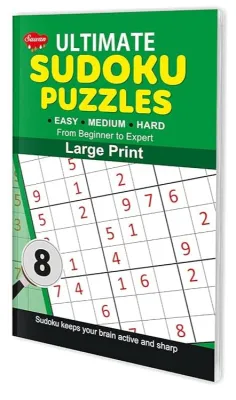
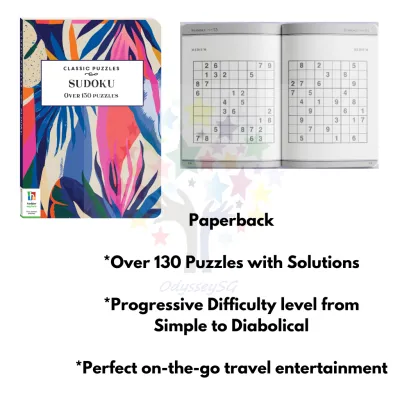
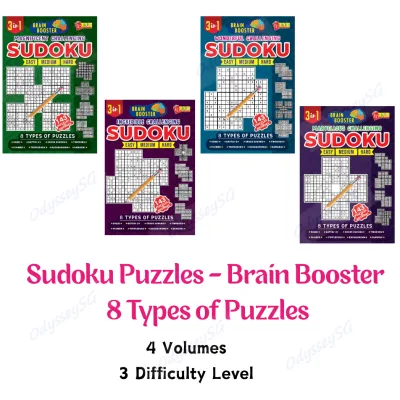
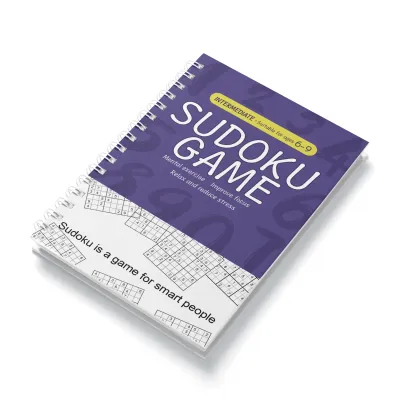
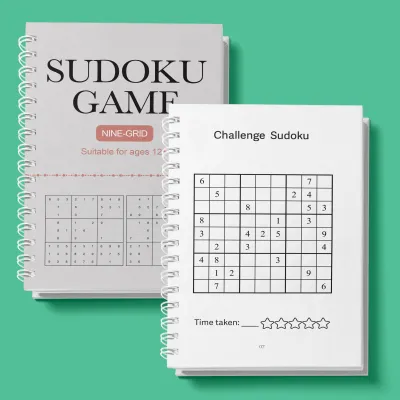
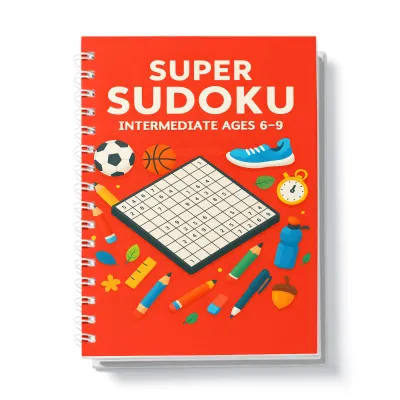
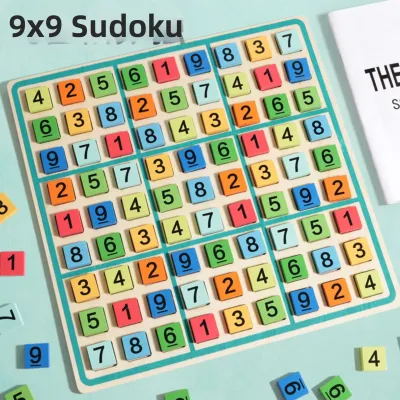
Prices are valid at publication and may change. Please refer to the product page for the latest price.
Intermediate solvers have moved past simple scanning. You are likely comfortable identifying “naked pairs” (two cells in a unit that can only contain the same two candidate numbers) and “pointing pairs” (where candidates in a box point to their placement in a row or column). However, you might stall when a puzzle requires more advanced strategies, such as “triples” or basic chain logic. If you find yourself filling in candidates but getting stuck halfway through a “medium” puzzle, look for books that bridge this gap by introducing intermediate deduction techniques.
Expert solvers routinely apply advanced logical patterns without hesitation. You can spot complex structures like X-Wings, Swordfish, XY-Wings, and simple coloring techniques. You do not need to fill the entire grid with chaotic pencil marks to see the path forward; instead, you systematically eliminate candidates using advanced chain logic. If standard puzzles feel like a mechanical chore rather than a mental workout, you require books designed specifically for expert-level deduction, where every single placement requires a deep understanding of grid geometry.
Identify the Physical and Structural Features You Need
While the logical difficulty of the puzzles is paramount, the physical construction of a Sudoku book directly dictates how much you will enjoy the experience. A poorly designed book can turn a relaxing mental exercise into an irritating chore, especially if you plan to solve puzzles during your daily commute or while relaxing in air-conditioned comfort at home.

First, consider the paper quality and grid size. Because solving Sudoku is an active process of trial, error, and deduction, you will inevitably need to erase. Cheap, thin newsprint easily tears under the friction of an eraser and allows ink or dark pencil marks to bleed through to the next page, ruining the puzzles underneath. Look for books printed on high-quality, thick, wood-free paper that can withstand multiple rounds of erasing. If you prefer solving in low-light environments or want to reduce eye strain, prioritize large-print editions with generous grid sizes that make the numbers easy to read.
Next, evaluate the layout and spacing. A dense layout with four to six puzzles crammed onto a single page leaves almost no room for writing candidate numbers in the margins or inside the cells. For intermediate and advanced players, blank space within each cell is non-negotiable. Opt for books that feature only one or two puzzles per page, leaving ample clearance space around the borders for notes, scratchpad calculations, and strategy tracking. This extra space is crucial when you need to write down multiple small candidates in a single cell.
The structure of the answer key is another critical detail. Some books only provide a list of final numbers or a tiny, illegible grid at the back. A superior puzzle book features clear, full-sized grid solutions. This allows you to compare your progress step-by-step and identify exactly where a logical misstep occurred, rather than simply realizing your final answer is incorrect.
Finally, check for instructional content. The best books do not just dump puzzles on you; they include a dedicated section explaining the rules, notation systems, and specific solving techniques used in that volume. This is especially valuable if you are trying to transition to a higher difficulty level, as it provides a handy reference guide when you get stuck.
Match Book Categories to Your Progression Stage
Once you understand your skill level and physical preferences, you can match them to specific book categories. This ensures your purchase aligns with your learning goals, whether you want to unwind after a long day or push your cognitive limits.
Beginner books are designed to build confidence and establish core habits. These volumes typically feature a gentle difficulty curve, starting with highly populated grids (often 40 or more given numbers) and gradually reducing the clues. They should include comprehensive tutorial sections that teach you how to scan systematically and write clean pencil marks. If you are introducing a child or a senior family member to the hobby, look for books with large grids and clear, step-by-step examples. These books are widely available at local bookstores and online marketplaces, usually priced between S$10 and S$15.
Intermediate books focus on transition and endurance. These collections offer a mix of easy, medium, and slightly challenging puzzles. They are excellent for players who want to practice transitioning from visual scanning to candidate-based solving. A good intermediate book will introduce you to concepts like “locked candidates” and “naked subsets” without overwhelming you with extreme logic. This variety keeps your practice engaging and prevents the fatigue that comes from solving identical difficulties repeatedly.
Expert books are built for rigorous logical deduction. These puzzles feature minimal starting clues—often close to the mathematical minimum of 17 clues—and are designed so that basic scanning will not yield a single digit. To solve these, you must use advanced strategies like XY-Wings, remote pairs, and forcing chains. When shopping for expert books, verify that the puzzles are hand-crafted or generated by high-quality algorithms that guarantee a unique solution solvable purely through logic, without any guessing.
Variety books are an excellent alternative for casual play, travel, or general cognitive maintenance. These books combine standard Sudoku with other logic puzzles like Kakuro, Futoshiki, or Hanji. They are perfect for keeping in your bag during a daily commute on the MRT or taking on a weekend getaway, offering a refreshing break when standard 9×9 grids begin to feel repetitive. They allow you to exercise different parts of your brain while maintaining your overall logical deduction skills.
Decide Between Classic Grids and Sudoku Variants
As you progress, you will face a choice between mastering the classic 9×9 grid or branching out into the diverse world of Sudoku variants. Both paths offer unique cognitive benefits, and your choice depends on what kind of mental challenge you enjoy.
Classic grids remain the gold standard for pure logical deduction. If you want to scale the difficulty within the classic format, you can look for larger grid sizes, such as 12×12 or 16×16. These larger formats do not necessarily require more complex logic, but they demand a much higher level of concentration, systematic scanning, and organizational skill to track candidates across a massive play area.
Alternatively, variant Sudoku books introduce entirely new rulesets that test different aspects of your brain. For example, Killer Sudoku combines traditional placement rules with arithmetic, requiring you to calculate sums within dashed “cages.” Diagonal Sudoku (or Sudoku X) adds the constraint that the two main diagonals must also contain the numbers 1 through 9. Irregular or Jigsaw Sudoku replaces the standard 3×3 boxes with irregular, non-square shapes, completely disrupting your normal scanning patterns. These variants are highly recommended if you feel stuck in a rut with classic puzzles.
You should also weigh the experience of physical books against digital apps. While apps offer convenience, automatic error-checking, and infinite puzzles, they lack the tactile satisfaction of a physical book. Writing with a pencil, physically erasing a mistake, and flipping through pages provides a screen-free, mindful experience that digital platforms cannot replicate. For many, the physical book is a deliberate choice to disconnect from digital notifications and enjoy a quiet, focused hobby.
Build a Sustainable Puzzle-Solving Routine
Selecting the right book is only the first step; integrating it into your daily life is what leads to genuine skill improvement and cognitive benefits. To build a sustainable routine, start by setting realistic goals that match your daily schedule.
Avoid the temptation to rush through dozens of puzzles in one sitting, which can lead to mental fatigue and frustration. Instead, aim for a consistent habit, such as solving one medium puzzle during your morning commute or winding down with a gentle grid before bed. If you are tackling expert-level books, limit yourself to one highly challenging puzzle per day to keep your mind sharp without causing burnout.
When you inevitably get stuck on a difficult puzzle, resist the urge to immediately look at the answer key. Instead, put the book down and take a break. Often, returning to a grid with fresh eyes after a few hours—or even the next day—allows you to spot a pattern or candidate elimination that you completely missed before. If you must use a hint, use the answer key responsibly: cover the rest of the grid and reveal only a single cell to get your momentum back.
Finally, track your progress over time. Note how long it takes you to complete puzzles of a certain difficulty, or how easily you spot advanced patterns. When you find yourself breezing through “hard” puzzles in under ten minutes without needing to write down extensive candidates, it is a clear sign that you have outgrown your current book and are ready to upgrade to the next difficulty tier.
Frequently Asked Questions (FAQ)
How many puzzles should a good Sudoku book contain?
A high-quality Sudoku book typically contains between 150 and 300 puzzles. While some budget books offer 500 to 1,000 puzzles, they often compromise on paper quality, print size, and layout, cramming multiple grids onto a single page. For a comfortable solving experience with thick paper and adequate margin space, a count of 200 puzzles is generally the sweet spot, balancing value with physical usability.
Is it better to buy a single-difficulty book or a mixed-difficulty book?
Your choice depends on your primary goal. If you are actively trying to master a specific set of skills—such as transitioning from beginner to intermediate—a single-difficulty book provides the focused, repetitive practice needed to build muscle memory. However, if you want a casual book for travel or daily relaxation, a mixed-difficulty book is superior, allowing you to choose an easy grid when you are tired or a challenging one when you feel mentally sharp.
What should I do if a Sudoku book feels too hard or too easy?
If a book is too easy, do not let it go to waste; use the puzzles as rapid-fire warm-ups to practice speed-solving or to try solving entirely without writing down any pencil marks. If a book is too hard, do not force your way through it and risk frustration. Set it aside, purchase a gentler transitional book to build up your technical skills, and return to the challenging volume once you have mastered the necessary advanced strategies.
Community discussion
Share your experience or ask a question. Comments are reviewed before publication.