
To choose the right Tamil dictionary, you must match the book’s structure and features to your current language proficiency. Beginners require English-to-Tamil bilingual dictionaries featuring clear Romanized transliteration and basic script guides. Intermediate learners need comprehensive bilingual editions that include contextual example sentences, verb conjugations, and distinctions between formal and colloquial registers. Advanced students, literary readers, and professionals should opt for monolingual Tamil-to-Tamil dictionaries that offer deep etymological roots, classical vocabulary, and nuanced definitions.
Quick Guide: Matching Dictionary Types to Your Tamil Level
Choosing a dictionary without assessing your current proficiency often leads to frustration. A dictionary that is too advanced will overwhelm you with complex script and academic definitions, while a basic pocket dictionary will quickly fail to support your growing vocabulary needs.
To streamline your selection, consider this general alignment of learner levels, dictionary formats, and core features:
Products mentioned in this guide
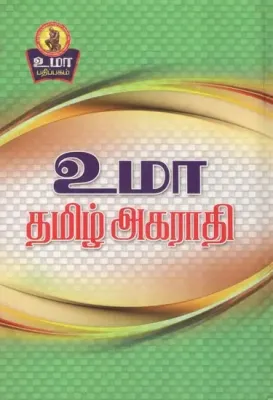
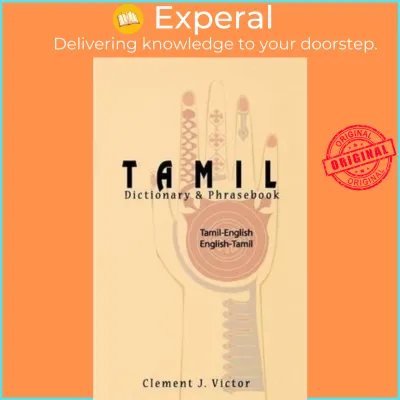
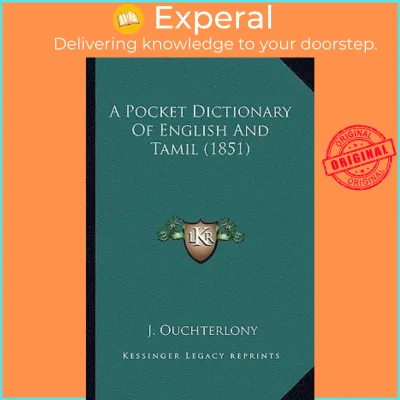
Prices are valid at publication and may change. Please refer to the product page for the latest price.
- Beginner Level: Focuses on English-to-Tamil direction, Romanized transliteration (phonetic guides), and basic thematic vocabulary. Pocket or compact print dictionaries and simple digital search apps are ideal.
- Intermediate Level: Focuses on bidirectional (English-to-Tamil and Tamil-to-English) formats, contextual example sentences, and grammatical notes. Medium-sized print volumes or comprehensive digital databases work best.
- Advanced Level: Focuses on monolingual (Tamil-to-Tamil) definitions, classical or literary vocabulary, etymology, and regional variations. Large, multi-volume print references or professional-grade digital lexicons are necessary.
By identifying your primary study goals—whether you are learning to converse with family, preparing for school examinations, or translating classical literature—you can select a format that provides the exact level of support required.
Beginner Dictionaries: Building Core Vocabulary and Script Recognition
For those starting their Tamil language journey, the primary hurdle is navigating a new script while simultaneously memorizing basic words. A beginner-friendly dictionary must act as a bridge, offering clear entry points that do not require immediate, fluent reading of the Tamil abugida script.

The most critical feature for any beginner is the inclusion of systematic transliteration, often referred to as Romanization. Transliteration represents Tamil words using the Latin alphabet, allowing you to pronounce words correctly before you have fully mastered the script. Without these phonetic guides, a beginner cannot confidently use the dictionary for spoken communication.
Bilingual formats that prioritize the English-to-Tamil direction are highly recommended at this stage. When you want to express a thought, you will naturally search for the English word first. The dictionary should provide the Tamil equivalent, its transliteration, and a clear guide on how the word is used in a simple sentence.
Visual aids and thematic groupings also add immense value for early learners. Some beginner dictionaries group words by everyday topics, such as family members, food items, colors, and numbers. This layout helps you build a functional vocabulary far more quickly than searching through an alphabetical list of unrelated words.
Beginners should actively avoid highly academic, monolingual, or older historical dictionaries. These reference works often omit transliteration entirely and use complex, archaic Tamil definitions to explain simple terms. This can lead to confusion and slow down your learning momentum.
When evaluating a potential purchase, open the book to a random page and check if the Tamil script is accompanied by a pronunciation key. Ensure the font size of the Tamil script is large and clear enough to distinguish individual characters, as some compact prints can make complex letters difficult to read for untrained eyes.
Intermediate Dictionaries: Expanding Context and Conversational Fluency
As you transition from memorizing isolated words to constructing complete sentences, your dictionary needs will change significantly. Intermediate learners require tools that explain how words function in relation to one another, helping to build natural conversational flow and accurate grammar.
At this stage, you should transition to a bidirectional dictionary that offers both English-to-Tamil and Tamil-to-English sections. This dual structure allows you to look up unfamiliar words you encounter while reading or listening, as well as find the correct Tamil terms for your own writing and speech.
A key feature to look for in an intermediate dictionary is the abundance of contextual example sentences. Tamil is a highly contextual language where a single word can have multiple meanings depending on the sentence structure. Seeing a word used in a complete sentence helps you understand its proper placement, particle attachments, and overall tone.
Another critical consideration is the distinction between formal Tamil (Senthamil) and colloquial spoken Tamil (Koduntamil). Many standard dictionaries focus exclusively on the formal, written register. While this is essential for academic writing and formal reading, using these exact words in daily conversation can sound overly stiff or unnatural. An intermediate dictionary that notes colloquial variations or common spoken alternatives is highly beneficial for practical communication.
Grammatical support is another hallmark of a quality intermediate reference. Look for editions that include verb conjugation tables, noun declensions, and explanations of tense markers. Tamil verbs can undergo complex transformations, and having a reliable reference guide within your dictionary saves significant study time.
Idioms and common phrases should also be represented. Tamil is rich with idiomatic expressions that cannot be understood through literal word-for-word translation. A dictionary that compiles these phrases helps you grasp the natural rhythm of the language and avoid awkward, literal translations.
Advanced Dictionaries: Mastering Literary, Formal, and Nuanced Tamil
Advanced students, translators, and those pursuing academic research require a level of detail that bilingual dictionaries simply cannot provide. To achieve true fluency and appreciate the depth of the language, you must transition to monolingual Tamil-to-Tamil dictionaries.
Monolingual dictionaries force you to think entirely in Tamil, eliminating the cognitive step of translating back to English. The definitions themselves are written in Tamil, which exposes you to synonyms, antonyms, and alternative sentence structures, rapidly expanding your passive vocabulary.
For those reading classical literature, historical texts, or modern newspapers, a comprehensive dictionary must cover literary and formal vocabulary. Classical Tamil (Sangam literature) uses vocabulary and grammatical structures that differ vastly from modern spoken or written Tamil. Advanced dictionaries provide the historical context and poetic meanings necessary to decode these texts.
Etymology and dialect variations become highly important at this level. Understanding the root of a word, its historical development, and how its meaning has shifted over centuries provides a deeper appreciation of Tamil culture and literature. Additionally, advanced references often document regional variations, showing how words are used differently across various Tamil-speaking regions.
When assessing an advanced dictionary, examine the depth of its definitions. A high-quality reference will not just provide a simple synonym; it will explain the subtle nuances between closely related words, outline historical usage, and cite classical literary sources where the word appears.
Specialized and technical terminology should also be present. If you are using Tamil in a professional capacity—such as in law, medicine, business, or translation—your dictionary must include modern technical terms that have been integrated into the language. Ensure the edition you choose is comprehensive enough to cover these specialized fields.
Print vs. Digital Formats: Aligning with Your Study Habits
The debate between physical print dictionaries and digital applications is not about which format is universally better, but rather which one aligns with your daily study habits and learning environment. Both formats offer distinct advantages that cater to different styles of learning.
Digital dictionaries and mobile applications excel in speed, portability, and interactive features. With a digital tool, you can search for a word in seconds using keyboard inputs or voice recognition. Many apps also include audio pronunciation guides recorded by native speakers, which is an invaluable resource for mastering the unique sounds of the Tamil language.
However, digital formats come with potential drawbacks. They require compatible devices, regular software updates, and reliable battery life. Some free apps may contain distracting advertisements or lack the rigorous editorial oversight found in established print publications. If you choose a digital format, verify if it offers offline access so you can study without an active internet connection.
Print dictionaries, on the other hand, offer a tactile learning experience that many students find highly effective for memory retention. Flipping through physical pages allows for accidental discovery—you often encounter interesting words adjacent to the one you are looking up. Print books also eliminate screen fatigue and the digital distractions of notifications and social media.
The main trade-offs with print are portability and search speed. A comprehensive, multi-volume Tamil dictionary is heavy and best suited for a dedicated study desk, whereas a compact pocket dictionary is portable but lacks deep definitions. Additionally, physical books do not offer audio pronunciation, requiring you to rely entirely on phonetic transcription guides.
Budget is another factor to consider. Print dictionaries are typically a one-time purchase that can last for decades, making them a durable investment. Digital dictionaries may offer free basic versions but often require ongoing subscriptions or one-time payments to unlock advanced features, ad-free interfaces, or complete offline databases.
Pre-Purchase Checklist: Verifying Editions, Scripts, and Language Direction
Before purchasing a Tamil dictionary, it is essential to verify its specific details to ensure it meets your learning requirements. Because dictionaries are long-term reference tools, buying the wrong edition or format can hinder your progress. Use this checklist to guide your purchase:
- Verify the Language Direction: Double-check whether the dictionary is English-to-Tamil, Tamil-to-English, or bidirectional. If you are a beginner, an English-to-Tamil direction is usually more practical. If you are translating or reading Tamil texts, a Tamil-to-English section is indispensable.
- Check the Publication and Revision Dates: Language evolves, and modern Tamil incorporates many contemporary terms related to technology, media, and daily life. Ensure the dictionary edition is relatively recent or has been updated to include modern vocabulary alongside classical terms.
- Confirm Script Support: Some beginner dictionaries use only Romanized transliteration and omit the actual Tamil script entirely. While this is helpful for quick pronunciation, it will not help you learn to read or write. Ensure the book displays the Tamil script clearly alongside any phonetic guides.
- Assess Regional Relevance: Tamil is spoken widely across different regions, including southern India, Sri Lanka, Singapore, and Malaysia. While the core literary language remains consistent, regional vocabulary, colloquialisms, and administrative terms can vary. Choose a dictionary that aligns with the specific regional context you are studying or working within.
- Examine the Binding and Print Quality: If you are buying a print dictionary for long-term reference, look for durable hardcover bindings and high-quality paper. Thick reference books undergo significant wear and tear, and a sturdy binding ensures the pages remain secure over years of frequent use.
By taking the time to verify these specifications, you can avoid common purchasing mistakes and select a Tamil dictionary that serves as a reliable, long-term companion on your language learning journey.
Frequently Asked Questions (FAQ)
Do I need a dictionary that includes spoken Tamil dialects?
Whether you need spoken dialects depends entirely on your primary learning goals. If your main objective is to converse naturally with family, friends, or colleagues in daily life, a dictionary that notes colloquial spoken Tamil (Koduntamil) is highly beneficial. Spoken Tamil often differs significantly from the formal, written language in pronunciation, verb endings, and vocabulary. However, if you are studying for academic exams, reading formal literature, or working in a professional translation capacity, you should prioritize dictionaries that focus on standard literary Tamil (Senthamil), as formal contexts strictly require the literary register.
Are free online Tamil dictionaries sufficient for serious study?
Free online Tamil dictionaries and translation tools are highly convenient for quick lookups and casual reference, but they often fall short for serious, long-term study. Many free web-based resources rely on crowd-sourced data or basic machine translation, which can lead to inaccurate definitions, lack of grammatical context, and a failure to capture subtle nuances. They also rarely provide detailed etymology, verb conjugation tables, or regional usage notes. For serious learners, investing in a professionally compiled, peer-reviewed print dictionary or a premium, licensed digital reference application ensures accuracy, depth, and reliable grammatical guidance.

Community discussion
Share your experience or ask a question. Comments are reviewed before publication.