
Choosing the right thick acoustic panel for your music room depends on the specific instruments you play and the acoustic challenges of your space. While thin panels can tame high-frequency flutter echoes, they do little to control muddy mid-range frequencies or boisterous bass notes. For most home studios and practice spaces, a combination of 50mm (2-inch) and 100mm (4-inch) panels provides the balanced absorption needed to hear your music accurately.
In high-density urban environments, such as concrete-walled apartments or HDB flats, sound waves bounce aggressively off hard parallel surfaces. This creates a harsh, ringing environment that distorts your perception of pitch and timing. Installing the correct thickness of acoustic treatment ensures you are hearing the true output of your instrument rather than the chaotic reflections of your room.
How Panel Thickness Influences Sound Absorption
To understand why thickness matters, it helps to look at how sound waves behave. Sound travels in waves of varying lengths; lower frequencies have incredibly long wavelengths, while high frequencies have very short ones. A thin panel of 25mm can easily capture short, high-frequency waves, but longer low-frequency waves will pass right through the material, bounce off the hard wall behind it, and return into the room completely unaffected.
Products mentioned in this guide
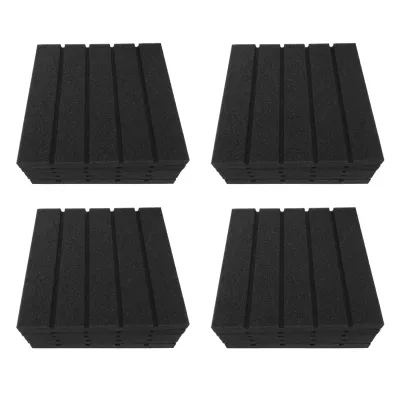
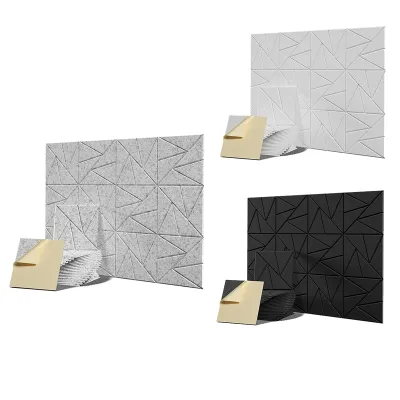
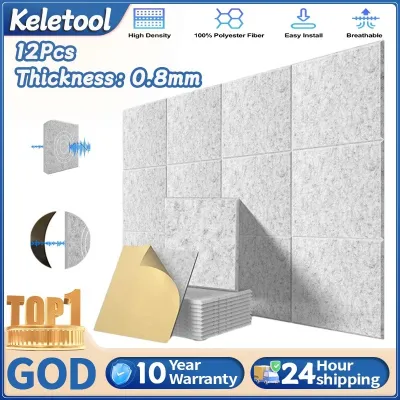

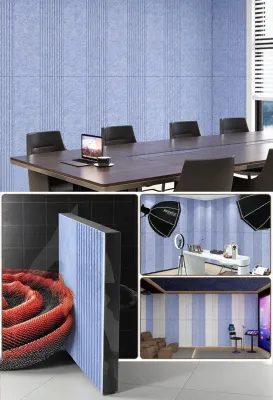
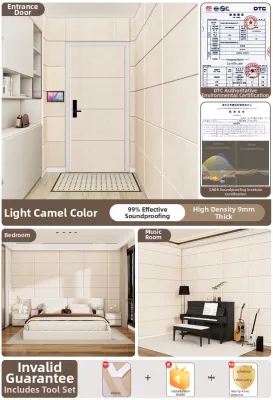
Prices are valid at publication and may change. Please refer to the product page for the latest price.
When shopping for a thick acoustic panel, do not rely solely on physical depth as a guarantee of performance. Instead, request the manufacturer’s technical data sheet to examine the absorption coefficients across different frequency bands. These coefficients, typically measured from 125 Hz to 4000 Hz, indicate exactly how much sound energy the panel absorbs at specific pitches. A high-quality 50mm panel made of dense material will often outperform a poorly constructed 100mm panel made of low-density packaging foam.
The core density and material composition of the panel are just as critical as its thickness. Professional-grade panels typically utilize dense semi-rigid fiberglass, stone wool, or specialized high-density polyester fibers. These materials create a dense labyrinth of microscopic pathways that convert sound energy into trace amounts of heat. When evaluating options, look for density specifications—usually expressed in kilograms per cubic meter (kg/m³)—to ensure the internal structure matches your acoustic goals.
Matching Panel Thickness to Your Instruments and Room
The instruments you practice or record dictate the frequency profile you must manage. If your primary focus is acoustic guitar, violin, flute, or vocals, your sound energy is concentrated in the mid-to-high frequencies. For these applications, 50mm panels are highly effective and can be placed strategically around the room to control primary reflections. However, if you play the bass guitar, a drum kit, or use deep synthesizer patches, you will generate powerful low-frequency energy that requires 100mm panels or dedicated corner bass traps to prevent muddy acoustic buildup.

Your room’s physical dimensions and construction materials also play a massive role in your treatment strategy. Standard residential rooms with solid concrete walls, tiled floors, and minimal soft furnishings are highly reflective. In these spaces, sound bounces repeatedly, creating a long reverberation time that makes critical listening difficult. Smaller rooms are particularly prone to “room modes,” where specific low frequencies pile up in corners and along walls, creating boomy spots and dead zones.
To address these issues systematically, map out your room’s primary reflection points. These are the specific areas on your side walls, ceiling, and back wall where sound waves from your speakers or instruments first strike. Placing 50mm or 75mm panels at these primary reflection points will dramatically improve stereo imaging and clarity. Meanwhile, reserve your thickest panels—ideally 100mm or deeper—for the corners of the room, where low-frequency energy naturally accumulates and intensifies.
Essential Specifications to Check Before Buying
Before finalizing your purchase on any online marketplace or specialty music store, verify the Noise Reduction Coefficient (NRC) rating. The NRC is an average rating representing how much sound a material absorbs, scaled from 0.0 (perfect reflection) to 1.0 (perfect absorption). While a general NRC rating is helpful, always look for the specific absorption values at 125 Hz and 250 Hz if you are trying to tame low-end boominess, as many panels with a high overall NRC still fail to absorb low frequencies.
Safety must be a primary consideration when installing large amounts of synthetic material in an enclosed music room. Always check the product’s fire safety rating, looking for certifications such as Class A or Class 1 flame spread ratings under recognized testing standards. Additionally, ensure the materials are certified for low chemical emissions, especially if you spend long hours practicing in a room with limited ventilation.
Finally, do not overlook the practicalities of mounting and structural support. A thick acoustic panel constructed from mineral wool or dense fiberglass is significantly heavier than a cheap polyurethane foam sheet. While lightweight foam panels can be hung with simple adhesive strips, investing S$20 to S$50 in proper mounting brackets and wall anchors for heavy, thick panels is essential to prevent damage to your walls. If you are renting your space and cannot drill into the walls, you may need to consider building or purchasing floor stands to support these heavier, thicker panels safely.
Frequently Asked Questions (FAQ)
Can I Stack Thinner Panels Instead of Using One Thick Acoustic Panel?
Stacking thinner panels can sometimes increase overall absorption, but it rarely matches the performance of a single, solid thick acoustic panel of the same depth. If you stack panels directly against one another, any internal air gaps, backing materials, or protective membranes can reflect mid-range frequencies rather than letting them pass through to the second layer. If you must combine panels, consult the manufacturer’s guidelines to understand the acoustic impact, or consider leaving a deliberate air gap between the panel and the wall, which naturally boosts low-frequency absorption without requiring extra material.
Does a Thicker Panel Provide Better Soundproofing?
No, a thicker acoustic panel does not provide soundproofing. There is a fundamental difference between acoustic absorption (improving the sound quality inside your room) and sound isolation (preventing sound from traveling to your neighbors). Acoustic panels are porous and designed to let sound enter and dissipate; they lack the dense, airtight mass required to block sound transmission. If your goal is to stop sound from escaping your music room, you must invest in isolation solutions like mass-loaded vinyl, double-wall construction, or specialized acoustic doors and seals, rather than thicker wall panels.
Community discussion
Share your experience or ask a question. Comments are reviewed before publication.