
Selecting the right tuning fork set requires matching the physical properties, frequency standards, and material build of the forks to your specific musical discipline. Whether you are tuning an acoustic instrument, practicing vocal intonation, or developing your ear, the ideal set must provide stable, reliable pitches that align with your performance environment. By focusing on the calibration accuracy, material composition, and specific frequency configurations, you can find a set that serves as a dependable reference for years to come.
Understanding Tuning Fork Frequencies and Pitch Standards
Before selecting a tuning fork set, you must identify the pitch standard used in your musical environment. Modern Western music primarily relies on the A440 standard, where the note A above middle C vibrates at exactly 440 Hertz (Hz). Most standard ensembles, orchestras, and music teachers in Singapore and globally use this reference point. If you play in a modern concert band or orchestra, an A440 tuning fork is the essential baseline for keeping your instrument in harmony with others.
However, specialized musical contexts often demand alternative frequencies. Early music ensembles, particularly those playing Baroque repertoire, frequently tune to historical pitches such as A415 or A392. Conversely, some European orchestras prefer a slightly brighter concert pitch of A442 or A443. Some wellness and experimental music circles also explore A432. You should verify the exact reference pitch required by your ensemble, syllabus, or instructor before committing to a specific set.
Products mentioned in this guide
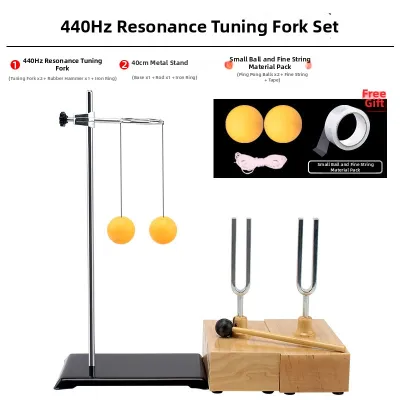


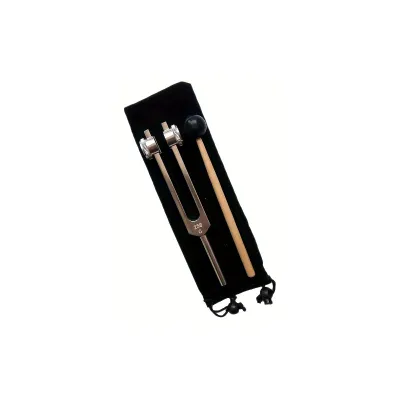

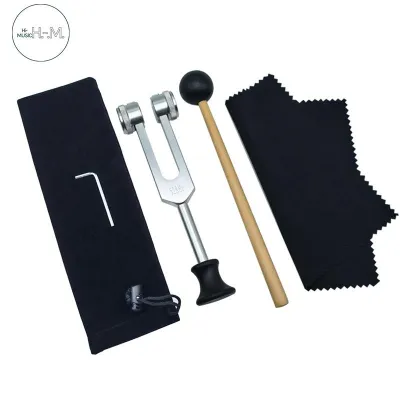
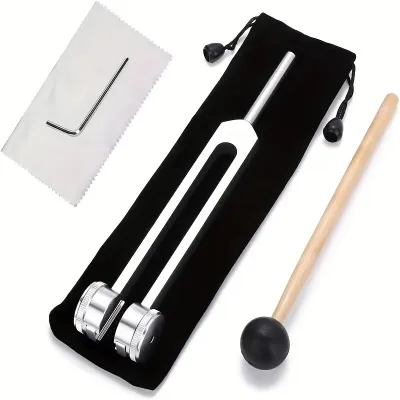
Prices are valid at publication and may change. Please refer to the product page for the latest price.
Tuning fork sets generally fall into two categories: chromatic sets and interval-based or single-pitch sets. A chromatic set typically contains 12 forks representing each semitone in an octave, allowing you to tune any note or practice complex ear-training exercises. If you only need to tune a specific instrument, a smaller, targeted set containing only the root notes of your open strings—such as G, D, A, and E for violinists—may be more practical and portable.
When choosing a set, check that the manufacturer explicitly states the reference standard of the forks. A high-quality set will clearly label each fork with its note name and exact frequency in Hertz. This transparency ensures you do not accidentally mix historical and modern tuning standards during a practice session.
Key Material and Build Specifications to Check
The physical construction of a tuning fork directly dictates its acoustic performance, sustain, and durability. The two most common materials used in manufacturing are medical-grade aluminum alloy and hardened steel. Each material offers distinct acoustic properties that suit different practice environments.

Aluminum alloy tuning forks are lightweight, highly resistant to corrosion, and generally produce a longer sustain. They are excellent for vocalists and educators who need a pitch to ring out clearly for an extended period. Aluminum forks also tend to produce a softer, warmer tone with fewer harsh overtones, making them pleasant for close-range ear training. However, because aluminum is a softer metal, these forks can be more susceptible to surface scratches if not handled with care.
Steel tuning forks, on the other hand, are exceptionally durable and produce a very bright, clear fundamental tone. They are often smaller than their aluminum counterparts of the same frequency, making them highly portable. The trade-off is that steel forks typically have a shorter sustain, meaning you may need to strike them more frequently during a tuning session. Steel is also susceptible to rust if exposed to moisture, requiring diligent maintenance.
The physical dimensions of the fork—specifically the thickness and length of the prongs—determine its frequency. Lower frequencies require longer, heavier prongs, while higher frequencies use shorter, thinner prongs. When evaluating a set, look for forks with a balanced weight distribution. A well-designed handle, or stem, should be long enough to hold comfortably without your fingers touching the vibrating prongs, which would instantly damp the sound. Some premium forks feature weighted ends on the prongs, which can be adjusted or are permanently fixed to enhance the lower-frequency vibrations and prolong the sustain.
Matching the Set to Your Musical Needs
Different musical disciplines require distinct tuning fork characteristics to achieve optimal results during practice. Understanding how your specific instrument or vocal training interacts with acoustic vibrations will help you narrow down the ideal set configuration.
For Instrument Tuning and Intonation Practice
Instrumentalists rely on tuning forks not just for initial tuning, but also for checking intonation during active practice. For stringed instruments like the violin, viola, or cello, a set containing the open-string pitches is highly beneficial. Wind and brass players often benefit from a set that provides the standard tuning notes for their specific transposition, such as B-flat or F.
If you play an acoustic stringed instrument, consider using weighted tuning forks. Weighted forks are designed to generate strong physical vibrations that can be transferred directly to the body of the instrument. By placing the base of the vibrating fork’s stem against the bridge, top board, or scroll of a violin or guitar, you can hear and feel the instrument resonate with the pitch. This physical transfer of vibration is incredibly useful in noisy environments where hearing a quiet, unamplified fork is difficult.
For keyboard instruments or historical harpsichords, a chromatic tuning fork set is indispensable. It allows you to set a temperament across an entire octave before tuning the rest of the instrument by octaves. Ensure the set you choose covers the specific octave range that is most comfortable for your ears to reference, typically around the middle C (C4) register.
For Vocal Training and Ear Development
Singers and vocal coaches use tuning forks to develop relative pitch, practice sight-singing, and establish a reliable starting note without relying on a piano or digital device. For vocal training, the clarity of the fundamental tone is paramount. You want a tuning fork that produces a pure, clean pitch free from distracting overtones or harmonic ringing, which can confuse the ear when trying to match pitch.
When selecting a set for vocal practice, prioritize mid-range frequencies that align with comfortable vocal registers. A set centered around the octave from C4 (middle C) to C5 is ideal for most voice types. This range allows sopranos, altos, tenors, and basses to easily find a comfortable pitch within their tessitura to reference.
Aluminum forks are highly recommended for vocalists due to their long sustain. A single strike can provide a continuous reference pitch for ten to fifteen seconds, giving you ample time to breathe, support, and match the tone. The gentle, warm acoustic profile of aluminum also prevents ear fatigue during long, repetitive ear-training sessions.
Evaluating Set Configurations and Accessories
A complete tuning fork set often includes various accessories that enhance its usability and protect your investment. When comparing different sets on online marketplaces or at local music shops, evaluate what is included in the package to determine the overall value.
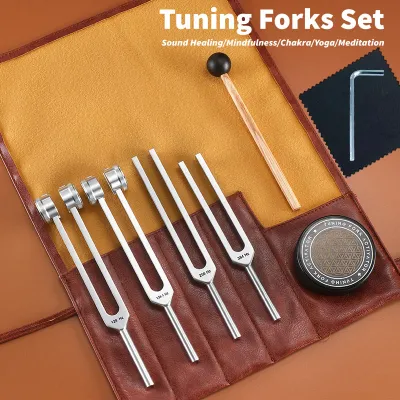
A vital accessory for any tuning fork set is a dedicated mallet or activator. Striking a tuning fork against a hard surface like a wooden table or a metal stand can nick the metal, alter its calibration, or produce a harsh, clanging sound. A proper activator, usually made of hard rubber or dense silicone, allows you to strike the fork safely, producing a clean, pure tone without damaging the prongs. Ensure the set includes at least one high-quality mallet designed for the specific material of your forks.
Storage is another critical consideration. Tuning forks must be kept clean and free from scratches to maintain their precise calibration. Look for sets that come with a padded carrying case, a wooden storage box, or individual soft pouches. A secure, fitted case prevents the forks from clashing against one another during transport, which can cause micro-damage to the metal over time.
Additionally, pay close attention to the markings on the forks themselves. The frequency (in Hz) and the corresponding note name should be deeply and clearly engraved on the stem of each fork. Printed or stamped markings can wear off with frequent handling, leaving you to guess the pitch of each fork. Clear, permanent engravings ensure quick and error-free identification during fast-paced rehearsals or lessons.
Building Your Shortlist: What to Verify Before Buying
Before finalizing your purchase of a tuning fork set, you must perform a few essential quality and specification checks to ensure the product meets professional standards. Because tuning forks are precision acoustic instruments, minor manufacturing defects can render them useless for serious musical practice.
First, verify the manufacturer’s stated calibration tolerance. High-quality tuning forks are typically calibrated to a tolerance of +/- 0.5% or better at a standard room temperature of 20 degrees Celsius. Be aware that extreme temperatures can temporarily affect the pitch of metal forks, so checking the manufacturer’s specifications regarding temperature stability is highly recommended.
Second, review the seller’s return and exchange policies. When your set arrives, you should immediately test each fork for dead spots or unusually short sustain. A defective fork may have internal structural flaws or micro-cracks that damp the vibration prematurely. Having a reliable return policy ensures you can exchange any individual fork that does not perform up to standard.
Finally, consider the total weight and dimensions of the entire set, especially if you plan to travel to gigs, rehearsals, or lessons. A full 12-fork chromatic set in a heavy wooden box may be beautiful for a studio desk but highly impractical for a mobile musician. If portability is a priority, look for sets housed in lightweight, roll-up canvas pouches that fit easily into an instrument case or backpack.
Frequently Asked Questions (FAQ)
Do I need a resonator box for my tuning fork set?
A resonator box is not strictly necessary for individual practice, but it is highly beneficial in specific scenarios. A resonator box is a hollow wooden chamber designed to match the frequency of a specific tuning fork. When the fork is mounted on the box and struck, the air inside the chamber vibrates, significantly amplifying the volume of the tone. This amplification is incredibly helpful for classroom teachers, choral directors, or anyone practicing in a large group setting where a standard fork would be too quiet to hear. For solo practice, you can easily amplify a standard fork without a resonator box by placing the base of its stem against a flat, resonant surface, such as a wooden tabletop, the top of an acoustic guitar, or even your own collarbone.
How should I clean and store aluminum tuning forks?
To preserve the accuracy and finish of aluminum tuning forks, you should wipe them down with a clean, dry microfiber cloth after every use. This simple step removes natural skin oils, sweat, and moisture, which can cause minor surface oxidation over time. Avoid using harsh chemical cleaners, abrasive polishes, or submerging the forks in water, as these can degrade the metal. Always store your tuning forks in a padded case or individual soft sleeves to prevent them from knocking against each other or other hard objects. Keeping them in a temperature-controlled environment away from direct sunlight or high humidity will also help maintain their structural integrity and calibration accuracy.
Community discussion
Share your experience or ask a question. Comments are reviewed before publication.