
Choosing the right Yamaha 88-key keyboard as a beginner in Singapore is a decision that shapes your entire musical journey. The ideal instrument must balance your immediate learning goals, your budget, and the physical realities of your living space. While Yamaha offers a diverse range of digital instruments, there is no single model that serves as a universal solution for every aspiring pianist. Instead, the best choice depends on whether you require a highly portable setup for a flexible living area or a dedicated, furniture-style console that replicates the experience of an acoustic upright piano. By understanding how different technical specifications and product lines align with your practice routine, you can confidently select an instrument that supports proper technique and remains relevant as your skills develop.
Key Features to Evaluate in an 88-Key Keyboard
When evaluating an 88-key keyboard, the key action mechanism is the most critical factor for a beginner. Acoustic pianos rely on a complex system of hammers and strings, creating a distinct physical resistance when a key is pressed. To build the necessary finger strength, dexterity, and muscle memory, beginners should look for a keyboard with fully weighted hammer action, such as Yamaha’s Graded Hammer Standard (GHS) or GrandTouch-S action. Graded action simulates the physical characteristics of an acoustic piano, where the keys in the lower register feel heavier to the touch than those in the higher register. Semi-weighted or non-weighted synth-action keys lack this resistance, which can lead to poor hand posture and make it exceptionally difficult to transition to a traditional acoustic piano during lessons or exams.
Another essential specification to consider is polyphony, which refers to the maximum number of individual notes or voices the keyboard’s sound engine can produce at the same time. When you play a complex piece of music, use the sustain pedal, or layer multiple sounds (such as combining piano and strings), the number of active notes accumulates rapidly. If a keyboard has a low polyphony limit, older notes will be cut off abruptly to make room for new ones, resulting in a choppy and unnatural sound. For absolute beginners, a minimum of 64-note polyphony is acceptable, but choosing an instrument with 128-note or 192-note polyphony ensures that the keyboard will continue to support your playing as you progress to more advanced classical repertoire.
Products mentioned in this guide
Prices are valid at publication and may change. Please refer to the product page for the latest price.
The quality of the built-in sound engine and the wattage of the integrated speakers also play a vital role in your practice experience. Yamaha is renowned for its high-fidelity sampling technology, which captures the rich, dynamic tones of their flagship acoustic grand pianos. When testing keyboards, listen to how the sound decays naturally and how it responds to different levels of touch sensitivity. Additionally, evaluate the speaker wattage; portable models typically feature compact speakers ranging from 6 to 7 watts per channel, which are perfectly adequate for small bedrooms or quiet practice. Console models, however, often feature larger speakers housed within a wooden cabinet, which naturally enhances acoustic resonance and provides a fuller, more immersive sound.
Finally, modern connectivity options are invaluable for contemporary learners. A USB-to-Host port is a standard but crucial feature that allows you to connect your keyboard directly to a computer, tablet, or smartphone. This connectivity enables you to integrate your practice with interactive learning applications, sheet music software, and digital audio workstations (DAWs). For instance, connecting to Yamaha’s dedicated Smart Pianist app allows you to control keyboard settings, select voices, and even generate chord charts from songs in your music library, making daily practice more engaging and productive.
Matching Yamaha Keyboard Lines to Your Practice Needs
Yamaha’s 88-key digital instruments are broadly categorized into two main styles: portable slab-style keyboards and console-style digital pianos. Understanding the distinct design philosophies behind these product lines is essential for matching an instrument to your specific home environment and lifestyle in Singapore.

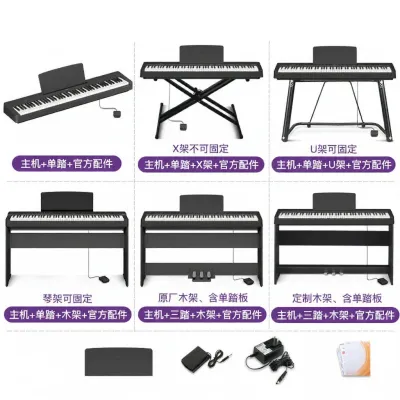
Portable slab-style keyboards, primarily represented by the P-series lineage, are designed with a slim, lightweight profile. These instruments are highly favored by beginners who live in compact apartments or HDB flats where space is at a premium. A portable keyboard can be easily set up on a folding stand for practice sessions and then stored away in a closet or under a bed when not in use. This flexibility makes the P-series an excellent entry point for those who want a full-sized keyboard without committing permanent floor space to a bulky piece of furniture. Furthermore, portable models generally represent a lower initial financial investment, making them highly attractive to beginners who are still exploring their long-term commitment to the instrument.
In contrast, console and furniture-style digital pianos, such as the Arius or YDP lineage, are designed to serve as a permanent fixture in your home. These instruments are built into a sturdy wooden cabinet that closely mimics the appearance and physical presence of a traditional acoustic upright piano. Console models feature an integrated sliding key cover to protect the keys from dust and humidity, as well as a fixed three-pedal board (sustain, soft, and sostenuto) that is structurally bolted to the frame. The solid construction of a console piano provides exceptional stability, ensuring that the instrument does not wobble or shift, even during energetic playing. Additionally, the wooden cabinet acts as a natural acoustic chamber, enhancing the resonance and depth of the built-in speakers.
The choice between these two styles involves clear practical trade-offs. A portable P-series keyboard offers unmatched flexibility and ease of transport, but it requires you to purchase a separate stand and pedal, which can sometimes slide around on smooth tile or vinyl flooring. On the other hand, a console YDP model provides a highly stable, aesthetically pleasing centerpiece for your living room that encourages regular practice, but it is heavy, difficult to relocate, and requires a dedicated, permanent space. Beginners must carefully evaluate their living arrangements and determine whether the convenience of portability outweighs the structural stability and acoustic advantages of a dedicated console instrument.
Essential Accessories and Ergonomic Setup
Setting up your keyboard correctly is just as important as choosing the right model. Proper ergonomics not only prevent physical fatigue and repetitive strain injuries but also promote the development of correct playing technique. If you choose a portable keyboard, selecting the right stand is your first priority. While double-braced X-stands are highly portable and affordable, they can restrict your knee room and may wobble during expressive playing. Z-stands offer significantly better stability and ample legroom, making them a superior choice for longer practice sessions. For the ultimate stability, matching a portable keyboard with its official, model-specific wooden furniture stand provides the secure feel of a console piano while retaining the option to disassemble the unit if you move.
An adjustable, padded keyboard bench is another indispensable accessory that is often overlooked. Using a standard dining chair, office chair, or stool can lead to poor posture, as these seats are rarely at the correct height for piano playing. An adjustable bench allows you to fine-tune your seating position so that your forearms are parallel to the floor when your hands are on the keys, and your elbows are bent at a comfortable angle of approximately 90 degrees. This alignment keeps your shoulders relaxed and prevents wrist strain, allowing you to practice comfortably for extended periods.
Additionally, you must consider the type of sustain pedal and your practice environment. Many entry-level keyboards come bundled with a basic plastic foot switch that only registers simple on/off inputs. Upgrading to a piano-style sustain pedal that supports half-damper pedaling allows for much more expressive control over the sustain effect, which is crucial as your playing skills advance. Finally, practicing in high-density residential areas in Singapore requires consideration for family members and neighbors. A high-quality pair of closed-back headphones plugged into the keyboard’s headphone jack allows you to practice silently at any hour of the day or night. Many Yamaha keyboards feature specialized headphone processing, such as a Stereophonic Optimizer, which adjusts the spatial distribution of the sound to make headphone practice feel natural and less fatiguing to your ears.
Pre-Purchase Verification and Local Buying Considerations
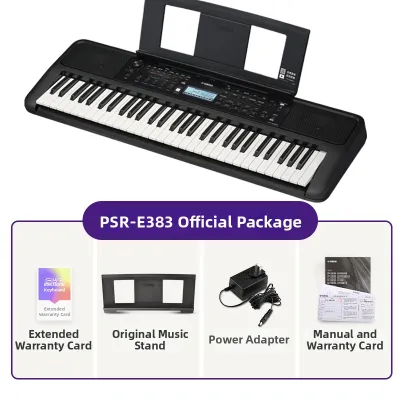
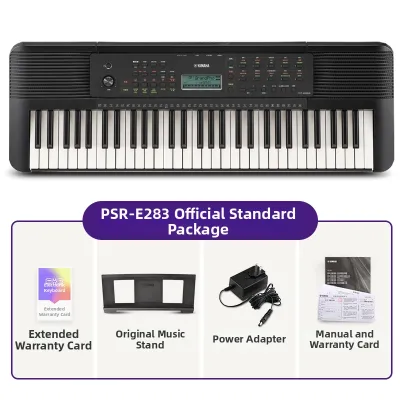
Before finalizing your purchase, it is essential to perform a thorough pre-purchase verification to ensure a smooth setup and avoid unexpected compatibility issues. Start by confirming the exact contents of the retail box. Some retailers sell digital keyboards as standalone units, while others offer bundled packages. Ensure that the package includes the correct regional power adapter compatible with Singapore’s standard 230V electrical system and features a standard three-pin Type G plug. You should also verify whether a music rest, a sustain pedal, or a dust cover is included, as purchasing these accessories separately can add to your overall cost.
Warranty coverage and after-sales support are critical factors when buying electronic musical instruments. To protect your investment, always purchase your Yamaha keyboard from an authorized local dealer or distributor in Singapore. This ensures that your instrument is covered by an official local warranty, granting you access to certified technicians and genuine replacement parts if any issues arise. Parallel-imported models may appear slightly cheaper initially, but they often lack local warranty support, meaning you could face high shipping fees or expensive repair bills if the keyboard requires servicing.
If possible, visit a physical showroom in Singapore to test the instruments in person before making a decision. Showroom testing allows you to evaluate several physical characteristics that cannot be fully appreciated online. Pay close attention to the mechanical noise of the keys; press the keys with the keyboard’s volume turned completely off to hear how loud the physical action is, as a noisy key mechanism can be distracting during quiet headphone practice. Test the velocity sensitivity by playing a single note very softly and then gradually increasing your force to ensure the sound engine responds smoothly and dynamically to your touch. Finally, test the responsiveness of the pedals and the overall build quality of the chassis to ensure the instrument feels solid and durable.
Frequently Asked Questions (FAQ)
Is an 88-key keyboard necessary for a complete beginner?
Yes, an 88-key keyboard is highly recommended for beginners, particularly those who intend to pursue classical piano training or sit for formal graded examinations, such as the ABRSM. Standard piano repertoire quickly expands beyond the range of smaller instruments, and learning on a full-sized keyboard is essential for developing proper spatial awareness and muscle memory across the entire keybed. Transitioning from a smaller 61-key or 76-key keyboard to a full-sized piano can be challenging, as the physical spacing and key resistance feel significantly different. However, if your primary musical focus is electronic music production, synthesizer programming, or if you are severely constrained by budget and living space, a smaller keyboard or MIDI controller may serve as a practical temporary alternative.
Can I use a keyboard stand with a console-style digital piano?
No, console-style digital pianos are not designed to be mounted on portable keyboard stands, such as X-stands or Z-stands. These instruments feature a heavy bottom chassis and are structurally engineered to be securely bolted to their matching, model-specific wooden side panels and integrated pedal board. Attempting to place a heavy console unit on a portable stand is highly unsafe, as the uneven weight distribution can cause the stand to collapse or tip over, risking severe damage to the instrument and potential physical injury. Always assemble and use console-style digital pianos with their designated factory-provided furniture stands to ensure structural integrity and safety.
Community discussion
Share your experience or ask a question. Comments are reviewed before publication.