
When choosing your first darbuka, the most critical factors to prioritize are shell material, head type, and physical comfort. For the vast majority of beginners, a cast aluminum shell paired with a synthetic plastic head offers the most practical, durable, and forgiving starting point. This combination provides a bright, resonant sound, requires virtually no maintenance, and remains completely unaffected by changes in temperature and humidity.
Learning the darbuka requires mastering distinct hand strokes—primarily the deep bass “doum,” the sharp edge “tek,” and the non-dominant hand “ka.” An instrument that is physically uncomfortable or difficult to keep in tune will quickly discourage a beginner. By focusing on a standard-sized, well-constructed metal drum, you ensure that your early practice sessions are spent developing proper finger technique rather than struggling with instrument maintenance.
Understanding Darbuka Materials and Shell Types
Traditionalists often favor clay or ceramic darbukas, known as clay tablas. These instruments are crafted from baked earth and typically fitted with natural animal skins, such as goat or fish skin. The acoustic properties of clay are highly regarded, producing a warm, earthy, and incredibly rich tone with deep, resonant bass notes and soft, organic high notes. However, clay is exceptionally fragile. A minor bump against a door frame or a short fall onto a tiled floor can instantly shatter the shell, rendering the instrument useless.
Products mentioned in this guide
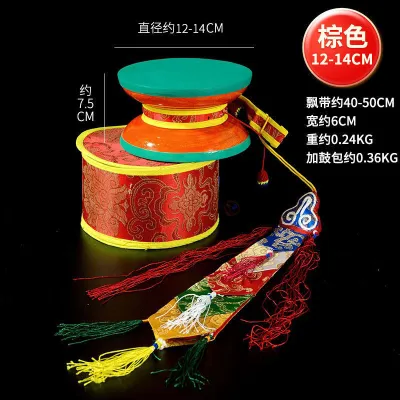
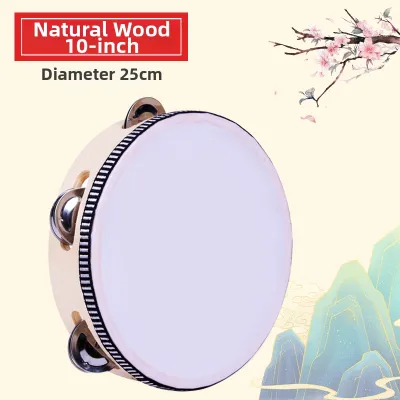
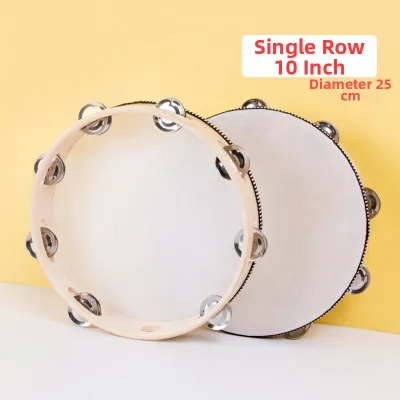
Prices are valid at publication and may change. Please refer to the product page for the latest price.
Furthermore, natural skin heads are highly sensitive to environmental conditions. In humid climates, a natural skin head will quickly absorb moisture from the air, lose its tension, and produce a dull, muddy sound that lacks the crispness needed for darbuka playing. To restore tension, players must carefully warm the head using a heat source or a specialized lamp, a process that requires experience and carries the risk of splitting the skin if overheated.
In contrast, metal shells—most commonly made from cast aluminum or copper—are virtually indestructible under normal playing conditions. They easily withstand accidental drops, bumps, and travel. Acoustically, metal darbukas produce a bright, sharp, and highly projecting sound. The high-pitched edge strokes ring out with clarity, while the bass strokes remain punchy and defined.
When paired with a synthetic (mylar or plastic) head, a metal darbuka becomes completely impervious to weather changes. Whether you are playing in an air-conditioned room, a humid outdoor park, or a dry studio, the drum will maintain its exact pitch and tension. This stability is invaluable for beginners, who need a consistent acoustic response to train their ears and hands.
Choosing the Right Size and Weight for Comfort
Darbukas come in several distinct sizes, each suited to different musical roles and body types. For a beginner, the standard “solo” darbuka is almost always the correct choice. This size typically features a playing head diameter of 8 to 8.75 inches (approximately 20 to 22 centimeters) and an overall height of around 17 to 18 inches (43 to 46 centimeters).

The standard solo size provides the ideal acoustic balance for learning. The bowl is large enough to produce a satisfyingly deep, resonant bass note, yet compact enough that the high-pitched edge strokes remain crisp and easy to reach. Smaller models, often referred to as companion or travel darbukas, have head diameters of 7 to 7.5 inches; while highly portable, they often lack a satisfying bass response, making it difficult to practice the contrast between doum and tek strokes. Larger models, such as the sombaty (typically 9 inches or larger), offer massive bass but can be physically overwhelming for a beginner to hold and play comfortably.
Physical weight is another crucial factor. A quality cast aluminum darbuka generally weighs between 2.5 and 4 kilograms. This weight is heavy enough to keep the drum stable on your lap during energetic playing, preventing it from sliding away from your body. However, it is light enough to avoid causing muscle strain during long practice sessions.
To ensure a proper physical fit, you should perform a quick ergonomic check before finalizing your purchase:
- Sit upright on a chair without armrests, keeping your feet flat on the floor.
- Place the darbuka horizontally across your left thigh (if you are right-handed), with the drum head pointing forward and slightly to your right.
- Tuck the rear bell of the drum under your left upper arm, using the weight of your arm to secure it.
- Rest your left forearm naturally along the side of the shell, allowing your left hand to drape comfortably over the edge of the head.
- Ensure your right hand can reach the playing surface without forcing your shoulder upward or straining your wrist.
Evaluating Playability, Edges, and Hardware
When learning the darbuka, your fingers will make thousands of rapid contacts with the edge of the drum. Therefore, the design of the bearing edge—the top rim of the drum where the head meets the shell—is the single most important factor for physical comfort.
High-quality modern darbukas feature a wide, smoothly rounded bearing edge. This design distributes the impact of your finger strikes over a larger surface area, significantly reducing finger fatigue, bruising, and skin abrasion. Cheaper, poorly manufactured drums often have thin, sharp, or uneven metal rims. Playing on a sharp edge can cause immediate pain and even cut your fingers during fast rolls, quickly halting your learning progress. Always run your hand along the rim before buying to ensure it feels perfectly smooth and contoured.
Tuning systems also play a major role in playability and maintenance. Most beginner-friendly metal darbukas utilize an external tuning system, where 5 to 8 tuning bolts are positioned around the outer collar of the drum head. This system is highly practical because the bolts are easily accessible with a standard hex key (Allen wrench), allowing you to make quick adjustments. Internal tuning systems, which hide the bolts inside the rim, offer a smoother surface for the resting arm but can be more tedious to adjust and are less common on entry-level models.
Finally, take a close look at the overall build quality and interior finish. Peer through the bottom opening (the bell) of the drum and inspect the inside of the shell. The interior should be relatively smooth and free of sharp metal burrs, rough casting seams, or peeling paint. A rough interior can disrupt the airflow inside the drum, resulting in a choked or muddy bass response. Additionally, ensure that the counter-hoop (the metal ring holding the head down) is perfectly aligned and that the synthetic head sits completely flat without any warping or uneven gaps.
Recommended Darbuka Configurations for Beginners
To help narrow down your search, it is useful to look at three common configuration profiles. These profiles represent standard setups that balance sound, durability, and ease of use for different starting goals.
Profile 1: The Casual Hobbyist
This configuration is designed for those who want an affordable, low-maintenance instrument to learn the basics at home. It features a lightweight cast aluminum shell, often finished with a simple painted or lightly engraved pattern. It is fitted with a standard clear synthetic head of 8.25 inches. This setup is highly durable, easy to store in small living spaces, and provides a bright, classic sound that is perfect for practicing basic rhythms.
Profile 2: The Traditional Sound Seeker
If you are drawn to the deep, warm tones of traditional Middle Eastern music but want to avoid the fragility of clay, this configuration is ideal. It utilizes a heavier cast aluminum or copper shell, often decorated with intricate mother-of-pearl or colored composite overlays. These overlays add physical weight to the shell, which helps dampen unwanted high-frequency overtones, resulting in a warmer, more focused sound with a deeper bass response. It is typically paired with a premium synthetic head.
Profile 3: The Traveling or Outdoor Player
For those who plan to take their drum to outdoor gatherings, drum circles, or travel frequently, a rugged setup is essential. This configuration features a thick, unornamented cast aluminum shell with a durable powder-coated or brushed finish that resists scratches and scuffs. It is fitted with a slightly thicker synthetic head, which can withstand aggressive playing and outdoor elements without losing its tone.
The following matrix compares these three configurations to help you weigh the trade-offs:
| Configuration Profile | Primary Shell Material | Head Type | Sound Profile | Durability | Maintenance Level |
|---|---|---|---|---|---|
| Casual Hobbyist | Cast Aluminum | Standard Synthetic | Bright, crisp, high resonance | Very High | Low (Wipe down occasionally) |
| Traditional Sound Seeker | Heavy Aluminum / Mosaic | Premium Synthetic / Skin | Warm, balanced, deep bass | Medium-High | Medium (Protect inlay/skin) |
| Traveling Player | Rugged Aluminum / Composite | Thick Synthetic | Loud, punchy, focused | Excellent | Very Low (Weatherproof) |
Inspecting Your Darbuka Before and After Purchase
Whether you are purchasing your darbuka from a local music shop or receiving it from an online retailer, performing a thorough inspection is crucial to ensure you have received a defect-free instrument.
Begin with a visual and tactile inspection of the shell. Run your hands over the entire body, looking for any hairline cracks, deep scratches, or dents. Pay close attention to the areas around the tuning lugs, as these points are under high tension and are susceptible to cracking if the metal casting is flawed. Check that all tuning bolts are present, straight, and turn smoothly without stripping.
Next, test the acoustic response and tuning of the head. Use a hex key to check that the tension is distributed evenly across all tuning bolts. You can do this by gently tapping the head directly in front of each bolt; the pitch should sound identical at every point. Once tuned, strike the center of the head to test the bass (doum) and the edge to test the treble (tek). Listen carefully for any unwanted buzzing, rattling, or metallic vibrations. A persistent buzz often indicates a loose tuning bolt, a poorly seated head, or a tiny crack in the synthetic material.
If you are ordering online, ensure the retailer has a clear return and exchange policy. Darbukas are heavy, hollow instruments that can easily be damaged during transit if not packaged correctly. Verify that the drum will be shipped in a heavily padded gig bag or surrounded by ample shock-absorbing material to prevent the collar or shell from warping during delivery.
Frequently Asked Questions (FAQ)
Do I need a darbuka stand or strap as a beginner?
For most beginners, a stand or strap is entirely unnecessary and can actually hinder your learning progress. The traditional seated posture—where the drum rests horizontally on your thigh and is secured under your arm—is the most effective way to play. This position allows you to use the weight of your upper body for stability and keeps both hands completely free to execute rapid finger strokes.
A stand is generally only useful if you have physical limitations that make seated playing uncomfortable, or if you are a multi-percussionist who needs to transition quickly between different instruments during a live performance. Similarly, a strap is only necessary if you plan to play while standing or marching. For regular practice and technique development, sticking to the traditional seated position is highly recommended.
How often should a beginner tune or replace the drum head?
If you are using a synthetic head, you will rarely need to tune or replace it. Synthetic heads are incredibly stable and do not stretch or react to humidity changes like natural skins do. You should occasionally check the tension of the tuning bolts with a hex key to ensure they have not vibrated loose during play, but daily tuning is not required.
A synthetic head only needs to be replaced if it suffers physical damage, such as a puncture, a deep tear, or if it becomes so stretched out over years of heavy use that it can no longer reach a high pitch. Natural skin heads, however, require frequent tuning adjustments to compensate for weather changes and will need to be replaced much sooner due to natural wear, moisture absorption, or splitting under high tension.
Community discussion
Share your experience or ask a question. Comments are reviewed before publication.