
Starting your drumming journey is an exciting milestone, and choosing your first instrument is a crucial step. For beginners, an electronic drum kit—commonly known as an e drum—offers a highly practical entry point. Unlike acoustic drums, which require extensive soundproofing and a large dedicated space, electronic kits allow you to practice quietly with headphones while enjoying a wide variety of built-in sounds.
However, navigating the technical specifications of these instruments requires a clear understanding of what truly matters for your development. When shopping for your first kit, it is easy to get distracted by flashy marketing, such as hundreds of pre-programmed sound effects or complex digital menus. In reality, your primary focus should be on how the instrument feels under your sticks, how accurately it responds to your playing dynamics, and how well it supports your learning goals. Balancing physical feel, sound quality, and connectivity is far more important than maximizing preset counts.
Choosing Between Rubber and Mesh Drum Pads
The physical pads you strike are the most critical point of contact between you and your electronic drum kit. Historically, entry-level kits relied almost exclusively on hard rubber pads. While rubber pads are highly durable and budget-friendly, they offer a very stiff rebound that feels quite different from a traditional acoustic drumhead. This excessive bounce can sometimes lead to wrist fatigue during long practice sessions, and the physical impact of sticks hitting hard rubber produces a distinct, loud acoustic noise that can easily disturb others in your household.
Products mentioned in this guide
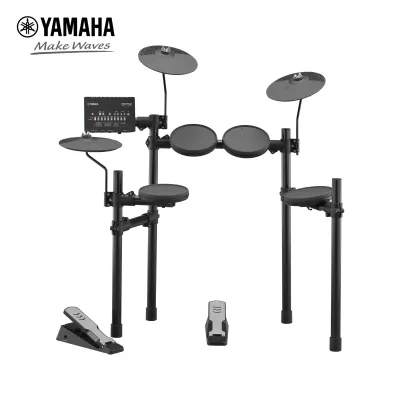
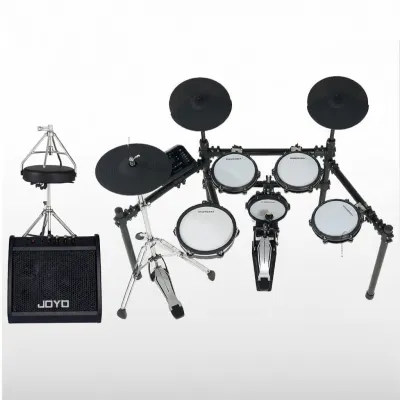
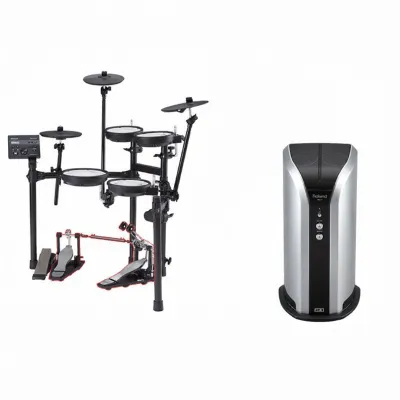
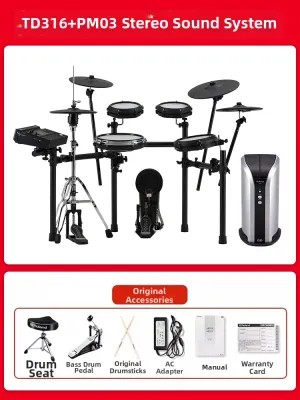
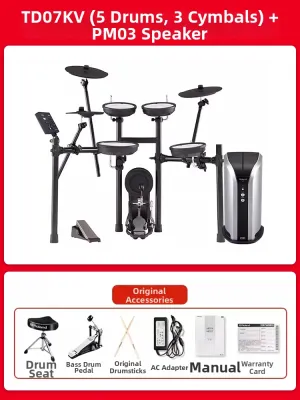
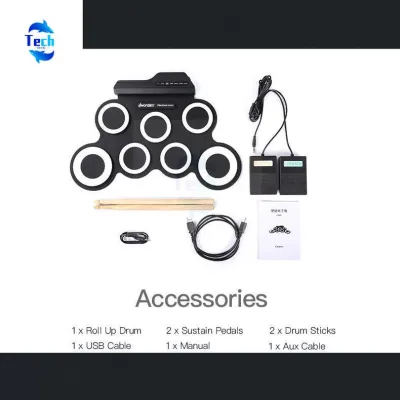
Prices are valid at publication and may change. Please refer to the product page for the latest price.
In contrast, mesh drum pads utilize a woven material stretched over the pad frame, closely mimicking the tension and natural rebound of an acoustic drumhead. Mesh pads are significantly quieter than rubber, making them the preferred choice for apartment living or shared spaces. Furthermore, many mesh heads allow you to adjust the tension using a standard drum key, letting you customize the stick response to match your personal preference or to simulate the deeper, softer feel of a floor tom.
When evaluating pads, you should also look for dual-zone triggers, particularly on the snare drum. A single-zone pad only triggers one sound regardless of where you strike it. A dual-zone pad, however, can differentiate between a strike in the center of the head and a strike on the rim. This capability is essential for learning fundamental drumming techniques, such as rimshots and cross-sticks, which are staple elements of modern drumming. Before making a purchase, always verify the manufacturer’s specifications regarding pad sensitivity, tension adjustment, and cymbal choke features.
Evaluating the Sound Module and Built-in Sounds
The sound module, often referred to as the “brain” of the electronic drum kit, is responsible for translating your physical strikes into digital audio. For a beginner, the sheer variety of sounds in a module is less important than the quality and utility of its built-in features. A high-quality module should offer clean, realistic acoustic drum samples that respond dynamically to how hard or soft you hit the pads, rather than simply playing the same sound at different volume levels.

Look for a module that includes essential educational tools designed to improve your timing and rhythm. A built-in metronome is non-negotiable, but advanced coaching functions—such as time-check modes that grade your accuracy against the beat—are incredibly valuable for self-guided practice. Additionally, modules that feature built-in play-along tracks across various musical genres allow you to apply your skills in a musical context, making practice sessions much more engaging.
You should also check how easily you can customize the pre-programmed kits. A user-friendly interface should allow you to adjust basic parameters like individual pad volume, panning, and basic tuning. Finally, verify the physical audio outputs on the module. Ensure it has a dedicated headphone jack for silent practice, as well as auxiliary inputs for plugging in a phone or music player, and standard line-out jacks if you plan to connect the kit to an external amplifier.
Checking Connectivity for Apps and Recording
Modern electronic drum kits offer powerful digital connectivity options that can accelerate your learning process. When reviewing a kit’s specifications, check whether it features MIDI over USB or traditional 5-pin MIDI connections. For most beginners, a USB-to-Host port is the most convenient option, as it allows you to connect the drum module directly to a computer, tablet, or smartphone using a single, standard USB cable.
This connection enables you to use interactive learning software and apps, which provide visual feedback on your playing and offer structured lesson plans. It also allows you to use your e drum kit as a MIDI controller within a Digital Audio Workstation (DAW) on your computer. By routing your physical hits to software-based drum libraries, you can access professional-grade drum sounds for recording or practicing without needing an expensive high-end module.
Some modern modules also feature Bluetooth connectivity. Bluetooth Audio allows you to stream backing tracks wirelessly from your phone directly into your headphones through the drum module, eliminating extra cables. Bluetooth MIDI allows the module to communicate wirelessly with learning apps on your tablet. However, keep in mind that wireless connections can sometimes introduce minor latency, so a wired USB connection remains the gold standard for precise recording and real-time interactive software.
Assessing the Hardware, Pedals, and Rack Stability
While the electronic components of an e drum kit receive the most attention, the physical hardware, rack, and pedals are what hold the entire system together. A flimsy, lightweight rack will wobble or slide across the floor when you play energetically. This instability is not only frustrating but can also cause “crosstalk”—a common issue where the vibration from striking one pad travels through the rack and accidentally triggers a sound on an adjacent pad. Look for a sturdy, steel or heavy-duty aluminum rack with robust clamps that lock securely into place.
The rack must also offer sufficient adjustability to accommodate your height and arm reach. A good rack allows you to position the snare, toms, and cymbals at ergonomic angles, which is crucial for preventing strain and developing proper posture. If multiple people of different sizes will be using the kit, quick-release clamps make adjusting the height of the pads simple and efficient.
Pay close attention to the kick pedal mechanism. Entry-level kits often use beater-less pedal controllers, which rely on magnetic sensors or simple switches to trigger the bass drum sound. While these are incredibly quiet and compact, they do not feel like a real bass drum pedal. If your goal is to eventually transition to an acoustic drum kit, look for an e drum set that features a physical kick tower pad designed to be struck by a standard acoustic bass drum pedal and beater. This setup builds the necessary foot control, ankle strength, and muscle memory required for traditional drumming.
Similarly, evaluate the hi-hat controller pedal. Basic kits use a simple on/off switch pedal that only produces fully open or fully closed hi-hat sounds. More advanced kits feature a continuous variable controller, which detects the exact position of your foot to deliver a smooth transition of sounds from tightly closed, to half-open, to fully open. Finally, always verify what accessories are included in the box. Many kits do not bundle a drum throne, headphones, drumsticks, or even the kick pedal itself, meaning you will need to budget for these essential items separately.
Aligning Your Budget with E-Drum Tiers and Use Cases
To avoid overspending or purchasing a kit that you will quickly outgrow, it is helpful to understand how electronic drum sets are categorized by price and features. For beginners, the market generally divides into entry-level and intermediate tiers, each serving different needs and practice environments.
The entry-level tier, typically priced under S$800, is ideal for casual hobbyists, young students, or those with limited space. Kits in this price range usually feature compact, foldable racks, smaller mesh or rubber pads, and basic sound modules with essential practice tools. While these kits are highly accessible, they may have limited upgrade options and simpler pedal mechanisms. They are perfect for testing your interest in the instrument without making a major financial commitment.
The intermediate tier, ranging from S$800 to S$1,500, is designed for serious students and adult beginners who want a more authentic playing experience. In this tier, you can expect larger snare and tom pads, multi-zone cymbals with choke capabilities, and more advanced sound modules with higher-quality audio samples. These kits also tend to feature physical kick drum towers and more sophisticated hi-hat controllers, providing a much smoother transition to acoustic drums.
When deciding on a budget, consider the trade-offs of buying a complete, pre-packaged bundle versus assembling a kit over time. Complete bundles are highly convenient and cost-effective for beginners, as they ensure all components are fully compatible out of the box. However, if you have specific preferences, purchasing a core kit and upgrading individual components—such as adding a higher-end snare pad or a sturdier drum throne—can offer a more customized experience.
Be cautious of ultra-cheap, unbranded electronic drum sets found on generic online marketplaces. While the low price tag can be tempting, these kits often suffer from poor trigger response, high latency, and fragile plastic hardware that breaks easily under regular use. Furthermore, unbranded kits rarely come with reliable local warranty support or accessible customer service, meaning a single broken cable or sensor could render the entire kit useless.
Verifying Compatibility and Seller Details Before Purchase
Before finalizing your purchase, there are several practical and logistical details you must verify to ensure a smooth setup process. First, carefully measure your available floor space. While electronic drum kits are more compact than acoustic sets, a typical setup still requires an area of approximately 1.2 meters by 1.2 meters once you account for the width of the rack, the extension of the kick pedal, and the position of your drum throne. Ensure you have enough clearance around the kit to move your arms and legs comfortably without hitting walls or furniture.
Next, verify the electrical specifications of the kit. Since you are purchasing for use in Singapore, ensure the power adapter supplied with the kit is compatible with the local voltage of 230V at 50Hz and features a standard Type G three-pin plug. Using incorrect power adapters or relying on cheap travel adapters can cause electrical noise in your audio signal or, worse, damage the sensitive electronics inside your drum module.
It is highly recommended to purchase your e drum kit from authorized local dealers or reputable music retailers. Buying locally ensures that your instrument is covered by a valid local warranty, giving you access to official service centers if you encounter any technical issues. Shipping a heavy drum rack or a delicate sound module overseas for repairs can be incredibly expensive and time-consuming, making local after-sales support invaluable.
Finally, check the long-term availability of replacement parts and accessories. Drum pads, mesh heads, and cables are subject to continuous physical wear and tear, and you may eventually need to replace them. Choosing a well-established brand with a strong local presence ensures that you can easily purchase replacement trigger sensors, mesh heads, or proprietary multi-pin cable harnesses when the need arises, extending the lifespan of your investment for years to come.
Frequently Asked Questions (FAQ)
Do I need an amplifier for my first e-drum set?
No, you do not need an amplifier to start playing. A good pair of closed-back headphones is actually the best way to experience your electronic drum kit, as they block out the physical acoustic sound of your sticks hitting the pads while delivering clear, detailed stereo audio directly from the module. An external amplifier or a dedicated electronic drum monitor is only necessary if you want to play along with other musicians, perform in front of an audience, or practice without wearing headphones. If you do decide to buy a speaker, avoid standard guitar or bass amplifiers; they are not designed to handle the wide frequency range and sharp transient peaks of drum sounds, which can result in distorted audio or even damage the speaker cone.
Can I use an e-drum set to learn acoustic drumming?
Yes, an electronic drum kit is an excellent tool for learning the fundamentals of drumming. Core skills such as hand-to-hand coordination, stick control, rhythm, limb independence, and reading sheet music transfer perfectly between electronic and acoustic kits. However, you should expect a brief adjustment period when transitioning to an acoustic set. Acoustic drums have a wider physical layout, larger drumheads, and highly nuanced physical feedback—especially on the hi-hat and cymbals—that cannot be fully replicated by digital sensors. Practicing on high-quality mesh pads with a physical kick pedal will minimize this gap and help you develop proper stroke mechanics from day one.
How much space does a typical beginner e-drum kit require?
A typical beginner electronic drum kit is designed to be compact and space-efficient, usually requiring a floor area of about 1.2 meters in width by 1.2 meters in depth. This footprint easily fits into the corner of a standard bedroom or study. When planning your space, remember to account for the drum throne, which needs to sit slightly behind the rack, and the forward extension of the kick pedal. Many entry-level kits feature lightweight, foldable frames, allowing you to fold the arms of the rack inward to store the kit against a wall or in a closet when it is not in use.

Community discussion
Share your experience or ask a question. Comments are reviewed before publication.