
Starting your guitar journey is an exciting milestone, but walking into a music shop or browsing an online store can quickly become overwhelming when you face rows of colorful plastic triangles. While it is easy to overlook the humble guitar pick as a minor accessory, this small piece of material serves as the direct bridge between your hand and the strings. Choosing the wrong pick early on can lead to unnecessary hand fatigue, dropped picks, and frustration with your tone.
For most beginners, the ideal starting point is a medium-thickness pick (between 0.60 mm and 0.80 mm) in a standard shape. This combination provides enough flexibility to make strumming comfortable while retaining the structural support needed to practice single notes and simple melodies. By starting with this versatile baseline, you can develop your hand strength and coordination before exploring more specialized gear.
How Guitar Pick Thickness Affects Your Playing
The thickness of a guitar pick is measured in millimeters, and even a fraction of a millimeter can dramatically alter how the instrument feels under your fingers. Picks generally fall into three broad categories: thin, medium, and thick. Thin picks, typically measuring under 0.60 mm, are highly flexible and bend easily when they strike a string. This flexibility makes them incredibly forgiving for basic strumming, as the pick glides over the strings with minimal resistance.
Products mentioned in this guide
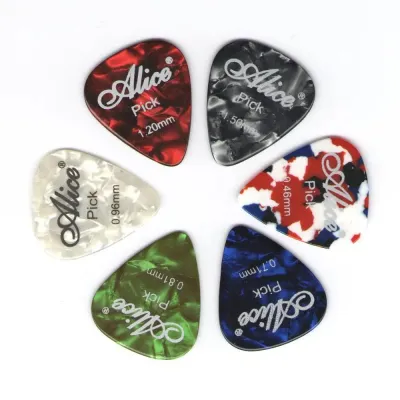
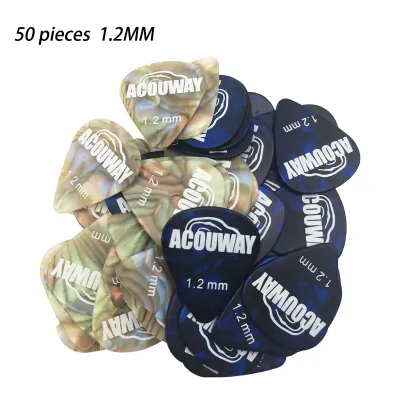


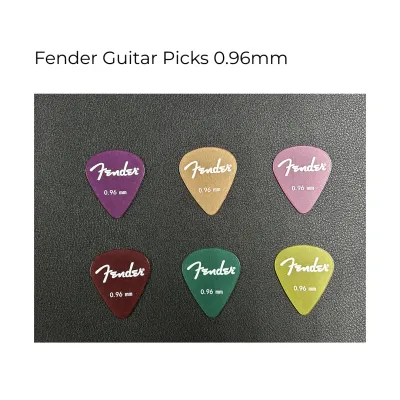
![Jim Dunlop Standard TORTEX Black Guitar pick Authentic [SG Distributor] Made in USA](https://img.lazcdn.com/g/p/bc3cffde25d234909a30ef71113c8279.jpg_400x400q80.jpg_.webp)
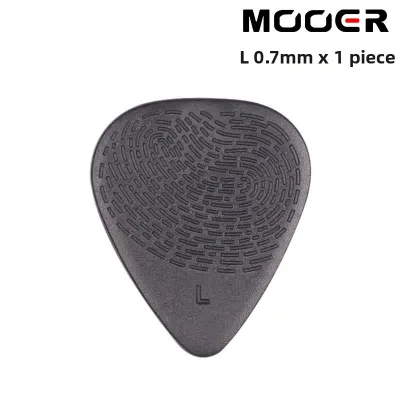

Prices are valid at publication and may change. Please refer to the product page for the latest price.
However, this same flexibility means thin picks lack the rigidity required for precise single-note lines. This often results in a slight delay between your hand movement and the actual sound, which can make scale practice feel disconnected. Medium picks, ranging from 0.60 mm to 0.80 mm, offer a balanced middle ground. They retain enough flex to allow for smooth, continuous strumming without catching on the strings, yet they possess enough stiffness to transfer your hand’s energy directly into the string for clear, articulate single notes.
Thick picks, which generally measure 1.0 mm or more, do not bend under normal playing pressure. They offer maximum control and immediate string response, which is highly valued for fast lead playing and heavy riffing. For a beginner, however, a thick pick can feel like trying to play with a rigid coin. Without developed technique, it is easy to accidentally pluck too hard, make mistakes, or drop the pick entirely.
Because there is no universal industry standard for what constitutes a “medium” or “thin” pick, you should always check the manufacturer packaging or the pick’s surface for the exact millimeter measurement. One brand’s “medium” might be 0.70 mm, while another’s could be 0.85 mm. Relying on the numerical measurement ensures you maintain a consistent feel during your practice sessions, helping your muscle memory develop without unexpected physical variables.
How Guitar Pick Shape Influences Comfort and Tone
While thickness dictates how much a pick bends, its shape determines how you hold it and how it releases from the strings. The most common shape is the standard pick, often referred to as the 351 shape. It features a wide, rounded top for your thumb and index finger to grip, tapering down to a moderately pointed tip. This classic design is highly versatile, offering a generous surface area that is easy for beginners to hold securely, especially when hands get slightly warm or sweaty in humid climates.

Other shapes offer distinct structural differences that alter your playing experience. Triangle picks are larger and feature three identical corners, meaning you can play with any of the three points. This design provides a massive grip area, making it a practical choice for players with larger hands or those who struggle with dropping their picks. Teardrop and jazz shapes, on the other hand, are much smaller and feature highly pointed tips.
While these smaller shapes allow for rapid, precise movements because your fingers sit closer to the strings, they offer very little surface area to grip. This can cause a beginner’s hand to cramp as they overcompensate to keep the pick from slipping. The sharpness of the pick’s tip also plays a significant role in your overall tone and playability. A rounded tip glides smoothly across the strings, producing a warmer, softer attack that is excellent for blending chords together.
A sharp, pointed tip releases the string quickly, creating a brighter, more defined sound with a sharp attack. For those just starting out, prioritizing physical grip comfort and natural hand positioning is far more important than chasing genre-specific trends. If a pick feels too small or constantly rotates in your fingers, your hand will naturally tense up, hindering your progress.
How to Match Your Pick to Your Practice Focus
Your choice of pick should align closely with the specific instrument you are playing and the exercises you focus on during practice. If you are practicing on an acoustic guitar and focusing primarily on open-chord strumming and rhythm patterns, a lighter touch is highly beneficial. For this style of playing, a pick thickness of 0.50 mm to 0.70 mm in a standard or triangle shape is highly suitable.
The inherent flexibility of a thinner pick allows it to act as a shock absorber, smoothing out uneven strumming strokes and producing a balanced, cohesive chord sound without excessive volume spikes. If your practice sessions are centered on an electric guitar, where you are learning single-note scales, simple riffs, and quick chord transitions, you will benefit from a slightly stiffer pick.
A medium-to-thick pick, ranging from 0.73 mm to 1.0 mm, provides the necessary structural support to push through the heavier tension of electric strings. This rigidity ensures that every note speaks clearly and immediately, allowing you to develop a clean, articulate picking technique. The standard shape remains the most practical starting point here, as it provides enough grip stability while you learn to control your picking hand’s movement.
Instead of committing to a single type of pick immediately, a highly practical approach is to purchase an affordable variety pack from a local music shop or online marketplace, typically costing between S$5 and S$10. These packs usually contain an assortment of thicknesses, shapes, and textures. By systematically testing different combinations during your daily practice—such as using a thin pick for strumming exercises on Monday, and a medium pick for scale practice on Tuesday—you can observe firsthand how each variation affects your control and comfort.
How to Test Your Pick and Fix Early Frustrations
As you practice, it is crucial to pay attention to how your hands and ears react to the pick. There are clear, observable signs when a pick is not suited to your current technique. If your pick is too thin for the exercise you are performing, you will likely hear a loud, plastic clicking sound that overpowers the natural tone of your guitar. You may also feel a distinct lack of control, as if the pick is lagging behind your hand’s movements.
Conversely, if your pick is too thick, it will frequently catch or snag on the strings, causing your strumming to sound choppy and uneven. You might also experience rapid hand fatigue or a tight, aching sensation in your forearm. Often, early difficulties are not solely the fault of the pick itself, but rather how you hold and angle it. Many beginners hold their picks with a death grip, fearing it will fly out of their fingers.
This excessive tension locks up the wrist and elbow, making smooth playing impossible. Your grip should be firm enough to keep the pick secure, but relaxed enough to allow a tiny amount of play. Additionally, pay attention to your picking angle; striking the strings with the flat face of the pick creates maximum resistance. Instead, try angling the pick slightly so it slices through the strings at a 30-to-45-degree angle, which significantly reduces friction and eases string transition.
It is vital to establish clear stopping conditions during your practice sessions. If you experience persistent joint pain, sharp muscle discomfort, or severe cramping in your hand or wrist, stop playing immediately. Do not attempt to push through physical pain. Take a break, consciously relax your hand, and consider switching to a thinner pick or a shape with a more textured grip surface before resuming your practice.
Frequently Asked Questions (FAQ)
Does the material of the guitar pick matter for beginners?
While pick material does influence grip texture and overall flexibility, it is a secondary consideration for beginners. Common standard materials include nylon, which is highly flexible and durable with a naturally soft attack, and celluloid, which offers a traditional, crisp tone but can become slippery when wet. Delrin or matte-finished plastics provide an excellent, chalky grip that helps prevent the pick from rotating in sweaty hands.
As a beginner, you should focus on finding the correct thickness and shape first, as these dimensions have a far greater impact on your physical playability. Once you are comfortable holding and controlling a standard pick, you can check the product packaging of different brands to explore specialized grip textures and materials.
How often should a beginner replace their guitar pick?
A beginner should replace their guitar pick as soon as they observe physical signs of wear. Over time, friction against the metal strings will create deep grooves, round off the sharp playing tip, or leave frayed, rough edges along the sides of the pick. These physical imperfections can catch on the strings, alter your tone, and even cause premature wear or damage to your guitar strings.
Your playing style, how hard you strike the strings, and the thickness of the pick all influence its lifespan; thin picks tend to wear down or split much faster than thick ones. Inspect your picks regularly, and discard any that show visible damage or feel rough to the touch to ensure your practice remains consistent and comfortable.
Community discussion
Share your experience or ask a question. Comments are reviewed before publication.