
Buying your first handpan drum in Singapore is an exciting milestone, but it requires balancing musical preference with practical environmental considerations. Because this unique percussion instrument is a significant investment, a beginner must focus on selecting an intuitive scale, choosing a rust-resistant material suitable for Singapore’s tropical humidity, and verifying the tuning accuracy before finalizing a purchase. Understanding these core elements ensures you select an instrument that is both rewarding to play and durable enough to withstand local climate conditions.
By taking a systematic approach to evaluating scales, materials, and makers, you can avoid common beginner pitfalls and find an instrument that resonates with your personal style. This guide outlines everything you need to know to make an informed decision when purchasing your first handpan.
Understanding Handpan Scales and Note Counts
Handpans are modal instruments, meaning they are tuned to a single, specific scale. Unlike a piano or a guitar, you cannot play a “wrong” note, but you are locked into the emotional landscape of that particular scale. This makes your choice of scale the most critical decision when buying your first instrument.
Products mentioned in this guide

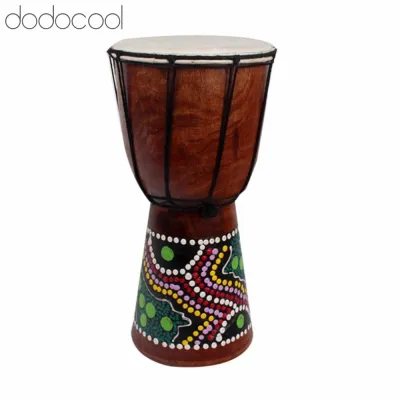

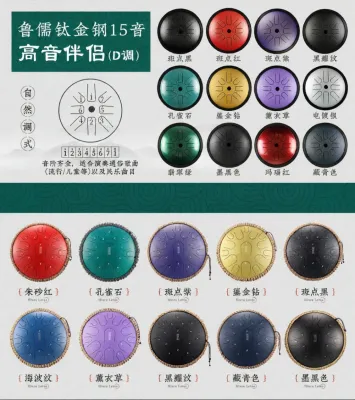
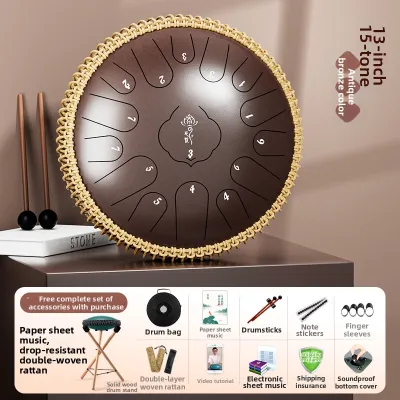
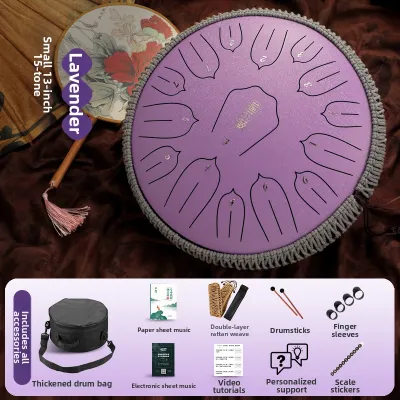
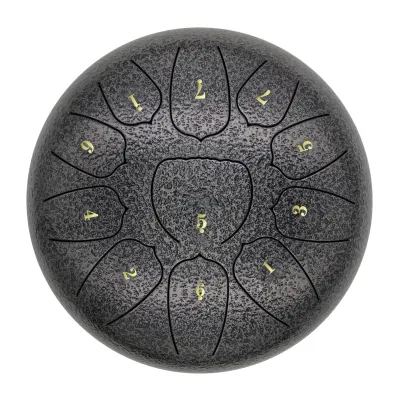

Prices are valid at publication and may change. Please refer to the product page for the latest price.
Minor scales, such as D Kurd, D Celtic Minor, or Amara, are highly popular for beginners. These scales offer a meditative, mysterious, and deeply emotional sound profile that many players find relaxing. Major scales, on the other hand, provide an uplifting, bright, and joyful atmosphere. For a first instrument, a minor scale is generally recommended because it aligns with the relaxing, introspective style most players seek and offers great versatility when playing solo.
Standard handpans typically feature 8 or 9 notes arranged in a circle around a central, deep bass note called the “Ding.” This layout is ideal for beginners because the tone fields are spaced far enough apart to prevent accidental strikes. It also keeps the instrument lightweight and easier to navigate as you build muscle memory.
Extended layouts, which can feature 10 to 14 or more notes, including notes on the bottom shell, offer greater musical range but introduce significant complexity. Bottom notes require advanced striking techniques and can make the instrument more awkward to balance on your lap. For your first handpan, sticking to a classic 9-note layout (often denoted as 8+1) provides the perfect balance of musical versatility and ease of learning.
Evaluating Materials and Build Quality
The choice of steel directly dictates the handpan’s voice, sustain, and maintenance needs. In Singapore’s highly humid tropical climate, material selection is especially critical to prevent rust and ensure the longevity of your instrument.

Stainless steel is highly favored in Singapore due to its exceptional resistance to rust. It produces a bright, singing tone with a very long sustain, meaning the notes ring out for a long time. This long sustain is beautiful for slow, ambient playing, though it can become slightly muddy during fast, percussive rhythms. If you prefer a dreamy, echoing sound and want peace of mind against humidity, stainless steel is an excellent choice.
Nitrided steel undergoes a heat-treatment process that hardens the metal and offers moderate rust protection. It delivers a warmer, more grounded, and ceramic-like tone with a shorter, more controlled sustain. This makes it excellent for fast, rhythmic playing, but it requires diligent oiling to prevent rust in Singapore’s high relative humidity. Carbon steel, which is untreated, is highly susceptible to oxidation and is generally not recommended for tropical climates unless you are prepared for daily, rigorous maintenance.
When inspecting a handpan in person, look closely at the tone fields, which are the dimpled areas on the shell. They should be cleanly shaped and flat, without erratic hammer marks or asymmetrical warping. Run your fingers along the rim where the top and bottom shells are glued together; the seam should be perfectly sealed with no visible gaps, excess glue, or sharp edges. Tap the outer rim gently to ensure the entire structure feels solid and resonant.
Setting a Realistic Budget and Price Expectations
A quality handpan is a handcrafted instrument requiring precise manual tuning by a skilled artisan. Because of the labor-intensive manufacturing process, prices reflect the craftsmanship involved.
Entry-level handpans crafted by reputable makers typically range from S$1,200 to S$2,000. In this bracket, you can expect a well-tuned 9-note stainless or nitrided steel instrument with stable intonation. Intermediate instruments range from S$2,000 to S$3,500, often offering more complex scales, better sustain control, and superior craftsmanship. Professional-grade handpans cost S$3,500 and above, featuring extended note layouts, custom tuning, and premium materials designed for recording artists.
Be highly cautious of instruments priced under S$800 on general online marketplaces. These are often mass-produced, machine-pressed shells that lack proper manual tuning. They frequently arrive out of tune, suffer from harsh metallic overtones, and cannot be retuned because the steel is too thin or poorly tempered. Investing in an untuned instrument can hinder your learning progress and lead to frustration.
If you have a strict budget, prioritize a high-quality 8-note or 9-note handpan made of stainless steel over a cheap 12-note instrument. A beautifully tuned instrument with fewer notes will always bring more joy, sound better, and hold its resale value far better than a poorly tuned instrument with many notes.
Where to Buy and How to Verify Before Purchase
Purchasing from a local physical music store in Singapore is the safest option for beginners. It allows you to play the instrument, feel its weight, and hear its true acoustic voice in person. Many local specialty shops also offer workshops or trial sessions, which can help you get a feel for different scales before committing.
Buying directly from an established maker’s official website is another excellent route, though you must factor in international shipping costs, potential import taxes, and the risk of transit damage. Avoid buying from unverified sellers on general e-commerce platforms where you cannot verify the maker’s identity or the instrument’s tuning stability.
When testing a handpan, download a chromatic tuner app on your phone and set the calibration to A=440Hz. Strike each note gently with the pad of your thumb. The tuner should show that the fundamental note is in tune. Listen closely to the overtones; each tone field is tuned to three frequencies: the fundamental, the octave, and the compound fifth. A quality handpan will have clear, isolated overtones that do not bleed into adjacent notes.
Verify the seller’s return policy and warranty terms before purchasing. Crucially, ask if they offer local retuning services or can recommend a local tuner in Singapore. Because handpans are sensitive instruments that can go out of tune over time, having access to a local artisan who can retune your pan is invaluable.
Essential Accessories and Maintenance for Beginners
To protect your investment, you must budget for essential accessories and establish a consistent maintenance routine. These practices will extend the lifespan of your handpan and keep it sounding its best.
A dedicated, heavily padded carrying case is non-negotiable. Look for a bag with a hard protective shield over the tone fields to prevent accidental impact damage during transport. A folding handpan stand is useful for playing while seated or standing, though playing on your lap remains the most common and intimate method. Keep several high-quality microfiber cloths on hand for wiping down the instrument after every session.
Singapore’s tropical climate poses a constant threat of rust to steel instruments. Never store your handpan inside its carrying bag for extended periods, as the foam and fabric can trap moisture against the steel shell. Instead, store it on a stand or a wall mount in a well-ventilated room. If you use air conditioning, the temperature drops can cause condensation when the instrument is brought back into warmer air, so let it acclimate slowly.
Apply a specialized, solvent-free protective oil or wax at least once every two to three weeks. Wipe the entire surface with a microfiber cloth to remove finger oils, apply a few drops of oil, spread it evenly, and buff it dry. If you notice a note sounding dull, buzzing, or registering flat on your tuner, avoid trying to fix it yourself. Seek a professional tuner immediately, as amateur hammering can permanently ruin the steel’s tension.
Frequently Asked Questions (FAQ)
Do I need to know how to read music to play the handpan?
No, you do not need to know how to read traditional sheet music to play the handpan. The instrument is highly intuitive and designed for freeform, improvisational playing. Because all the notes on a single handpan belong to the same scale, any combination of notes you play will sound harmonious. For structured learning, most online tutorials and video lessons use simple numbered notation systems or visual guides rather than standard musical notation.
How often does a handpan need to be retuned?
On average, a handpan needs to be retuned every one to two years, depending on how often you play and how hard you strike the instrument. Hard striking, exposure to extreme heat (such as leaving the instrument in a hot car), and physical impacts can cause the metal to detune faster. You will know it is time for a retuning when notes begin to sound dull, lose their sustain, or register as flat or sharp on a chromatic tuner.
Can I travel with my handpan on an airplane?
Yes, you can travel with a handpan, but you must take precautions to protect it. Due to its size, a handpan usually exceeds standard cabin carry-on dimensions, though some airlines may allow it if you purchase an extra seat or if the overhead compartments are spacious. If you must check your handpan as baggage, you should invest in a heavy-duty, hard-shell flight case rather than a soft padded bag, and loosen any tight straps to prevent pressure damage during transit.
Community discussion
Share your experience or ask a question. Comments are reviewed before publication.