
Choosing your first handpan is an exciting entry into the world of intuitive percussion, but navigating the options can feel overwhelming. To select the right instrument, you must focus on three primary pillars: choosing an intuitive scale that matches your musical goals, selecting a manageable note count that prevents cognitive fatigue, and verifying that the steel treatment can withstand Singapore’s high humidity. By prioritizing these elements, you can secure an instrument that is both rewarding to play and built to last.
Quick Start: Core Decisions for Your First Handpan
Before diving into the specific acoustics of a handpan, you must understand the foundational choices that define your initial playing experience. Beginners often get distracted by complex, multi-note instruments that feature notes on both the top and bottom shells. For your first purchase, it is highly recommended to prioritize a classic top-shell layout with a standard note count, which allows you to build muscle memory without feeling overwhelmed.
Physically interacting with a handpan is the most reliable way to evaluate its suitability. The way the steel vibrates against your lap, the physical weight of the shell, and the force required to activate a clear tone vary significantly between makers. If you cannot visit a local showroom or workshop in Singapore, prioritize sellers who offer clear return policies or comprehensive video verification.
Products mentioned in this guide
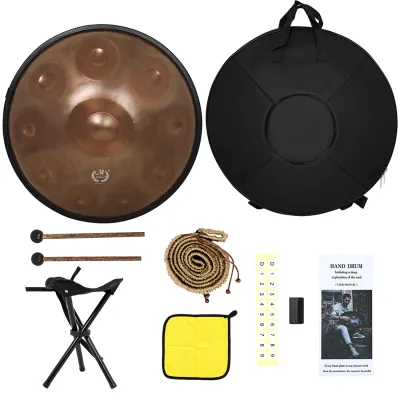
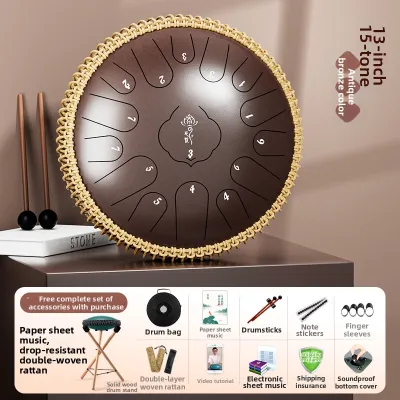
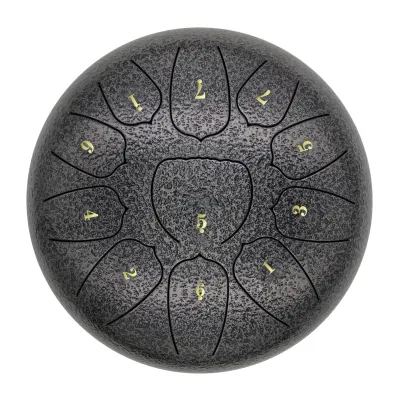
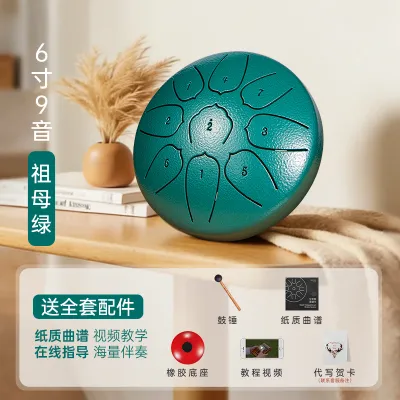
Prices are valid at publication and may change. Please refer to the product page for the latest price.
Additionally, the local climate must play a decisive role in your selection process. Singapore’s high relative humidity can quickly degrade untreated steel, leading to rust and tuning instability. Your quick-start checklist must include verifying the material’s protective treatment before making any financial commitment.
Choosing the Right Scale for Your Musical Mood
Unlike a piano or a guitar, a handpan is tuned to a single, fixed scale. This design means you cannot play a “wrong” note, but it also means you are locked into a specific emotional palette for that instrument. Understanding the difference between scale types is crucial for finding an instrument you will enjoy playing long-term.

Diatonic scales, such as natural minor or major scales, offer a familiar Western musical framework that is easy to comprehend. Exotic or synthetic scales, like the Hijaz or Romanian Hijaz, introduce a mystical, Middle Eastern, or Eastern European flavor. While exotic scales are beautiful, they can sometimes feel restrictive for daily practice or solo meditation.
For first-time players, versatile and grounded scales are highly recommended to build confidence. The D Minor scale, particularly the D Kurd or D Celtic Minor layout, is widely considered the gold standard for beginners. It provides a balanced, contemplative, and deeply resonant soundscape that is incredibly forgiving to play, allowing you to create beautiful melodies almost immediately.
You should also match the scale to your preferred music genres or your plans for playing with others. If you intend to jam with acoustic guitarists, flutists, or other handpan players, choosing a common scale like D Minor or G Major ensures seamless compatibility. If your primary goal is solo sound therapy or personal relaxation, you might instead opt for more introspective scales like F Integral or C# Pygmy.
Note Count and Size: Balancing Range and Playability
When browsing handpans, you will encounter instruments with varying numbers of tone fields. Balancing the musical range of the instrument with its physical playability is essential for a satisfying learning curve.
A standard 8-note or 9-note layout consists of a central low note, known as the Ding, surrounded by a circle of seven or eight tone fields. This classic configuration is highly recommended for beginners because it reduces cognitive load. With fewer notes to manage, you can focus on mastering your striking technique, rhythm, and hand coordination without stretching your fingers awkwardly.
In contrast, extended models with 10 or more notes, or multi-row handpans with notes on the bottom shell, offer a wider musical range but present significant challenges. These instruments require precise hand placement to avoid accidental strikes on adjacent tone fields. They also tend to be heavier and more complex to keep in tune, making them less suitable for those just starting out.
Physical dimensions also affect your playing comfort and travel convenience. Most standard handpans have a diameter of 53 cm to 58 cm, which fits comfortably on the lap of most adults and allows your arms to rest at a natural angle. Smaller travel handpans, measuring around 45 cm to 50 cm, are highly portable but often sacrifice bass resonance and volume. Choosing a standard size ensures a balanced physical and acoustic experience.
Materials and Build: Ensuring Durability in Humid Climates
The choice of steel not only shapes the voice of your handpan but also determines how well it survives in Singapore’s tropical environment. Understanding the properties of different steel treatments will help you choose a durable instrument.
Nitrided steel is mild steel that has undergone a chemical heat treatment to harden the surface and provide moderate rust resistance. Nitrided handpans are celebrated for their warm, ceramic, and focused tone with a controlled sustain, making them excellent for fast, percussive playing styles. However, they still require regular maintenance and oiling to prevent rust in humid conditions.
Stainless steel offers exceptional resistance to rust, making it highly popular among players in tropical climates. These instruments produce a bright, singing tone with a very long sustain and rich ambient resonance. While they require less frequent oiling than nitrided steel, their long sustain can sometimes make fast, percussive patterns sound muddy.
Ember steel is a premium variety of stainless steel designed to offer the best of both worlds. It provides the excellent rust resistance and long sustain of stainless steel, combined with the warm, grounded fundamental tones typically associated with nitrided steel.
When evaluating build quality, perform visual and tactile checks on the instrument. Look for smooth, symmetrical dimples in the center of each tone field, and inspect the rim where the top and bottom shells are joined. The glue line should be even and clean, with no visible gaps or excess adhesive.
Regardless of the material you choose, establishing a strict rust prevention routine is vital in Singapore. Always wipe down the handpan with a dry microfiber cloth after playing to remove acidic oils from your hands. Apply a thin layer of specialized, solvent-free protective oil at least once a month to maintain a barrier against moisture.
Sound Quality: How to Listen for a Well-Tuned Instrument
A well-crafted handpan is a masterpiece of acoustic engineering. Knowing what to listen for will help you distinguish a high-quality, professionally tuned instrument from a poorly made alternative.
Every note on a handpan should produce a clear fundamental tone accompanied by two tuned harmonics: the octave and the compound fifth. When you strike a tone field gently, these three frequencies should ring out in perfect harmony. The overall sound should be balanced, meaning the volume and tonal quality remain consistent as you play from the lowest note to the highest.
You must also listen closely for unwanted cross-talk and dead spots. Cross-talk, or sympathetic resonance, occurs when striking one tone field causes an adjacent note to vibrate discordantly. A dead spot is a note that sounds dull, flat, or lacks the sustain and resonance of the surrounding tone fields. A quality instrument will have minimal cross-talk and vibrant, active notes across the entire shell.
If you are purchasing your handpan online, always request a recent, unedited video demonstration from the seller. Ask them to strike each note individually, both softly and firmly, preferably with a digital tuner visible in the frame. Avoid relying on videos with heavy digital reverb or studio processing, as these effects can easily mask tuning imperfections and structural flaws.
Budgeting and Buying: Navigating Local and Online Channels
Navigating the financial and logistical aspects of buying a handpan requires realistic expectations and careful planning. Because these instruments are handcrafted, prices reflect the labor and expertise involved.
Entry-level handpans typically range from S$1,000 to S$1,800. While these instruments can be suitable for learning the basics, they may have minor tuning inconsistencies or shorter sustain. Mid-range handpans, priced between S$1,800 and S$3,000, are crafted by established makers and offer excellent tuning stability, balanced harmonics, and durable steel treatments. High-end artisan instruments can exceed S$3,000, offering premium materials, custom scales, and exceptional acoustic precision.
Buying from a local specialty music store in Singapore offers the distinct advantage of trying the instrument in person and receiving immediate guidance. It also simplifies future maintenance. Alternatively, purchasing directly from reputable international makers gives you access to a broader selection of scales and materials, though you must account for shipping fees, import taxes, and transit risks.
Before finalizing your purchase, always verify the seller’s warranty terms and retuning policies. A reputable maker should offer a warranty against natural detuning under normal playing conditions. Because handpans eventually require retuning due to temperature changes or physical wear, knowing whether the maker offers local servicing or if you must ship the instrument overseas is a critical factor in your long-term budget.
Frequently Asked Questions (FAQ)
Do I need to learn music theory to play the handpan?
No, you do not need formal music theory training to enjoy playing the handpan. Because each instrument is tuned to a specific, cohesive scale, any combination of notes you strike will naturally harmonize with one another. This intuitive layout allows beginners to explore melodies and rhythms freely through muscle memory and experimentation. As you progress, learning basic rhythm structures and simple chord progressions can help you compose more complex pieces or collaborate smoothly with other musicians.
How often does a handpan need to be retuned?
A high-quality handpan typically holds its tune for one to three years under normal playing conditions. The frequency of retuning depends on your playing style, how hard you strike the steel, and its exposure to physical impacts or extreme heat. Playing with mallets or using excessive force will knock the instrument out of tune much faster than gentle finger strikes. Before buying, check if the maker offers local retuning services or if there is a trusted tuner available in Singapore to avoid expensive international shipping fees.
Can I travel with my handpan on an airplane?
Yes, you can travel with a handpan, but it requires careful preparation to protect the delicate steel shell. Most airlines will not allow a standard-sized handpan in the overhead cabin compartments due to size restrictions. If you must check your handpan as baggage, it is absolutely essential to use a heavy-duty, flight-approved hard-shell case rather than a soft gig bag. Additionally, placing a humidity control pack inside the case can help protect the metal from rapid temperature and moisture changes during the flight.
Community discussion
Share your experience or ask a question. Comments are reviewed before publication.