
To find a comprehensive drawing instruction book that truly teaches you how to draw everything, adult beginners must look beyond simple step-by-step copying. The ideal guide balances fundamental artistic principles—such as perspective, form, light, and shadow—with structured, progressive exercises that build spatial reasoning. Rather than offering isolated projects, a high-quality manual equips you with a repeatable methodology to deconstruct any real-world object into basic geometric shapes, transforming drawing from an elusive talent into a learnable, systematic skill.
What Makes a Drawing Book Suitable for Adult Beginners?
Adult learners approach skill acquisition differently than children or art school students. While children’s books often rely on tracing or highly simplified cartoon shapes, and academic textbooks can overwhelm with dry, historical theory, a suitable beginner guide strikes a careful balance. It must respect your cognitive capacity, offering logical explanations that satisfy an adult’s need to understand the underlying mechanics of art.
The pacing of the book is critical. A well-structured guide does not rush from basic lines to complex portraits in a single chapter. Instead, it introduces concepts sequentially, allowing your hand-eye coordination to catch up with your intellectual understanding. This cognitive pacing ensures you build confidence rather than experiencing frustration.
Products mentioned in this guide
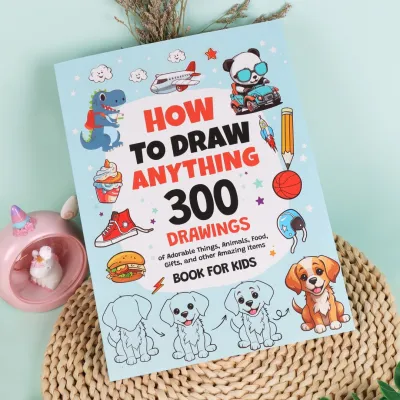
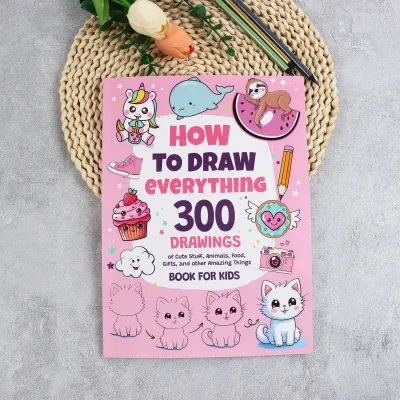
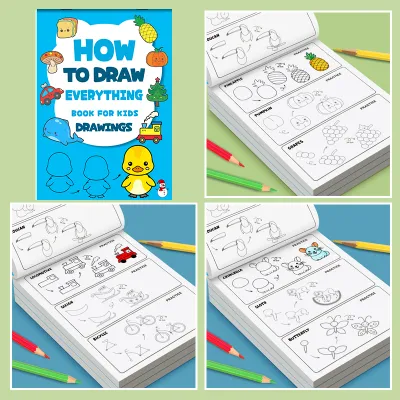
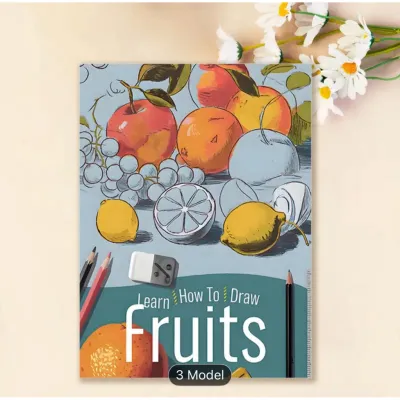
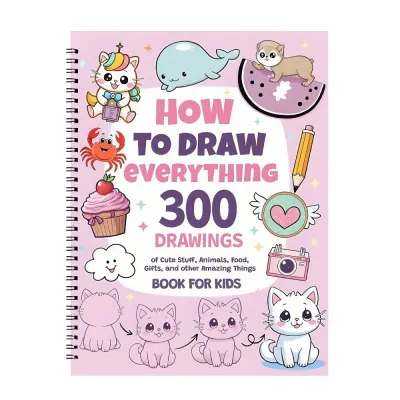
Prices are valid at publication and may change. Please refer to the product page for the latest price.
Furthermore, the book must balance fundamental theory with immediate, practical application. Learning about the physics of light is only useful if the book immediately shows you how to apply that knowledge to shade a sphere. This combination of theory and practice helps you internalize concepts, making them easier to recall when drawing from life.
Finally, look for a clear progression from basic geometric forms to intermediate, multi-element compositions. A great book teaches you to see the world as a collection of spheres, cylinders, and cubes. Once you master these simple primitives, the guide should systematically demonstrate how to combine and modify them to construct complex subjects like household items, landscapes, or basic human figures.
Key Evaluation Criteria for Comprehensive Drawing Guides
When evaluating a book that promises to teach you how to draw everything, you must assess its breadth and depth. The table of contents is your first point of inspection. A truly comprehensive guide should cover a wide variety of subjects, including still life, basic anatomy, perspective, landscapes, and everyday objects. If a book focuses too heavily on a single subject, it fails the “comprehensive” test.

Medium versatility is another important factor. While graphite pencil is the most accessible and forgiving medium for beginners, a well-rounded guide should introduce you to other tools. Look for sections that discuss the unique properties of pen and ink, charcoal, or colored pencils. This exposure helps you understand how different mediums affect line quality, value range, and texture.
The quality and clarity of the visual demonstrations are paramount. Avoid books that jump from a rough outline to a highly detailed, finished drawing without showing the intermediate steps. The best guides use color-coded construction lines, step-by-step progression panels, and clear annotations to explain the artist’s decision-making process at each stage of the drawing.
Additionally, look for books that address common beginner mistakes. Visual comparisons showing a common error—such as incorrect perspective on a tabletop or flat shading on a curved surface—alongside the corrected version are incredibly valuable. These comparisons teach you how to self-critique your work, which is an essential skill for self-directed learners.
Matching Book Methodologies to Your Learning Style
Different authors employ different pedagogical approaches, and matching these methodologies to your personal learning style will greatly enhance your progress. The first major approach is observation-based drawing. This method focuses on training your eyes to see shapes, negative spaces, and proportions exactly as they appear in reality, rather than how your brain conceptualizes them. It is highly effective for drawing from life and developing a realistic style.
The second approach is construction-based drawing. This methodology teaches you to think like a sculptor, building complex forms out of simple three-dimensional primitives. You learn to understand the structural volume of an object before adding surface details. This approach is indispensable if you want to draw from your imagination, design characters, or create concept art.
You must also choose between step-by-step project tutorials and technique-heavy reference manuals. Project-based books guide you through completing specific drawings, offering immediate gratification and a sense of accomplishment. Reference manuals, conversely, focus on deep dives into specific techniques, such as the mechanics of two-point perspective or the anatomy of the human hand.
To make the right choice, consider your ultimate artistic goals. If you want to sketch your surroundings in Singapore’s vibrant urban spaces or capture still lifes at home, an observation-focused book is ideal. If you dream of creating your own worlds, comic art, or industrial designs, a construction-focused guide will serve you far better. Many modern comprehensive books attempt to blend these styles, which is often the best path for an absolute beginner.
Pre-Purchase Checks: Editions, Formats, and Usability
Before purchasing a drawing guide, it is essential to evaluate its physical or digital usability. Drawing is a two-handed activity; you need one hand to hold your sketchbook and the other to draw. If your instruction book constantly snaps shut or requires a heavy paperweight to stay open, it will quickly become a source of daily frustration. Look for books with spiral binding, lay-flat bindings, or digital editions that can be propped up easily.
If you prefer physical books, pay attention to the paper and print quality. High-contrast printing is crucial for studying value scales and subtle shading transitions. If the print quality is poor, delicate graphite gradations will look like muddy gray blocks, making it difficult to understand how to replicate the values in your own work.
For those who prefer digital formats, compatibility and screen size are key considerations. Ensure the digital edition is compatible with your tablet or e-reader and allows you to zoom into detailed illustrations without losing clarity. A high-resolution PDF or fixed-layout ePub is generally superior to a standard reflowable text format for art instruction books, as it preserves the relationship between text and explanatory diagrams.
Finally, verify the specific edition and language of the book. Publishers frequently release revised editions, workbooks, or condensed versions under similar titles. Whether you are budgeting S$20 to S$50 for a high-quality manual, carefully read the product description on your chosen ecommerce platform to ensure you are buying the complete, unabridged instructional manual rather than a supplementary workbook that requires a separate purchase.
Integrating Your Guide into a Sustainable Practice Routine
Acquiring a high-quality drawing book is only the first step; the real challenge lies in establishing a sustainable practice routine. As an adult beginner, you must manage your expectations. Drawing is a motor skill that requires time to develop. Your hand will initially fail to execute what your eye has learned to see. Accept this “creative gap” as a natural, temporary phase of your artistic journey.
To build muscle memory and spatial understanding, supplement the book’s lessons with targeted, repetitive practice. Do not simply read through the chapters like a novel. For every page of reading, aim to fill several pages in your sketchbook with practice strokes, ellipses, and value scales. Short, daily practice sessions of twenty to thirty minutes are far more effective than a single, exhausting three-hour session once a week.
You do not need to achieve perfection on one chapter before moving to the next. If you understand the core concept of a lesson and can execute it with reasonable accuracy, progress to the next topic. You can always return to earlier chapters to refine your skills as your overall hand-eye coordination improves.
Eventually, you will reach a point where a general, comprehensive guide no longer answers your specific questions. You might find yourself drawn specifically to portraiture, landscape painting, or urban sketching. When this happens, view it as a sign of progress. It means you are ready to transition from your comprehensive beginner guide to specialized, intermediate texts that focus deeply on your chosen niche.
Frequently Asked Questions (FAQ)
Do I need to buy expensive art supplies before starting with a comprehensive book?
No, you do not need premium or specialized art supplies to begin. Most comprehensive drawing books focus on fundamental skills like line quality, perspective, and value, which can be practiced with very basic tools. A standard graphite pencil (such as a 2B or 4B), a plastic eraser, a kneaded eraser, and a simple, inexpensive sketchbook are entirely sufficient. Mastering these fundamentals depends on your observation and hand control, not the brand of your pencil. Invest in higher-end materials only after you have established a consistent practice routine and understand your personal preferences.
Can I learn to draw effectively from a digital version of an instruction book?
Yes, digital books are highly effective, provided you set up your workspace correctly. The primary advantage of a digital book is the ability to zoom in on fine details, cross-hatching, and construction lines that might look small in print. However, digital screens can cause eye strain during long sessions, and devices can slide around on your desk. To draw effectively, use a stable tablet stand to keep the screen at eye level next to your sketchbook, and ensure your device’s auto-sleep setting is turned off so you do not have to constantly touch the screen with graphite-covered fingers.
How long should I spend on each chapter before moving to the next?
There is no fixed timeline, as pacing depends entirely on your individual progress and practice frequency. Instead of rushing to finish the book, focus on mastery of the core concepts in each chapter. A good rule of thumb is to move on when you can draw the chapter’s primary subject from direct observation or simple reference with reasonable accuracy and confidence. If you find yourself struggling with a new chapter, it is often a sign that you need to spend more time practicing the foundational exercises in the preceding sections.
Community discussion
Share your experience or ask a question. Comments are reviewed before publication.