
Finding the right ukulele padded bag requires matching your instrument’s exact physical dimensions—length, width, and depth—with the internal specifications of the bag, rather than relying solely on generic size labels like soprano, concert, or tenor. While these standard categories provide a helpful starting point, manufacturing variances mean a hands-on measurement is the safest path to protecting your instrument. Taking the time to verify these details ensures your ukulele remains secure and undamaged during transport.
Understand Your Ukulele Size and Fit Requirements
To choose the correct bag, you must first understand the physical characteristics of your instrument. Soprano ukuleles are the smallest standard size, known for their compact bodies and short scale lengths. Concert ukuleles are slightly larger, offering a longer neck and a wider body, while tenor ukuleles provide an even larger frame and deeper resonance. Each of these sizes requires a corresponding bag that mirrors its unique proportions.
Using a bag that is too tight poses significant risks to your instrument. When you force a ukulele into an undersized bag, the fabric and zipper put continuous pressure on the tuning pegs and the bridge. This pressure can knock the instrument out of tune, strain the neck joint, or even lift the bridge off the soundboard over time. Additionally, tight zippers are more likely to scratch the delicate wood finish during packing and unpacking.
Products mentioned in this guide
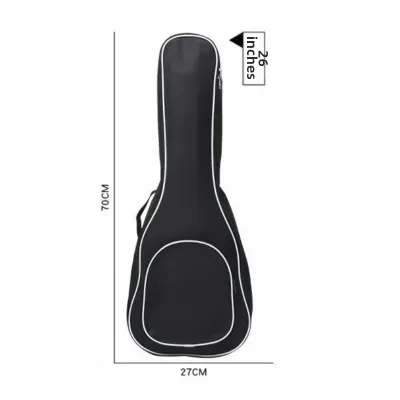
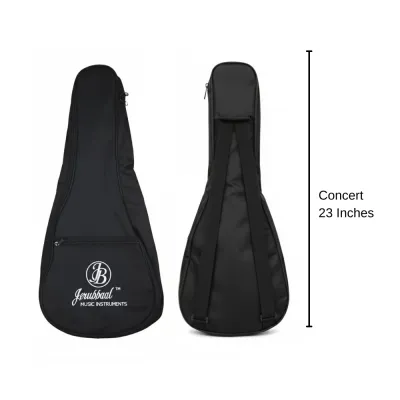
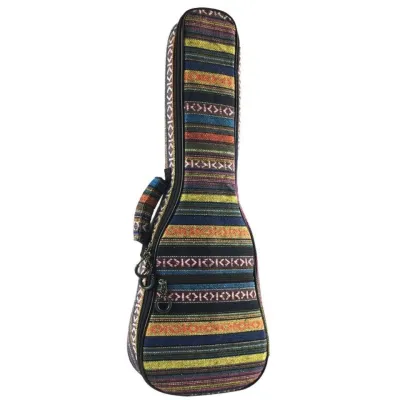
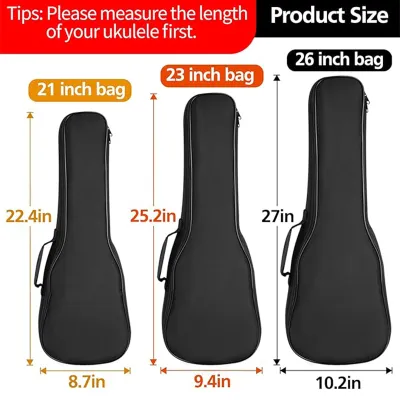
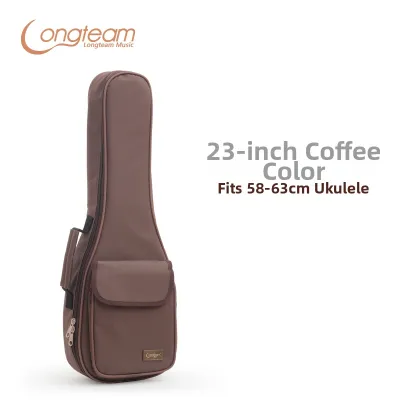
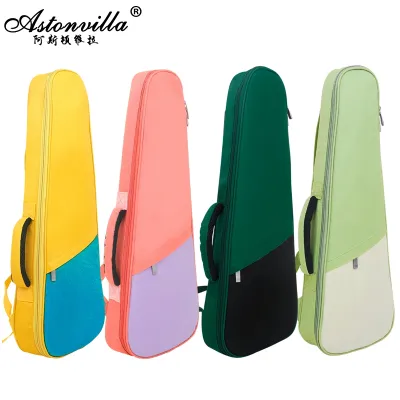
Prices are valid at publication and may change. Please refer to the product page for the latest price.
Conversely, a bag that is too loose presents its own set of hazards. If there is excess space inside the compartment, the ukulele will shift and slide with every step you take. This constant movement can cause the headstock to repeatedly collide with the top of the bag, potentially loosening the tuning gears or damaging the nut. In the event of an accidental drop, a loose instrument has room to accelerate inside the bag before impact, reducing the effectiveness of the padding.
It is also important to recognize that standard dimensions are not universal across all brands. A pineapple-shaped soprano ukulele has a wider waist than a traditional figure-eight model, and some modern tenor ukuleles feature thicker bodies or extended headstocks. Because of these manufacturing variations, verifying your specific instrument’s dimensions against the bag’s internal measurements is a critical step.
How to Measure Your Ukulele for a Perfect Fit
Obtaining accurate measurements of your ukulele is a straightforward process that requires only a flexible measuring tape or a standard ruler. To begin, lay your instrument flat on a secure, level surface. This prevents the ukulele from slipping while you take your measurements and ensures accuracy.

First, measure the total length of the ukulele. Place the start of your measuring tape at the very top of the headstock and extend it down to the bottom edge of the lower body. Be sure to measure along the center line of the instrument to capture the absolute longest point, as some headstocks have decorative carvings or asymmetrical shapes that add extra millimeters.
Next, measure the width of the body at its widest points. The ukulele body is divided into two main sections: the upper bout (the smaller curve near the neck) and the lower bout (the larger curve at the bottom). Measure horizontally across the widest part of the upper bout, and then do the same for the lower bout. These two numbers are crucial, as many padded bags taper significantly near the top of the body compartment.
Briefly measure the maximum depth of the body. Place your ruler against the side of the ukulele body to measure the distance from the backboard to the soundboard. When doing this, look for any protruding elements that might add to the overall thickness. For example, if your instrument has installed strap buttons, bridge pins, or an arched back, include these in your depth measurement to avoid a tight squeeze.
Once you have recorded these four key measurements—total length, upper bout width, lower bout width, and maximum depth—keep them handy. Having these exact figures written down allows you to bypass generic size labels and compare your instrument directly to the technical specifications provided by bag manufacturers.
How to Match Your Measurements to Bag Specifications
When shopping for a ukulele padded bag, you will often encounter two sets of dimensions in the product descriptions: external and internal. It is vital to focus primarily on the internal dimensions, as these represent the actual usable space available for your instrument. External dimensions simply tell you how much space the bag will occupy in your closet or car trunk.
The thickness of the padded lining plays a major role in how a bag fits. A bag with 10mm or 20mm of high-density foam padding will have internal dimensions that are significantly smaller than its external shell. When reviewing product specifications, ensure that the listed internal dimensions are at least one to two centimeters larger than your ukulele’s measurements. This small buffer accounts for the compression of the padding and allows you to insert and remove the instrument smoothly.
Many reputable manufacturers provide specific model compatibility charts alongside their product listings. If you own a popular ukulele model, check if the bag manufacturer explicitly lists your instrument as a confirmed fit. This is especially helpful for non-traditional body shapes, such as cutaway designs or electric-acoustic ukuleles with side-mounted preamp control boxes.
Even with careful measurement, slight variations in manufacturing can occasionally lead to an unexpected fit. Before finalizing your purchase, verify the return and exchange policy of the retailer or online marketplace. Choosing a seller that offers hassle-free returns ensures that you can swap the bag for a different size if the fit is not as snug or secure as you prefer.
Key Protection Features to Check Before Buying
While finding the correct size is the first step, the overall protective quality of the bag is what ultimately keeps your instrument safe during travel. The primary line of defense is the padding itself. Look for bags that feature high-density foam rather than soft, spongy open-cell foam. High-density padding absorbs impacts much more effectively, preventing the force of a bump or drop from transferring directly to the wooden body of your ukulele.
A high-quality ukulele padded bag should also include internal structural supports. Look for models equipped with an internal neck cradle or a padded neck rest with a Velcro security strap. This feature suspends the neck and headstock, keeping the instrument centered and preventing the tuning pegs from rubbing against the interior lining. Some premium bags also feature reinforced patches near the bridge and headstock areas to prevent the sharp string ends from tearing the inner fabric.
The hardware of the bag is another critical area to inspect. Heavy-duty, dual-opening metal zippers are highly recommended, as they allow you to open the bag fully and lay it flat for safe loading. Check the stitching around the backpack straps and the main carrying handle; reinforced cross-stitching or metal rivets at these high-stress points will prevent the straps from tearing away over time.
Lastly, consider the utility of external accessory pockets. A well-designed bag will feature at least one spacious front pocket to hold your essential gear, such as a clip-on tuner, spare nylon strings, a capo, and a cleaning cloth. Ensure these pockets are designed to expand outward so that packing them full of accessories does not compress the main compartment and put unnecessary pressure on the face of your ukulele.
Frequently Asked Questions (FAQ)
Can I use a concert bag for a soprano ukulele?
While a soprano ukulele will physically fit inside a larger concert bag, doing so is generally not recommended for regular transport. The extra space allows the smaller instrument to slide around during transit, which can lead to cosmetic scratches or structural damage if the bag is bumped. If you must use a concert bag as a temporary solution, you can stabilize the instrument by placing a clean, soft microfiber cloth or a small foam insert in the empty spaces around the body and headstock to prevent shifting.
Do I need a humidifier inside my padded ukulele bag?
Whether you need a humidifier depends largely on your local climate and the construction of your instrument. Solid wood ukuleles are highly sensitive to changes in relative humidity, whereas laminate models are much more resilient. In dry regions or air-conditioned environments, a small case humidifier can prevent the wood from cracking or shrinking. Conversely, in highly humid tropical climates like Singapore, you may actually need to place silica gel packets or specialized humidity-control packs inside the bag to absorb excess moisture and prevent mold growth. Always consult your instrument manufacturer’s care guidelines for specific humidity recommendations.
Are hard cases better than padded bags for tenor ukuleles?
The choice between a hard case and a padded bag depends on your lifestyle, travel habits, and personal preferences. Hard cases offer superior crush resistance and structural protection, making them the ideal choice for air travel, stacking in a car trunk, or long-term storage. However, they are heavier and less convenient to carry. A high-quality padded bag with thick foam offers excellent protection against daily bumps and scratches while remaining lightweight and easy to carry on public transport or during a walking commute.
Community discussion
Share your experience or ask a question. Comments are reviewed before publication.