
Finding the correct Yamaha guitar bag size requires matching your instrument’s exact physical dimensions with the internal specifications of the bag. While bags are categorized broadly as acoustic, classical, or electric, variations in body shapes, scale lengths, and headstock angles mean a generic label is never a guarantee of a perfect fit. A bag that is too tight can put pressure on the neck joint and tuning pegs, while an oversized bag allows the instrument to slide around, increasing the risk of cosmetic or structural damage during transit.
Measure Your Guitar's Key Dimensions
To find a bag that offers reliable protection, you must first establish your guitar’s baseline measurements using a standard tape measure. Start by measuring the overall length, which is the straight-line distance from the very top of the headstock to the bottom edge of the lower bout. Be sure to include the strap button at the bottom of the guitar in this measurement, as this small protrusion can add up to a centimetre of length and prevent a tight-fitting zipper from closing.
Next, measure the body width at its widest points. This involves checking both the upper bout, which is the wider upper curve of the body, and the lower bout, which is the widest part of the lower body. These dimensions ensure the guitar sits snugly within the side padding without stretching the zipper seams or compressing the foam.
Products mentioned in this guide
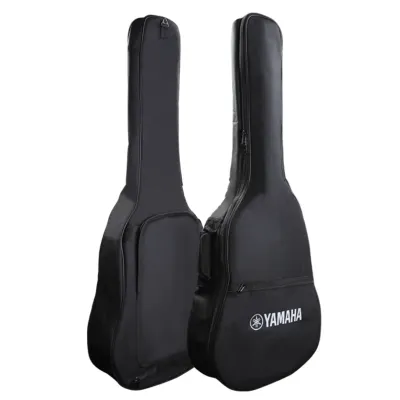
Prices are valid at publication and may change. Please refer to the product page for the latest price.
Do not forget to measure the maximum body depth. For acoustic and classical guitars, measure from the back of the body to the top of the soundboard, adding a small allowance for the bridge and saddle height. For electric guitars, include any protruding hardware such as control knobs, pickup selectors, or floating tremolo arms that might press against the front panel of the bag.
Finally, consider the scale length and how it influences the neck pocket fit. The scale length, which is the distance from the nut to the saddle, determines where the neck heel rests. A proper fit ensures that any integrated neck support blocks or straps inside the bag align correctly with the guitar’s neck rather than pressing against the delicate headstock joint.
Match Guitar Body Shapes to Yamaha Bag Profiles
Yamaha designs its instrument bags to match specific structural families, categorizing them into distinct profiles for acoustic, classical, electric, and bass guitars. Matching the internal contour of the bag to your guitar’s physical outline is essential to prevent the instrument from shifting and to ensure that reinforced padding zones align with the most vulnerable parts of the guitar.

Different guitar series have distinct body depths and silhouettes. For example, a slim-line acoustic-electric guitar will require a different internal depth profile than a traditional deep-bodied dreadnought, making it vital to match the bag’s shape to the specific instrument family.
Sizing for Acoustic and Classical Guitars
Classical guitars and steel-string acoustic guitars have fundamentally different proportions that affect how they fit into a gig bag. Classical guitars generally feature a wider neck and a more symmetrical, rounded body shape. Consequently, dedicated classical guitar bags are designed with a wider neck channel to accommodate the wider nut and headstock, along with specific depth allowances tailored to traditional classical body depths.
Steel-string acoustics, such as dreadnought or concert models, require careful checking of the lower bout width. A dreadnought guitar has a deep, broad body that will stretch or fail to fit into a slimmer concert-sized or classical bag. Conversely, placing a smaller concert acoustic into a dreadnought bag leaves excess empty space, allowing the guitar to slide around during transport.
When choosing an acoustic bag, verify that the internal neck support block aligns correctly with the heel joint of your guitar. This block is designed to suspend the neck and relieve pressure on the headstock, but it can only function effectively if the body of the guitar sits fully against the bottom padding of the bag.
Sizing for Electric Guitars and Basses
Solid-body electric guitars and basses present unique dimensional challenges due to their diverse body shapes, headstock angles, and hardware configurations. Electric guitar bags are typically slimmer and flatter than acoustic bags, but they must accommodate angled headstocks and protruding tuning machines. A bag with insufficient headstock clearance can force the tuning pegs against the zipper, causing the instrument to go out of tune or putting stress on the neck.
For bass guitars, verifying the total length is critical because of their extended scale lengths. A standard electric guitar bag is far too short for a bass, which requires a dedicated bass gig bag to accommodate the longer neck and larger headstock. Trying to force a bass into a standard guitar bag can damage both the zipper and the instrument’s headstock.
Additionally, consider any aftermarket modifications or specific hardware on your electric guitar or bass. Strap locks, floating tremolo systems, and angled output jacks can add extra width or depth to the instrument. Ensure the bag has enough flexibility or internal clearance to accommodate these components without creating tight pressure points.
Evaluate Protection, Padding, and Storage Features
Beyond basic dimensions, the level of protection and storage capacity should align with your daily transit habits and environmental conditions. Standard gig bags often feature lightweight foam padding suitable for quick trips in a car or storage at home. However, if you frequently commute on public transport or carry your instrument through busy urban areas, a bag with heavy-duty, high-density foam padding or integrated impact-resistant panels offers significantly better protection against bumps and drops.
Examine the internal neck support systems and headstock suspension features. Premium bags often include adjustable neck cradles with hook-and-loop straps that secure the neck in place, preventing lateral movement. Some designs also feature reinforced interior patches near the bridge and headstock to prevent sharp string ends from tearing the inner lining over time.
Storage is another practical consideration for active musicians. Evaluate the exterior pocket dimensions to ensure they can hold your essential accessories, such as instrument cables, clip-on tuners, spare strings, and sheet music or tablets. A well-designed bag distributes this extra weight evenly, keeping the overall profile balanced when carried on your back using the shoulder straps.
Verify Fit and Compatibility Before Purchasing
Before making a final decision, cross-reference your guitar’s measured dimensions with the bag’s published internal specifications. Do not rely solely on the guitar’s model name or generic size classifications, as manufacturers occasionally update body shapes or dimensions between different production years.
Aim for a snug fit where the guitar is held securely by the internal padding without requiring force to zip the bag closed. There should be no excess bulk that allows the instrument to shift side-to-side or slide up and down inside the bag. If you are unsure about the fit, check the retailer’s return policy to ensure you can exchange the bag if the physical fit does not match your expectations upon arrival.
For those living in humid tropical climates, environmental protection is also a key factor. Look for bags featuring water-resistant exterior fabrics and robust zippers to protect your instrument from sudden rain showers during outdoor commutes. Ensuring the bag has a reliable weather seal is just as important as verifying the physical dimensions.
Frequently Asked Questions (FAQ)
Can I use an acoustic guitar bag for a classical guitar?
While a classical guitar may physically fit inside a larger steel-string acoustic bag, doing so is generally not recommended due to the mismatch in dimensions. Acoustic bags are typically longer and deeper, leaving excess empty space that allows the classical guitar to shift during transit. This movement can cause the instrument to slide around, potentially scratching the delicate finish or putting unnecessary stress on the neck joint. Additionally, the neck channel in an acoustic bag may not properly support the wider neck of a classical guitar.
Will a standard Yamaha electric bag fit a bass guitar?
No, a standard electric guitar bag will not fit a bass guitar due to the significant difference in scale length and overall instrument length. Bass guitars have much longer necks and larger headstocks, which require a dedicated bass gig bag. Attempting to force a bass into an electric guitar bag can bend the neck, damage the tuning machines, or rupture the bag’s zippers and seams. Always choose a bag specifically designed for the longer dimensions of a bass guitar.

Community discussion
Share your experience or ask a question. Comments are reviewed before publication.