
To check if a 61-key keyboard bag will fit your specific keyboard model, you must compare the physical maximum dimensions of your instrument against the internal dimensions of the bag, rather than relying on the “61-key” label alone. While the label indicates the number of keys on the keybed, it does not account for the highly variable chassis designs across different manufacturers and models.
Taking precise measurements of your instrument and understanding how to read manufacturer size charts are essential steps before making a purchase. This is especially important for musicians who frequently transport their instruments on public transport or store them in compact spaces, where a poorly fitting bag can lead to unnecessary bulk or physical damage. By following a systematic measurement and matching process, you can ensure your keyboard remains secure, protected, and easy to carry.
Why "61-Key" Labels Are Not Enough for a Perfect Fit
Assuming that all 61-key keyboards share a uniform size is a common mistake that often results in returning an ill-fitting bag. The term “61-key” refers strictly to the layout of the keybed—typically spanning five octaves. However, the frame built around that keybed varies dramatically depending on the instrument’s primary function, whether it is a slim MIDI controller, a performance synthesizer, or a feature-heavy arranger workstation.
Products mentioned in this guide
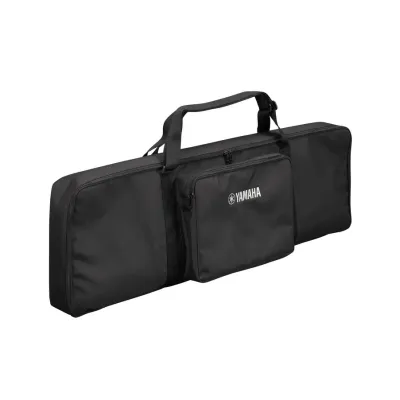
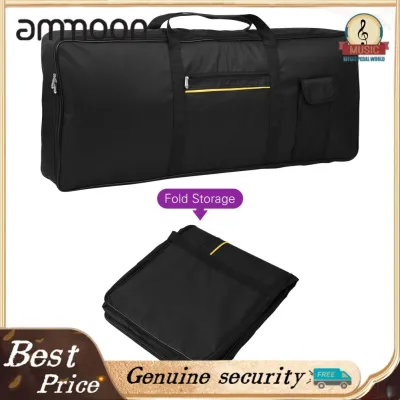
![TMW Digital Piano Keyboard Bag suitable for 37 44 61 Keys Model Premium Durable Quality Accessories [LIMITED STOCK]](https://img.lazcdn.com/g/p/01098f39a16a9a8c7f3e002aa8139b0d.jpg_400x400q80.jpg_.webp)
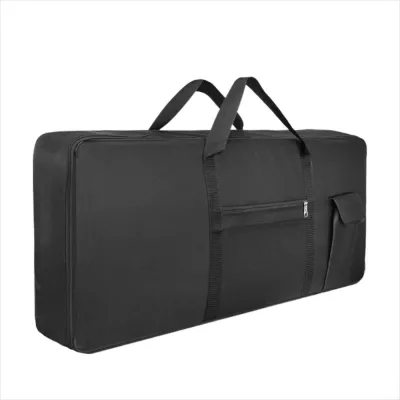
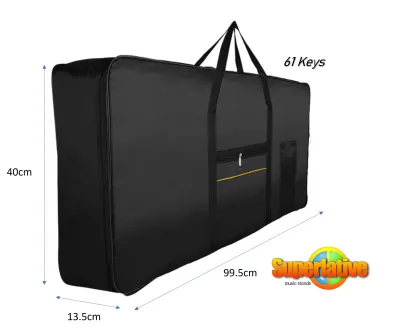
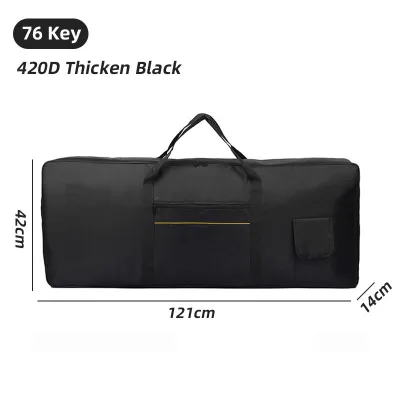
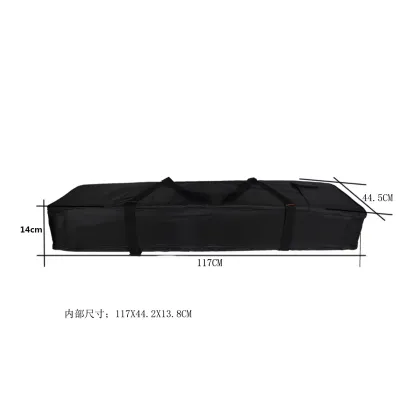
Prices are valid at publication and may change. Please refer to the product page for the latest price.
For instance, beginner arranger keyboards often feature large, built-in stereo speakers on either side of the keybed, which significantly increases the overall length of the chassis. On the other hand, professional synthesizers and performance controllers frequently place pitch bend wheels, modulation wheels, or assignable joysticks to the left of the keys, extending the length of the unit without adding to the key count itself.
Additionally, the depth and height of the chassis can vary based on the control interface. Workstations with extensive physical sliders, rotary knobs, and tilted LCD screens require a much taller and deeper bag than a minimalist digital piano. If you attempt to force a deep or tall keyboard into a bag designed for a slim controller, you risk putting constant, damaging pressure on the delicate controls, keys, and internal circuit boards. Conversely, a bag that is too large allows the instrument to slide around, rendering the protective padding ineffective during transit.
How to Measure Your 61-Key Keyboard Accurately
To find a bag that offers the right balance of security and ease of use, you must obtain the exact physical footprint of your keyboard. Do not rely on the dimensions listed in the user manual if they only represent the main body shell, as they may omit protruding components. Instead, take manual measurements using a rigid metal tape measure, which prevents the sagging and inaccuracies common with soft sewing tapes.

Start by measuring the absolute maximum length of the keyboard. Extend the tape measure from the outermost left edge to the outermost right edge. Be sure to include any protruding side panels, strap buttons, or pitch bend controllers in this measurement.
Next, measure the maximum width, which is often referred to as the depth of the keyboard. Measure from the very front edge of the keys to the furthest point on the back panel. Pay close attention to the rear of the instrument; you must account for any fixed music stand brackets, protruding power switches, or master volume knobs that extend past the main chassis line.
Finally, measure the maximum height, or thickness, of the instrument. Place the keyboard on a flat, level surface and measure from the tabletop to the highest point on the top panel. This highest point is rarely the keys themselves; it is usually the top of a control knob, a joystick, or the raised casing of a display screen. Make sure the rubber feet on the bottom of the keyboard are included in this measurement, as they add to the overall height inside the bag.
Decoding Keyboard Bag Dimensions and Specifications
Once you have your keyboard’s exact measurements, the next step is to interpret the size charts provided by bag manufacturers. The most critical distinction to make during this step is the difference between internal and external dimensions.
External dimensions represent the outer boundaries of the bag, including external accessory pockets, carrying handles, and the thickness of the outer shell. These measurements are useful for determining if the bag will fit into a car boot or a storage closet, but they do not tell you if your keyboard will fit inside. Always locate and use the internal dimensions for your fitting calculations.
Padding thickness plays a major role in reducing the usable interior space of a gig bag. For example, a bag advertised with 20mm of high-density foam padding will have an internal length and width that are at least 40mm smaller than its external measurements. If a manufacturer only lists external dimensions, you must subtract double the padding thickness from the length, width, and height to estimate the true internal capacity.
Furthermore, pay attention to the structural shape of the bag. Many gig bags feature tapered ends, rounded corners, or rigid internal frames. If your keyboard has sharp, square 90-degree corners, it may not fit into a bag with heavily rounded corners, even if the maximum length and width specifications seem to align.
Matching Your Keyboard to the Right Bag Size
With both sets of measurements in hand, you can now calculate the ideal fit. As a general rule, look for a keyboard bag with internal dimensions that are approximately 1 to 2 centimeters larger than your keyboard’s physical measurements in length and width. This small clearance provides just enough room to insert and remove the instrument smoothly without straining the zippers or stitching.
Avoid choosing a bag that is a perfect, millimetre-exact match, as fabric tension and manufacturing tolerances can make the fit too tight. However, do not go too far in the opposite direction. If a bag is more than 3 to 4 centimeters larger than your keyboard in any direction, the instrument will shift during transport. This constant movement can cause the keys to rub against the interior lining, potentially leading to cosmetic wear or broken key mechanisms.
If you must use a bag that is slightly larger than your instrument, evaluate models that include adjustable internal security features. Many mid-range and premium bags come equipped with internal Velcro straps, padded dividers, or customizable foam blocks. These accessories allow you to snuggly secure a shorter or slimmer keyboard, preventing it from sliding around inside a larger compartment.
Additionally, consider how you plan to transport your accessories. If you carry a heavy sustain pedal, a power adapter, and thick audio cables, storing them in the main compartment alongside the keyboard can cause scratches and structural damage. Look for a bag with dedicated, padded external pockets to keep these items completely separate from the instrument’s keybed and control panel.
Verifying the Fit Before and After Purchase
Before finalizing your purchase, take a few precautionary steps to confirm that the bag will perform well in real-world conditions. Whether you are investing S$50 in a basic padded gig bag or over S$200 in a premium semi-rigid case, verifying the fit beforehand saves time and potential return shipping costs.
First, review the return and exchange policies of the retailer or online marketplace. Ensure they accept returns for sizing issues, and keep all original tags and packaging intact until you have physically tested the fit.
Second, leverage the experience of the music community. Search online forums, gear registries, and customer review sections using your specific keyboard model name alongside the target bag model. Other musicians frequently post about their hands-on experiences, noting if a specific combination is too tight, too loose, or a perfect match.
Once the bag arrives, perform a gentle physical test. Place your keyboard inside the main compartment without forcing it. Slowly pull the zippers closed, paying close attention to any points of resistance. If you notice the fabric stretching tightly over the corners, or if the zipper presses directly against the keys or control knobs, the bag is too small. A proper fit should allow the zippers to glide smoothly around the entire perimeter without compressing the protective padding against the instrument’s delicate components.
Frequently Asked Questions (FAQ)
Can I use a 61-key bag for a smaller or larger keyboard?
Using a 61-key bag for a smaller keyboard, such as a 49-key model, is possible but requires extra precaution. Because the bag will have significant empty space, the smaller keyboard will slide around during transit, exposing it to impact damage. To prevent this, you must fill the void using adjustable internal Velcro straps, dedicated foam inserts, or clean towels to keep the instrument centered and immobile.
Conversely, you should never attempt to force a larger keyboard, such as a 73-key or 76-key model, into a 61-key bag. Doing so will overstretch the seams, compress the protective padding to a point where it offers zero impact absorption, and put dangerous pressure on the outer keys and chassis corners, which can warp the keybed or snap the keys entirely.
Should I choose a soft gig bag or a hard case for my 61-key keyboard?
The choice between a soft gig bag and a hard case depends on your primary transport methods and storage environment. Soft gig bags are lightweight, easy to carry using backpack straps, and convenient to store in space-constrained homes. They are ideal for local rehearsals, music lessons, and personal travel where you maintain direct control over how the instrument is handled. For adequate protection, look for a gig bag with at least 15mm to 20mm of high-density foam padding.
Hard cases, or molded flight cases, offer maximum protection against heavy impacts, crushing forces, and environmental changes. They are essential if you are checking your instrument as airline luggage, loading it into a shared band van where heavy equipment is stacked on top, or storing it in areas prone to extreme temperature and humidity fluctuations. However, hard cases are significantly heavier, bulkier, and more expensive than soft bags.
Community discussion
Share your experience or ask a question. Comments are reviewed before publication.