
Measuring an electric guitar for a hard case requires capturing three primary physical dimensions: the total length of the instrument, the widest point of the body, and the maximum depth including all protruding hardware. A secure, form-fitting hard case is the most reliable defense against structural damage, finish scratches, and environmental shifts during transit or storage. Because minor discrepancies in body contours or headstock angles can prevent a case from closing safely, taking precise measurements of your specific instrument is an essential first step before you begin browsing online catalogs or visiting a local music store.
Tools You Need Before Measuring Your Guitar
To obtain accurate physical measurements, prepare a stable environment and gather the correct tools. Avoid soft, elastic sewing tapes that stretch over long distances, as minor deviations can lead to an ill-fitting case. Instead, opt for a flexible steel measuring tape or a long, rigid metal ruler to measure straight lines without bending.
Clear a flat, stable surface such as a table or workbench. Lay down a thick towel or a dedicated guitar work mat to protect the delicate finish from scratches and prevent sliding. Keep a notepad or digital device nearby to record each dimension immediately, ensuring you do not rely on memory when comparing figures to manufacturer specifications.
Products mentioned in this guide
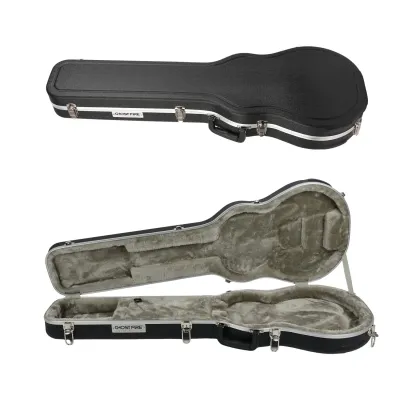




Prices are valid at publication and may change. Please refer to the product page for the latest price.
Step-by-Step Guide to Measuring Your Electric Guitar
Measuring an electric guitar involves translating a complex, three-dimensional instrument into linear dimensions that correspond to a hard case’s internal cavity. By breaking the process down, you can systematically document the length, width, and depth profiles that define your guitar’s unique footprint.

Measuring Overall Length and Maximum Body Width
The first critical dimension is overall length, which determines the minimum internal length your hard case must provide. Lay your guitar flat on its back and run your measuring tape in a straight line parallel to the neck, from the tip of the headstock to the bottom edge of the body. If your guitar has strap buttons, measure to the outer edge of the button, as this hardware adds to the total length.
Next, determine the maximum body width, which typically occurs at the lower bout—the widest part of the lower body. Place your tape measure straight across this section, perpendicular to the neck. For asymmetrical or offset body shapes, find the center line of the body, measure from that line to the outermost point on each side, and add those two figures together to find the true maximum width.
Measuring Body Depth and Hardware Protrusions
A hard case must be deep enough to accommodate your guitar without putting downward pressure on the face, which can damage electronics or crack the wood. Measure the depth of the wood itself at the thickest part of the body, usually near the center of the lower bout or around the neck joint. For flat-top guitars, this is uniform, but carved-top models require extra care to capture the peak of the arch.
Once you have the base body depth, account for protruding hardware on the front. Measure the height of the highest components, including pickups, control knobs, switches, and the bridge assembly. If your guitar features a non-removable tremolo system, these elements add significant height that the lid padding must accommodate.
Finally, inspect the back of the guitar. Raised neck plates, protruding neck joint screws, or thick tremolo cavity covers add subtle but important millimeters to the overall depth. Combine the base body thickness with the height of the tallest front and rear protrusions to establish the minimum internal depth your hard case must offer.
Accounting for Headstock Angles and Neck Joints
Standard rectangular measurements often fail to account for structural angles. One critical area is the headstock angle. Guitars with flat headstocks require relatively shallow cases. Conversely, guitars with angled headstocks tilt backward, which significantly increases the effective depth required at the top of the case. If an angled headstock is placed in a flat case, the headstock tip may touch the bottom first, putting immense pressure on the fragile neck joint and risking a break if the case is dropped.
The neck heel—the joint where the neck meets the body—also requires consideration. Hard cases typically feature internal neck cradles designed to hold the neck stable and provide storage compartments underneath. Ensure that the position of these internal supports aligns with your guitar’s neck profile without pressing directly against the neck joint or putting uneven pressure on the finish.
Additionally, offset body shapes and guitars with extended upper horns require special attention. A long upper horn can shift the balance point and may require a wider upper bout area in the case than a standard symmetrical design. If your guitar has an exaggerated horn, measure the distance from the neck center line to the tip of the horn to ensure the case’s internal cutout can accommodate this shape without pinching.
How to Match Your Measurements to Case Specifications
Once you have recorded your guitar’s dimensions, compare them to the specifications provided by hard case manufacturers. Always look specifically for the “interior dimensions” or “internal cavity dimensions.” Exterior dimensions include the thick protective outer shell, heavy-duty latches, and internal foam padding, which means they do not represent the actual usable space available for your instrument.
Do not rely solely on raw numbers; match your guitar’s body style to the intended mold of the case. Hard cases are generally categorized by body shapes, such as single-cutaway, double-cutaway, offset, or extreme geometric shapes. A case designed for a single-cutaway guitar will have internal padding shaped to support that specific silhouette. Attempting to force a double-cutaway or offset guitar into it can damage both the instrument and the case lining, even if the overall length and width measurements seem to match on paper.
Aim for a snug, secure fit where the guitar cannot shift or slide during transport. However, avoid cases where the internal dimensions are exactly identical to your guitar’s measurements. A tiny amount of clearance—typically around five to ten millimeters of wiggle room in the padding—is necessary to allow you to insert and remove the guitar safely without scraping the finish.
Common Measuring Mistakes to Avoid
One frequent error is overlooking the strap buttons. These small metal pegs can add up to a centimeter or more to the overall length and width. If you fail to include them, the guitar may press tightly against the hard foam walls of the case, putting constant pressure on the strap button screws and potentially cracking the wood or damaging the finish over time.
Another mistake is assuming that all guitars of a similar style share identical dimensions. For example, two double-cutaway guitars from different manufacturers can have variations in scale length, body thickness, headstock length, or horn shape. Always measure your individual instrument rather than relying on generic online forum advice or assuming a standard case will fit your specific model.
Finally, never attempt to measure your guitar while it is hanging on a wall hanger, resting on a vertical floor stand, or tucked inside a soft gig bag. These positions make it difficult to keep your measuring tape completely straight, leading to skewed or inaccurate readings. Always lay the guitar completely flat on a padded, level surface to ensure every measurement is precise and reliable.
Frequently Asked Questions (FAQ)
Can I use a universal rectangular hard case for my electric guitar?
Yes, you can use a universal rectangular hard case, but you must exercise caution. Universal cases are designed with a broad, open rectangular cavity rather than a form-fitting mold, relying on thick internal foam padding, adjustable cushions, or strategically placed accessory compartments to hold the guitar in place. While they offer excellent versatility for players who own multiple guitars of different shapes, they carry a higher risk of allowing the instrument to shift or slide during transit if the padding does not make snug contact with the body edges. If you choose a universal case, ensure it includes adjustable interior blocks or that the padding is thick enough to firmly secure your specific guitar shape.
Should I measure the guitar with the strings on or off?
You should measure your guitar in its standard, fully assembled playing condition, which means keeping the strings installed and tuned to pitch. The presence or absence of strings does not alter the overall length, body width, or wood depth of the instrument. However, measuring the guitar while it is fully assembled ensures that you naturally account for the height of the strings over the pickups, the position of the bridge, and the height of the tuning pegs on the headstock. This guarantees that the case you select will have adequate vertical clearance to close safely without pressing down on the strings or putting pressure on the tuning keys.
What if my guitar has a floating tremolo or an extended scale length?
Guitars with floating tremolo systems or extended scale lengths require special consideration. A floating tremolo bridge often sits higher off the body and may feature a whammy bar that, even when swung out of the way, adds significant height to the face of the guitar. Ensure the case has sufficient depth clearance at the bridge area to prevent the lid from pressing down on the tremolo arm, which can detune the instrument or damage the internal springs. Extended scale length guitars, such as baritones or multi-scale instruments, have longer necks and overall body lengths. These instruments will not fit into standard-sized cases and require specialized cases designed specifically for extended-scale or baritone models to ensure the neck support cradle aligns correctly with the longer neck.
Community discussion
Share your experience or ask a question. Comments are reviewed before publication.