
Finding the right AI books as a business professional in Singapore requires moving past sensationalist headlines and focusing on actionable, role-specific knowledge. With the rapid evolution of generative models and machine learning, the most valuable literature bridges the gap between complex computer science and practical corporate strategy. To make an informed purchase, you must evaluate a book’s publication currency, the author’s practical implementation background, and how well the content maps to your daily operational decisions. Investing in the wrong material not only wastes valuable time but can also lead to implementing outdated frameworks that fail to deliver measurable business value.
Defining Your AI Learning Objectives
Before investing in any literature, you must clarify what you intend to achieve with your new knowledge. A common pitfall is purchasing a highly technical guide when your actual need is strategic oversight, or buying a broad executive summary when you need to implement specific workflows. Defining your objectives early prevents wasted reading time and ensures the concepts can be directly applied to your professional projects. In Singapore’s fast-paced commercial environment, where digital transformation is highly prioritized across industries, aligning your reading material with your immediate corporate goals is essential for career progression.
To establish a clear direction, distinguish between high-level strategic understanding and hands-on technical execution. If your role involves setting budgets, hiring talent, or restructuring departments, you require books that explain the economic trade-offs and organizational impacts of technology. If you are responsible for building or deploying tools, your focus must shift toward books that cover data pipelines, model evaluation, and software integration.
Products mentioned in this guide

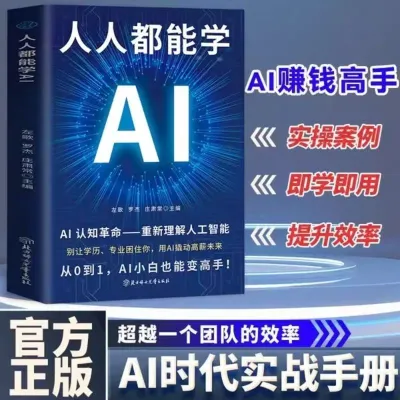
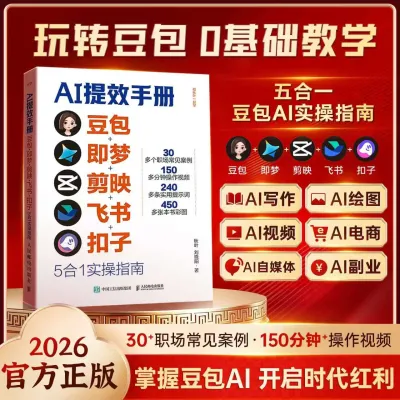

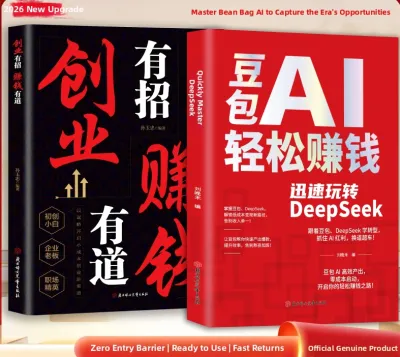

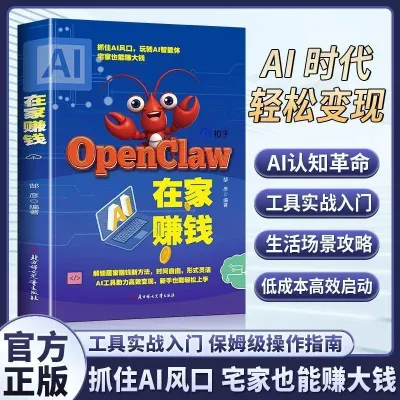
Prices are valid at publication and may change. Please refer to the product page for the latest price.
Additionally, determine whether your immediate business priority is generative AI integration, predictive analytics, or workflow automation. Generative AI books focus on content creation, knowledge management, and natural language interfaces. Predictive analytics literature covers forecasting, customer lifetime value, and risk assessment. Workflow automation guides help you streamline repetitive tasks and connect disparate software systems.
Finally, align these learning goals with your current career stage. Executive leaders need to understand market disruption, governance, and long-term investment strategies. Operational managers, on the other hand, require tactical frameworks to guide their teams through daily tool adoption, performance tracking, and process optimization.
Core Criteria for Evaluating AI Business Books
With hundreds of new titles entering the market, establishing a rigorous evaluation framework is essential to filter out superficial guides. High-quality business literature should offer more than just a glossary of technical terms; it must provide a structured methodology for decision-making. By applying specific criteria before purchasing, you can ensure the book delivers lasting professional value.

First, assess the author’s credibility by looking for a balanced mix of academic rigor and real-world industry implementation experience. Authors who only possess theoretical knowledge may overlook the messy realities of corporate data silos, legacy systems, and employee resistance. Conversely, writers with purely practical experience might lack the conceptual frameworks needed to help you generalize their lessons to your unique business environment. Look for authors who have actively led enterprise-level digital transformations or advised major organizations on technology adoption. You can verify these credentials by researching the author’s professional background, corporate advisory roles, and previous publications.
Second, scrutinize the publication timeline and the specific technologies discussed. The AI landscape underwent a massive shift with the rise of large language models and transformer architectures. Books published before this paradigm shift may focus heavily on traditional machine learning, regression models, or deep learning image recognition. While these concepts remain highly relevant for predictive analytics, they will not help you implement modern generative AI workflows or prompt engineering strategies. Ensure the book explicitly addresses contemporary generative models if that aligns with your goals.
Third, evaluate the book’s practicality ratio. A valuable business book should dedicate a significant portion of its pages to actionable frameworks, organizational case studies, and implementation checklists. If a book spends several chapters explaining the history of neural networks without connecting those concepts to business outcomes, it may be too academic for a busy professional. Look for chapters that offer step-by-step guides on vendor selection, pilot project design, and key performance indicators (KPIs) for measuring technology adoption.
Matching Book Categories to Professional Roles
A single book rarely serves the needs of every professional within an organization. A one-size-fits-all approach to AI literature often leads to frustration, as executives find technical guides too granular, while developers find strategic overviews too vague. To build an effective reading list, you must match the book’s core theme to your specific job functions and daily responsibilities.
By categorizing literature into distinct professional domains, you can construct a targeted shortlist that addresses your immediate workplace challenges. This targeted approach ensures that every hour spent reading translates directly into improved decision-making, better team collaboration, or more efficient project execution.
Strategy and Leadership Focus
For executives, board members, and business founders, the primary challenge of AI is not writing code, but managing organizational transformation and maintaining a competitive advantage. Books in this category should focus heavily on the economics of technology, resource allocation, and risk mitigation. You need to understand how automated decision-making shifts the value of human judgment and where to invest capital for the highest return.
When evaluating leadership-focused books, look for content that addresses change management and cultural adaptation. Implementing new technologies often meets resistance from employees who fear job displacement or struggle to adapt to new workflows. The best strategic books provide frameworks for upskilling staff, redesigning job roles, and fostering a culture of continuous learning.
Furthermore, prioritize books that cover enterprise-wide risk, data governance, and ethical considerations. Leaders must navigate complex regulatory landscapes, intellectual property concerns, and potential biases in automated systems. Avoid books that get bogged down in coding syntax or specific software tutorials; instead, seek out those that clarify macro-level business models and strategic partnerships.
Operations and Product Implementation
Professionals tasked with integrating new tools into daily workflows, supply chains, or product pipelines require a highly tactical class of literature. If you are a project manager, operations director, or product owner, your reading list should prioritize books that offer step-by-step integration frameworks and clear data governance protocols. You need to know how to take a conceptual technology and turn it into a reliable, repeatable business process.
Look for books that explain how to structure cross-functional teams that bridge the gap between software engineers and business units. Successful implementation requires clear communication and shared goals across departments. The literature you select should provide templates for defining project scope, managing data pipelines, and establishing quality assurance protocols for model outputs.
Additionally, verify that the book covers practical operational challenges, such as API integrations, vendor selection criteria, and overcoming legacy system bottlenecks. You need to understand the trade-offs between building proprietary models and buying off-the-shelf software. Books that offer detailed case studies of operational failures and how they were resolved are particularly valuable for avoiding costly implementation mistakes.
Marketing and Customer Analytics
For marketing directors, sales leaders, and growth-oriented professionals, AI represents a powerful tool for understanding and engaging customers at scale. Books tailored to this domain should focus on personalization engines, predictive customer behavior modeling, and automated content generation workflows. The goal is to learn how to use data to deliver highly relevant experiences to your target audience.
When selecting marketing-focused literature, ensure the content addresses the critical balance between automation and brand authenticity. While automated tools can generate vast amounts of copy or optimize ad spend, they can also dilute your brand voice if left unguided. Look for books that offer frameworks for human-in-the-loop content creation and brand safety guidelines.
Crucially, the book must address data privacy regulations, ethical marketing practices, and maintaining consumer trust. In Singapore, for instance, businesses must strictly adhere to the Personal Data Protection Act (PDPA) when handling customer information. Books that discuss how to implement privacy-by-design principles and navigate consent frameworks are essential for ensuring your marketing strategies remain compliant and socially responsible.
Pre-Purchase Verification and Format Selection
Once you have identified the categories of books that match your professional needs, you must perform a thorough pre-purchase verification. Because the technology sector moves rapidly, relying solely on a book’s cover title or marketing description can lead to purchasing outdated or irrelevant material. Taking a few systematic steps before finalizing your purchase ensures you receive the exact content and format required for your learning style.
Always verify the publication date, edition number, and table of contents to confirm the book covers modern paradigms. A book with a title like “Artificial Intelligence for Business” might have been written in 2018 and only updated with a new cover in recent years. Look for explicit mentions of transformer models, large language models, or modern generative workflows in the chapter outlines to ensure the material is current.
Next, compare physical, e-book, and audiobook formats based on how you plan to use the information. If the book contains detailed strategic matrices, flowcharts, data schemas, or code snippets, a physical book or a high-resolution e-book is highly preferable. These visual aids are often difficult to interpret in standard audiobook companion PDFs. However, if the book is primarily conceptual, focusing on leadership psychology or historical business case studies, an audiobook can be an excellent way to utilize commuting time.
Finally, check for regional availability, language editions, and authorized sellers to guarantee content completeness. When purchasing in Singapore, compare S$ prices across local physical bookstores and digital platforms, keeping in mind that some international editions may have regional licensing restrictions that block access to online companion materials or software sandboxes. Ensure you are buying from reputable local distributors or official online marketplaces to avoid counterfeit prints with missing pages or low-quality diagrams. Verify that the edition you are purchasing is the complete, unabridged version, as some international student editions or regional reprints may omit crucial case studies or online supplementary resources.
Frequently Asked Questions (FAQ)
How often should I update my AI reading list?
To keep pace with rapid technological shifts, you should review and update your reading list every six to twelve months. However, you do not need to replace your entire library this frequently. The core strategic frameworks—such as how to evaluate business value, manage organizational change, and design data governance—remain stable over longer periods. To stay updated on specific software tools, API updates, and immediate industry trends, supplement your foundational books with reputable industry whitepapers, curated newsletters, and official vendor documentation.
Are audiobooks effective for learning technical AI concepts?
Audiobooks are highly effective for high-level strategy, leadership psychology, and conceptual business frameworks where the narrative drives the learning. They allow you to absorb broad industry trends and management philosophies during your daily commute. However, for topics that require a deep dive into data structures, algorithmic logic, prompt engineering syntax, or visual workflow diagrams, audiobooks are generally less effective. For these technical subjects, choose physical books or e-books that allow you to pause, study diagrams, and easily refer back to complex reference tables.
Community discussion
Share your experience or ask a question. Comments are reviewed before publication.