
Selecting the right Secondary 4 exam paper bundles is a critical decision for students preparing for the Singapore-Cambridge GCE O-Level examinations. The right materials do more than just offer practice questions; they align perfectly with the latest Ministry of Education (MOE) and Singapore Examinations and Assessment Board (SEAB) syllabi, mirror the exact formatting of the actual papers, and provide clear, step-by-step solutions that teach students how to secure maximum marks. With numerous publishers and formats available in local bookstores and online marketplaces, making an informed choice requires looking beyond the cover design to evaluate the structural integrity and educational value of each bundle.
As the national examinations approach, the pressure to practice can lead to hasty purchases of outdated or poorly structured materials. Using resources that do not match the current examination requirements can lead to confusion, wasted study hours, and a false sense of security. To optimize revision, students and parents must adopt a systematic approach to selecting exam paper bundles, focusing on syllabus currency, format suitability, and the quality of the accompanying answer keys. This guide outlines the essential criteria, material types, and pre-purchase checks to help you choose the most suitable exam paper bundles for your study needs.
What to Look for in Sec 4 Exam Paper Bundles
The primary filter for any exam preparation material is its alignment with the current educational standards. The Singapore curriculum undergoes periodic reviews to ensure relevance, meaning that a bundle published several years ago might contain topics that have since been phased out, or lack newly introduced components. Students must cross-reference the table of contents of any potential purchase with the official SEAB syllabus for their specific examination year. This is particularly important for subjects like sciences and mathematics, where syllabus codes change to reflect updated learning outcomes and practical assessment formats.
Products mentioned in this guide
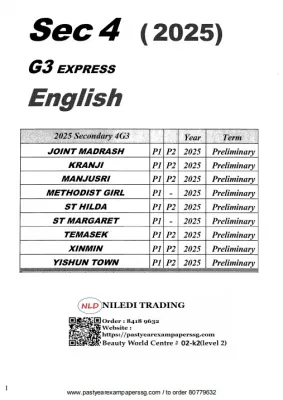
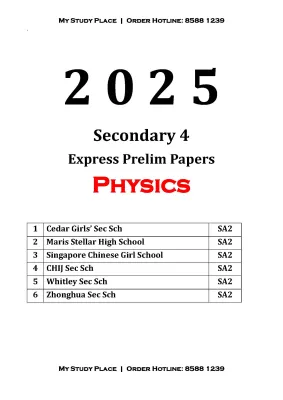
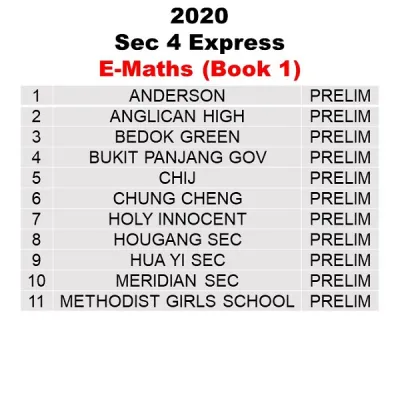
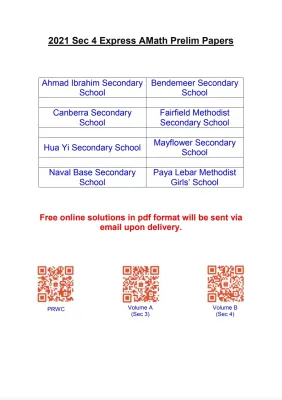
Prices are valid at publication and may change. Please refer to the product page for the latest price.
Beyond syllabus alignment, the publication year of the bundle plays a vital role in its relevance to the current O-Level exam format. The structure of exam papers, including the distribution of marks, the types of questions asked, and the duration of papers, can change over time. For instance, the introduction of real-world context questions in mathematics or source-based case studies in humanities requires students to practice with papers that reflect these specific demands. A bundle that relies too heavily on older papers without updating the question styles may leave students unprepared for the exact format they will face in the examination hall.
Another critical dimension to evaluate is the depth, clarity, and educational value of the worked solutions and marking schemes included in the bundle. A bundle is only as useful as its answer key; simple numerical answers or brief one-sentence explanations are rarely sufficient for comprehensive Sec 4 preparation. Effective bundles feature detailed, step-by-step worked solutions that demonstrate how to structure answers to meet marking rubrics. For humanities and languages, look for sample essays with examiner-style commentary that highlights why a particular response scores highly. For sciences and mathematics, look for clear algebraic steps, chemical equations, and explanations of key terms that examiners look out for.
Finally, consider the physical layout and readability of the exam papers. High-quality bundles feature clear typography, well-spaced margins for working out calculations, and high-resolution diagrams and graphs. Poorly printed materials with cramped text or blurry illustrations can cause unnecessary eye strain and make it difficult for students to interpret data accurately. Ensuring that the visual presentation of the practice papers closely matches the actual examination booklets helps reduce anxiety and allows students to focus entirely on applying their knowledge.
Comparing Different Types of Exam Paper Bundles
When browsing for preparation materials, students will encounter two main structural formats: topical revision guides and full-year past paper compilations. Topical bundles group questions by subject chapters, making them ideal for early-stage revision. When a student finishes a specific topic in school, they can immediately reinforce their learning by practicing past exam questions dedicated to that topic. This targeted approach helps identify specific conceptual gaps early in the academic year, allowing for timely intervention before moving on to more complex topics.

In contrast, yearly compilations present full exam papers in their original chronological order. These are best reserved for the final months leading up to the O-Levels, as they test a student’s ability to transition quickly between different topics under timed conditions. Working through a yearly paper requires a holistic understanding of the entire syllabus, helping students build the mental stamina needed for the actual exam. Balancing both types of bundles throughout the academic year ensures a smooth transition from topical mastery to full-syllabus integration.
Another comparison to make is between publisher-authored assessment books and compiled official past year papers, commonly known as the Ten-Year Series. Official past-year papers provide the most accurate representation of actual exam difficulty, phrasing, and grading standards. However, publisher-authored assessment books and school prelim paper compilations are highly valuable for exposing students to a wider variety of challenging questions. Some school prelim papers are designed to be more difficult than the actual O-Levels, which can help high-achieving students stretch their problem-solving capabilities and build resilience.
Lastly, students must choose between physical books and digital downloads. Physical exam paper bundles remain the gold standard for O-Level preparation because the actual examinations are written by hand. Practicing on physical paper helps students develop writing stamina, manage their physical workspace, and practice drawing diagrams or graphs accurately. Digital downloads offer convenience, portability, and the ability to print multiple copies of a single paper for repeated practice. However, students using digital files on tablets must be mindful of annotation limits and the temptation to type answers rather than write them out, which does not accurately simulate the physical exam experience.
Essential Pre-Purchase Checks for O-Level Materials
Before completing a purchase from online bookstores or retail shops, performing a few essential checks can save time and money. The first step is matching the publication year of the bundle with the current exam cycle. Publishers often release new editions annually, but older stock may remain on shelves or online listings. Ensure that the bundle you select includes the most recent past-year papers available, as this guarantees that the material is as up-to-date as possible.
The second check involves verifying the specific subject codes and syllabus versions for the intended academic year. Every subject under the SEAB curriculum is assigned a unique four-digit syllabus code. For example, different versions of mathematics or science (such as Pure Physics versus Combined Science) have distinct codes. Before purchasing any exam paper bundle, buyers must verify that the code printed on the cover matches the exact syllabus code the student is registered for. A mismatch can lead to studying incorrect topics or practicing the wrong paper formats.
Additionally, buyers should confirm the inclusion of complete answer keys, marking rubrics, and examiner reports if applicable. Some budget bundles or unofficial compilations sold on online marketplaces may omit the answer keys or provide them as separate, paid downloads. A complete bundle should include a comprehensive answer booklet that is easy to navigate. For languages and humanities, check if the bundle includes sample essays across different grade bands, as these are invaluable for understanding how to structure high-scoring responses.
Finally, if purchasing digital bundles, verify the file format and device compatibility. Ensure that the files are in a standard format like PDF that can be easily opened and annotated on your preferred device. Check if there are any digital rights management (DRM) restrictions that limit printing, as being able to print physical copies of specific papers is highly beneficial for realistic exam simulation.
How to Use Exam Paper Bundles Effectively
To get the most out of purchased exam paper bundles, students must integrate them into a structured study routine rather than using them for passive reading. The most effective way to use full-year bundles is by simulating actual exam conditions. This means sitting in a quiet room, removing all notes and textbooks, and strictly adhering to the official time limit. Timed practice helps students build pacing strategies, such as knowing when to abandon a difficult question to secure marks elsewhere, and reduces anxiety by familiarizing them with the pressure of the clock.
Another essential practice is maintaining a dedicated error log. Simply completing a paper and checking the score is not enough to drive improvement. Students should maintain a notebook or digital document to log every mistake they make during practice sessions. For each error, write down the correct concept, the reason for the mistake (such as a conceptual misunderstanding, a calculation error, or misreading the question), and a similar practice question to solve. Reviewing this log regularly before attempting new papers ensures that mistakes are not repeated.
Furthermore, students should spend time analyzing the worked solutions, even for questions they answered correctly. There may be more efficient methods or specific keywords used in the solutions that can save time or guarantee marks in the actual exam. If the bundle includes examiner reports, pay close attention to common student misconceptions and pitfalls highlighted by the examiners. Understanding where other candidates typically lose marks can help students avoid making the same errors.
Finally, spacing out the practice sessions is crucial for long-term retention. Rather than cramming multiple papers in the days leading up to the exam, students should distribute their practice over several weeks or months. This spaced repetition approach allows the brain to consolidate information more effectively, leading to deeper understanding and better recall during the actual examinations.
Frequently Asked Questions (FAQ)
How far in advance should I start using Sec 4 exam paper bundles?
Students should ideally begin using topical exam paper bundles at the start of the Secondary 4 academic year to reinforce classroom learning. Yearly compilations and full mock papers should be introduced around mid-year, typically after the mid-year examinations or during the June holidays. This timeline allows students to transition smoothly from topical mastery to full-syllabus integration without experiencing premature burnout or frustration from attempting full papers before all topics have been taught.
Are digital exam paper bundles as effective as physical copies?
While digital bundles offer excellent portability and the ability to print fresh copies for multiple practice runs, they are generally less effective on their own than physical copies. The O-Level examinations are entirely paper-based, requiring students to write extensively by hand, draw precise diagrams, and physically turn pages to reference data. Practicing on physical paper builds the necessary muscle memory, handwriting speed, and spatial awareness required to navigate the exam booklet efficiently under pressure. If using digital bundles, it is highly recommended to print them out to simulate the actual exam environment.
Community discussion
Share your experience or ask a question. Comments are reviewed before publication.