
Selecting the right Secondary 3 exam paper bundles is a pivotal decision for students navigating the transition to upper secondary education. In Singapore, the academic leap from Secondary 2 to Secondary 3 is steep, characterized by a sudden increase in content volume and a shift toward higher-order application questions. The best exam paper bundle is not simply the thickest or most expensive option; rather, it is the one that directly aligns with a student’s current academic needs, learning style, and specific subject requirements. Whether preparing for Mathematics, Sciences, or English, understanding how to evaluate and select these study aids can significantly enhance revision efficiency.
To make an informed choice, parents and students must look beyond attractive cover designs and focus on structural features such as syllabus alignment, the depth of the answer keys, and the progression of question difficulty. A well-chosen bundle serves as a diagnostic tool, a conceptual guide, and a realistic exam simulator. By taking a systematic approach to selecting these materials, students can avoid the common pitfall of mindless drilling and instead engage in targeted, high-impact practice that yields measurable academic improvement.
Identifying Learning Gaps Before Choosing Sec 3 Exam Papers
Before stepping into a physical bookstore or browsing online marketplaces, it is essential to conduct a thorough assessment of the student’s current academic standing. Purchasing a generic bundle without a clear diagnostic goal often leads to unproductive study sessions and unnecessary stress. Students should begin by analyzing their performance in recent school assessments, looking specifically for patterns in the types of marks lost.
Products mentioned in this guide
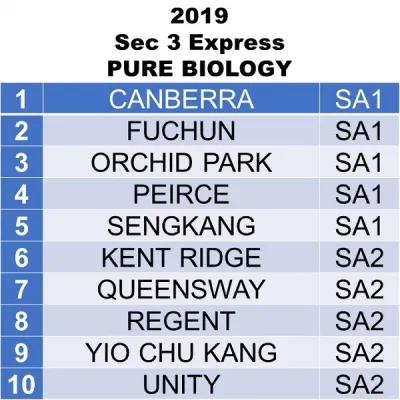
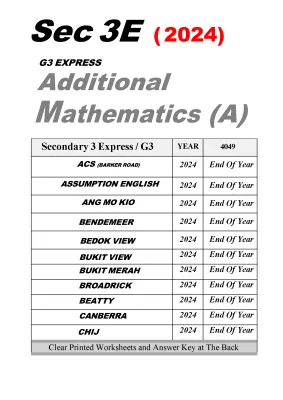
Prices are valid at publication and may change. Please refer to the product page for the latest price.
A critical first step is distinguishing between foundational concept gaps and application errors. A conceptual gap occurs when a student does not understand the underlying theory or formula, such as struggling to recall the steps for quadratic expansion in mathematics. An application error, on the other hand, happens when the student understands the theory but fails to apply it correctly to a novel or complex scenario, which is common in structured science questions.
Reviewing weighted assessment feedback and teacher comments is highly effective for pinpointing these specific issues. Parents and students should examine marked scripts together, noting whether errors are concentrated in specific topics or if they occur across different sections due to poor time management. If the teacher’s feedback highlights a lack of conceptual clarity, the immediate priority should be topical reinforcement rather than full-length exam papers.
Once the specific weak areas are identified, you can determine whether the student requires targeted topical practice or full-paper time-management training. Topical bundles allow students to isolate and drill specific chapters until they achieve mastery, making them ideal for early-year revision. Conversely, full-paper bundles are best reserved for the weeks leading up to major examinations, where building exam stamina and managing the clock are the primary goals.
Core Evaluation Criteria for Exam Prep Bundles
With numerous publishers offering various exam preparation materials, establishing objective evaluation criteria is vital for selecting high-quality resources. The absolute baseline requirement for any exam paper bundle is strict alignment with the current Singapore Ministry of Education (MOE) syllabus. Syllabuses are updated periodically to reflect changing educational standards, and practicing with outdated materials can lead to studying obsolete topics or missing newly introduced exam formats.

Another critical criterion is the quality, detail, and educational value of the provided answer keys and marking schemes. A subpar bundle will only offer the final numerical or short-answer results, leaving the student to guess how those answers were derived. In contrast, premium bundles provide comprehensive, step-by-step worked solutions that explain the logic behind each step, making them invaluable tools for self-directed learning.
The progression of difficulty within the bundle should also be carefully evaluated. The most effective practice materials feature a structured progression, starting with basic recall and procedural questions before gradually introducing intermediate application problems and, finally, challenging non-routine questions. This gradual increase in difficulty helps students build confidence and consolidate their understanding before tackling highly complex exam scenarios.
Furthermore, look for bundles that explicitly include higher-order thinking questions, which are designed to test a student’s ability to synthesize multiple concepts. These questions closely mirror the challenging sections of actual school examinations and national papers, preparing students for the unpredictable nature of exam day. A bundle that only features straightforward, repetitive questions will not adequately prepare a student for the academic rigor of Secondary 3.
Finally, consider the physical layout and readability of the practice papers. Clear typography, well-drawn diagrams, and generous spacing for working out solutions are not just aesthetic preferences; they reduce cognitive fatigue and allow students to practice organizing their written work neatly, which is a crucial skill for securing method marks in examinations.
Subject-Specific Selection Strategies
Each academic subject in the Secondary 3 curriculum demands a distinct cognitive approach and testing methodology. Consequently, a bundle format that works exceptionally well for mathematics may be entirely unsuitable for English language preparation. To maximize the effectiveness of study sessions, you must match the structural features of the exam paper bundle to the unique demands of each specific subject’s examination format.
Mathematics: Problem-Solving and Heuristics
Secondary 3 Mathematics, which includes both Elementary Mathematics (E-Math) and Additional Mathematics (A-Math), introduces students to abstract algebraic concepts, trigonometry, and coordinate geometry. When selecting a math exam paper bundle, the priority must be the inclusion of detailed, step-by-step worked examples. These examples serve as a visual guide, demonstrating the precise logical flow required to secure full marks.
Look for bundles that offer clear heuristic breakdowns for complex word problems. Heuristics are systematic problem-solving strategies that help students dissect unfamiliar questions, identify key information, and determine the most efficient mathematical pathway to the solution. Understanding these strategies is essential for tackling the high-weightage structured questions found in Paper 2 of math examinations.
If the student is taking both E-Math and A-Math, ensure the bundle provides comprehensive coverage of the prerequisites and distinct requirements of both subjects. A-Math demands a significantly higher level of algebraic precision and logical proofs compared to E-Math. The practice papers should reflect this distinction, offering dedicated sections that challenge the student’s ability to manipulate complex algebraic expressions and execute multi-step proofs.
Additionally, check if the bundle highlights common student mistakes and provides alternative solving methods. Learning why a particular approach is incorrect is often more valuable than simply memorizing the correct path. Alternative methods also give students a backup plan if they get stuck using their preferred method during an actual examination.
Lastly, verify that the bundle includes clear guidelines on calculator use and rounding rules. Many marks are lost in mathematics exams due to premature rounding or incorrect calculator inputs. A high-quality answer key will explicitly show intermediate values and indicate when and how to apply specific calculator functions to verify final answers.
Science: Application and Open-Ended Questions
Whether a student is taking Pure or Combined Biology, Chemistry, and Physics, Secondary 3 Science examinations place a heavy emphasis on the application of scientific concepts to novel, real-world scenarios. To help students navigate these challenging assessments, the selected science bundle must focus heavily on the structure of open-ended and structured questions.
Prioritize bundles that explicitly highlight the specific keywords and phrasing required in official marking schemes. In science examinations, examiners look for precise scientific terminology; using vague or colloquial language often results in a loss of marks, even if the student understands the general concept. A good bundle will annotate answers to show which words are non-negotiable for scoring marks.
Verify that the practice papers include a healthy mix of data analysis, graph interpretation, and experimental design questions. These question types are standard features of both practical assessments and written theory papers. Students must practice extracting trends from graphs, interpreting data tables, and identifying experimental variables to perform well in these sections.
Ensure there is a clear separation between Biology, Chemistry, and Physics topics within the bundle, especially if the student is taking Combined Science. During the initial revision phases, students need to master the specific content of each discipline separately before they can successfully tackle integrated mock papers that combine multiple sciences.
Furthermore, look for detailed explanations of experimental setups and laboratory procedures. Understanding the purpose of specific apparatus, the role of control experiments, and the identification of potential sources of experimental error are critical skills that are heavily tested in both the practical exam and the written papers.
English: Comprehension and Composition Skills
Preparing for Secondary 3 English requires a shift away from rote memorization toward skill acquisition, critical reading, and expressive writing. When evaluating English exam paper bundles, look for resources that offer annotated model essays rather than simple, unannotated sample answers. These annotations should explain the structural choices, vocabulary selections, and stylistic devices that make the essay successful.
The bundle should feature diverse comprehension text types, reflecting the current examination format. This includes narrative texts, non-narrative texts, and visual stimuli such as advertisements or information posters. Practice papers must challenge students to identify the writer’s tone, analyze the use of language, and answer complex inferential questions that require reading between the lines.
Check for dedicated vocabulary-building exercises and tone analysis guides within the comprehension sections. A strong vocabulary is essential for understanding nuanced texts and expressing ideas precisely in writing. Bundles that include vocabulary glossaries or contextual meaning exercises help students expand their lexical range naturally through practice.
Ensure that the grammar, editing, and summary writing sections are fully aligned with the latest examination weightings and formats. Editing exercises should reflect the typical error patterns tested, while summary writing sections must provide clear frameworks for identifying key points from a text and paraphrasing them concisely within the strict word limit.
Finally, look for situational writing tasks that cover a wide range of formats, such as formal letters, proposals, emails, and reports. The bundle should provide clear templates and checklists for each format, ensuring that students master the appropriate tone, register, and layout required for different target audiences.
Comparing Bundle Formats: Topical Guides vs. Mock Papers
When planning a revision schedule, choosing between topical guides and full mock papers is a strategic decision that depends on the student’s current learning phase. Topical guides organize questions by specific chapters or topics, making them highly effective for early-year revision and initial concept mastery. They allow students to focus on one area at a time, building a solid foundation before moving forward.
Use topical guides to perform targeted weak-area drilling. If a student consistently struggles with a specific topic, such as stoichiometry in Chemistry or coordinate geometry in Mathematics, working through a concentrated set of questions on that topic helps reinforce the necessary formulas, concepts, and problem-solving steps until they become second nature.
As major assessments approach, such as the mid-year or end-of-year examinations, students should transition to full mock papers. Mock papers simulate the actual examination experience by presenting a mixed variety of questions in a random order. This format forces students to practice “retrieval practice,” which is the mental process of identifying which formula or concept is required for each unique question.
Full mock papers are also indispensable for building exam stamina and mastering time management. Sitting for a continuous two-hour paper teaches students how to pace themselves, when to abandon a difficult question to secure marks elsewhere, and how to maintain concentration and accuracy under timed pressure.
For a comprehensive, year-long revision strategy, consider investing in hybrid bundles that combine both formats. These resources typically offer topical exercises for the first half of the academic year to support ongoing schoolwork, followed by a series of full-length mock papers in the second half to prepare students thoroughly for their final examinations.
Pre-Purchase Checklist for Physical and Online Bookstores
To ensure that you are investing in the most effective and relevant study materials, it is important to perform a quick verification check before completing your purchase, whether you are shopping at a physical retail bookstore or an online marketplace. First, confirm that the publication year of the bundle matches the current syllabus cycle. Using outdated materials can lead to confusion if certain topics have been removed or if the exam format has changed.
Verify the exact academic stream of the exam paper bundle. Materials are tailored specifically for the Express, Normal Academic (NA), or Normal Technical (NT) streams, reflecting the different depths of content and examination formats of each pathway. Purchasing a bundle designed for the wrong stream can result in practice that is either inappropriately difficult or insufficiently challenging.
Double-check the specific subject codes printed on the cover or in the product description. Subject codes are unique identifiers that ensure the content aligns precisely with the examination the student will sit for. This is particularly important for subjects with multiple variants, such as Combined Science versus Pure Science, or different mathematics syllabuses.
If you are purchasing physical books in-store, take a moment to inspect the copy for any manufacturing defects. Check for missing pages, misprinted text, or torn answer keys. The answer key is one of the most valuable components of any exam paper bundle, and a missing or incomplete key significantly reduces the educational value of the resource.
When buying digital bundles or online access codes, verify the compatibility of the digital platform with your existing devices. Check if the access code has an expiration date and ensure that the platform allows you to easily print out the papers if physical, pen-and-paper practice is preferred for simulating realistic exam conditions.
Frequently Asked Questions (FAQ)
How many exam paper bundles should a Sec 3 student complete per subject?
The quality of the review process is far more important than the sheer quantity of exam papers completed. Thoroughly completing and reviewing a single paper—which includes analyzing mistakes, rewriting incorrect answers, and understanding the underlying concepts—is significantly more beneficial than rushing through multiple papers without proper correction.
Align the practice volume with the student’s available weekly study hours and energy levels to prevent burnout. A sustainable target is to complete one full mock paper or two topical chapters per subject each week, adjusting this workload based on school homework demands and upcoming assessment schedules.
It is highly recommended to consult the student’s school teachers before adding excessive external practice materials to their routine. Teachers can provide valuable insights into whether the school’s own revision packages are already sufficient, helping to maintain a healthy balance between schoolwork and external preparation.
Are digital exam paper bundles as effective as physical copies?
Physical exam papers offer significant tactile benefits that are crucial for simulating realistic examination conditions. Writing by hand on physical paper helps students build the physical writing stamina and hand-eye coordination required for long, written examinations, which cannot be fully replicated by typing or writing on a digital tablet.
On the other hand, digital formats offer excellent convenience, portability, and searchability. They allow students to quickly search for specific question types, carry multiple years of papers on a single lightweight device, and easily access digital answer keys for rapid self-marking.
If you choose to purchase digital exam paper bundles, the most effective approach is to print them out for timed practice sessions. This hybrid method allows you to enjoy the storage and portability benefits of digital files while ensuring the student gets the realistic, physical writing practice necessary for exam success.
Community discussion
Share your experience or ask a question. Comments are reviewed before publication.