
Solving Sudoku puzzles successfully relies on systematic scanning, logical deduction, and structured elimination rather than mathematical calculation. By mastering a few foundational techniques—such as cross-hatching and identifying single candidates—you can systematically fill any standard grid without guessing.
Understanding the Basic Rules and Grid Structure
A standard Sudoku puzzle consists of a 9×9 grid, which is subdivided into nine smaller 3×3 boxes. At the start of a puzzle, several cells already contain numbers, known as “givens” or “clues.” Your objective is to fill the remaining empty cells so that every row, column, and 3×3 box contains the numbers 1 through 9 exactly once.
The beauty of Sudoku lies in its simplicity and accessibility. Because the numbers 1 through 9 function merely as distinct symbols, you do not need any arithmetic, addition, or mathematical skills to solve a puzzle. The entire process is an exercise in pure logic, spatial awareness, and pattern recognition.
Products mentioned in this guide
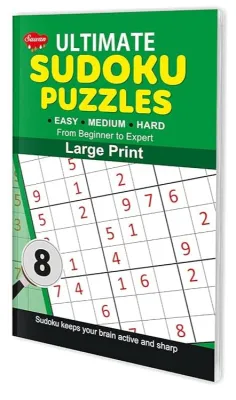
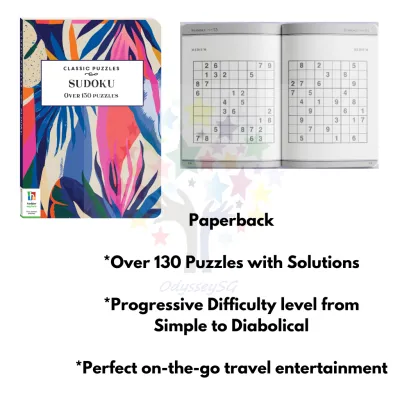
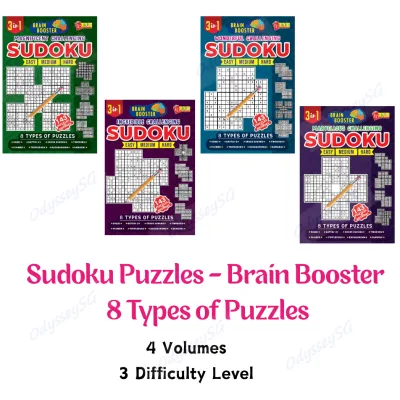
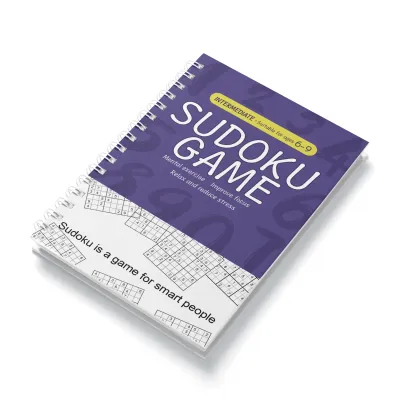
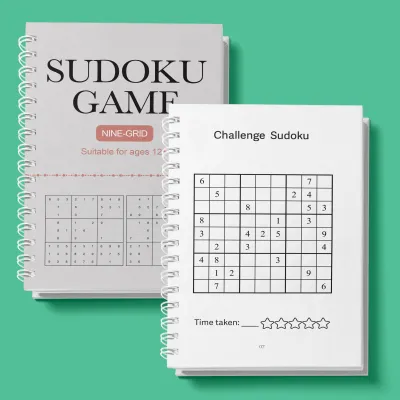
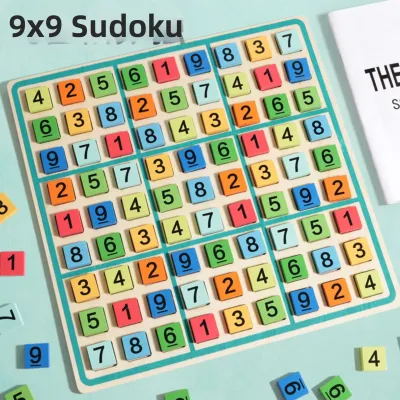
Prices are valid at publication and may change. Please refer to the product page for the latest price.
A valid, well-constructed puzzle is designed to have exactly one unique solution that can be reached through logical steps alone. You never need to guess to complete a proper Sudoku grid; every empty cell can be solved by analyzing the constraints of its intersecting row, column, and box.
Essential Scanning Techniques for Beginners
When you first look at a blank or partially filled grid, scanning is your primary tool for finding immediate placements. These basic methods help you identify empty cells that have only one logical option.

Cross-Hatching
This technique involves focusing on a single number at a time and scanning its presence across rows and columns to eliminate empty cells within a specific 3×3 box. For example, if you are looking for where the number 5 belongs in the top-left box, you trace horizontal and vertical lines from all existing 5s in the adjacent rows and columns. Any cell in the target box that intersects with these lines cannot contain a 5, often leaving only one valid open cell.
Identifying Naked Singles
A naked single occurs when you analyze a specific empty cell and realize that, due to the numbers already present in its intersecting row, column, and 3×3 box, eight of the nine possible digits are completely ruled out. This leaves exactly one candidate number that can legally occupy that cell.
Identifying Hidden Singles
Unlike a naked single, a hidden single refers to a situation where a cell might theoretically accommodate multiple candidate numbers, but a specific number has only one possible home within a given row, column, or box. Even if other numbers could technically fit in that cell, the fact that the target number cannot go anywhere else in that unit forces its placement.
Pencil Marks and Candidate Notation
As puzzles grow more complex, keeping track of possibilities in your head becomes difficult. This is when you should start using pencil marks, which are tiny numbers written in the corners of empty cells to track potential candidates. The most common method is Snyder notation, where you only write pencil marks for a number if it has exactly two possible locations within a 3×3 box.
Intermediate Strategies to Overcome Roadblocks
When basic scanning no longer reveals obvious moves, you must transition to intermediate logical deductions. These strategies focus on eliminating candidate numbers from specific cells to narrow down your options.
Pointing Pairs and Triples
Sometimes, when you look at a 3×3 box, you will notice that a candidate number can only fit in two or three cells, and all of those cells happen to align in the same row or column. Because the number must go into one of those cells within the box, it cannot possibly appear anywhere else in that entire row or column. You can safely eliminate that candidate from the rest of the intersecting line outside of that box.
Naked Pairs
A naked pair occurs when two cells within the same unit (a row, column, or box) contain the exact same two candidate numbers and no others. Because those two numbers must occupy those two cells in some order, they are locked. You can immediately eliminate both candidates from all other empty cells in that specific unit.
Box/Line Reduction
This technique is the inverse of pointing pairs. If a candidate number within a specific row or column can only fit inside a single 3×3 box, you can deduce that the number must be placed in that box along that line. Consequently, you can eliminate that candidate from all other cells in that 3×3 box that do not lie on the row or column in question.
Dynamic Re-evaluation
It is easy to get stuck looking for a single advanced technique when a simpler one has opened up elsewhere. Every time you place a definitive number, the constraints on the grid shift. Pause your search for complex patterns and return to basic scanning to see if the new number has unlocked easier placements.
A Step-by-Step Workflow for Solving Any Grid
Having a structured routine prevents you from staring aimlessly at the grid. Following a consistent workflow helps maintain momentum and reduces cognitive fatigue.
- Phase 1: The Initial Sweep: Begin by scanning the numbers 1 through 9 sequentially. Use cross-hatching on each number to find and fill the easiest, most obvious empty cells across the entire grid.
- Phase 2: Dynamic Re-evaluation: Every time you write down a permanent number, immediately check its intersecting row, column, and box. This newly placed digit often creates a domino effect, revealing new naked or hidden singles nearby.
- Phase 3: Transition to Pencil Marks: When the obvious placements run out, systematically write down candidate notations in the remaining empty cells. Use these marks to identify pointing pairs, naked pairs, and other intermediate patterns.
- Phase 4: Final Verification: Once the grid is completely filled, perform a quick final check. Scan each of the nine rows, columns, and boxes to confirm they contain every digit from 1 to 9 without any duplicates.
Common Mistakes and How to Avoid Them
Even experienced solvers make errors, but understanding where things typically go wrong can save you from ruining a puzzle.
The Danger of Guessing Never guess a number to see if it works out later, a habit sometimes called bifurcation. Sudoku is designed to be solved purely through logical deduction. A single incorrect guess will eventually create a contradiction, forcing you to erase large portions of your work or start over entirely.
Neglecting Pencil Marks Failing to update or erase your pencil marks after placing a definitive number is a common pitfall. If you leave outdated candidates on the grid, you will eventually misidentify a pattern, leading to an incorrect placement. Make it a habit to clean up surrounding pencil marks immediately after filling a cell.
Tunnel Vision It is easy to focus so intensely on a single row or column that you completely overlook the constraints of the overlapping 3×3 box. If you find yourself stuck, consciously shift your focus from lines to boxes, or vice versa, to break the mental block.
How to Backtrack If you discover a duplicate number or an empty cell with zero valid candidates, you have made a mistake. Instead of guessing how to fix it, backtrack to your last absolutely certain placement. If you cannot find where the error occurred, it is often best to erase the pencil marks in the affected area and rebuild the logic step by step.
Frequently Asked Questions (FAQ)
Is there only one correct solution to a standard Sudoku puzzle?
Yes, a properly constructed standard Sudoku puzzle has exactly one unique solution. If you find yourself in a situation where multiple numbers seem to work in the final cells, it usually indicates either a logical error made earlier in the solving process or a poorly designed puzzle that lacks sufficient starting clues.
Do I need to be good at math to solve Sudoku?
No, you do not need any mathematical or arithmetic skills to solve Sudoku. The game is entirely based on logic, spatial reasoning, and pattern recognition. The numbers 1 through 9 are simply symbols used for convenience; the puzzle would function exactly the same way if it used letters, colors, or geometric shapes.
Community discussion
Share your experience or ask a question. Comments are reviewed before publication.