
You do not always need to purchase dedicated sound absorber panels to make a music practice room functional, but they become highly beneficial when simple room adjustments fail to control harsh echoes, muddy tones, or ear fatigue. Many musicians practicing at home struggle with poor room acoustics without realizing that the physical characteristics of their space are actively distorting the sound of their instruments. Before investing in specialized acoustic treatments, it is important to evaluate how sound behaves in your specific environment and determine whether everyday household items can resolve the issues or if professional panels are required.
In compact urban living spaces, such as typical apartments in Singapore, music rooms are often characterized by hard concrete walls, tiled or vinyl flooring, and large glass windows. These hard, non-porous surfaces act like acoustic mirrors, reflecting sound waves back and forth across the room. This continuous reflection creates a chaotic sonic environment where notes overlap, high frequencies become piercing, and low frequencies build up into a boomy, indistinct rumble. Understanding whether you need dedicated sound absorber panels starts with identifying these acoustic anomalies through simple, practical tests.
Signs Your Practice Room Has Acoustic Issues
Before spending money on acoustic treatments, you can perform a few simple diagnostic checks to assess the acoustic health of your practice space. The most immediate and accessible test is the clap test. Stand in the center of your room and clap your hands sharply once. In a well-balanced room, the sound of the clap should decay quickly and smoothly. If you hear a metallic, ringing, or fluttering sound that lingers after the clap, your room is suffering from flutter echo. This phenomenon occurs when high-frequency sound waves bounce rapidly between parallel, highly reflective walls, creating a harsh ringing that can distort the true tone of your instrument.
Products mentioned in this guide

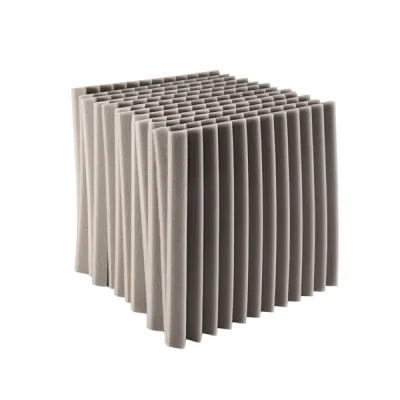
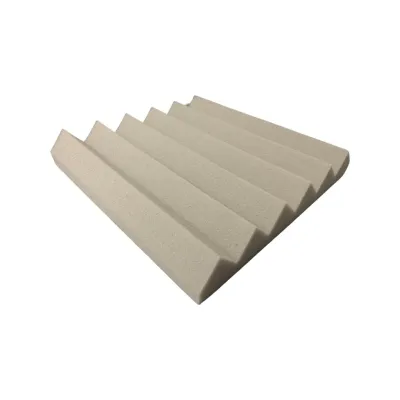
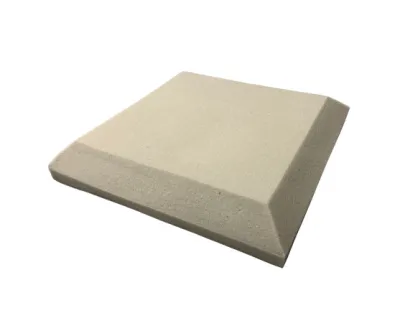


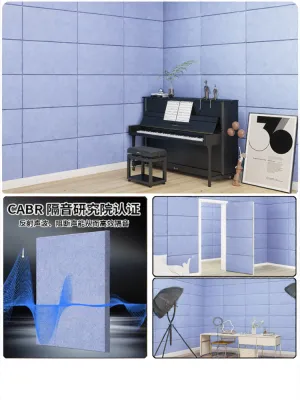
Prices are valid at publication and may change. Please refer to the product page for the latest price.
Another clear sign of acoustic trouble is how your instrument sounds when played at different pitches and volumes. Take your instrument—whether it is an acoustic guitar, a violin, a flute, or a brass instrument—and play a slow scale from the lowest register to the highest. Pay close attention to how the volume and clarity of each note change. If certain low notes sound disproportionately loud and boomy, while other mid-range notes seem to disappear, your room has an uneven frequency response. This muddy sound makes it difficult to practice dynamic control, as the room’s acoustics are artificially altering the volume of your playing.
You should also pay attention to how your ears feel during and after a practice session. If you find yourself turning up your amplifier or playing harder just to hear the details of your performance, or if you experience physical ear fatigue and headaches after only fifteen to twenty minutes of practice, your room is likely too reflective. High reverberation levels force your brain to work harder to separate direct sound from the reflected sound, leading to rapid mental and physical exhaustion. Additionally, if you struggle to understand spoken words at normal conversation levels within the room, the speech intelligibility is low, which is a classic indicator of excessive reverberation.
Sound Absorber Panels vs. Everyday Household Alternatives
When addressing these acoustic issues, many musicians wonder if they can rely on common household items instead of buying dedicated sound absorber panels. Dedicated panels are typically made from dense, porous materials such as fiberglass, rockwool, or specialized open-cell acoustic foam. These materials are engineered to let sound waves penetrate deep into their core, where the friction of the moving air molecules converts sound energy into trace amounts of heat. This process efficiently dampens mid-to-high frequency reflections, resulting in a much clearer and more controlled acoustic environment.

Everyday household items can mimic this process to some degree, but they have significant physical limitations. Thick rugs, heavy blackout curtains, and large fabric-upholstered sofas can absorb high-frequency sounds, helping to tame flutter echo and reduce some of the high-end harshness in a room. However, because these items are usually thin or lack the density of professional acoustic materials, they are highly selective in the frequencies they absorb. They do almost nothing to control lower-middle and low frequencies, which require thicker, denser barriers to slow down.
Relying solely on household items often leads to an acoustically unbalanced room. If you cover your walls with thin blankets and lay down a light rug, you might succeed in killing the high-frequency reflections, but the low-frequency buildup will remain completely untouched. This results in a room that sounds unnaturally “dead” in the high end but incredibly boomy and muddy in the low end, which can make practicing even more frustrating. Furthermore, household items are rarely optimized for space; adding two extra fabric sofas to a small room just to absorb sound can severely restrict your physical movement and practice comfort.
From a practical standpoint, you must weigh the cost, aesthetic impact, and space requirements of both options. Rearranging your existing furniture, hanging heavy drapes, and adding bookshelves filled with books (which act as crude diffusers) is a cost-effective first step that requires no additional spending. However, if you have limited floor space, dedicated sound absorber panels are far more efficient. They are designed to be mounted directly onto walls or suspended from ceilings, keeping your floor space clear for music stands, instrument cases, and amplifiers. While professional panels require an upfront financial investment—often ranging from S$50 to S$150 per panel depending on the material and size—they provide predictable, balanced absorption across a wider frequency spectrum.
How to Decide: A Step-by-Step Acoustic Checklist
To determine the best path forward for your practice space, you can use a conditional decision-making process based on your instrument, goals, and physical constraints. The first factor to consider is the type of instrument you play. Loud acoustic instruments, such as acoustic drums, saxophones, or acoustic pianos, generate high sound pressure levels that will easily saturate a small, untreated room with reflections. These instruments almost always require dedicated sound absorber panels to make the practice environment safe and comfortable for your ears. Conversely, if you practice on an electronic keyboard, an electric guitar through headphones, or a low-volume woodwind instrument, your acoustic treatment needs are minimal, and basic household adjustments will likely suffice.
The second factor is your primary goal for the space. If your room is strictly used for casual practice and learning, your main priority is basic comfort and preventing ear fatigue. In this scenario, a combination of a thick rug, some heavy curtains, and perhaps a couple of strategically placed foam panels will be more than enough to create a pleasant environment. However, if you plan to record music, produce tracks, or teach online lessons from the room, your requirements are much stricter. Recording microphones capture every reflection and room resonance, which cannot be easily removed during mixing. For any form of home recording or critical listening, dedicated sound absorber panels are necessary to ensure an accurate, uncolored sound capture.
Finally, you must evaluate your practical and structural constraints. If you live in a rented apartment, drilling holes to mount heavy fiberglass panels may violate your tenancy agreement. In such cases, lightweight open-cell foam panels attached to temporary presentation boards, or free-standing acoustic panels on tripod stands, offer a non-destructive alternative. You should also measure your available wall space; if your room has large built-in wardrobes or floor-to-ceiling windows, you may not have enough wall surface to mount traditional panels, forcing you to rely on ceiling-mounted clouds or mobile acoustic screens.
When Basic Adjustments Are Not Enough
There are certain scenarios where basic furniture adjustments and standard wall panels simply cannot solve your acoustic problems. The most common of these is low-frequency buildup, often referred to as bass boom. Low-frequency sound waves are incredibly long and powerful, easily passing through thin household items and standard two-inch-thick wall panels. If you play a bass guitar, a cello, or electronic music with heavy low-end, standard sound absorber panels will not be enough. You will need dedicated bass traps, which are thick, high-density absorbers designed specifically to be placed in the corners of the room where low-frequency pressure naturally accumulates.
Highly irregular room dimensions or perfectly square rooms also present severe acoustic challenges that basic treatments cannot fix. Square rooms are notorious for creating standing waves, where specific frequencies bounce back and forth and reinforce themselves, creating massive volume spikes and dead zones throughout the room. Similarly, rooms with parallel concrete walls and no natural architectural breaks will continuously produce harsh flutter echoes. If your practice room has these structural characteristics, simple DIY fixes will often leave you frustrated with inconsistent sound.
When you find that you have covered a reasonable portion of your walls with basic treatments but still experience muddy bass, harsh ringing, or uneven volume levels, it is time to consider specialized solutions. This may involve consulting an acoustic professional who can measure your room’s frequency response using calibrated microphones, or upgrading to professional-grade, multi-density acoustic panels and diffusers. Taking a systematic, measured approach ensures you do not waste money on ineffective products and helps you build a practice space that truly supports your musical development.
Frequently Asked Questions (FAQ)
Do Sound Absorber Panels Stop Noise From Leaving the Room?
No, sound absorber panels do not stop noise from leaving the room or entering from the outside. This is one of the most common misconceptions in acoustic treatment. Absorber panels are designed to improve the sound quality inside the room by capturing reflections and reducing echo. They are lightweight and porous, meaning sound waves pass through them easily. To prevent sound from escaping to your neighbors or to block outside traffic noise, you need soundproofing. Soundproofing requires adding dense mass to the walls (such as thick drywall or mass-loaded vinyl), decoupling the wall structures to stop vibrations, and completely sealing any air gaps around doors, windows, and ventilation ducts.
Where Should You Place Panels If You Decide to Buy Them?
If you decide to purchase sound absorber panels, their placement is just as important as their quality. You should focus on treating the primary reflection points, which are the areas on the walls and ceiling where sound bounces directly from your instrument or speakers to your ears. You can find these points using the mirror method: sit in your usual practice position and have a friend slide a small mirror along the side walls at eye level. Wherever you can see the reflection of your instrument or speakers in the mirror, mark that spot; this is where a panel should be mounted. It is also important not to over-treat the room. Covering every wall entirely will make the space sound unnaturally dead and claustrophobic; leaving some bare wall space preserves a natural, lively acoustic character.
Community discussion
Share your experience or ask a question. Comments are reviewed before publication.