
Using a chromatic tuner with a Hohner chromatic harmonica requires a systematic approach that combines stable physical preparation, precise playing technique, and an understanding of how breath pressure alters pitch. Because a chromatic harmonica contains a complex system of reeds, valves (windsavers), and a slide mechanism, checking its pitch is more involved than tuning a simple stringed instrument. To achieve accurate readings, you must isolate each note cleanly, maintain a consistent and moderate airflow, and account for the natural physical tendencies of the reeds.
By systematically testing both the natural scale with the slide out and the altered scale with the slide in, you can map out the pitch profile of your entire instrument. This process helps you distinguish between minor pitch deviations caused by your embouchure and actual physical reed fatigue or alignment issues. Regular monitoring ensures your instrument remains in pitch, allowing you to perform confidently alongside other tempered instruments.
Preparing Your Hohner Chromatic Harmonica and Tuner
Before you begin analyzing individual notes, you must configure your tuning equipment and stabilize the physical state of your harmonica. Set your chromatic tuner to its standard chromatic mode, which allows it to detect all twelve semitones of the chromatic scale automatically. Verify the calibration reference of the tuner; while standard concert pitch is typically set to A = 440 Hz, many harmonica players and manufacturers utilize a slightly higher reference, such as A = 442 Hz or A = 443 Hz, to compensate for the natural flattening effect that occurs when blowing air into the chamber. Check your specific instrument’s documentation or manufacturer specifications to align your tuner with the intended factory calibration.
Products mentioned in this guide
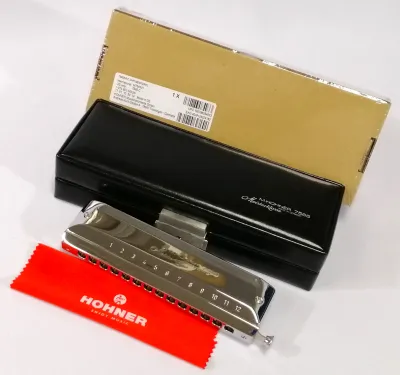
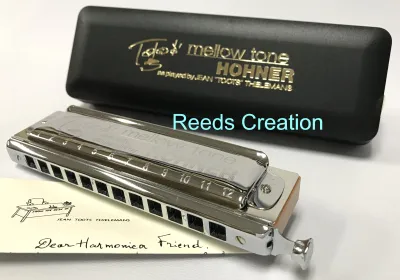
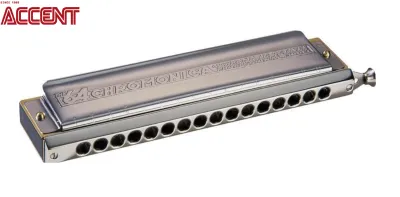
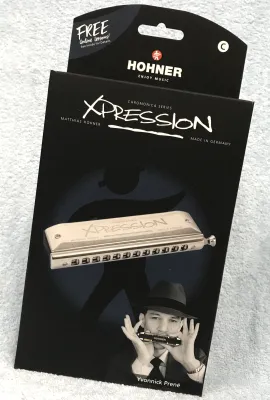


Prices are valid at publication and may change. Please refer to the product page for the latest price.
Warming up the harmonica is a critical step that is often overlooked. Cold metal brass reeds are stiffer and will register differently on a tuner than reeds that have reached operating temperature. Additionally, blowing warm breath into a cold harmonica causes immediate condensation to form on the reeds and the plastic windsavers, which can cause the valves to stick or the reeds to flat. To prevent this, cradle the harmonica in your hands or place it inside an inside pocket close to your body for several minutes before testing, allowing the comb and reed plates to reach a temperature close to your natural breath.
The environment in which you test your harmonica must be carefully selected to ensure clean readings. Choose a quiet room free from ambient noise, such as humming air conditioners, fans, or street traffic, which can easily confuse the tuner’s internal microphone. If you are using a clip-on tuner, attach it securely to the cover plate of the harmonica, ensuring it does not block any of the rear acoustic vents or interfere with the movement of the slide. For microphone-based tuners, position the device on a stable surface at a consistent distance of about fifteen to thirty centimeters from the instrument to capture a clear, direct acoustic signal.
Step-by-Step Process for Checking Pitch on Every Reed
To obtain an accurate assessment of your harmonica’s pitch, you must isolate each individual note without allowing air to bleed into adjacent chambers. Use a clean, focused embouchure—either a tight pucker or a precise tongue-blocking technique—to direct your breath into a single hole. If your embouchure is too wide, the tuner will receive a composite signal from multiple reeds, resulting in a fluctuating or completely inaccurate pitch reading. Keep your tongue relaxed and your oral cavity open to avoid accidentally bending the pitch downward as you play.

Begin your assessment with the slide in its resting position (slide out) to test the base scale, which is typically tuned to the key of C major on standard models. Start at the lowest hole on the instrument, gently blowing to test the first blow note, and then drawing breath to test the first draw note. Maintain a steady, moderate breath pressure that is just sufficient to initiate a clear, stable vibration from the reed. Record or note the tuner’s reading for each note as you progress systematically up the instrument, hole by hole, through the low, middle, and high registers.
Once you have completed the base scale, repeat the entire process with the slide fully depressed (slide in) to test the shifted scale, which provides the sharps and flats. Depressing the slide redirects your breath to an entirely different set of chambers and reeds, which must be evaluated with the same level of care. Pay close attention to the transition between the slide-out and slide-in notes on the same hole, ensuring that the slide moves smoothly and seals completely. Any partial slide engagement can cause air leaks that alter the pitch and response of the active reed.
As you move through the registers, be aware that the physical size of the reeds changes significantly. The long, heavy reeds in the lower register require a broader, more relaxed column of air to speak clearly without bending flat. Conversely, the short, delicate reeds in the upper register are highly sensitive to over-blowing, which can choke the reed or cause it to sound sharp. Adjust your breath volume—but not your core pressure—to suit the physical requirements of each register as you document the pitch of every blow and draw reed.
Interpreting Tuner Readings and Breath Control Adjustments
When reading your chromatic tuner, focus on the cents display, which measures the micro-tonal deviation from absolute pitch in hundredths of a semitone. A reading of zero cents indicates perfect alignment with the calibrated reference pitch, while positive values indicate the note is sharp and negative values indicate it is flat. Because harmonicas are dynamic acoustic instruments, the needle or digital indicator will rarely remain perfectly static; look for a stable average reading after the initial attack of the note has settled.
If the tuner indicates a minor pitch deviation of a few cents, your playing technique may be the primary cause rather than a physical defect in the reed. You can correct minor flat readings by raising your tongue slightly, narrowing your oral cavity, or increasing the support from your diaphragm to deliver a more focused stream of air. If a note registers as sharp, try relaxing your throat, lowering your jaw, and reducing your breath pressure. Experimenting with these subtle physical adjustments allows you to understand how your unique anatomy interacts with the instrument’s acoustic chamber.
It is also important to recognize the natural pitch tendencies inherent to the design of the chromatic harmonica. Many manufacturers intentionally tune the reeds slightly sharp to accommodate the average player’s breath force, which naturally pulls the pitch down during performance. Consequently, a reed that reads three to five cents sharp under very light breath pressure may be perfectly in tune when played at a standard performance volume. Understanding this relationship prevents you from unnecessarily attempting to physically alter reeds that are actually performing exactly as intended.
Identifying Physical Issues and When to Seek Professional Repair
While technique adjustments can resolve minor pitch fluctuations, consistent and significant deviations often point to physical issues within the harmonica. If a specific reed consistently registers as flat by ten cents or more, regardless of how gently you blow or how much you adjust your embouchure, the reed may be experiencing physical fatigue. Over time, the repeated flexing of the brass or bronze reed can cause microscopic fractures near its rivet base, lowering its natural vibrational frequency and indicating that the reed is nearing the end of its lifespan.
Another common physical issue is slide misalignment or structural air leaks, which primarily affect the pitch and playability of the upper register. If the slide assembly is bent, dirty, or improperly tensioned, it may not seal the chambers completely when depressed or released. This allows air to escape or bypass the intended reed, resulting in a weak, airy tone that registers as flat or unstable on your tuner. Regularly cleaning the slide components and checking the tightness of the assembly screws can resolve these issues without requiring reed modification.
In tropical or highly humid environments, such as Singapore, the plastic windsavers (valves) glued over the reed slots are highly susceptible to sticking due to moisture and saliva buildup. A sticking or curled windsaver can cause a reed to start flat, rattle, or fail to speak entirely when you first apply breath. If you observe these symptoms, inspect the windsavers visually to ensure they lie flat and clean against the reed plate. If a reed remains severely out of tune after cleaning, or if you suspect a reed needs to be physically filed or replaced, it is best to consult a qualified harmonica technician to avoid permanently damaging the delicate reed plates.
Frequently Asked Questions (FAQ)
Why does my Hohner chromatic harmonica sound out of tune when I play softly?
Playing with extremely low air pressure does not supply enough energy to initiate a stable, full vibration in the reed. When a reed is under-blown, it responds sluggishly and often registers as flat on a chromatic tuner. To get an accurate reading of the reed’s true pitch, you must maintain a consistent, moderate airflow that fully engages the reed without forcing or choking it.
Can I use a guitar tuner for my Hohner chromatic harmonica?
Standard guitar tuners are often programmed to recognize only the specific pitches of guitar strings and may fail to register the full range of notes on a chromatic harmonica. To properly evaluate your instrument, you must use a fully chromatic tuner that detects all twelve semitones across multiple octaves. Ensure the tuner’s frequency range is broad enough to capture both the deep bass notes and the high-register treble notes of your harmonica.
How often should I check the pitch of my chromatic harmonica?
For casual players, checking the pitch every few months or whenever you notice a change in tone or response is generally sufficient. If you practice daily or perform regularly, a monthly check helps you identify reed fatigue before a reed fails completely during a performance. Immediate pitch checks are recommended if a specific note suddenly sounds dull, requires significantly more breath to speak, or drops noticeably in pitch.
Community discussion
Share your experience or ask a question. Comments are reviewed before publication.