
Developing a reliable sense of rhythm is one of the most critical milestones in your musical journey. To use a metronome effectively, you must treat it as an active diagnostic tool rather than passive background noise. This involves starting at a slow, comfortable tempo, breaking down complex rhythms into smaller subdivisions, and incrementally increasing the speed only after you can play a passage flawlessly.
Whether you are learning a classical piano piece, practicing acoustic guitar chords, or polishing a drum rudiment, the metronome acts as an unbiased observer. It reveals exactly where your timing wavers, allowing you to build muscle memory that is both physically relaxed and rhythmically precise.
Why Practice with a Metronome?
A metronome serves a much deeper purpose than simply clicking along while you play. Its primary function is to provide an objective, unwavering pulse that does not bend to your emotions, physical fatigue, or the technical difficulty of a musical passage.
Products mentioned in this guide
![[ammoon]Clip on Digital Be-at Tempo Metronome LCD Screen Lightweight & Mini for Violin Guitar Bass Musical Instrument Black](https://img.lazcdn.com/g/p/f3cc47d23c61e66b44f5d6d0ec47bba0.jpg_400x400q80.jpg_.webp)
![[ammoon]Mini Mechanical Metronome Metronome 11cm Height for Piano Guitar Violin Ukulele Chinese Zither Music Instrument](https://img.lazcdn.com/g/p/e34590512f8dd63fb6e0c3970b65cb1c.jpg_400x400q80.jpg_.webp)


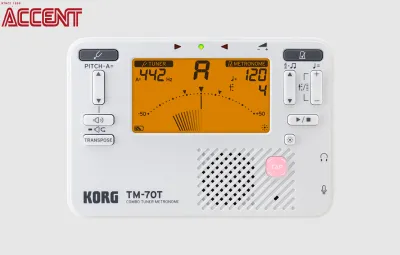
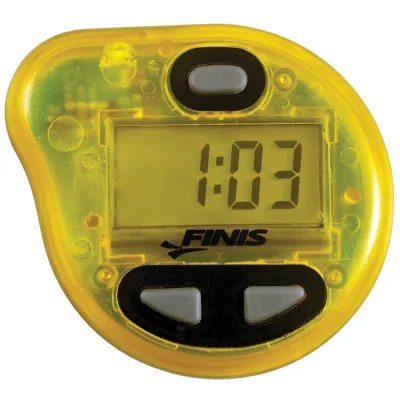
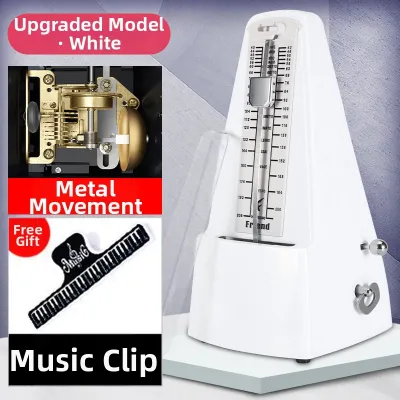
Prices are valid at publication and may change. Please refer to the product page for the latest price.
Human beings naturally tend to alter their tempo based on the complexity of what they are playing. When you reach an easy section of a song, your brain relaxes, and you will often unconsciously rush the tempo. Conversely, when a difficult run of notes or a complex chord transition appears, you will likely drag the tempo as your fingers scramble to find the correct positions. The metronome acts as an immediate diagnostic tool, highlighting these micro-fluctuations the instant they occur.
Ultimately, practicing with a metronome is not about learning to play mechanically like a machine. Instead, it is about building a highly developed, internalized sense of time. By aligning your movements with an external reference point, you train your brain to feel the precise space between beats. Over time, this scaffolding allows you to maintain a steady groove when playing solo or collaborating with other musicians in an ensemble, even when the metronome is turned off.
Setting Up Your Metronome for Effective Practice
Before you play your first note, taking a moment to configure your device correctly will prevent frustration and make your practice sessions far more productive.

Understanding BPM and Finding Your Starting Tempo
Beats Per Minute (BPM) is the standard measurement of musical tempo. If a piece of music has a target tempo of 120 BPM, attempting to practice it at that speed from the beginning is a recipe for tension and mistakes. To find a realistic starting tempo, locate the most technically challenging measure in the piece. Set your metronome to a speed where you can play that specific measure perfectly and without tension—even if that means starting at 60 BPM. This is your baseline practice tempo.
Configuring Time Signatures and Accents
Most modern metronomes allow you to select a specific time signature, such as 4/4, 3/4, or 6/8. When you configure this setting, the device will produce a distinct pitch or a louder click on the first beat of every measure (the downbeat). Utilizing this accented beat is essential because it maintains your structural awareness. It prevents you from getting lost in a continuous stream of identical clicks and teaches you to feel the natural phrasing and boundaries of the music.
Adjusting Sound, Volume, and Visual Cues
The sound of your metronome should be easily audible over your instrument without causing ear fatigue. Many players prefer a organic woodblock or rim-shot sound over a harsh, high-pitched electronic beep. If you are practicing a loud instrument like drums or brass, or if you are practicing quietly in an apartment setting to avoid disturbing your neighbors, look for a digital metronome with a headphone jack. Many devices also offer a flashing LED light; while visual cues are helpful, try to rely primarily on your auditory senses, as music is fundamentally an acoustic medium.
Step-by-Step Guide to Practicing with a Metronome
Integrating a metronome into your daily routine requires a structured approach. Following this sequential workflow will help you master difficult passages efficiently without developing bad habits.
Step 1: Listen and Internalize
Do not pick up your instrument immediately. Turn on the metronome at your chosen starting tempo and simply listen to the pulse for a few moments. Tap your foot, clap the rhythm of the sheet music, or count the beats out loud (for example, “one, two, three, four”). This simple step coordinates your physical body with the tempo, ensuring that you have internalized the speed before your hands have to execute complex movements.
Step 2: Play at a Slow Tempo
Begin playing your instrument at the slow baseline tempo you established earlier. Your goal during this step is absolute accuracy and physical relaxation. If you feel your shoulders tightening or your breathing shallowing, the tempo is still too fast. Playing slowly gives your brain the necessary time to process hand placement, tone quality, and dynamics, ensuring that you are mapping correct movements into your muscle memory.
Step 3: Isolate Difficult Passages
Avoid the common mistake of playing a piece from the very beginning to the end every time you practice. When you encounter a section where you stumble or lose sync with the click, stop immediately. Isolate that specific phrase—even if it is only two measures long. Loop this small section repeatedly with the metronome until you can play it smoothly and in perfect time.
Step 4: Apply Incremental Speed Increases
Once you can play the isolated passage flawlessly three times in a row, it is time to build speed. Increase the metronome tempo by a tiny increment, specifically 3 to 5 BPM. Play the passage again at this slightly faster speed. If you make a mistake, resist the urge to keep pushing forward; instead, lower the metronome by 2 BPM and consolidate your technique before trying to speed up again. This gradual staircase method builds effortless speed and prevents the accumulation of tension.
Step 5: Record and Review
When you are actively playing, your brain is highly focused on physical execution, which can impair your ability to judge your own timing objectively. Use a smartphone or a simple voice recorder to record a brief two-minute segment of your practice session. When you listen back, pay close attention to whether your notes land directly on top of the clicks, or if you tend to drift slightly ahead of or behind the beat.
Advanced Techniques to Internalize the Groove
Once you are comfortable playing along with a basic quarter-note click, you can use more advanced metronome techniques to develop a highly resilient, professional sense of rhythm.
Subdividing the Beat
Instead of setting your metronome to click only on the main beats, configure it to click on eighth notes or sixteenth notes. For example, in a slow 4/4 ballad, hearing four subdivisions per beat provides a dense rhythmic grid that guides your placement of shorter notes. This technique is incredibly helpful for tightening up fast, intricate runs and ensuring that your shorter notes do not bunch up or rush.
The "Missing Beat" Method
To test the strength of your internal clock, you must gradually rely less on the constant guide of the metronome. If you are using a programmable metronome app, configure it to silence every second or fourth measure while the timer continues to run silently in the background. Your challenge is to keep your tempo perfectly steady during the silence so that when the click returns on the next measure, you are still perfectly in sync with it.
Practicing on the Off-Beats
In genres like jazz, funk, and reggae, the groove relies heavily on syncopation and the off-beats. You can train your rhythmic independence by shifting your relationship to the metronome click. Instead of treating the click as beats 1, 2, 3, and 4, try to perceive the click as the “and” (the upbeat) between the main beats. This mental shift is challenging at first, but it dramatically improves your ability to feel syncopated rhythms and play with a relaxed, natural swing.
Common Metronome Mistakes and How to Fix Them
Many musicians abandon the metronome because they find it frustrating or feel it makes their playing sound rigid. Recognizing and correcting these common pitfalls will transform your relationship with the tool.
- Chasing the Click: If you realize you have fallen behind or jumped ahead of the metronome, do not try to rush or slow down mid-measure to catch up. This creates a jerky, unstable rhythm. Instead, stop playing entirely, take a deep breath, listen to the pulse for one full measure, and re-enter smoothly on the next downbeat.
- Ignoring the Accent: Treating every click as identical can cause you to lose track of where you are in the music, leading to robotic playing. Always ensure your metronome's accented downbeat aligns perfectly with the first beat of your sheet music's measures to preserve the natural phrasing and weight of the time signature.
- Over-Reliance on the Tool: If you never turn the metronome off, you run the risk of becoming dependent on it. The metronome is a training wheel, not a permanent performance partner. Once you have secured the technical layout and timing of a piece, turn the metronome off. This allows you to introduce natural expressive timing, such as rubato, without feeling confined by a rigid pulse.
Frequently Asked Questions (FAQ)
Should I practice with a metronome every day?
Yes, incorporating metronome practice into your daily routine is highly beneficial, but it should not consume your entire practice session. A balanced approach is to dedicate roughly 20% to 30% of your daily practice time to focused metronome drills, such as technical scales, exercises, and tricky rhythmic passages. Use the remainder of your practice session to focus on tone production, emotional expression, and dynamic phrasing without the constraint of a strict click.
Is a physical metronome better than a metronome app?
Both options have distinct advantages depending on your needs. Traditional mechanical metronomes offer a classic aesthetic and a swinging physical pendulum that provides excellent peripheral visual tracking. However, in tropical climates with high humidity, mechanical gears can occasionally suffer from wear or warping over time. Digital quartz metronomes and smartphone apps are highly portable, offer precise subdivision settings, feature tap-tempo buttons, and include headphone jacks for quiet practice, making them incredibly versatile for modern musicians.
How do I stop feeling stiff when playing with a metronome?
Stiffness usually happens when you view the metronome as an aggressive master that you must fight to keep up with. To counter this, shift your mental focus to the silence and space between the clicks rather than the impact of the click itself. Keep your breathing deep and steady, relax your shoulders, and allow your body to sway slightly with the rhythm. Treating the metronome as a supportive rhythm section partner rather than a rigid judge will immediately make your playing feel more fluid and musical.
Community discussion
Share your experience or ask a question. Comments are reviewed before publication.