
Using a metronome to practice the traditional Malay kompang requires translating the fluid, interlocking patterns of ensemble drumming into a precise, structured grid. By aligning the fundamental strokes—palu, gantung, and mati—with the steady pulse of a metronome, you can build the muscle memory, timing accuracy, and rhythmic discipline needed for live performances. This practice method bridges the gap between solo technical drills and the dynamic, collaborative environment of a traditional kompang ensemble. To succeed, you must configure your metronome to cut through the drum’s natural resonance, map each stroke type to specific subdivisions, and systematically increase your speed only when your dampening technique is clean and consistent.
Preparing Your Metronome and Practice Space
Setting up a productive practice environment is essential because the kompang is a highly resonant, loud hand drum. Start by selecting a standard time signature on your metronome. Most traditional kompang rhythms, such as those used in wedding processions or formal ceremonies, are built on a simple 4/4 or 2/4 time signature. Setting your metronome to a common quadruple meter provides a clear, predictable framework of strong and weak beats that matches the structure of basic rhythmic cycles.
Set your initial tempo significantly slower than performance speed. A slow tempo, such as 60 to 70 beats per minute, gives your brain and hands the necessary time to focus on the physical mechanics of each strike. Rushing into fast tempos before mastering the basic movements often leads to sloppy technique and uneven timing.
Products mentioned in this guide
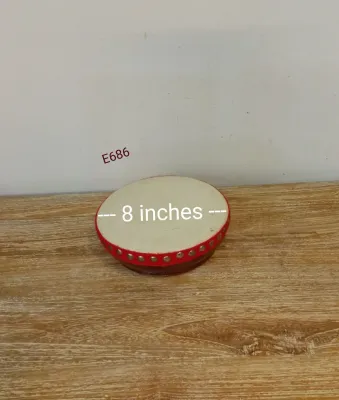
Prices are valid at publication and may change. Please refer to the product page for the latest price.
Choose a metronome sound that can easily cut through the sharp, acoustic volume of the drum. The kompang produces a bright, ringing tone that can easily drown out soft clicks. Opt for a high-pitched electronic beep, a sharp cowbell sound, or a digital click with a high frequency to ensure you can hear the pulse clearly over your playing.
Position your metronome or speaker strategically. Placing the device on a hard surface at ear level, or using a single in-ear headphone, can help you monitor the click without having to strain your hearing or strike the drum too softly.
Mapping Clicks to Palu, Gantung, and Mati Strokes
To use a metronome effectively, you must understand how the three primary kompang strokes align with the auditory pulse. The first stroke is the palu, which is an open, heavy strike. To execute a palu, strike the skin of the kompang near the rim with your fingers, allowing your hand to bounce off immediately. This creates a loud, resonant, and ringing tone. On your metronome, the palu is typically aligned with the strong downbeats to establish the primary pulse of the rhythm.

The second stroke is the gantung, a lighter, suspended strike. This stroke is played with less force, often on the off-beats or subdivisions between the main clicks. The gantung adds texture and momentum to the rhythm, filling the spaces between the primary pulses without overpowering the main beats.
The third and most critical stroke is the mati, a muted or damped strike. To play a mati, strike the drum skin while simultaneously keeping your hand or fingers pressed against the surface to choke the sound instantly. This produces a dry, percussive thud with no lingering resonance.
Assigning these strokes to the metronome’s grid requires careful visualization. For a basic pattern, you might play a resonant palu on beat one, a light gantung on the off-beat of beat two, and a sharp mati on beat three.
Pay close attention to the rhythmic subdivision. The mati stroke must occur precisely on the designated click or subdivision. If your dampening hand is even slightly late, the drum will ring out, causing rhythmic bleeding that blurs the distinction between the open and muted notes. Visualizing the metronome click as a physical trigger for the dampening action helps maintain a clean, crisp sound.
Step-by-Step Routine for Building Basic Rhythms
Mastering traditional kompang rhythms requires a structured, progressive practice routine that builds coordination systematically.
Phase one focuses on synchronizing the core beats. Begin by isolating the two contrasting sounds: the open palu and the muted mati. Set your metronome to a slow, steady tempo. Play a palu on beat one, let it ring through beat two, play a mati on beat three, and hold through beat four. Focus entirely on making the transition between the ringing open tone and the deadened mute sound as clean as possible. Your hand should strike exactly on the click, with no anticipation or lagging.
Phase two introduces the subdivisions. Once you can transition smoothly between palu and mati on the main beats, introduce the gantung stroke on the subdivisions. Set your metronome to play eighth-note subdivisions. Practice playing a palu on beat one, a gantung on the off-beat of beat two, and a mati on beat three. This introduces the syncopated feel characteristic of traditional Malay drumming. Keep the gantung light and bouncy, ensuring it does not compete with the volume of the palu.
Phase three involves continuous looping and tension monitoring. Combine these elements into a continuous loop. Repeat the pattern for several minutes without stopping. As you loop the rhythm, perform a mental scan of your body. Check for tension in your shoulders, wrist, and fingers. Tight muscles will slow down your reaction time and make your strokes sound stiff. Keep your wrist flexible and let the natural rebound of the drum skin do the work.
The condition for progression is strict. Resist the temptation to speed up too quickly. You should only increase the metronome tempo when you can play the entire pattern consistently for several minutes. If you notice your mati strokes becoming muddy, or if you find yourself rushing to hit the gantung, lower the tempo immediately. True mastery is built on consistency and clarity, not raw speed.
Troubleshooting Timing Drift and Stroke Execution
Even experienced percussionists encounter timing issues and physical fatigue during extended practice sessions. Rushing is the most common timing error, especially when transitioning from an open palu to a muted mati stroke. Because the mati requires more physical effort to damp the sound, players often anticipate the stroke and strike the drum ahead of the metronome click. If you find yourself consistently playing ahead of the beat, focus on relaxing your striking hand and letting it fall naturally with the gravity of the pulse.
Dragging, or falling behind the click, often happens during complex sequences involving multiple gantung strokes. This is usually a sign that your wrist is too tense or that you are overthinking the pattern. To correct dragging, simplify the rhythm. Strip away the subdivisions and play only the downbeats until your hand regains its natural bounce and matches the metronome’s pace.
Examine your hand posture and dampening pressure if your mati strokes sound muddy. A clean mati requires a flat, firm contact with the drum skin. If only your fingertips touch the skin, or if your hand bounces off too quickly, the drum will continue to vibrate. Ensure your palm or fingers remain flat against the head to absorb the vibration instantly.
Establish clear stop conditions for your practice. If you find your technique collapsing, your wrist aching, or your timing drifting consistently for more than a few measures, stop playing. Continuing to practice with poor form only reinforces bad habits. Take a short break, stretch your hands, and resume at a tempo that is significantly slower.
Developing Internal Timing for Ensemble Playing
While a metronome is an invaluable tool for solo practice, traditional kompang music is fundamentally a group activity where players must lock in with one another. To transition from relying on an external click to developing your own internal sense of time, try practicing with a space drum approach. Set your metronome to click only on the first beat of each measure instead of every beat. This forces you to maintain the tempo internally for the remaining beats. When the first beat clicks again, you will immediately hear if you have rushed or dragged.
Another effective exercise is the muting technique. If you use a digital metronome or app, set it to play for two measures and then mute itself for two measures while you continue playing. When the sound returns, check if you are still accurately in sync with the click. This exercise builds a robust internal clock that will keep you steady even when other ensemble members drift.
Ultimately, the precision you gain from metronome practice must be translated into active listening. In a live kompang performance, you will not have a click track in your ear. Instead, you must listen to the lead drummer and the interlocking parts of your fellow players. By training your ears to be highly sensitive to micro-timings against a metronome, you will find it much easier to lock into the collective groove of the ensemble and adjust to subtle tempo changes naturally.
Frequently Asked Questions (FAQ)
What is a good starting tempo for beginners learning Malay kompang?
There is no single universal starting tempo, as the ideal speed depends entirely on your current level of physical control. For most beginners, a tempo between 60 and 75 beats per minute is highly effective. At this speed, you have enough time between clicks to consciously prepare your hand for the next strike, focus on the distinct physical mechanics of the palu and mati strokes, and ensure the drum is fully muted without rushing. Prioritize clean, resonant tones and sharp dampening over speed; once you can play a pattern perfectly for several minutes, you can gradually increase the tempo in small increments.
Should I use a digital metronome app or a physical device for kompang practice?
Both options have distinct advantages depending on your practice environment. A physical metronome, especially an electronic one designed for percussionists, often features a louder speaker and a physical volume dial, making it easier to hear over the loud acoustic volume of a kompang. Digital metronome apps, on the other hand, offer excellent portability, visual indicators, and advanced features like programmable mute patterns. If you practice in a shared space or a typical apartment in Singapore, a digital app paired with a single in-ear headphone can provide an excellent balance of high-volume clarity for you without disturbing your neighbors.
Community discussion
Share your experience or ask a question. Comments are reviewed before publication.