
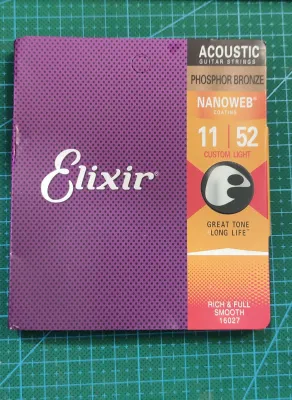
Selecting your first set of guitar strings can feel like navigating an overwhelming maze of numbers, materials, and technical jargon. For beginners looking to minimize maintenance and maximize practice time, Elixir strings are widely considered the benchmark for coated string technology. If you want a quick recommendation, the best starting point for most acoustic beginners is the Elixir Nanoweb Phosphor Bronze Custom Light (.011-.052), while electric beginners should opt for the Elixir Optiweb Nickel-Plated Steel Super Light (.009-.042).
These specific sets balance easy playability with a long-lasting, smooth performance. By choosing a lighter gauge with a protective coating, you can significantly reduce initial finger pain and avoid the frustration of dealing with rusty, dull-sounding strings during your first few months of learning. This guide breaks down exactly how to navigate Elixir’s lineup to find the perfect match for your instrument, playing style, and budget.
Why Elixir Strings Are a Smart Start for Beginners
Standard, uncoated guitar strings begin to degrade the moment they are installed on an instrument. Sweat, natural skin oils, and ambient moisture quickly find their way into the microscopic gaps of the wound strings, causing rapid oxidation and rust. In humid tropical climates like Singapore’s, this corrosive process is heavily accelerated, often turning uncoated strings dull, rough, and discolored within just a couple of weeks.
Products mentioned in this guide
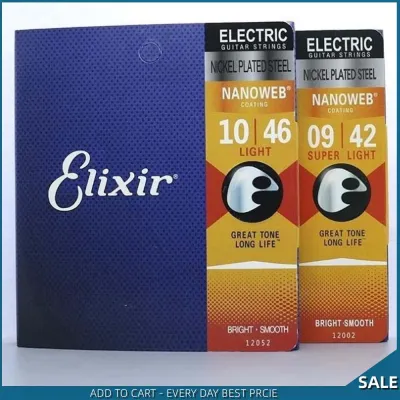
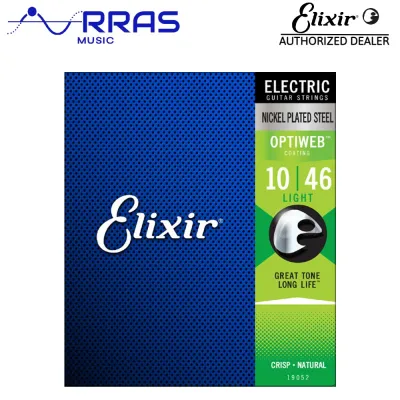
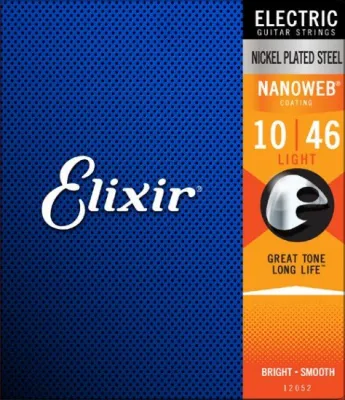
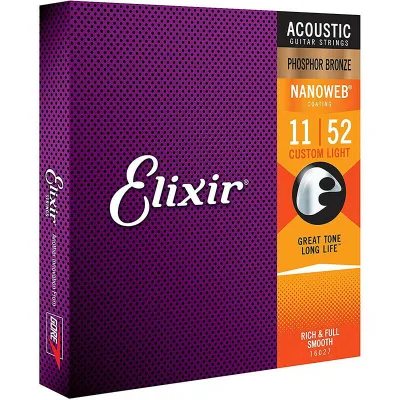
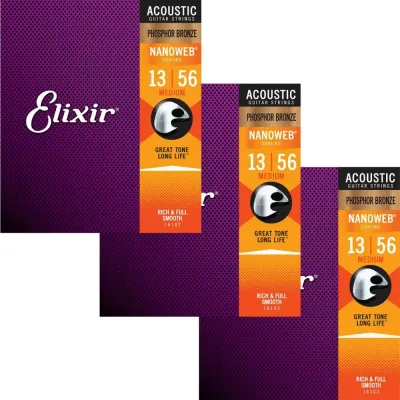
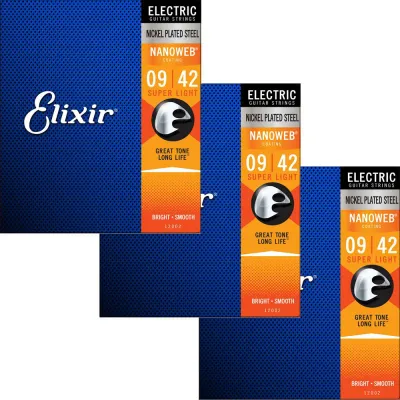
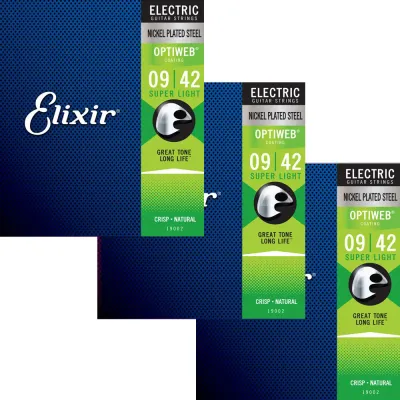
Prices are valid at publication and may change. Please refer to the product page for the latest price.
Elixir strings address this issue using a proprietary, ultra-thin polymer coating technology. This micro-thin barrier wraps entirely around the string, preventing dirt, sweat, and moisture from settling into the windings. Because the core and wrap wires are shielded from environmental exposure, the strings are highly resistant to corrosion and rust. This physical barrier ensures that the strings retain their fresh out-of-the-box tone and smooth physical texture for a significantly longer period.
For a beginner, this extended lifespan is a massive practical advantage. Learning to change guitar strings can be a tedious and intimidating task when you are still mastering basic chords. Since Elixir strings typically last three to five times longer than standard uncoated sets, you will not have to worry about frequent string changes. You can dedicate your energy entirely to practicing, knowing your guitar will sound clean and bright every time you pick it up.
While Elixir strings carry a higher initial price point—typically retailing between S$20 and S$30 per set in Singapore, compared to S$8 to S$12 for basic uncoated strings—they are highly cost-effective in the long run. Because a single set of Elixirs can easily last several months under normal practice conditions, you will end up purchasing fewer sets over the course of a year. You also save the valuable time and effort required to perform multiple restringing setups.
Another subtle but important benefit for new players is the reduction in finger squeak. When sliding your fingers along the fretboard to change chord positions, the friction against uncoated wound strings often produces a loud, high-pitched squeaking noise. Elixir’s smooth polymer coatings naturally dampen this mechanical noise. This results in cleaner-sounding practice sessions, which can be highly encouraging when you are still developing clean finger transitions.
Key Factors When Choosing Your First Elixir Set
Before purchasing a set of Elixir strings, it is essential to understand how different product specifications impact your playing experience. Navigating these factors systematically will ensure you choose a set that matches both your instrument and your physical comfort level.

Guitar Type
Acoustic and electric guitar strings are engineered differently and are not interchangeable. Acoustic strings are designed to project sound naturally through the guitar’s wooden body, utilizing copper-based alloys like bronze to create a warm, resonant acoustic tone. Electric strings, on the other hand, are formulated with highly magnetic materials like nickel-plated steel so that the guitar’s electromagnetic pickups can clearly capture the string vibrations. Installing electric strings on an acoustic guitar will result in a thin, quiet projection, while using acoustic strings on an electric guitar will produce a very weak, unbalanced signal through your amplifier.
Coating Types
Elixir offers three distinct polymer coatings, each tailored to deliver a specific balance of tone, durability, and physical feel:
- Polyweb: This is Elixir's original, thickest coating. It provides a distinctly warm, mellow tone and an incredibly slick, smooth feel under the fingers. It offers the maximum reduction in finger squeak and provides a soft barrier that is highly comforting for sensitive fingertips.
- Nanoweb: A much thinner coating that strikes a popular middle ground. It delivers a bright, vibrant, and highly dynamic tone that closely mirrors uncoated strings, while still offering a smooth, comfortable feel with a bit more physical grip than Polyweb.
- Optiweb: The thinnest coating in the lineup, designed exclusively for electric guitars. It is engineered to be virtually unnoticeable, providing the crisp, raw, and organic feel of an uncoated string while still delivering the full lifespan benefits of a coated string.
String Gauge (Thickness)
String gauge refers to the physical thickness of the strings, measured in thousandths of an inch. A standard set is typically referred to by its thinnest string (for example, a set of “10s” starts with a .010-inch high E string). Thicker strings require higher physical tension to tune to pitch, making them stiffer to press down and bend. For beginners who are still building up hand strength and fingertip calluses, lighter gauges are highly recommended because they minimize finger pain and make basic techniques much easier to execute.
Material
The metal alloy used to wrap the core wire dictates the fundamental voice of the string. For acoustic guitars, the two primary options are Phosphor Bronze (which offers a rich, warm, and balanced tone) and 80/20 Bronze (which delivers a very bright, crisp, and sparkling sound). For electric guitars, Nickel-Plated Steel is the industry standard, offering a bright, punchy tone with an excellent magnetic response that works beautifully across all genres from clean jazz to heavy distortion.
Recommended Elixir Strings for Acoustic Beginners
Acoustic guitars naturally require higher string tension than electric guitars to vibrate the wooden soundboard effectively. Choosing the right coating and gauge is crucial to balance physical playability with rich acoustic volume.
Elixir Nanoweb Acoustic (Phosphor Bronze or 80/20 Bronze)
The Elixir Nanoweb series is the most versatile and widely recommended starting point for acoustic beginners. The thin Nanoweb coating protects the strings from sweat and dirt while preserving the bright, open, and resonant characteristics of a traditional acoustic guitar. It feels smooth and comfortable under the fingers without feeling overly slippery, giving you a reassuring sense of control as you learn to navigate the fretboard.
For most beginners, the Phosphor Bronze alloy is the ideal default choice. It delivers a warm, full-bodied tone with rich low-end warmth and clear highs, making it highly forgiving and suited to a wide variety of music styles, from folk strumming to fingerstyle. If you find that your acoustic guitar naturally sounds a bit dark or muddy, choosing the 80/20 Bronze version can help inject some crisp, sparkling high-end clarity into your overall sound.
To keep finger fatigue to a minimum, beginners should start with either the Custom Light (.011-.052) or Light (.012-.053) gauge. The Custom Light set is particularly excellent for new players because the slightly thinner treble strings require less downward pressure to fret cleanly. This allows you to practice chord shapes for longer periods before your hands begin to tire, while still providing enough low-end thickness to maintain a satisfying, full-bodied acoustic volume.
While highly versatile, the Nanoweb coating does have minor trade-offs. Because the coating is engineered to be thin, it does not dampen finger squeak quite as thoroughly as the thicker Polyweb coating. Additionally, players who are specifically searching for an extremely dark, earthy, or vintage blues tone might find the inherent high-end clarity of the Nanoweb series to be a bit too modern and bright.
Elixir Polyweb Acoustic (80/20 Bronze)
If your absolute top priority as a beginner is physical comfort and reducing finger pain, the Elixir Polyweb Acoustic set in 80/20 Bronze is an exceptional alternative. The thicker Polyweb coating creates a highly polished, ultra-slick surface that feels incredibly soft under the fingertips. This smooth barrier reduces the abrasive friction of the metal wrap wire against your skin, making it a very comforting option if you have sensitive fingers or are struggling to build calluses.
This thick coating is also highly effective at eliminating mechanical finger noise. If you find the scraping sound of your fingers sliding across the strings distracting during practice, the Polyweb coating will quiet those frequencies down significantly. This results in a much smoother, more polished acoustic sound, even if your finger transitions are still a bit unrefined.
For this set, the Light (.012-.053) gauge is highly recommended. Because the slick Polyweb coating softens the physical sensation of the strings, a set of 12s will actually feel slightly more forgiving and easier to play than a standard, uncoated set of the same gauge. This allows you to enjoy the robust volume and projection of a light set without the typical physical strain.
However, the thicker Polyweb coating does impact the guitar’s acoustic voice. It naturally dampens some of the high-frequency sparkle and bite, resulting in a distinctly warm, mellow, and slightly compressed tone. If you prefer a highly articulate, bright, or punchy acoustic sound, the Polyweb coating may feel a bit too dark or acoustically restricted for your taste.
Recommended Elixir Strings for Electric Beginners
Electric guitars feature thinner necks and lower action than acoustic guitars, allowing players to use much lighter string gauges. This makes the electric guitar highly playable, but choosing the right Elixir coating is still essential to match your tactile preferences.
Elixir Nanoweb Electric (Nickel-Plated Steel)
Elixir Nanoweb Electric strings are a highly popular, reliable choice for players picking up the electric guitar for the first time. Constructed with a high-quality nickel-plated steel wrap wire, these strings deliver a bright, punchy, and well-balanced tone. They offer excellent magnetic output, ensuring that your guitar pickups capture every nuance of your playing clearly, whether you are practicing clean chord progressions or using high-gain distortion.
The Nanoweb coating on these strings provides a smooth, fast feel that allows your hand to slide effortlessly up and down the neck. It offers a comfortable compromise for beginners: it provides excellent protection against rust and sweat buildup, while still retaining enough natural surface texture to prevent your fingers from slipping out of position when trying to execute precise notes or chords.
For most electric beginners, starting with the Super Light (.009-.042) or Custom Light (.009-.046) gauge is highly recommended. The incredibly low tension of a .009 set makes pressing down on the frets effortless, which is crucial for preventing hand cramping as you build up finger strength. It also makes learning basic lead guitar techniques, such as string bending and vibrato, significantly easier and less painful for developing hands.
One minor limitation to keep in mind is that lighter gauges have less physical resistance. If you have a naturally heavy picking hand or tend to grip the neck with excessive force, you may accidentally push the strings out of tune or experience some fret buzz. If you find yourself constantly overpowering a .009 set, stepping up to a Regular Light (.010-.046) set will provide a more stable, solid physical response.
Elixir Optiweb Electric (Nickel-Plated Steel)
For beginners who want the incredible durability of Elixir strings but absolutely dislike the slick, slippery feel of coated strings, the Elixir Optiweb Electric series is the perfect solution. Engineered with an ultra-thin polymer coating, Optiweb strings are designed to feel identical to traditional, uncoated strings. They offer a crisp, natural grip and a bright, raw tone, allowing you to experience the organic tactile feedback of bare metal.
This natural texture is highly beneficial for beginners who want to build precise finger control. The slight physical resistance of the uncoated feel helps keep your fingers anchored during bends, scales, and complex chord shapes. It is an excellent option if you have already practiced on a standard uncoated set and want to preserve that familiar, tactile connection to your fretboard while gaining complete protection against rust.
For the Optiweb series, the Regular Light (.010-.046) gauge is an excellent, well-balanced starting point. It provides a robust, full-bodied electric tone with stable tuning and a satisfying physical resistance. If you find that a .010 set feels a bit too stiff for your fingers to bend comfortably, you can easily drop down to the Super Light (.009-.042) set for a softer, more forgiving playing experience.
Because the Optiweb coating is designed to be as thin and unobtrusive as possible, it does not offer the same level of friction reduction as Nanoweb or Polyweb. This means you will experience a normal amount of finger squeak when sliding across the fretboard. Additionally, if you suffer from highly acidic sweat, the ultra-thin Optiweb coating may wear down slightly faster than the thicker Nanoweb or Polyweb options.
Quick Comparison of Elixir Coatings and Gauges
To help you quickly identify the best option for your guitar, the table below summarizes the key differences between Elixir’s three primary coating technologies:
| Coating Type | Tone Profile | Physical Feel | Best Suited For |
|---|---|---|---|
| Polyweb | Warm, mellow, and smooth | Very slick, soft, and polished | Acoustic beginners with sensitive fingers; maximizing comfort and reducing finger squeak. |
| Nanoweb | Bright, balanced, and clear | Smooth with a moderate, balanced grip | All-round acoustic and electric players seeking a highly versatile, traditional tone. |
| Optiweb | Crisp, natural, and bright | Natural texture; feels virtually uncoated | Electric guitarists who want a traditional, organic feel with long-lasting rust protection. |
Understanding String Gauge Packaging
When purchasing Elixir strings, the packaging will display a range of numbers, such as “10-46” or “11-52”. These numbers represent the physical thickness of the strings in thousandths of an inch:
- The first number (e.g., 10 or .010 inches) represents the thickness of the thinnest string (the high E string).
- The last number (e.g., 46 or .046 inches) represents the thickness of the thickest string (the low E string).
- A lower starting number indicates a lighter, lower-tension set that is easier to play but produces slightly less volume. A higher starting number indicates a heavier, higher-tension set that is physically stiffer but delivers a louder, more robust tone.
Verification Checklist Before Purchasing
Before finalizing your purchase of Elixir strings, run through this quick checklist to ensure complete compatibility with your instrument:
- Verify Guitar Type: Double-check that you are buying "Acoustic" strings for an acoustic guitar or "Electric" strings for an electric guitar. The packaging is clearly labeled.
- Verify Bridge and String Ends: Ensure your guitar accepts standard ball-end strings. Elixir's standard sets feature traditional ball ends, which are compatible with almost all standard acoustic bridge pins and electric hardtail or tremolo bridges.
- Check Current String Gauge: If your guitar was professionally set up for a specific gauge (such as .009s on an electric), installing a much heavier gauge (like .011s) can alter the neck tension. This may cause the strings to sit too high off the fretboard or buzz against the frets, requiring a truss rod adjustment. Try to stick close to your guitar's original factory gauge unless you plan to have the instrument set up professionally.
- Buy from Authorized Sources: Because Elixir is a premium brand, counterfeit strings are common on generic online marketplaces. To ensure you are getting genuine Elixir strings with the proprietary polymer coating, purchase directly from established local music shops or authorized musical instrument distributors in Singapore.
Frequently Asked Questions (FAQ)
Do Elixir strings hurt less for beginners?
Elixir strings can help reduce finger discomfort, but they are not a magic cure for initial finger soreness. The smooth polymer coating (especially Polyweb) reduces raw friction and sliding resistance, which helps prevent painful blisters and skin irritation on your fingertips.
However, the primary cause of finger pain for beginners is string tension and action height (the distance between the strings and the fretboard). To minimize pain effectively, you should choose a lighter string gauge, such as a .009 set for electric or a .011 set for acoustic. Additionally, taking your instrument to a professional guitar technician for a proper setup will ensure the strings sit close to the frets, making them much easier to press down.
How often should a beginner change Elixir strings?
While standard uncoated strings often need to be replaced every three to four weeks due to rust and tone degradation, Elixir strings can easily last between three to six months for a beginner practicing regularly. The exact lifespan depends on how frequently you practice, how heavily your hands sweat, and how well you maintain the instrument.
To determine when it is time to change your Elixir strings, look for these common warning signs:
- Loss of Brightness: The guitar begins to sound noticeably dull, muddy, or lacks sustain.
- Visible Wear: The protective polymer coating begins to look frayed or fuzzy, particularly in the area where you strike the strings with your pick or fingers.
- Tuning Instability: The strings struggle to stay in tune or have difficulty intonating correctly up and down the neck.
- Discoloration or Rust: You notice dark spots or a rough texture developing on the metal surface, indicating the coating has worn through.
Are Elixir strings worth the higher price for a beginner?
Yes, Elixir strings are highly recommended and worth the initial investment for a beginner. Although they cost more upfront than standard uncoated strings, their extended lifespan means you will spend less money on replacement strings over time.
More importantly, Elixir strings provide a highly consistent practicing experience. Because the tone and physical feel remain stable for months, your guitar will always sound and feel the same every time you pick it up to practice. This consistency is incredibly valuable for training your ears to recognize correct pitches and helps prevent the frustration of practicing on stiff, rusty, and dull-sounding strings.
Community discussion
Share your experience or ask a question. Comments are reviewed before publication.