
A Ghostfire guitar bag can be a highly practical and cost-effective choice for beginner guitarists who need reliable protection without a premium price tag. When starting your musical journey, protecting your instrument from scratches, dust, and minor bumps is crucial to maintaining its playability and appearance. Ghostfire offers a range of gig bags that cater specifically to budget-conscious players, providing essential features that far exceed the flimsy, unpadded dust covers often bundled with entry-level guitars. However, determining if a specific model is right for you depends on your instrument type, your daily travel habits, and the level of physical protection your environment demands.
Choosing the right gig bag involves evaluating how and where you plan to use your guitar. If you are primarily practicing at home or occasionally traveling to local lessons, a well-padded soft bag offers the ideal balance of convenience and safety. By understanding what makes a guitar bag effective, you can confidently assess whether a Ghostfire model aligns with your needs and budget.
Core Requirements for a Beginner's Guitar Bag
Before evaluating any specific brand, it is essential to understand what a beginner’s guitar bag must accomplish. The primary role of a gig bag is to safeguard your instrument from physical damage during storage and transport. For a beginner, this means the bag must offer adequate padding, typically made of high-density foam, to absorb minor impacts from accidental bumps against doorways or furniture. A quality bag should also feature a dedicated neck support system, such as a padded strap or cradle, to keep the guitar’s neck stable and prevent tension-related damage to the headstock.
Products mentioned in this guide
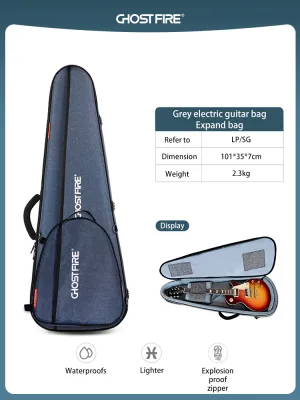
Prices are valid at publication and may change. Please refer to the product page for the latest price.
Portability is another critical factor for players who need to transport their instrument. Padded backpack straps are highly recommended, as they distribute the weight of the guitar evenly across your shoulders, reducing strain during commutes. The straps should be adjustable and securely stitched to the bag’s body to prevent sudden tears. Additionally, a comfortable side carry handle is necessary for quick maneuvers, such as lifting the bag in and out of vehicles or navigating tight spaces.
Finally, a practical gig bag must accommodate the various accessories that every guitarist needs. Beginners quickly accumulate essential gear, including clip-on tuners, instrument cables, picks, capos, spare strings, and sheet music or instructional books. Having spacious, well-organized exterior pockets ensures that you can carry all your gear in a single trip, eliminating the need for an extra backpack and keeping your practice essentials organized and accessible.
Evaluating the Ghostfire Bag: A Practical Checklist
To determine if a Ghostfire bag is suitable for your specific setup, you should perform a systematic check of its physical features and manufacturer specifications. Start by inspecting the protection details listed on the product page or packaging. Look for the exact padding thickness, which is typically measured in millimeters; for basic daily use, padding between 10mm and 20mm is generally recommended to provide a reasonable buffer against minor impacts. Examine the interior lining material as well, ensuring it is smooth and non-abrasive to prevent scratches on your guitar’s finish.

Next, verify the internal dimensions of the bag against your actual guitar. Guitars come in a wide variety of shapes and sizes, from dreadnought acoustics to slim electrics and classical models. A bag that is too large will allow the instrument to slide around inside, increasing the risk of damage, while a bag that is too small will put pressure on the tuning pegs and bridge. Measure your guitar’s overall length, upper bout width, lower bout width, and body depth, and compare these figures directly with the bag’s internal specifications before making a purchase.
Lastly, pay close attention to the hardware and construction quality of the bag. Zippers are often the first component to fail on budget gig bags, so look for models that feature heavy-duty, dual-metal zippers that glide smoothly without catching. Check the reinforcement stitching at high-stress points, such as where the backpack straps and carrying handles attach to the main body. A sturdy rubber or plastic bumper pad at the bottom of the bag is also a valuable feature, as it protects the endpin and lower body when you set the bag upright on hard floors.
Balancing Protection and Budget for Beginners
For most beginners, budget allocation is a major consideration when purchasing gear. It is important to recognize the inherent limitations of soft gig bags, regardless of the brand. While a padded soft bag is excellent for preventing scratches, dust buildup, and minor bumps, it cannot protect an instrument from heavy crushing forces, severe drops, or significant structural impacts. Understanding this limitation helps you set realistic expectations for what a budget-friendly bag can achieve.
When planning your initial investment, aim to balance the cost of your bag with the value of your instrument and other essential accessories. In Singapore, a beginner guitar package might cost anywhere from S$150 to S$500. Spending a disproportionate amount on a luxury, high-end flight case might not make sense if it leaves you with insufficient funds for a quality instrument, a reliable tuner, or professional setup services. A reasonably priced Ghostfire bag can free up your budget, allowing you to allocate more resources toward a better-sounding guitar or essential learning materials.
It is also helpful to distinguish between necessary protective features and premium extras that you might not need as a beginner. Features like built-in hygrometers, advanced water-resistant coatings, and genuine leather trim drive up the price significantly. For a first-time player practicing primarily indoors or making short commutes, standard high-density foam padding and durable polyester fabric are more than sufficient. Focus on securing a bag that covers the structural basics reliably rather than paying extra for aesthetic or specialized additions.
When a Soft Gig Bag Is Not Enough
While a soft gig bag is highly convenient, there are specific scenarios where a more robust protective solution is necessary. High-risk transit situations demand structural rigidity that soft bags simply cannot provide. If you plan to travel by air and must check your instrument as baggage, or if you frequently navigate highly crowded public transit networks during peak hours in Singapore, a hard-shell case is essential to prevent the guitar from being crushed or severely damaged by shifting cargo and heavy crowds.
Environmental factors also play a significant role in instrument care, particularly for acoustic guitars made of solid tonewoods. Singapore’s high humidity levels can cause wood to swell, warp, or develop mold if left unprotected. While a gig bag offers some barrier against dust, it does not provide an airtight seal. If you own a sensitive acoustic guitar and struggle to maintain a stable, air-conditioned environment at home, storing your instrument in a high-quality hard case with dedicated humidity-control packets is a much safer long-term solution.
Finally, keep an eye out for upgrade signals that indicate it is time to transition away from a basic gig bag. As your skills progress, you may decide to invest in a higher-value instrument, expand your collection, or begin performing at local venues and jam sessions. When your gear represents a significant financial or sentimental investment, or when you begin transporting multiple instruments regularly, upgrading to a premium flight case or a professional-grade hybrid bag becomes a necessary step to safeguard your musical journey.
Frequently Asked Questions (FAQ)
Can a beginner use the same Ghostfire bag for both acoustic and electric guitars?
Generally, it is not recommended to use the same gig bag for both acoustic and electric guitars due to the significant differences in their physical dimensions. Acoustic guitars have much deeper bodies and wider bouts, requiring a spacious bag, whereas electric guitars are slim and compact. If you place an electric guitar inside a bag designed for an acoustic, the instrument will shift excessively during transport, which can lead to scratches or damage to the neck and headstock. Always check the specific model variants and internal dimensions of the Ghostfire bag to ensure a snug, secure fit tailored to your specific instrument type.
How should I clean and maintain my guitar gig bag?
To prolong the life of your gig bag, establish a simple routine for cleaning and maintenance. For regular care, wipe down the exterior polyester fabric with a damp cloth to remove dust and light dirt, and use a vacuum attachment to clear out any debris or pick shavings from the interior lining. Avoid using harsh chemical solvents that could degrade the protective coatings or foam padding. Store the bag in a dry, well-ventilated area away from direct sunlight to prevent mold growth and fabric fading, and periodically inspect the zippers and straps to ensure they remain free of debris and fully functional.
Community discussion
Share your experience or ask a question. Comments are reviewed before publication.