
Quick Answer: Who Benefits Most from a Jumbo Format?
A jumbo Quran is designed primarily for readers who prioritize maximum visual clarity and comfortable, stationary reading. It is highly beneficial for elderly readers, individuals with visual impairments, or anyone dedicated to intensive home-based study where the book remains in a fixed position.
However, if your daily routine involves commuting, frequent travel, or if your living space has limited shelf depth, this oversized format can quickly become impractical. The core trade-off lies in choosing between large, highly legible text and the physical ease of handling and transporting a lighter, standard-sized volume.
Assessing Your Reading Habits and Visual Needs
Your daily reading routine is the most critical factor when deciding on a book format. Long study sessions often lead to eye strain, especially when dealing with intricate Arabic script, diacritical marks, or footnotes. A jumbo Quran addresses this by offering significantly larger text, wider margins, and increased line spacing. These design choices allow your eyes to track the lines more naturally, reducing visual fatigue over extended periods.
Products mentioned in this guide
![Al Quran Al Karim Al Mujawwad Dengan Panduan Tajwid Dan Waqaf & Ibtida COMPILED & PERJILID [JUMBO SIZE 32 x 23 cm]](https://img.lazcdn.com/g/p/135a5bc134473e87b3ef258c10494556.jpg_400x400q80.jpg_.webp)
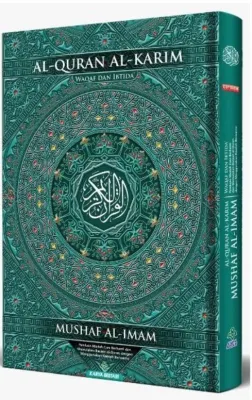
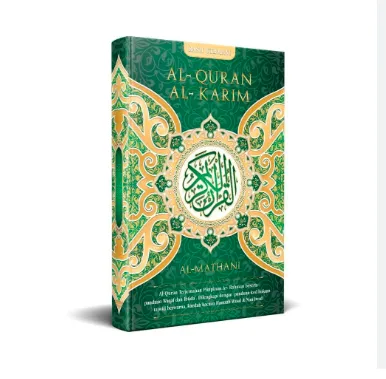
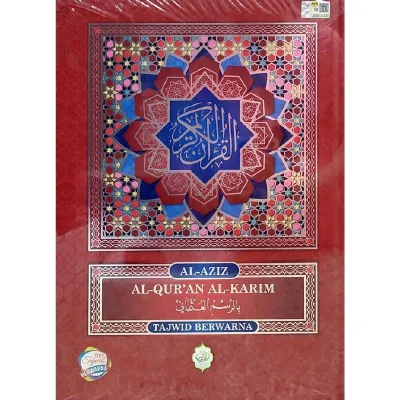
Prices are valid at publication and may change. Please refer to the product page for the latest price.

The physical location where you read also dictates the ideal size. If you have a dedicated prayer corner or a spacious study desk, a large-format book can remain permanently open on a stand. This setup creates a structured, inviting space for daily reflection without the need to constantly pack the book away.
Additionally, consider whether your reading is a solitary or shared activity. In family study circles or teaching environments, a jumbo edition is highly practical. The enlarged script allows multiple people to follow along simultaneously from a comfortable distance, making it an excellent tool for parents teaching children or for group study sessions where a single text is shared.
Evaluating Your Living Space and Storage Constraints
Before purchasing a jumbo Quran, it is essential to measure your physical environment. These oversized volumes require substantial shelf depth and height clearance that standard bookcases may not accommodate. Due to their weight, they also demand sturdy, structurally sound shelving to prevent sagging over time.
The physical handling of a heavy book requires realistic assessment. Holding a jumbo edition in your hands for more than a few minutes can cause wrist and arm fatigue. You must evaluate whether you have the physical comfort to handle such a volume, or if you will need to rely entirely on a flat table or a dedicated book stand to support its weight during use.
Storage conditions in tropical climates, such as in Singapore, also play a role in preservation. Large-format pages have more surface area exposed to environmental factors. To protect the binding and paper from humidity, warping, or direct sunlight, you need a storage spot that is dry, well-ventilated, and away from windows. Leaving a heavy book open for long periods without proper support can also strain the spine, so planning where and how it will sit is crucial for its longevity.
Portability and Daily Commute Considerations
If your lifestyle involves reading during a daily commute or traveling frequently, a jumbo Quran is highly restrictive. Its dimensions and weight make it virtually impossible to slip into a standard backpack or handbag without adding significant bulk and strain to your shoulders.
Attempting to read an oversized, heavy volume on public transport, such as a crowded train or bus, is highly impractical. The lack of space and the constant movement make it difficult to hold the book steady, risking damage to the pages or causing discomfort to nearby passengers.
A practical compromise is to adopt a hybrid reading system. Many readers choose to keep a jumbo edition as their primary, high-comfort text at home, while relying on a compact pocket edition or a digital application for their daily commute. This approach ensures you maintain your reading habits on the go without compromising on visual comfort during your dedicated study time at home.
Comparing Jumbo, Standard, and Pocket Formats
Choosing the right format requires balancing readability against physical convenience. While pocket formats offer unmatched portability, they sacrifice text size and margin space, which can make detailed study difficult. Standard formats offer a middle ground but may still cause eye strain during long sessions. The jumbo format maximizes visual clarity at the expense of portability.
The physical construction of these formats also differs significantly. Because of the sheer weight of the paper, a jumbo Quran requires a highly robust binding. The spine experiences much greater stress when the book is opened, meaning that high-quality stitching and reinforced covers are essential to prevent the pages from pulling away over time. Standard and pocket editions, being lighter, experience less structural wear on their bindings during normal handling.
From a budget perspective, jumbo editions generally represent a larger initial investment. The cost of high-grade, heavy-duty paper, specialized binding, and low-volume printing runs makes them more expensive than mass-market standard editions. When planning your purchase, consider whether the long-term visual comfort justifies the higher price point compared to standard alternatives.
Essential Checks Before Purchasing a Large-Format Edition
To ensure you select a high-quality jumbo Quran that meets your needs, perform several key checks before buying. First, verify the layout of the script and any accompanying translation. In some editions, only the Arabic text is enlarged, while the translation or commentary remains in a small, difficult-to-read font. Ensure that all elements of the text are scaled proportionally for comfortable reading.
Second, examine the paper quality. Look for thick, non-reflective paper that minimizes glare under indoor lighting. The paper should be opaque enough to prevent ink bleed-through from the reverse side, which can create visual clutter and make reading difficult.
Finally, inspect the binding specifications. A reliable jumbo edition should feature a lay-flat binding, allowing the book to remain open on a flat surface or stand without the pages flipping back. Look for section-sewn bindings rather than glued-only spines, as sewn pages offer the durability needed to support the weight of a large-format book over years of use.
Frequently Asked Questions (FAQ)
Can I use a book stand for a jumbo edition?
Yes, using a book stand is highly recommended for a jumbo edition to alleviate physical strain. However, you must verify the weight capacity and width of the stand before use. Standard wooden or lightweight metal stands may wobble or collapse under the weight of an oversized book. Look for a sturdy, wide-base stand with adjustable angles to ensure the book is supported securely at an optimal viewing height, reducing neck and wrist fatigue.
Are digital versions a good alternative to a physical jumbo Quran?
Digital versions offer excellent portability and adjustable text sizes, making them a highly flexible alternative. You can easily zoom in on the script and adjust screen brightness to reduce eye strain. However, digital screens can cause visual fatigue during extended reading sessions due to blue light emission. Many readers also find that a physical jumbo Quran provides a more focused, tactile, and distraction-free reading experience compared to a tablet or smartphone, which may display notifications and interrupt your study routine.
Community discussion
Share your experience or ask a question. Comments are reviewed before publication.