
For first-time players, a Kai ukulele generally offers a practical and reliable entry point into learning the instrument. These ukuleles provide a solid balance of structural integrity, comfortable playability, and stable tuning at an accessible price point. However, whether a specific model represents true value for your money depends on your willingness to perform basic physical inspections and your understanding of how to care for the instrument in a humid climate.
In the entry-level musical instrument market, “good value” does not mean flawless perfection. Instead, it means acquiring an instrument that does not actively hinder your learning process. A budget-friendly ukulele should hold its tune reasonably well, feature a neck that is straight and comfortable to hold, and produce a clear, pleasing tone without distracting fret buzz.
Kai has positioned itself as an accessible brand catering primarily to casual learners and hobbyists. While they offer a unique aesthetic—often characterized by their signature side soundports—the ultimate value of your purchase will depend on verifying the build quality upon delivery and understanding the total cost of ownership, including essential accessories and potential setup adjustments.
Products mentioned in this guide
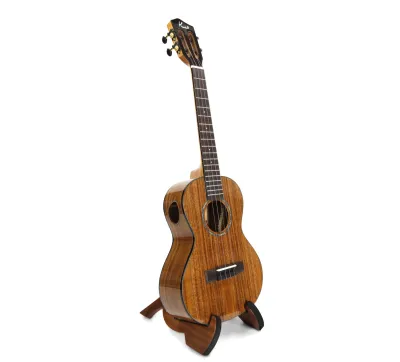
Prices are valid at publication and may change. Please refer to the product page for the latest price.
Inspecting Build Quality and Climate Durability
When your ukulele arrives, performing a thorough physical inspection is the first step to ensuring your investment is sound. Start by checking the neck alignment. Hold the ukulele at eye level and look down the fretboard from the headstock toward the body; the neck should be straight or have a very slight, almost imperceptible upward bow. A twisted or heavily warped neck will make the instrument difficult or impossible to play comfortably.
Next, run your fingers gently along both sides of the fretboard to check the fret finishing. The metal fret ends should feel smooth and flush with the wood. If they stick out or feel sharp, it indicates poor factory finishing or wood shrinkage, which can make sliding your hand up and down the neck uncomfortable. Additionally, inspect the bridge—the wooden piece glued to the body that holds the strings. Ensure there are no visible gaps, lifting, or glue residue where the bridge meets the soundboard, as a lifting bridge will eventually snap off under string tension.
Understanding the materials used in construction is also vital, especially when living in Singapore’s highly humid tropical climate. Entry-level ukuleles are typically constructed from either laminated wood or solid wood.
- Laminated Wood: Made from thin layers of wood glued together with alternating grain directions. This construction is highly stable and resistant to changes in humidity and temperature, making it less likely to warp, swell, or crack when transitioned between air-conditioned rooms and outdoor heat.
- Solid Wood: Offers richer resonance and tone but is highly sensitive to environmental changes. Without strict humidity control, solid wood can easily crack or warp in humid conditions.
For most beginners, a laminated body is actually the more practical and durable choice. It requires far less maintenance and can withstand daily environmental shifts without requiring a dedicated dehumidifier cabinet. Finally, inspect the tuning machines on the headstock. Ensure the gears turn smoothly without slipping, grinding, or feeling excessively loose, as stable hardware is essential for keeping the instrument in tune.
Evaluating Playability and Sound for Beginner Motivation
An instrument that is painful or frustrating to play will quickly end up gathering dust in a closet. The most critical factor in beginner playability is the “action,” which refers to the height of the strings above the fretboard. If the action is too high, you will have to press down excessively hard to fret a note, leading to rapid hand fatigue and sore fingertips. Conversely, if the action is too low, the strings will vibrate against the frets, creating an annoying metallic buzz.

To evaluate this visually, look at the gap between the strings and the frets near the nut (the plastic piece near the headstock) and at the 12th fret (the middle of the string length). The strings should sit close to the frets without touching them when open. Press down on various frets to ensure you can produce a clean note with moderate finger pressure.
It is also important to set realistic acoustic expectations for budget-friendly instruments. A laminated ukulele will produce a bright, punchy, and cheerful sound, but it will lack the deep resonance, long sustain, and complex tonal overtones of a premium, solid-wood instrument. For learning basic chords, strumming patterns, and simple melodies, the acoustic output of an entry-level model is more than adequate to keep you motivated.
Before committing to keeping your ukulele, perform a quick playability test across the entire fretboard. Pluck every single note on every fret individually. Listen closely for any “fret buzz” or “dead notes” where the sound is muffled or cut short.
Additionally, check the basic intonation by tuning an open string perfectly with a digital tuner, then pressing that same string down at the 12th fret. The tuner should show the exact same note, just one octave higher. If the fretted note is significantly sharp or flat, the instrument’s scale length or saddle placement is inaccurate, which will make chords sound out of tune even if the open strings are perfectly tuned.
Calculating the True Cost: Accessories and Setup Needs
The sticker price of a ukulele is rarely the final amount you will spend to start playing. To calculate the true cost of ownership, you must factor in several essential accessories that are not always included in the base package.
- Padded Gig Bag: While some entry-level packages include a thin dust cover, a bag with at least 5mm to 10mm of padding is necessary to protect the instrument from accidental bumps and scratches during transport.
- Clip-on Digital Tuner: Essential for keeping your instrument in tune. While smartphone apps are convenient, they rely on the phone's microphone and struggle in noisy environments, whereas a clip-on tuner detects physical vibrations directly through the headstock.
- Ukulele Strap: Helps support the instrument, allowing you to maintain proper hand positioning without worrying about dropping the ukulele.
- Replacement Strings: Factory strings on budget instruments are often of lower quality. Upgrading to a premium set can dramatically improve both the tone and feel of your instrument.
Another potential hidden cost is a professional setup. If your ukulele arrives with high action or uneven frets, you may need to take it to a local music shop or luthier for adjustment. A basic setup—which involves filing the nut slots, adjusting the saddle height, and leveling uneven frets—can cost anywhere from S$30 to S$80. Factor this potential cost into your budget, especially if you are purchasing online without a pre-delivery inspection.
When buying online, always verify the shipping fees, return policies, and warranty terms. Ensure the retailer offers a clear return window for manufacturing defects, so you are not stuck with an unplayable instrument. If possible, purchasing from a physical music shop allows you to play and inspect the exact instrument you will be taking home, eliminating the guesswork of online shipping.
Making the Final Decision: Buy, Upgrade, or Explore Alternatives
To help you decide whether to purchase a Kai ukulele, upgrade to a higher-tier model, or look at other options, consider which of the following scenarios best matches your current situation.
When a Kai Ukulele is the Right Choice
- Strict Budget Constraints: If you want to keep your initial investment low while still receiving a real, playable musical instrument rather than a toy.
- Casual Hobby Testing: If you are exploring the ukulele as a casual hobby and are not yet sure if you will commit to long-term practice.
- Young Learners: The durable laminated construction of entry-level models is ideal for children, as it can withstand minor bumps and rough handling better than delicate solid wood.
When to Consider Upgrading or Exploring Alternatives
- Long-Term Commitment: If you are certain you want to study the instrument seriously, saving up for a solid-top model (where the top face is solid wood and the back/sides are laminate) will provide a richer tone that grows with your skills.
- Tonal Preferences: If you prefer a warm, mellow, and highly resonant acoustic character, you may want to explore mid-tier brands that specialize in solid mahogany or cedar tops.
Before making your final purchase or immediately after unboxing your new instrument, use this quick quality threshold checklist to ensure you have a reliable ukulele:
- Neck: Is it straight when viewed from the headstock?
- Frets: Are the metal edges smooth to the touch along the sides of the neck?
- Bridge: Is it perfectly flush with the body, with no gaps or lifting?
- Tuning Pegs: Do they turn smoothly and hold their position under string tension?
- Action: Is the string height comfortable to press down without causing fret buzz?
- Intonation: Do the notes at the 12th fret match the open notes on a tuner?
Frequently Asked Questions (FAQ)
Do Kai ukuleles stay in tune well?
Like all new stringed instruments, a new ukulele will experience tuning instability during the first few days of play. This is a natural characteristic of synthetic strings, such as nylon or fluorocarbon, which require a stretching and settling period before they hold their tension. To speed up this process, gently stretch each string upward along its length, retune, and repeat this cycle several times. Once the strings have fully stretched and settled, the geared tuning machines on most entry-level models will hold their tune reliably under normal playing conditions.
What size Kai ukulele should a beginner buy?
Ukuleles primarily come in three standard sizes: soprano, concert, and tenor.
- Soprano: The smallest size, offering the classic, bright, and plucky tone. However, the short scale length means the frets are very close together, which can feel cramped for players with larger hands.
- Concert: The most popular choice for adult beginners. It offers a slightly larger body, a deeper tone, and a longer fretboard with wider fret spacing, providing a comfortable middle ground for most hand sizes.
- Tenor: The largest standard size, delivering a rich, full tone with maximum fretboard space, making it ideal for fingerstyle playing.
For most first-time players, a concert-sized ukulele offers the best balance of comfort, playability, and traditional sound.
Can I upgrade the strings on a budget ukulele?
Yes, upgrading the strings is one of the easiest and most cost-effective ways to improve the sound and playability of any entry-level ukulele. Standard ukulele strings are universally compatible across brands, provided you match the strings to your instrument’s size (soprano, concert, or tenor). Replacing cheap factory strings with high-quality fluorocarbon or premium synthetic gut strings can instantly enhance the instrument’s volume, clarity, and sustain while providing a smoother feel under your fingertips.
Community discussion
Share your experience or ask a question. Comments are reviewed before publication.