
Deciding whether a self-help book based on Murphy’s Law is right for your mindset depends on how you handle setbacks and plan for the future. If you are naturally over-optimistic, frequently blindsided by unexpected obstacles, or exhausted by the relentless pressure of positive thinking, this realistic framework can be incredibly grounding. However, if you already struggle with chronic anxiety, low self-esteem, or a tendency to freeze when imagining worst-case scenarios, focusing heavily on what can go wrong may do more harm than good.
At its core, Murphy’s Law—the famous adage that “anything that can go wrong will go wrong”—is not used in these books as a fatalistic prophecy. Instead, authors adapt this principle as a practical tool for strategic preparation, risk management, and emotional resilience. By understanding what these books offer, you can determine if this structured, defensive approach to personal growth aligns with your current mental needs and life goals.
What to Expect from Murphy's Law Self-Help Books
Books centered on Murphy’s Law reject the mainstream narrative of unconditional optimism. Traditional self-help often encourages readers to visualize success, manifest positive outcomes, and ignore potential failures. While this can boost initial motivation, it often leaves readers entirely unprepared for real-world friction. Murphy’s Law books flip this script by arguing that true mental strength comes from looking directly at potential failures and planning for them in advance.
Products mentioned in this guide


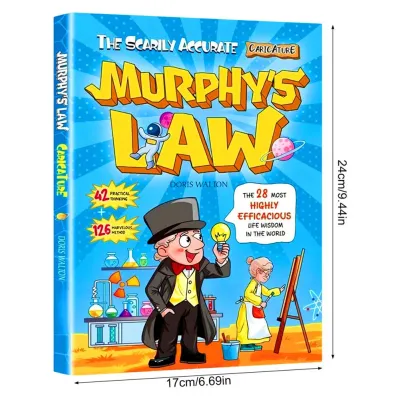
![[SG Local Stock]Murphys Law Learning Book for Kids with 128 Pages Paperback Illustrated Fun Educational Concepts](https://img.lazcdn.com/g/p/d8b8df552a7df072e2f5a80a26ce962e.png_400x400q80.png_.webp)
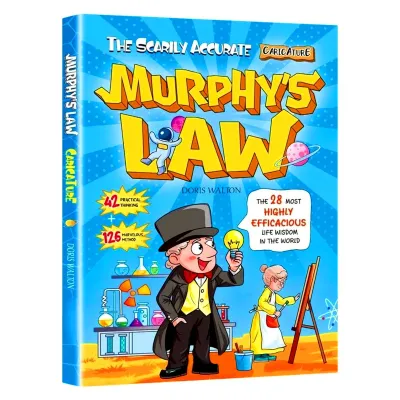


![[SG Ready Stock] MurphyS Law Childrens books Engaging Educational Entertainment Birthday Holiday Present](https://img.lazcdn.com/g/p/3aa3c33a649468c8b078a139741c3788.png_400x400q80.png_.webp)
Prices are valid at publication and may change. Please refer to the product page for the latest price.
This approach is closely aligned with “defensive pessimism,” a cognitive strategy where individuals lower their expectations and play out detailed scenarios of what could go wrong. By doing so, they reduce their anxiety because they no longer fear the unknown. Instead of being paralyzed by the possibility of failure, they demystify it, turning a vague threat into a series of manageable problems.
When you open a book in this genre, you can expect to learn specific mental tools designed to build practical resilience. These typically include risk mapping, where you identify the weakest points in your personal or professional plans. You will also learn how to conduct a “pre-mortem”—a technique where you assume a project has already failed before you even begin, allowing you to trace back the causes and prevent them.
Ultimately, these books aim to replace blind hope with structured contingency planning. They teach you to build emotional, financial, and logistical buffers into your daily life. By accepting that friction, delays, and mistakes are inevitable parts of any journey, you can remain calm and decisive when things do not go according to plan.
Self-Diagnostic: Does Your Thinking Style Match This Approach?
Before purchasing a book on this topic, it is essential to evaluate your current cognitive habits and emotional state. This mindset is highly constructive for specific personality types but can be counterproductive for others. Understanding where you fall on this spectrum will help you avoid wasting time on a book that does not serve your mental well-being.

You will likely benefit from a Murphy’s Law self-help book if you have a history of falling victim to the “planning fallacy.” This is the common tendency to underestimate the time, costs, and risks of a given task. If you consistently find yourself stressed by minor disruptions, or if you feel deeply alienated by “toxic positivity” and “good vibes only” culture, you will find the pragmatic, grounded tone of these books incredibly refreshing.
Conversely, you should probably avoid this approach if you are currently managing high levels of generalized anxiety or clinical depression. If your mind naturally defaults to catastrophic thinking—where you obsess over worst-case scenarios without taking constructive action—reading a book that encourages you to focus on failure can reinforce these harmful mental loops. Similarly, if you struggle with low self-esteem, you may interpret anticipated failures as personal flaws rather than normal system errors.
To gauge your compatibility with this mindset, take a moment to reflect on the following prompts:
- When a project or plan fails, do you feel completely blindsided, or do you usually have a backup plan ready to deploy?
- Does identifying potential obstacles make you feel empowered and prepared, or does it make you feel anxious and unmotivated to start?
- Are you looking for a book to help you build practical, step-by-step systems, or do you need emotional encouragement and self-compassion right now?
If your answers suggest a need for structure, preparation, and realistic boundaries, this genre is likely an excellent fit for your current developmental path.
Matching the Mindset to Your Current Life Goals
Even if your thinking style matches this approach, you must consider whether the Murphy’s Law mindset aligns with your active life goals. Some endeavors require strict risk management, while others demand open-ended exploration and vulnerability.
This realistic framework is exceptionally useful for highly structured, high-stakes objectives. If you are managing a complex project at work, launching an entrepreneurial venture, or organizing your personal finances in a high-cost environment like Singapore, anticipating failure is vital. For example, when planning a major home renovation or starting a small business, assuming that costs will run over budget and timelines will be delayed allows you to allocate appropriate financial reserves, preventing sudden panic.
It is also highly effective for habit formation. When trying to build a new routine, such as a daily exercise program or a strict savings plan, anticipating the obstacles—such as rainy days, low-energy evenings, or unexpected social expenses—allows you to design strategies to bypass them before they disrupt your progress.
However, this mindset is poorly suited for early-stage creative brainstorming, where premature criticism can kill innovative ideas before they have room to develop. It is also counterproductive when building new personal relationships, where expecting betrayal or rejection prevents you from establishing trust. Furthermore, if you are healing from emotional trauma, you require gentle self-compassion and emotional processing rather than analytical risk assessments.
To integrate this mindset successfully, treat it as a phase-specific tool. Use optimistic, open-ended thinking when dreaming up new ideas or connecting with others. Then, switch to a Murphy’s Law framework when it is time to execute, budget, and build the systems that will protect those dreams from real-world friction.
How to Choose the Right Author and Edition
Because “Murphy’s Law” is a public domain concept, many different authors have written books using this title or theme. To ensure you do not waste money on a book that does not suit your needs, you must evaluate the specific edition and the author’s background before buying.
First, research the author’s professional background. A book written by a cognitive behavioral therapist or clinical psychologist will focus heavily on managing anxiety, reframing cognitive distortions, and building internal mental resilience. A book written by a business consultant, military strategist, or project manager will focus on operational systems, checklists, and external risk mitigation. Decide whether you need to work on your internal emotional reactions or your external planning systems, and choose an author accordingly.
Next, carefully review the table of contents and sample chapters. You want to distinguish between books that offer actionable, evidence-based frameworks and those that are merely collections of historical anecdotes or lighthearted humor. While reading about famous historical blunders can be entertaining, it will not provide you with the practical tools needed to restructure your daily habits.
Finally, verify the publication details and format. If you prefer digital reading or audiobooks, check if the publisher includes downloadable PDF worksheets or templates, as these are crucial for completing the diagnostic exercises. Ensure the examples used in the book are modern and relevant to your life; a book written decades ago may focus on outdated industrial scenarios, whereas a contemporary edition will address modern digital distractions, remote work challenges, and current economic realities.
Your Action Plan: Buy, Skip, or Pair with Alternatives
If you have completed your self-diagnosis and decided that a Murphy’s Law self-help book matches your current needs, your next step is to proceed with a purchase. When you begin reading, do not just consume the information passively. Immediately apply the concepts to one active project or personal goal by writing down three potential failure points and creating a concrete, actionable backup plan for each.
If you have realized that this approach is too pessimistic or anxiety-inducing for your current mental state, skip this genre entirely. Instead, look for alternative frameworks that offer a more balanced perspective. Stoicism is an excellent alternative; while it also involves anticipating negative outcomes, it focuses heavily on internal emotional control and accepting what you cannot change, rather than just planning for external disasters.
Alternatively, you can explore books on the “growth mindset,” which focus on how to learn and recover from failure after it happens, rather than obsessing over it beforehand. Cognitive Behavioral Therapy (CBT) workbooks are also highly recommended if you need to address underlying anxiety and catastrophic thinking before attempting structured risk management.
Ultimately, the most effective personal development strategy is to balance realistic risk assessment with optimistic goal-setting. Use Murphy’s Law to build your safety nets, but keep your eyes focused on the destination you want to reach.
Frequently Asked Questions (FAQ)
Can reading about Murphy's Law increase my daily anxiety?
Yes, if the material is approached without the proper cognitive framing, it can increase anxiety. The critical difference lies between passive worry and active risk assessment. Passive worry involves repeatedly imagining a disaster without creating a solution, which fuels feelings of helplessness. Active risk assessment involves identifying a potential problem and immediately designing a practical backup plan to address it.
If you find yourself experiencing constant dread, insomnia, or physical tension while reading, these are clear warning signs that the material is triggering catastrophic thinking. If this occurs, you should stop reading immediately and consult a qualified mental health professional to help you address these anxious patterns in a safe, supportive environment.
Is this mindset suitable for creative or artistic goals?
This mindset is highly valuable for creative professionals, but only during specific phases of the creative process. During the initial brainstorming and ideation phases, anticipating failure will stifle your imagination and prevent you from taking the risks necessary to produce original work. You must keep this analytical mindset entirely separate from your creative flow.
However, once you transition to the execution, budgeting, and marketing phases of an artistic project, applying Murphy’s Law is essential. It helps you plan for missed deadlines, protect your digital files with redundant backups, manage production budgets, and handle negative reviews. Compartmentalize your process: dream without boundaries, but execute with a safety net.
How does this approach compare to Stoicism in self-help?
While both philosophies encourage you to contemplate negative outcomes, they focus on different aspects of control. A Murphy’s Law approach is highly tactical and externally focused; it encourages you to analyze external systems, identify potential points of failure, and build physical or logistical contingency plans to prevent or mitigate those failures.
Stoicism, on the other hand, is deeply internal. It teaches you that while you cannot control external events, you have absolute control over your emotional reactions to them. Stoicism uses the visualization of adversity to build emotional indifference to hardship. If you need practical systems to manage a complex project, choose Murphy’s Law; if you need to build emotional equanimity in the face of chaotic life events, Stoicism is the better framework.
Community discussion
Share your experience or ask a question. Comments are reviewed before publication.