
A tenor ukulele is an excellent starting size for beginners who prefer a warmer, deeper sound, require wider fret spacing for larger hands, or plan to transition to the guitar. However, it may not be the right fit if you have a smaller physical build, prefer the traditional high-pitched Hawaiian chime, or need a highly portable instrument for daily commuting. Choosing the right size depends on balancing your physical comfort with your musical goals.
While many beginners instinctively reach for the smallest, most traditional ukulele size, the tenor has grown significantly in popularity. It bridges the gap between the compact soprano and the larger acoustic guitar, offering a unique blend of playability and rich resonance. To make an informed decision, you must evaluate how the physical dimensions, tonal characteristics, and handling requirements of a tenor match your personal preferences and physical build.
Assess Your Hand Size and Comfort Level
The physical dimensions of a tenor ukulele directly impact how your fingers interact with the fretboard. A tenor typically features a scale length—the distance from the nut to the saddle—of around 43 centimeters, compared to roughly 35 centimeters for a soprano and 38 centimeters for a concert. This longer scale translates to wider spacing between individual frets, which provides more breathing room for players with wider fingers or larger hands who might otherwise feel cramped on smaller instruments.
Products mentioned in this guide
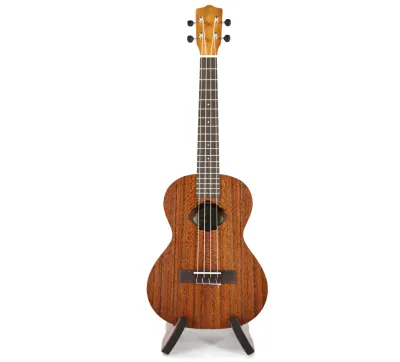
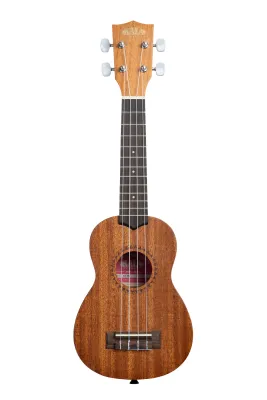
Prices are valid at publication and may change. Please refer to the product page for the latest price.
Conversely, this wider spacing requires your fingers to stretch further when executing complex chord shapes. If you have shorter fingers, reaching across four frets on a tenor can introduce hand tension, especially during extended practice sessions. To estimate your comfort level at home, you can grip a standard ruler or a kitchen spatula handle to simulate the neck width, which is usually about 35 millimeters at the nut for a tenor. Pay attention to whether your wrist remains straight and relaxed or if you feel strain in your thumb joint.
Comparing the physical footprint is essential before making a decision. While a soprano ukulele is compact and easy to wrap almost any hand around, the tenor demands a more deliberate hand position. The neck profile is often slightly thicker to support the increased tension of the longer strings, meaning the neck itself requires a more substantial grip. This extra thickness can be a benefit if you find thin necks cause your hand to cramp, but it can be a hurdle if you struggle to wrap your thumb comfortably around the back of the neck.
Define Your Musical Goals and Tone Preferences
The acoustic profile of a tenor ukulele is distinct from its smaller siblings, offering a deeper, warmer, and more resonant voice. Because the body chamber is larger, it projects lower frequencies more effectively, resulting in a sound that leans closer to a classical guitar than a traditional soprano. This rich tonal quality makes the tenor highly versatile, allowing chords to ring out with sustain and complexity.

If your musical goals involve fingerpicking, instrumental arrangements, or playing chord melodies, the tenor is often the preferred choice. The extra fretboard real estate allows you to navigate higher registers with greater precision, and the individual notes remain distinct and full-bodied. It also accommodates low-G tuning exceptionally well, which replaces the high fourth string with a lower octave string to expand the instrument’s bass range. This setup is particularly popular among solo performers who want to play bass-line integrations alongside their melodies.
However, this deeper resonance comes with a trade-off. If you are searching for the classic, bright, and percussive “plink” associated with traditional Hawaiian music, a tenor might sound too dark or modern. Soprano and concert models offer a punchier, more immediate projection that cuts through group sing-alongs with that iconic, cheerful ukulele chime. Beginners should consider whether they want their instrument to sound like a miniature guitar or a traditional, breezy island companion.
Evaluate Portability and Handling Needs
Handling a tenor ukulele requires a different physical approach than managing smaller sizes. The larger body means your strumming arm must wrap around a wider lower bout, which can alter your shoulder alignment and elbow position. For some beginners, this extra volume provides a secure anchor point against the ribs, making the instrument feel more stable and less prone to slipping. For others, particularly those with shorter torsos, it can force the arm into an awkward, elevated angle during long practice sessions.
Portability is another practical factor to weigh, especially if you plan to carry your instrument on public transport or take it to outdoor gatherings. A tenor instrument is approximately 66 centimeters in total length, making it noticeably bulkier to pack into a backpack or carry in a gig bag compared to a 53-centimeter soprano. While still highly portable compared to a guitar, it requires more dedicated storage space and a larger footprint when traveling.
Weight distribution also plays a role in how comfortable the instrument feels when playing. Tenor ukuleles are naturally heavier, and the longer neck can sometimes make the instrument feel neck-heavy, requiring you to support it more actively with your fretting hand. While playing seated mitigates this balance issue, playing while standing often necessitates the use of a strap, which requires installing strap buttons if the instrument does not come with them pre-installed. This is an important consideration if you prefer a completely free-holding playing style.
Signs a Tenor Ukulele Might Not Be the Best Starting Point
While the tenor is highly versatile, certain indicators suggest a smaller size might be a more successful starting point. For younger children or adult players with very small hands and limited arm spans, the physical stretch required to hold basic chords on a tenor can lead to early frustration. Starting with a concert size often provides a comfortable middle ground that prevents physical strain while offering more space than a soprano.
Another sign to reconsider is your aesthetic and sonic expectation. If your heart is set on the traditional, high-pitched strumming sound of classic folk or Hawaiian records, the tenor’s mellow, guitar-like voice may disappoint you. It is important to choose an instrument that matches the specific sound you want to recreate, rather than assuming a larger size is simply an upgrade.
Budgetary considerations also come into play for beginners. In the local market, quality tenor ukuleles generally carry a higher entry cost in S$ compared to standard soprano or concert options due to the additional materials and structural reinforcement required. If you are testing the waters and want to minimize your initial financial commitment, a reliable entry-level soprano or concert model often fits a modest budget more comfortably. This allows you to learn the basics before investing in a more expensive tenor later.
How to Test Before You Commit
The most reliable way to determine if a tenor ukulele suits you is to handle one in person before purchasing. When visiting a local music shop, perform a simple physical test by transitioning between basic chords like C major, G major, and F major. Pay close attention to whether your fingers can reach the frets without your wrist collapsing or your hand cramping, and check if your strumming arm feels relaxed over the lower bout.
If you do not have immediate access to a retail store, consider reaching out to local ukulele clubs or community music groups. Many players are happy to let beginners hold their instruments, allowing you to compare a soprano, concert, and tenor side-by-side. This hands-on comparison is invaluable for feeling the differences in weight, body thickness, and neck profiles.
During your physical test, evaluate the string tension and action height—the distance between the strings and the fretboard. Tenor strings are under higher tension than those on smaller ukuleles, which requires slightly more finger pressure to press down. Ensure the action is low enough to fret notes cleanly without buzzing, and verify that the neck profile feels comfortable in the palm of your hand.
Frequently Asked Questions (FAQ)
Do I need to relearn chords if I switch from soprano to tenor?
No, you do not need to learn new chord shapes when moving from a soprano to a tenor ukulele. Both instruments use standard G-C-E-A tuning, meaning a C major chord is played using the exact same finger placement on both sizes. The only adjustments you will need to make are physical, as you adapt to the wider fret spacing, slightly higher string tension, and different hand positioning required by the larger tenor neck.
Is a tenor ukulele too big for a child beginner?
For most young children under the age of ten, a tenor ukulele is generally too large and heavy to hold comfortably. The long scale length and wide fret spacing can make basic chords physically painful or impossible for small hands to reach, leading to frustration. A soprano or concert ukulele is typically a much better starting size for children, as these instruments are lightweight, easy to grip, and can be upgraded to a tenor later as the child grows.
Community discussion
Share your experience or ask a question. Comments are reviewed before publication.