
Deciding whether to read Mere Christianity depends entirely on what you want to gain from your spiritual and personal growth journey. If you are searching for a highly rational, intellectually rigorous, and non-denominational defense of basic Christian beliefs, this book is an exceptional choice. However, if your current needs lean toward emotional healing, modern therapeutic advice, or deep mystical contemplation, C.S. Lewis’s classic work may feel overly analytical or disconnected from your immediate goals.
Understanding where this book fits within the landscape of spiritual literature is essential before investing your time. Originally delivered as a series of wartime radio broadcasts in the 1940s, the text has stood the test of time as a foundational primer. It does not offer quick-fix solutions or motivational hype. Instead, it invites the reader to engage in a structured intellectual exercise to explore the logical consistency of the Christian worldview.
Identifying Your Spiritual Needs: What Are You Looking For?
Spiritual growth is rarely a linear path, and different stages of life require different literary companions. Some readers find themselves in an intellectual sorting phase, where they need to test the logical foundations of their beliefs or doubts. Others are in a season of emotional restoration, seeking comfort, validation, or a sense of peace amidst personal trials. Recognizing which phase you are currently navigating is the first step in determining if this book will serve you well.
Products mentioned in this guide
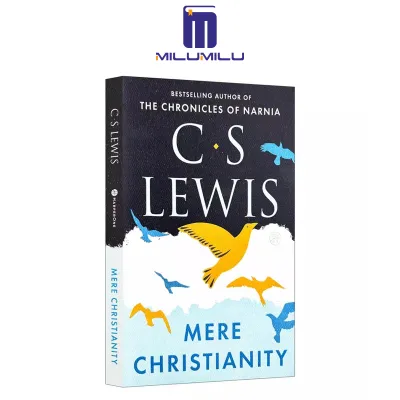
Prices are valid at publication and may change. Please refer to the product page for the latest price.
Mere Christianity is explicitly designed to address the intellectual and moral foundations of faith. C.S. Lewis intentionally avoids the theological debates that separate various Christian denominations, focusing instead on the common ground—the “mere” core—that unites them. If you are looking for a deep dive into specific denominational doctrines, such as Reformed theology, Catholic sacraments, or charismatic practices, this book will not satisfy that need. It is a book of broad foundations rather than narrow theological specialization.
In a busy urban environment where personal development is frequently measured by career milestones and productivity metrics, pausing to evaluate your inner life requires the right resources. If you are a skeptic seeking a respectful intellectual dialogue, or a believer whose faith feels intellectually stagnant, Lewis offers a structured framework to examine your assumptions. However, if you are looking for modern psychological self-help that focuses primarily on self-actualization and emotional wellness, you may find the book’s traditional emphasis on self-denial and objective moral duties challenging.
Core Themes of Mere Christianity: Do They Match Your Goals?
The book is structured into four distinct sections, each addressing a different dimension of belief and practice. Evaluating how these sections align with your personal learning objectives will help you decide if the entire work is worth your attention.

Moral Law and Logical Apologetics
The opening section of the book does not begin with scripture or theology; instead, it starts with an observation of human behavior. Lewis introduces the concept of the “Law of Human Nature,” arguing that all humans share a basic understanding of right and wrong, which they consistently fail to keep. He uses this universal moral awareness as a logical stepping stone to argue for the existence of a transcendent Creator.
If you enjoy philosophical deduction, logical proofs, and structured arguments, this section will engage your intellect. It is designed for readers who want to understand the “why” behind belief before exploring the “what.” If you prefer narrative-driven spiritual memoirs or purely experiential reflections, you may find this logical scaffolding dry or overly academic.
Practical Ethics and Daily Behaviour
The third section of the book shifts from abstract philosophy to concrete action, outlining a traditional framework for Christian ethics. Lewis examines the four cardinal virtues—prudence, temperance, justice, and fortitude—alongside the three theological virtues of faith, hope, and charity. He dedicates significant attention to what he terms the “great sin” of pride, presenting it as the ultimate source of human division and moral decay.
This section is highly valuable for readers focused on character formation and moral philosophy. It provides a demanding standard for personal conduct that contrasts sharply with modern, feel-good self-help. It requires you to confront your own flaws and consider how your daily decisions affect your community, making it an excellent tool for deep ethical reflection.
Theological Concepts and the Trinity
In the final section, Lewis transitions into more complex theological territory, exploring the nature of the Trinity and the mechanics of spiritual transformation. He explains the distinction between “begetting” (producing something of the same kind) and “making” (producing something of a different kind), illustrating how humans are transformed from natural creatures into spiritual beings.
This section requires a higher level of concentration, as it deals with abstract concepts that go beyond basic morality. If you are prepared to wrestle with dense theological ideas and metaphorical explanations of the divine, this section offers profound insights. If you are only looking for practical moral advice, you may find these final chapters more challenging to digest.
Clear Signs Mere Christianity Is the Right Fit for You
To help you make a clear decision, consider this checklist of indicators that suggest the book will align with your personal and spiritual growth goals:
- Intellectual Curiosity: You want your spiritual journey to engage your intellect and reason. You appreciate arguments that are built step-by-step and are not satisfied with emotional appeals alone.
- Seeking the "Core": You want to understand the foundational, historical beliefs of Christianity without getting bogged down in denominational disputes or sectarian politics.
- Navigating Doubt: You are a skeptic, agnostic, or questioning believer who appreciates a respectful, logically rigorous defense of the Christian worldview that does not dismiss your questions.
- Character over Comfort: Your primary goal is long-term character formation, humility, and ethical integrity rather than immediate emotional comfort or motivational encouragement.
- Appreciation for Classic Prose: You enjoy mid-20th-century British literature, formal yet conversational writing, and the extensive use of everyday analogies to explain complex ideas.
When to Choose an Alternative: Signs It Might Not Align
While the book remains a classic, it is not the right tool for every reader. Recognizing when a book does not match your needs can save you time and guide you toward more suitable alternatives:
- Seeking Emotional Healing: If you are currently dealing with personal trauma, grief, or require emotional validation, the highly rational and analytical tone of this book may feel cold or detached. You would benefit more from pastoral care literature or modern therapeutic Christian books that focus on emotional recovery.
- Desiring Mystical Experiences: If your spiritual practice is centered on contemplative prayer, silent meditation, or experiential worship, Lewis’s structured, doctrinal approach will not address those desires. Classic mystical texts or guides on contemplative spiritual disciplines would be a better fit.
- Need for Specific Denominational Depth: If your goal is to understand specific church practices, sacraments, or theological frameworks like Calvinism or Catholicism, this book’s intentional focus on the "mere" basics will feel incomplete. You should look for specific catechisms or denominational primers instead.
- Aversion to Dated Cultural References: Because the book originated as radio broadcasts during World War II, some of the cultural examples, gender language, and social contexts reflect the mid-20th century. If you prefer contemporary illustrations and modern scientific or cultural references, the text may require extra mental translation.
How to Approach the Book and Choose the Right Edition
If you decide that Mere Christianity matches your goals, approaching it with the right reading strategy and selecting the appropriate format will significantly enhance your experience.
Because the text is dense with philosophical arguments, reading it too quickly can lead to frustration. Consider treating it as a study text rather than a casual read. Aim to read just one short chapter at a time, allowing yourself space to journal, write down questions, and actively engage with Lewis’s assertions. This methodical approach is far more effective for personal growth than passive consumption.
Before purchasing, it is important to verify the edition, language, and format to ensure they meet your specific needs. Physical paperbacks typically range from S$12 to S$25 at local bookstores or verified online marketplaces. If you are buying a digital copy or an audiobook, always check for device compatibility, regional restrictions, and authorized publishers to ensure a complete and high-quality file.
- Annotated Editions: For readers who want historical context, explanations of mid-century British terms, or deeper philosophical background, an annotated study edition is highly recommended.
- Audiobooks: Because the book was originally written to be spoken over the radio, the prose has a natural, conversational rhythm that translates exceptionally well to audio. This is an excellent option for listening during your daily MRT commute or quiet evening walks.
- Large Print or E-readers: If you find dense, closely set text tiring for your eyes, opt for a large-print edition or an e-reader version where you can adjust the font size and spacing to maintain focus.
Manage your expectations by approaching this work as an intellectual and philosophical foundation. It is a starting point for a lifelong journey of character development and spiritual inquiry, rather than a modern step-by-step instruction manual.
Frequently Asked Questions (FAQ)
Is Mere Christianity too academic or dense for a beginner?
No, it is highly accessible because it was originally written for radio broadcasts. Lewis intentionally used everyday language and familiar analogies to explain complex ideas. However, some philosophical arguments in the first and fourth sections require slow, focused reading to fully grasp.
Can non-Christians read Mere Christianity for general self-improvement?
Yes, non-Christians can gain significant value from the book’s ethical discussions and exploration of human nature. The chapters on virtues, pride, and social morality offer timeless insights into character building, though readers should expect the book’s ultimate arguments to lead toward a distinctly Christian conclusion.
Community discussion
Share your experience or ask a question. Comments are reviewed before publication.