
If you are searching for a clear, logical exploration of faith, C.S. Lewis’s Mere Christianity is one of the most widely read books on the subject. However, whether it is the right book for your specific spiritual questions depends heavily on what you are hoping to find. If you are looking for a rational defense of core Christian beliefs that bypasses denominational divisions, this book is highly effective. If you are seeking emotional comfort during a crisis, deep biblical commentary, or guidance on specific church practices, you will likely need to look elsewhere.
Understanding what this classic work offers—and what it deliberately leaves out—is the first step in deciding if it deserves a place on your bookshelf or digital reading list. By evaluating its scope, structure, and intellectual style, you can determine if Lewis’s arguments will speak to your current doubts and help you make an informed purchasing decision.
What Kind of Spiritual Questions Does Mere Christianity Actually Answer?
C.S. Lewis wrote this book to address the foundational elements of the Christian faith, choosing to focus on what he termed “mere” Christianity. This concept, which Lewis borrowed from the seventeenth-century writer Richard Baxter, refers to the common ground shared by the vast majority of Christians throughout history, regardless of their specific denomination. Consequently, the book does not wade into the historical disputes between Roman Catholicism, Protestantism, or Eastern Orthodoxy. Instead, it concentrates on the core beliefs that unite them.
Products mentioned in this guide
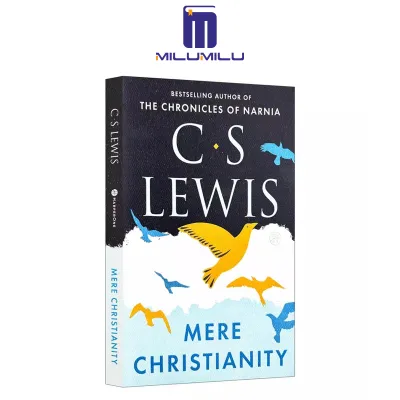

Prices are valid at publication and may change. Please refer to the product page for the latest price.
The spiritual questions this book answers are primarily intellectual and philosophical. If you find yourself asking whether objective right and wrong actually exist, or why human beings across different cultures share a baseline sense of fair play, Lewis addresses these queries directly. He uses these universal human observations to build a logical case for the existence of a Creator. From there, he explores the basic tenets of Christian theology, including the nature of God, the concept of the Trinity, the significance of the incarnation, and the meaning of Christian morality.
It is equally important to understand what the book does not attempt to do. Mere Christianity is not a verse-by-verse Bible commentary, nor is it a guide to prayer, liturgy, or church governance. If your spiritual questions are tied to how to read scripture, how to choose a local church, or how to interpret specific prophecies, this book will not provide those answers. It is fundamentally an apologetic work—a reasoned defense of the faith—designed to engage the intellect and establish a solid logical foundation for belief.
Self-Check: Is This Book the Right Fit for Your Current Doubts?
Before purchasing a copy, performing a quick self-assessment of your current spiritual state can help you avoid mismatched expectations. Because books on faith serve vastly different purposes, identifying your primary motivations for reading will ensure you choose a resource that truly aligns with your needs.

Signs Mere Christianity Will Address Your Needs
Mere Christianity is exceptionally well-suited for readers who prefer to engage their minds alongside their spirits. If you are a skeptic, an agnostic, or a believer wrestling with intellectual doubts, Lewis’s structured approach can provide a helpful framework. Specifically, this book will speak to you if:
- You seek rational arguments for faith: You prefer logical deductions and philosophical thought experiments over emotional appeals or personal testimonies.
- You struggle with the concept of morality: You want to understand why human beings feel a sense of obligation to do what is right, and whether that obligation points to a higher power.
- You want to understand core theology without sectarian bias: You are interested in the central claims of Christianity—such as the divinity of Christ or the concept of grace—without getting bogged down in denominational arguments.
- You appreciate clear analogies: You learn best when complex theological ideas are explained using everyday illustrations, such as a fleet of ships, a piano keyboard, or a mathematical equation.
If these scenarios describe your current state of inquiry, the book offers an accessible yet intellectually rigorous starting point that does not require prior theological training.
When You Should Look for a Different Resource
Conversely, there are many spiritual and emotional situations where Mere Christianity may not be the most helpful tool. Because of its highly analytical tone, the book is generally not the right fit if:
- You are seeking deep emotional healing or pastoral comfort: If you are dealing with acute grief, trauma, or personal suffering, Lewis’s logical arguments may feel overly detached. For these struggles, pastoral care books, memoirs of faith through suffering, or Lewis’s own raw personal reflection, A Grief Observed, are far more appropriate.
- You want to explore specific denominational doctrines: If you are trying to decide between different theological traditions—such as Calvinism versus Arminianism, or the differences between Anglicanism and Roman Catholicism—this book deliberately avoids those topics. You would be better served by reading denominational catechisms or specific theological treatises.
- You need a practical daily devotional guide: This is a continuous, argumentative text rather than a collection of short, daily readings designed for personal quiet times. If you want daily spiritual prompts, look for dedicated devotional books.
- You are looking for advanced academic theology: While intellectually stimulating, the book was written for a general audience. Advanced scholars looking for dense academic discourse or historical-critical biblical analysis will find the text too introductory.
What to Expect from the Book's Structure and Tone
To decide if Lewis’s writing style suits your reading preferences, it helps to understand how the book is organized and why it was written in this particular manner. Mere Christianity is divided into four distinct parts, each building logically on the previous one:
- Book 1: Right and Wrong as a Clue to the Meaning of the Universe. This section acts as the philosophical foundation. Lewis does not start with the Bible or Christian doctrine; instead, he begins with human behavior, arguing that the universal human awareness of a moral law points to a reality beyond the material world.
- Book 2: What Christians Believe. Here, Lewis introduces the core theological responses to this moral law. He discusses the differences between pantheism and monotheism, the problem of evil, and the Christian claim that God entered human history in the person of Jesus Christ.
- Book 3: Christian Behaviour. This section shifts from theory to practice, exploring how Christian beliefs shape daily conduct. Lewis examines the classic virtues—such as prudence, temperance, justice, and fortitude—alongside social morality, forgiveness, and the Christian view of marriage.
- Book 4: Beyond Personality. The final section dives into deeper theological concepts, explaining the Christian view of the Trinity, the difference between making something and begetting something, and how the Christian life involves a complete transformation of human nature.
The tone of the book is conversational, direct, and highly logical. This is because the text was originally delivered as a series of live radio broadcasts on the BBC during the Second World War. Because Lewis had to capture the attention of a distracted, wartime audience in short, ten-to-fifteen-minute segments, he avoided dense jargon. Instead, he relied heavily on brilliant analogies and common-sense reasoning. Readers should expect a text that reads like an intellectual conversation with a thoughtful friend, focusing on clear explanations rather than emotional manipulation or intense academic terminology.
Practical Tips for Reading and Choosing Your Edition
If you decide to read Mere Christianity, how you approach the text and which edition you purchase can significantly impact your experience. Because the book is dense with logical arguments, reading it requires a different strategy than reading a standard work of fiction.
When reading, it is highly beneficial to take notes and highlight key passages. Lewis’s arguments build step-by-step, and keeping track of his analogies—such as comparing the human virtues to a fleet of ships sailing in formation—will help you retain the core concepts. Reading slowly, perhaps one short chapter at a time, allows your mind to fully digest the philosophical transitions. If possible, reading the book alongside a friend or as part of a discussion group can provide valuable opportunities to debate and clarify the concepts.
When purchasing a copy, several factors must be verified to ensure you get the best possible reading experience. Before finalizing your purchase from an online bookstore or a local bookshop in Singapore, pay close attention to the following details:
- Verify the publisher and edition: Look for authorized, unabridged editions from reputable publishers (such as HarperOne or Collins). This ensures the integrity of the text and prevents you from accidentally purchasing a poorly formatted print-on-demand version. Never infer edition contents from a title or cover alone.
- Check the medium and format: Consider your reading habits. If you plan to read during your daily MRT commute, a lightweight paperback or a digital e-book version may be the most convenient. However, if you choose a digital format, verify device compatibility and check for any regional file restrictions that might apply to your e-reader account.
- Evaluate the translation and language: If you are purchasing the book in a language other than English, check the translator's credentials and reader reviews to ensure the translation accurately captures Lewis's precise logical nuances.
- Consider the audiobook option: Because the text was originally written to be spoken over the radio, the audiobook format is an excellent alternative. Listening to a skilled narrator can make the conversational tone feel even more natural, though you may still want a physical copy nearby to reference complex paragraphs.
In Singapore, physical copies can often be found in the philosophy or religion sections of major local bookstores, while digital and audio versions are readily available on global e-commerce platforms. Taking a few moments to double-check these technical specifications and ensuring you buy from an authorized source will guarantee a smooth and rewarding reading journey.
Frequently Asked Questions (FAQ)
Is Mere Christianity too academic or difficult to read?
No, the book is highly accessible. Although it addresses deep philosophical and theological topics, Lewis wrote it specifically for the general public during a time of national crisis. He deliberately avoided complex academic jargon, opting instead for everyday language and relatable analogies. While the book requires active mental focus and a willingness to follow a logical train of thought, you do not need any prior background in theology, philosophy, or history to fully understand and appreciate the arguments.
Do I need to be a Christian to understand this book?
Absolutely not. In fact, the entire first section of the book is written specifically with skeptics, agnostics, and non-believers in mind. Lewis does not assume his readers believe in God or accept the authority of the Bible. Instead, he starts with common human experiences—such as arguing or appealing to a standard of fairness—and builds his case from there. It is an excellent resource for anyone who is simply curious about the intellectual foundations of the Christian worldview.
Which edition or format of Mere Christianity should I buy?
Your choice should depend on your reading style and lifestyle. If you enjoy highlighting, writing margin notes, and flipping back to review an argument, a physical paperback or hardcover edition is highly recommended. For those who prefer reading on the go, an authorized e-book is a convenient choice, provided you verify device compatibility and regional restrictions. If you prefer auditory learning, the audiobook format is highly effective, as it honors the book’s original design as a series of spoken radio broadcasts. Always check that the edition is unabridged and published by an authorized house to ensure text completeness.
Community discussion
Share your experience or ask a question. Comments are reviewed before publication.