
Deciding how to start your investment journey can feel overwhelming, especially with hundreds of books claiming to hold the secret to wealth. If you are looking for a practical guide to active stock picking, one up on wallstreet by Peter Lynch remains one of the most frequently recommended texts. This classic book is highly suitable for beginners who want to learn how to research individual companies and build a personalized portfolio.
At its core, the book champions a simple philosophy: everyday consumers can outperform Wall Street professionals by investing in what they already know and observe. For a beginner in Singapore, this means turning your daily observations at local malls, supermarkets, and workplaces into investment leads. However, because the book was written with a heavy focus on the United States market, local readers must consciously adapt its principles to the Singapore Exchange (SGX) or learn how to access global markets from Singapore. It is best read as a foundational mindset and research guide rather than a technical manual or a shortcut to overnight wealth.
Before purchasing any edition of this book, always verify the publication details. Ensure you are selecting an authorized edition, and check whether you prefer a paperback, hardcover, e-book, or audiobook format. Digital editions should be checked for regional compatibility and device support on your preferred e-reader platform to ensure a seamless reading experience.
Products mentioned in this guide
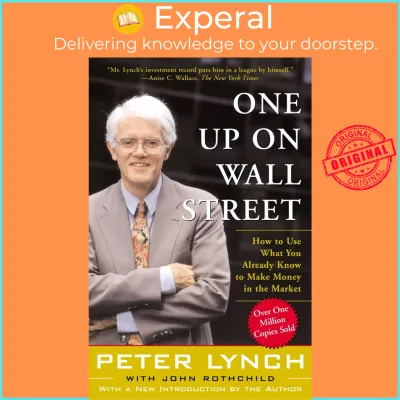
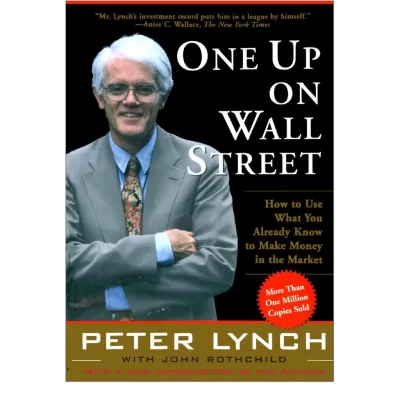
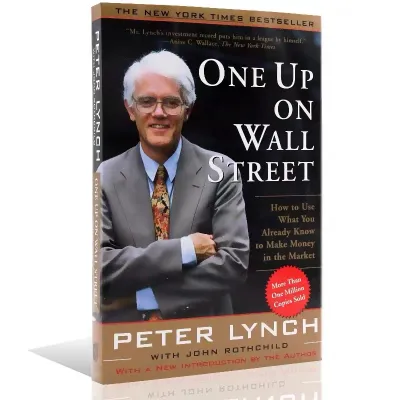
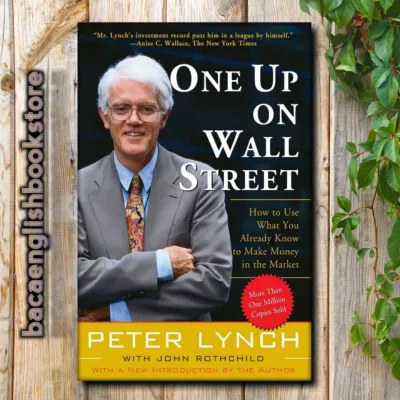
Prices are valid at publication and may change. Please refer to the product page for the latest price.
Knowledge Check: Do You Have the Right Foundation?
One of the greatest appeals of Peter Lynch’s writing is its accessibility. You do not need a background in advanced mathematics or financial engineering to understand his strategies. Lynch intentionally avoids complex quantitative models, heavy academic theories, and confusing Wall Street jargon, making the text highly digestible for absolute beginners.
However, while advanced math is not required, having a basic level of business acumen is essential. You should feel comfortable thinking about how businesses operate in the real world. If you can observe a crowded local coffee shop or a popular retail chain and understand why customers prefer it over competitors, you already possess the foundational logic required for this book.
Additionally, the book expects readers to develop a willingness to engage with basic financial metrics. You do not need to be a certified accountant, but you must be open to looking up and understanding a few key numbers. Lynch introduces concepts such as price-to-earnings (P/E) ratios, debt levels, cash reserves, and growth rates as simple tools to verify if a company is healthy.
To help you determine if you are ready for this book, consider this quick diagnostic checklist:
- Business Understanding: Can you clearly explain how a local supermarket chain or telecom provider makes money?
- Research Interest: Are you willing to spend an hour reading a company's annual summary or financial presentation?
- Basic Arithmetic: Are you comfortable comparing simple ratios, such as checking if a company's debt is high relative to its cash?
- Emotional Patience: Can you handle watching a stock price fluctuate without panicking, focusing instead on the underlying business performance?
If you answered yes to these points, you have the cognitive foundation needed to benefit from the book. If these concepts feel entirely foreign, you might want to read a very basic personal finance primer before diving into Lynch’s work.
Goal Alignment: Does Active Stock Picking Match Your Style?
Before buying the book, it is crucial to align its teachings with your personal financial goals and the amount of time you can realistically dedicate to managing your money. Lynch’s methodology is built entirely around active stock picking, which requires a specific mindset and a commitment of personal time.

Active vs. Passive Investing
This book is written specifically for individuals who want to beat the market by selecting individual stocks. If your goal is to build wealth using a hands-off, passive approach—such as buying broad-market Exchange Traded Funds (ETFs), index funds, or using robo-advisors—the core chapters of this book will not serve your immediate practical needs. Passive investors aim to match market returns with minimal effort, whereas Lynch’s readers aim to outperform the market through active research.
The "Tenbagger" Mindset
Lynch famously coined the term “tenbagger” to describe a stock that appreciates to ten times its original purchase price. Finding these high-growth opportunities requires a long-term investment horizon and the patience to hold shares through market ups and downs. If you are looking for quick, short-term gains or feel highly anxious during market downturns, this long-term growth philosophy may conflict with your risk tolerance.
Time and Effort Commitment
Investing in what you know is not a shortcut; it is a research method. Observing a popular product is merely the first step. Lynch emphasizes that you must follow up your observations by examining financial reports, checking competitor strength, and monitoring whether the company’s expansion plans are succeeding. You should honestly evaluate whether you have at least a few hours each week to devote to analyzing individual companies. If your schedule is highly constrained, a passive strategy might be a more practical starting point.
The Singapore Context: Adapting US Strategies Locally
Because the book was written by an American fund manager focusing on US companies, Singaporean readers must translate its concepts to fit their local environment. The economic landscape and stock market structure in Singapore differ significantly from those in the United States.
Translating "Invest in What You Know"
Applying Lynch’s observational strategy in Singapore requires looking at local and regional brands. Instead of US retail giants, a Singapore-based investor might observe the steady foot traffic at Sheng Siong supermarkets, the regional expansion of local food and beverage brands, or the domestic dominance of local banks like DBS, OCBC, and UOB. By observing which local services are indispensable to daily life in Singapore, you can identify stable business models worth investigating.
Market Structure Differences
The Singapore Exchange (SGX) is structurally different from the high-growth, technology-heavy US markets. The SGX is highly regarded for its stable, dividend-paying entities, such as Real Estate Investment Trusts (REITs), financial institutions, and industrial conglomerates. Lynch’s book focuses heavily on finding fast-growing companies. When evaluating local Singaporean stocks, you will need to adjust your expectations. Fast growth is rarer on the SGX, meaning you will need to apply Lynch’s principles of financial health to steady, high-yielding dividend stocks instead.
Accessing US Stocks Directly
Many Singaporean investors choose to apply Lynch’s strategies directly to the US market where fast-growing companies are more common. Today, local brokerages in Singapore make it highly accessible to buy shares in US companies. If you choose this path, you can use the exact types of companies Lynch discusses in his book, leveraging your global consumer insights on brands you use daily in Singapore.
Cross-Border Considerations
If you decide to invest in US stocks from Singapore, you must factor in practical cross-border elements that the book does not cover. These include:
- Dividend Withholding Tax: Singapore residents are subject to a 30% US withholding tax on dividends distributed by US-incorporated companies, which impacts your net returns.
- Currency Exchange Rates: Fluctuations between the US Dollar (USD) and the Singapore Dollar (SGD) can affect your portfolio's value independently of stock performance.
- Trading Hours: The US stock market operates overnight relative to Singapore time, requiring discipline to avoid disrupting your sleep schedule to watch live price movements.
When to Skip It: Signs You Need a Different Investing Book
While the book is a masterpiece of financial literature, it is not the right fit for every reader. Recognizing when your goals diverge from Lynch’s philosophy can save you time and help you find a book better suited to your needs.
Day Trading and Speculation
If you want to learn technical analysis, read stock charts, trade options, or engage in short-term speculation, you should skip this book. Lynch is highly critical of short-term trading and market timing. He views stocks as fractional ownership of real businesses, not as abstract tickers to be traded daily. For technical trading, look for specialized textbooks on charting and market mechanics.
Macro-Economic Focus
Some investors prefer a top-down approach, making decisions based on interest rates, inflation data, currency trends, and global GDP forecasts. Lynch famously advocates ignoring macroeconomic predictions, stating that if you spend thirteen minutes analyzing economics, you have wasted ten minutes. If you want to understand how global monetary policy impacts asset classes, look for books focused on macroeconomics and asset allocation.
Strictly Passive Investors
If you have already decided that you do not want to research individual companies and prefer a low-maintenance portfolio, this book is not a practical tool. Instead, look for literature that focuses on index fund investing, the Bogleheads philosophy, or modern portfolio theory. These resources will guide you on how to build a diversified portfolio of low-cost ETFs without the need for individual stock analysis.
Frequently Asked Questions (FAQ)
Is 'One Up on Wall Street' outdated for modern investors?
While the specific company examples in the book are historical, the core investment principles remain highly relevant. The modern digital economy still operates on the fundamental rules of business: companies must generate revenue, manage debt, and please customers. Observing consumer behavior on digital platforms, software applications, or modern retail services is simply the modern equivalent of the physical store observations Lynch describes.
Do I need a finance degree to understand this book?
No, you do not need a finance degree. Lynch wrote the book specifically to demystify investing for the general public. He argues that academic finance programs often overcomplicate investing with rigid models that fail to account for real-world consumer behavior. Your everyday experience as a consumer, employee, or business owner is often a more practical tool for identifying market trends than an academic degree.
Should I read 'Beating the Street' or 'Learn to Earn' first?
For most beginners, ‘One Up on Wall Street’ is the ideal starting point because it offers the most comprehensive balance of investment philosophy and practical stock analysis. If you find the financial terms in this book challenging, ‘Learn to Earn’ is a simpler introductory text designed for younger readers or absolute novices. If you enjoy this book and want to see detailed case studies of how Lynch applied these rules to specific industries during his career, ‘Beating the Street’ serves as an excellent follow-up read. Always verify the edition and format of these books before purchasing to ensure they meet your learning goals.
Community discussion
Share your experience or ask a question. Comments are reviewed before publication.