
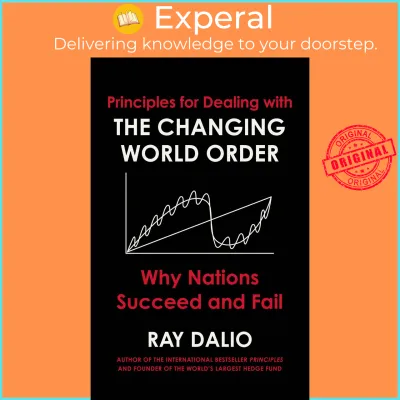
Deciding whether to invest your time and money in a dense, 500-page macroeconomic text requires looking beyond its bestseller status. Ray Dalio’s The Changing World Order (fully titled Principles for Dealing with the Changing World Order: Why Nations Succeed and Fail) attempts to do something incredibly ambitious: map the rise and fall of major empires over the last 500 years to identify recurring patterns that explain our current global economic and geopolitical climate. If you are trying to make sense of rising inflation, shifting global alliances, and the long-term stability of reserve currencies, this book offers a structured, data-driven mental model.
However, at a typical retail price of around S$35 to S$45 for a physical copy, and requiring a commitment of 15 to 20 hours of focused reading, it is essential to evaluate if this macro-level perspective aligns with your specific goals. This guide analyzes the book’s core frameworks, practical utility, and format options to help you determine if it is a worthy addition to your library.
Core Frameworks: What the Book Actually Teaches
At the heart of the book is the “Big Cycle” theory, a template Dalio developed to explain how wealth, power, and reserve currencies transition over multi-decade periods. By examining the Dutch, British, and American empires, along with the rise of historical Chinese dynasties, the book argues that empires follow a predictable lifecycle. This cycle consists of a peaceful and prosperous period of rise, a peak characterized by excess and overextension, and a period of decline marked by financial crises, internal conflict, and external wars. Understanding this cycle helps readers view current geopolitical tensions not as isolated events, but as part of a historical progression.
Products mentioned in this guide
Prices are valid at publication and may change. Please refer to the product page for the latest price.
To measure where an empire stands in this cycle, Dalio introduces eight key empirical metrics of power. These metrics include education, competitiveness, technology and innovation, economic output, share of world trade, military strength, financial center strength, and reserve currency status. The book illustrates how these indicators are interconnected and lag or lead one another. For instance, a rise in education typically leads to increased innovation and trade competitiveness, while reserve currency status is usually the last strength to decline long after an empire’s economic dominance has peaked.
Another critical framework is the interplay between internal and external order. Internal order refers to the domestic state of a country, which is heavily influenced by wealth gaps, debt levels, and political polarization. When wealth gaps widen and debt becomes unsustainable, internal conflict tends to rise, leading to political extremism or civil unrest. External order refers to the relationships between countries. The book explains how domestic instability often weakens a nation’s global standing, making it vulnerable to external rivals who challenge its dominance in trade, technology, and military influence.
Target Audience: Who Benefits Most (and Who Should Skip)
This book is highly beneficial for macro investors, policy analysts, business strategists, and history enthusiasts who want a long-term structural context for current events. If you manage a multi-asset portfolio, run a business with international supply chains, or simply want to understand the forces driving global inflation and currency fluctuations, Dalio’s frameworks provide a valuable macro lens. It helps you step back from daily market noise and look at the broader structural shifts occurring over decades.

Conversely, readers looking for short-term trading signals, micro-level stock picking advice, or immediate financial hacks should skip this book. Dalio does not provide a list of specific stocks to buy or tell you exactly when the next market crash will occur. The insights are designed for long-term asset allocation and strategic planning rather than day trading. Additionally, if you prefer light, narrative-driven casual reading, you may find the heavy reliance on charts, index scores, and repetitive historical case studies dry and academic.
To fully appreciate the book’s arguments, a foundational understanding of basic macroeconomic terms is highly recommended. While Dalio explains concepts like debt monetization, inflation, and reserve currencies in relatively simple terms, having a basic grasp of modern financial history—such as the abandonment of the gold standard or the role of central banks—will help you grasp the nuances of his historical comparisons much faster.
Practical Application: Translating History into Actionable Insights
One of the most practical ways to apply the book’s theories is by using historical cycle indicators to stress-test your long-term portfolio allocations. Dalio’s analysis highlights the recurring danger of holding cash or debt instruments during the late stages of a debt cycle, when central banks typically print money to monetize debt, leading to currency devaluation and inflation. For individual investors, this historical context serves as a strong argument for diversifying across different asset classes, including hard assets, inflation-hedged instruments, and equities in countries with strong internal order and rising competitiveness.
Furthermore, the book helps you recognize the early warning signs of systemic debt crises and shifts in global supply chain dominance. By tracking metrics like a country’s debt-to-GDP ratio, its share of global trade, and its level of internal political polarization, you can make more informed decisions about where to allocate capital or build business partnerships. For example, if you observe a country experiencing widening wealth gaps alongside rising debt levels, you might choose to limit your long-term exposure to that market.
For business owners and corporate leaders, these frameworks are useful for adjusting expansion strategies based on shifting geopolitical alignments. As the world transitions from a unipolar system to a multipolar one, global trade is becoming increasingly fragmented. Understanding the dynamics of external order can help you anticipate trade barriers, regulatory shifts, and supply chain disruptions, allowing you to build more resilient business models that do not rely entirely on a single geographic region.
Format Guide: Choosing the Right Edition for Your Reading Style
The Changing World Order is a highly visual book, containing dozens of multi-colored charts, timelines, and index scores that track the relative strength of empires over centuries. Because of this heavy reliance on visual data, choosing the right format is crucial for your reading experience.
If you prefer physical books, the hardcover edition is highly recommended. The large format allows you to easily read the detailed graphs and compare different historical timelines side-by-side with the text. It functions well as a reference book that you can keep on your desk and flip through when analyzing current economic news.
An e-book edition offers the convenience of portability and searchability, which is excellent for highlighting key passages and searching for specific historical events. However, the charts and graphs can be difficult to read on smaller e-reader screens. Zooming in on complex data visualizations often results in pixelation or formatting issues, which can disrupt the flow of your reading.
The audiobook format is convenient for commuting or multitasking, but it presents significant challenges for a data-heavy book like this. While the narrator does an excellent job of conveying the narrative, you will miss the critical visual context of the charts. If you choose the audiobook, you will need to supplement your listening by downloading the accompanying PDF companion containing the visual data, which requires extra effort to reference while on the go.
Reading Strategy: How to Maximize Your Takeaways
To get the most out of this dense book without feeling overwhelmed, it is highly effective to pair the text with the author’s supplementary animated summary video. Dalio has produced a free, 40-minute animated video that outlines the core concepts of the book. Watching this video before you open the book provides a clear visual roadmap of the entire framework, making the detailed historical chapters much easier to digest.
It is also important to maintain critical objectivity and cross-reference the book’s claims with alternative economic perspectives. While Dalio’s frameworks are compelling, some economists criticize his model for being overly deterministic and simplifying complex historical events to fit a rigid cycle. To avoid single-narrative bias, consider reading alternative views on geopolitics and economics, such as institutional economics, which places greater emphasis on the role of laws, governance, and technological breakthroughs rather than cyclical patterns.
Finally, take structured notes on specific metrics and historical parallels that directly apply to your own industry, portfolio, or area of study. Instead of trying to memorize every historical detail of the Dutch East India Company, focus on how the transition of financial centers from Amsterdam to London mirrors modern shifts. Write down how you can apply these observations to your own financial planning, ensuring that the time spent reading translates into practical, real-world utility.
Frequently Asked Questions (FAQ)
Is 'The Changing World Order' too academic for beginners?
While the book deals with complex macroeconomic concepts, it is written in a straightforward, corporate style rather than dense academic jargon. Dalio aims to make his theories accessible to a broad audience, using clear analogies and bold summaries at the end of key sections. The first part of the book, which outlines the core frameworks, is highly approachable for beginners. However, the middle chapters, which dive deep into historical case studies and data indexes, require more focus and patience. If you are a complete beginner, you can read the first part for the theory and skim the historical chapters, focusing on the summary sections.
How does this book compare to Ray Dalio's 'Principles'?
The Changing World Order and Dalio’s previous bestseller, Principles: Life and Work, serve entirely different purposes. Principles is a micro-level guide focused on personal development, decision-making frameworks, and corporate management culture. It teaches you how to build effective habits and run an organization. In contrast, The Changing World Order is a macro-historical analysis focused on global economics, geopolitics, and long-term cycles. If you want to improve your personal productivity or leadership skills, prioritize Principles. If you want to understand global economic shifts, inflation, and geopolitical transitions, prioritize The Changing World Order.
Community discussion
Share your experience or ask a question. Comments are reviewed before publication.