
Selecting the right science enrichment book for your child is more than just picking a popular title. To determine if the Science Champs series is the correct fit, you must evaluate your child’s current academic standing, understand the specific demands of their school curriculum, and analyze how the book’s structure aligns with their learning needs. An enrichment book should serve a clear purpose—whether that is bridging a conceptual gap, reinforcing classroom learning, or providing a rigorous stretch for high-achieving students. By taking a systematic approach to assessing your child’s work, you can make an informed decision that supports their academic growth without causing unnecessary frustration.
Identify Your Child's Current Science Foundation and Learning Gaps
Before purchasing any supplementary material, it is essential to diagnose your child’s actual performance and identify their specific weak areas. Start by reviewing recent school exam papers, topical tests, and homework assignments. Look closely at the errors they make and categorize them. Factual recall errors, such as forgetting specific definitions, suggest that your child needs to spend more time reviewing basic notes and textbooks. On the other hand, application-based mistakes—where a child understands the concept but fails to apply it to an unfamiliar scenario—indicate a need for targeted practice with higher-order thinking questions.
Next, determine whether the struggle lies in conceptual understanding or in answering techniques. In primary school science, particularly in open-ended questions, students are often required to use precise scientific vocabulary and structure their answers logically. A child might fully comprehend how evaporation works but lose marks because they omitted key terms like “gain heat” or “water vapour.” If your child consistently loses marks in the open-ended section despite knowing the subject matter, they require a book that focuses heavily on answering frameworks and keyword application.
Products mentioned in this guide
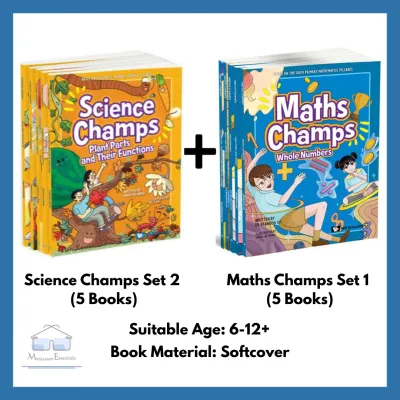
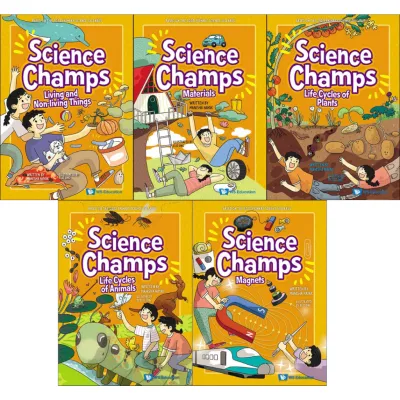
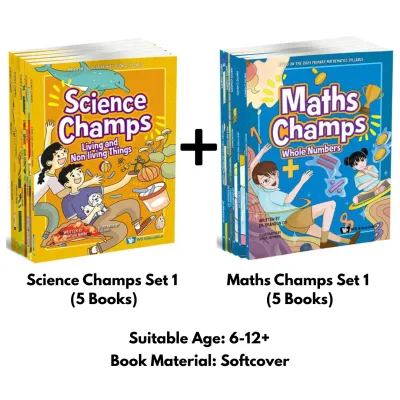
![[SG STOCK] WS E - Science Champs All Titles - Age 6-12+ Children Primary School Science Comic Singapore MOE Syllabus Learning Book](https://img.lazcdn.com/g/p/9fa1dae25497f74cdc8c63842f8591b1.png_400x400q80.png_.webp)
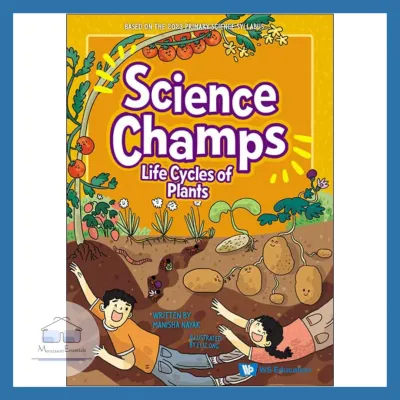
![[SG STOCK] WS E - Science Champs All Titles - Age 6-12+ Children Primary School Science Comic Singapore MOE Syllabus Learning Book](https://img.lazcdn.com/g/p/9b2938373157ce97e173f2c897293d9b.png_400x400q80.png_.webp)
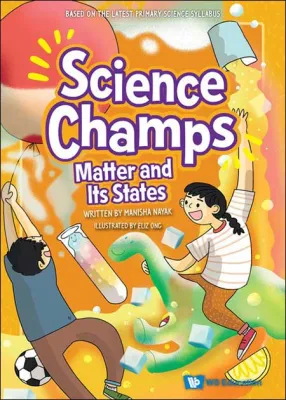
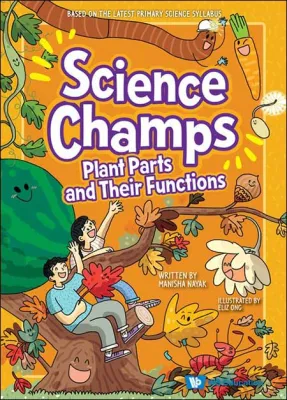
Prices are valid at publication and may change. Please refer to the product page for the latest price.
Finally, establish the primary goal of introducing an enrichment book. Does your child need foundational reinforcement to keep up with their school class, or do they require advanced enrichment to challenge their current abilities? If they are struggling to pass or are scoring in the mid-range, a highly challenging enrichment book may overwhelm them and damage their confidence. In contrast, a student who consistently scores high marks will benefit from a book that pushes their boundaries with complex, multi-step application questions.
Verify the Edition and Syllabus Alignment
Once you have identified your child’s needs, the next step is to ensure that the specific volume of the enrichment series matches their grade level and current educational requirements. Educational syllabi undergo periodic updates to reflect modern scientific understandings and pedagogical shifts. Therefore, you must check the cover, title page, and the publisher’s official description for the exact grade level and syllabus edition. A book designed for an older syllabus may contain topics that have been removed or lack newer topics that are now examinable.

To verify alignment, compare the book’s table of contents directly with your child’s current school curriculum or textbook. Primary school science is typically organized into distinct themes, such as Diversity, Cycles, Systems, Interactions, and Energy. However, different schools may teach these themes in a different order or depth depending on the academic year. Ensuring that the enrichment book matches the specific topics your child is currently learning in school allows for timely reinforcement, making the practice far more effective than studying unrelated topics.
Do not assume the content, difficulty, or suitability of a book based solely on the series name or brand reputation. Even within a highly regarded series like Science Champs, different volumes or editions may target different academic streams, difficulty levels, or specific exam formats. Always take the time to look inside the book—either through online preview pages or physical inspection—to verify that the scope, depth, and terminology used align precisely with what is expected in your child’s classroom.
Evaluate the Question Types and Learning Support Features
The effectiveness of an enrichment book depends heavily on how its exercises are structured and the level of support it provides to the learner. Begin by assessing the balance of question types within the book. A well-rounded science book should offer a mix of standard multiple-choice questions (MCQs) and structured open-ended questions (OEQs). Look for books that include data-analysis questions, graph-reading exercises, and experiment-based scenarios. These question types are crucial for developing critical thinking skills and preparing students for modern school assessments that test scientific inquiry rather than rote memorization.
Equally important are the learning support features embedded within the book. For children who struggle with open-ended questions, look for structured answering guides, lists of essential keywords, or worked examples. These features act as scaffolding, teaching students how to dissect a question, identify the core scientific concept being tested, and construct a complete, high-scoring answer. Without these guides, a child may simply repeat their mistakes without understanding how to improve.
Lastly, examine the quality and detail of the answer key. A simple answer key that only provides the final correct option or a brief one-sentence answer is of limited use. For effective learning, the answer key should be comprehensive, offering detailed explanations for MCQs and complete model answers for OEQs. Ideally, the guide should highlight key terms that must be included to secure full marks and point out common misconceptions or pitfalls to avoid. This level of detail is invaluable for facilitating independent study or helping parents confidently coach their children at home.
Make Your Final Decision: Buy, Wait, or Seek Alternatives
With a clear understanding of your child’s academic needs and the book’s features, you can now make a practical decision. You should proceed with the purchase if the book’s difficulty level, topic coverage, and question style directly target your child’s identified weak areas. For instance, if your child has a solid grasp of basic concepts but struggles with the application of scientific principles in open-ended questions, and the book offers strong scaffolding and challenging practice in this area, it is likely an excellent investment.
Conversely, you should delay the purchase if your child currently lacks a foundational understanding of the core concepts. If they are consistently confused by basic definitions or struggle to follow classroom lessons, introducing an enrichment book will likely lead to cognitive overload. In this scenario, the most effective step is to wait, focus on reviewing standard school textbooks, and seek clarification from their school teacher. Once the foundational gaps are bridged, you can re-evaluate the suitability of supplementary practice books.
Finally, consider alternative resources if your child’s learning style does not align with text-heavy practice exercises. Some children learn more effectively through visual aids, interactive digital platforms, or hands-on experiments. If your child is highly disengaged by traditional worksheets, forcing them to complete pages of dense text may prove counterproductive. In such cases, look for alternative educational materials, such as science magazines, educational kits, or interactive online modules, which can build interest and understanding before transitioning back to written practice.
Frequently Asked Questions (FAQ)
Is this series suitable for independent self-study without a tutor?
Whether a student can use this series independently depends on their current reading comprehension level and the detail provided in the book’s support features. If the book includes clear, step-by-step explanations, worked examples, and a highly detailed answer key, a self-motivated student with strong reading skills can use it effectively for self-study. However, if your child struggles to interpret complex scientific texts or frequently misinterprets question requirements, they will likely need parental guidance or tutor support to explain the underlying concepts and correct their answering techniques.
Should my child complete the entire book or focus on specific chapters?
It is generally more effective to use enrichment books selectively rather than forcing your child to complete every page from cover to cover. Focus on specific chapters that align with the topics currently being taught in school to reinforce classroom learning. Additionally, you can target chapters that correspond to your child’s identified weak areas as revealed in school assessments. Saving the remaining chapters for comprehensive revision during school holidays or exam preparation periods ensures that the book remains a valuable, targeted tool throughout the academic year.
Community discussion
Share your experience or ask a question. Comments are reviewed before publication.