
Deciding whether to invest your time and money in Carmine Gallo’s “Talk Like TED” depends entirely on where you currently stand on your public speaking journey. For aspiring speakers who struggle to keep an audience engaged or find themselves relying on text-heavy slides, this book serves as an excellent, highly structured primer. It distills the common elements of the world’s most popular presentations into actionable communication pillars.
However, if you are already comfortable with narrative structures and seek advanced training in vocal modulation, physical stage presence, or complex data visualization, the book’s broad approach may feel somewhat basic. By evaluating your specific skill gaps against the book’s core frameworks, you can determine if this guide will truly elevate your presentation style or if you should look toward more specialized resources.
Whether you plan to invest around S$25 for a physical copy or borrow a digital edition, understanding what the book teaches is the first step. This guide will help you diagnose your current speaking needs and establish a clear plan for applying or supplementing the book’s core lessons.
Products mentioned in this guide
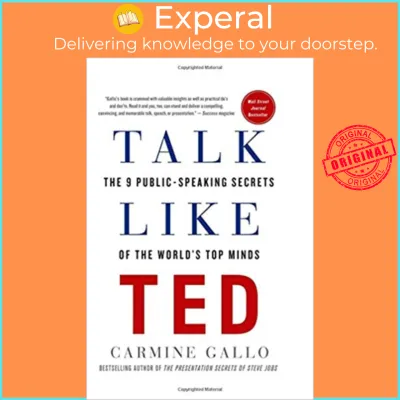
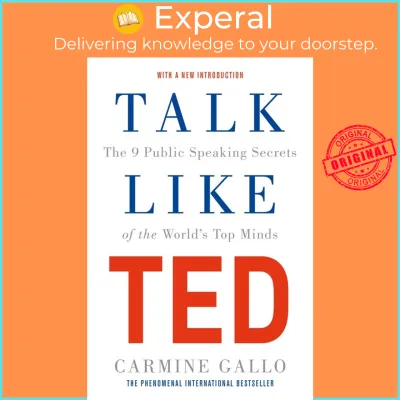
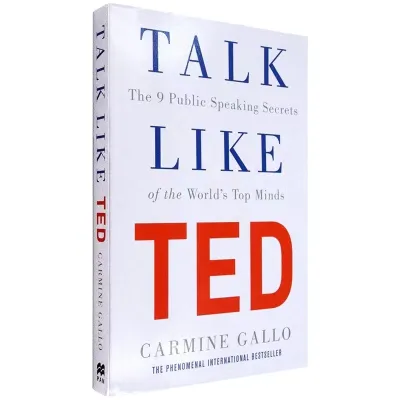

![EBOOK How to Deliver a Great TED Talk - Karia Akash [Full Version]](https://img.lazcdn.com/g/p/376edf13270c2ff6dc5937cb5ad184f6.jpg_400x400q80.jpg_.webp)
Prices are valid at publication and may change. Please refer to the product page for the latest price.
Core Speaking Frameworks Taught in the Book
Carmine Gallo’s work is built on a simple premise: by analyzing thousands of hours of highly viewed TED Talks, one can extract repeatable patterns that make communication successful. The book organizes these patterns into three primary categories: emotional, novel, and memorable. Each category represents a fundamental pillar of public speaking designed to shift the speaker’s focus from merely delivering information to creating a genuine connection with the audience.
The emotional pillar emphasizes the power of storytelling and authentic connection. Gallo argues that facts alone rarely persuade; instead, speakers must weave personal narratives, humor, and vulnerability into their presentations. This approach helps lower the audience’s natural defenses and makes the core message far more relatable. The book provides structural advice on how to balance emotional appeals with logical arguments, ensuring that your speech remains intellectually grounded while still touching the hearts of your listeners.
The novelty pillar focuses on delivering information that is entirely new, packaged in an unexpected way, or offers a fresh perspective on a familiar topic. According to the book, the human brain is naturally wired to pay attention to novelty. By introducing surprising statistics, unexpected demonstrations, or unique metaphors, you can trigger a release of dopamine in your audience, which naturally heightens their focus. Gallo encourages speakers to identify their “jaw-dropping moment”—a specific, memorable event or prop within the presentation that people will talk about long after the talk ends.
Finally, the memorability pillar addresses how to make your message stick. This section emphasizes the importance of keeping presentations concise, adhering strictly to the eighteen-minute rule popularized by the TED platform. It also covers visual design principles, advocating for highly visual slides with minimal text, which aligns with cognitive science principles regarding how humans process visual and auditory information simultaneously. By using multisensory experiences and simple, vivid language, speakers can ensure their core message is easily digested and remembered.
Self-Diagnosis: Does the Book Match Your Current Skill Gaps?
To determine if “Talk Like TED” is the right addition to your bookshelf, it is helpful to perform a self-diagnosis of your current presentation strengths and weaknesses. If you frequently receive feedback that your presentations are informative but dry, or if you notice your audience’s attention drifting during slide transitions, you likely need to work on emotional connection and novelty. This book is particularly beneficial if you struggle to structure a clear narrative arc, often finding yourself dumping raw data onto slides rather than telling a cohesive story.

Another clear indicator that you would benefit from this resource is a reliance on text-heavy slide decks. If your slides serve as your teleprompter, filled with bullet points and dense paragraphs, Gallo’s chapters on visual design and cognitive load will offer a much-needed paradigm shift. The book provides clear guidance on how to transition to a minimalist visual style that supports, rather than competes with, your spoken words.
Conversely, there are distinct signs that you may have already outgrown the concepts taught in this book. If you are already comfortable standing on a stage, naturally incorporate personal anecdotes, and understand how to structure a basic three-act narrative, you might find the book’s advice repetitive. “Talk Like TED” does not delve deeply into advanced physical delivery techniques, such as precise vocal modulation, breath control, or complex body language adjustments. If your primary goal is to master these physical mechanics, or if you need to deliver highly technical, data-dense corporate reports where emotional storytelling is strictly limited, this book’s broad advice may feel too generalized.
To verify if the book aligns with your actual improvement needs, review the feedback from your recent presentations. Look for comments regarding your pacing, slide clarity, and audience engagement. If colleagues noted that your main point was difficult to identify or that the presentation felt too long, the book’s focus on conciseness and the “one single message” rule will directly address those issues. If the feedback was highly technical—such as requests for deeper statistical analysis—your gaps lie in specialized data delivery rather than general presentation style.
Action Plan: Reading Strategies and Alternative Resources
If you decide to read “Talk Like TED”, your approach should match your current experience level to maximize the value of your time. For beginners, a sequential, highly practical reading strategy is recommended. Start by reading the chapters on storytelling and the eighteen-minute rule first. As you read, keep an active slide deck or an upcoming presentation outline open next to you. Immediately apply the book’s structural advice to your work, rewriting your introduction to include a narrative hook and cutting down your slide text by half. This immediate application helps solidify the concepts before you move on to more advanced delivery techniques.
For intermediate speakers, a targeted skimming strategy is far more efficient than a cover-to-cover read. Skip the introductory chapters that argue why storytelling is important, as you likely already understand this value. Instead, focus on the specific case studies of successful speakers to analyze how they structured their “jaw-dropping moments” or how they utilized humor. Pay close attention to the chapters detailing the rule of three and multisensory experiences, extracting the specific checklists and design guidelines to refine your existing presentation templates.
There are, however, clear conditions under which you should pivot to alternative resources. If your primary challenge is stage fright or physical anxiety, you will find more practical help in books dedicated to the psychology of performance or physical theater techniques. For those who need to master the physical mechanics of speaking—such as voice projection, tone variation, and articulation—look for specialized guides written by vocal coaches or speech therapists. Similarly, if your role requires you to present complex financial models or scientific data to highly analytical audiences, resources focused specifically on data visualization and technical communication will serve you far better than a general guide on inspirational speaking.
Before purchasing any edition of “Talk Like TED”, always verify the specific edition, language, and regional compatibility. If you are purchasing an audiobook for your commute, ensure the file format is compatible with your device and that the digital retailer is authorized to distribute the title in your region. Checking these details beforehand prevents compatibility issues and ensures you receive a complete, high-quality version of the text.
Frequently Asked Questions (FAQ)
Are the presentation examples in the book adaptable to virtual or hybrid meetings?
Yes, the core principles of emotional connection, concise messaging, and visual simplicity are highly adaptable to virtual and hybrid formats. When presenting online, keeping slides visually clean is even more critical, as viewers are often watching on smaller laptop or tablet screens where dense text becomes unreadable. While physical stage presence must be adapted to camera framing—focusing on eye contact with the lens and controlled upper-body gestures—the narrative structures and storytelling techniques taught in the book remain highly effective at maintaining audience attention across digital platforms.
Does the book provide practical exercises or primarily theoretical analysis?
The book is primarily an analytical study of successful presentations, meaning it focuses heavily on case studies, observations, and the science behind effective communication. While it does not feature workbook-style exercises or interactive worksheets, it does provide actionable checklists and structural guidelines at the end of key sections. To get the most out of the book, you will need to design your own self-directed practice sessions, applying the book’s templates and rules directly to your upcoming presentation materials.
Community discussion
Share your experience or ask a question. Comments are reviewed before publication.