
Deciding whether to invest your time and money in Robert Greene’s controversial work requires looking past the online sensationalism. Yes, the 48 laws of power is highly worth reading, but primarily as an analytical guide to defensive career strategy rather than an offensive playbook. For professionals navigating complex organizational structures, the book offers a deep, realistic look into human psychology, though its cynical tone requires careful filtering.
The Social Media Hype vs. The Actual Reading Experience
In recent years, the book has experienced a massive resurgence across online platforms, video-sharing networks, and professional forums. It is frequently framed as an essential manual for corporate survival, street smarts, and rapid career advancement. However, the reality of reading the book cover-to-cover is often quite different from the bite-sized quotes shared online.
Instead of offering modern corporate case studies or step-by-step business frameworks, the book is structured around historical anecdotes. Greene draws heavily from the strategic maneuvers of historical figures such as Niccolò Machiavelli, Sun Tzu, Queen Elizabeth I, and Julius Caesar. Each law is illustrated with a historical transgression, an observance, and an interpretation. This format means you will spend more time reading about 16th-century court intrigue and ancient military campaigns than modern boardroom dynamics.
Products mentioned in this guide



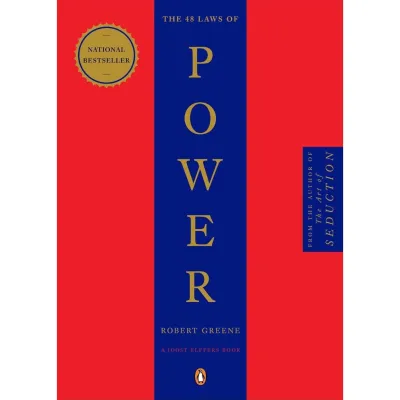



Prices are valid at publication and may change. Please refer to the product page for the latest price.
The overall tone of the book is highly analytical, cynical, and amoral. Greene presents human relationships as a continuous, zero-sum struggle for dominance and control. For readers accustomed to uplifting, collaborative self-help books or modern leadership guides that emphasize empathy, this stark realism can be jarring. Understanding this structure beforehand is crucial to determining whether the reading experience aligns with your learning style.
Practical Value: Using the Laws as a Shield, Not a Sword
The primary value of the book lies in its utility as a defensive shield. In any professional environment, you will inevitably encounter individuals who employ manipulation, credit-stealing, or political maneuvering to advance their own agendas. By studying these laws, you develop a heightened awareness of these behaviors. You learn to recognize when a colleague is trying to outshine you, when a manager is withholding information, or when a competitor is setting a trap. This awareness allows you to protect your work, your reputation, and your career trajectory without being caught off guard.

Conversely, attempting to apply these laws offensively in a modern workplace carries immense risk. Laws such as “Crush your enemy totally” or “Pose as a friend, work as a spy” are highly destructive when applied literally in contemporary corporate settings. Today’s organizations are built on cross-functional collaboration, transparency, and psychological safety. A professional who attempts to operate as a ruthless Machiavellian agent will quickly find themselves isolated, distrusted, and flagged by human resources.
In a highly connected professional landscape, your reputation is your most valuable asset. Manipulative tactics might yield short-term victories, but they ultimately destroy the trust required for long-term career growth. The true benefit of the book is not in learning how to deceive others, but in decoding the underlying power dynamics of human nature so that you can navigate complex organizational hierarchies with clarity and composure.
Cultural Context: Do These Tactics Work in Singapore Workplaces?
When evaluating the book’s strategies, it is essential to consider the specific cultural and business environment of Singapore. The local corporate landscape features a unique blend of multinational corporations (MNCs), small and medium enterprises (SMEs), and public sector agencies. This ecosystem places a high premium on consensus, long-term relationship building, and collective harmony. The overt, ruthless individualism advocated in some of the laws directly clashes with these cultural values.
In Singapore, the concept of “saving face” is deeply embedded in professional interactions. Publicly outshining a superior or aggressively sidelining a colleague can lead to severe reputational damage that is difficult to repair. Because the local business community is relatively compact and highly interconnected, word of toxic or overly aggressive behavior spreads rapidly across industries. What might be tolerated in a massive, highly fragmented market can lead to professional blacklisting in a tight-knit environment where reference checks and mutual connections carry immense weight.
However, certain laws do align naturally with local professional norms of discretion and humility. For example, Law 4 (“Always say less than necessary”) and Law 3 (“Conceal your intentions”) resonate with the valued traits of prudence, quiet competence, and strategic patience. In many local organizations, quiet execution and diplomatic reserve are far more effective than loud self-promotion. Professionals must filter each law through this cultural lens, recognizing that quiet discretion is highly valued, while overt aggression is almost always counterproductive.
Who Should Read It (And Who Should Skip It)
To help you decide if this book is worth your investment, it is helpful to categorize who will benefit most and who should look elsewhere.
Who Should Read It:
- Professionals in Highly Political Environments: If you work in an organization with complex hierarchies, intense internal politics, or ambiguous decision-making processes, this book provides a useful framework for understanding the unwritten rules of power.
- Entrepreneurs and Negotiators: Business owners who regularly deal with aggressive competitors, difficult clients, or high-stakes negotiations will find the strategic analysis valuable for protecting their business interests.
- Students of Psychology and History: Those who enjoy analyzing historical patterns, human behavior, and the mechanics of influence will find the dense historical narratives highly engaging.
Who Should Skip It:
- Collaborative Team Leaders: If your goal is to build high-performing, trust-based teams, cultivate emotional intelligence, or foster psychological safety, this book's zero-sum perspective will offer little practical guidance.
- Early-Career Professionals Seeking Actionable Career Paths: Those looking for structured, positive advice on skill development, resume building, or standard career progression will find the historical anecdotes impractical.
- Readers Sensitive to Cynical Perspectives: If you prefer optimistic, constructive, and ethically aligned frameworks for personal development, the relentless focus on manipulation and self-interest may feel exhausting or misanthropic.
Time and Cost: Maximizing Your Return on Investment
Reading this book requires a substantial commitment of both time and mental energy. The unabridged physical edition is a dense, heavy volume running over 450 pages of small text, filled with sidebars, historical quotes, and parallel narratives. Purchasing the book in Singapore typically costs between S$20 and S$35, depending on the retailer and the specific edition.
Before making a purchase, it is critical to verify the exact edition you are buying. The book is widely available in two primary formats: the full Unabridged Edition and the Concise Edition. The Concise Edition strips away the historical fables and parallel texts, leaving only the core laws and brief explanations. While the concise version is faster to read and easier to carry during a daily commute on the MRT, it lacks the rich historical context that makes the author’s arguments compelling. Conversely, the unabridged version can feel overwhelming if you attempt to read it cover-to-cover like a novel.
To maximize your return on investment, consider a selective reading strategy. Rather than reading sequentially, treat the book as a reference manual. Use the table of contents to identify specific laws that correspond to your current workplace challenges, such as dealing with a difficult supervisor or managing a high-stakes negotiation. You can also check for digital or audiobook formats through online platforms or local public library networks to evaluate the content before committing to a physical purchase. Always ensure you are purchasing from authorized distributors to guarantee content completeness and translation quality.
What to Read Instead If You Skip It
If you decide that the cynical, zero-sum worldview of Robert Greene’s work does not align with your professional goals, several excellent alternatives offer practical insights into workplace dynamics without the ethical compromises.
For those seeking to understand influence and persuasion through a scientific, collaborative lens, books on modern organizational psychology are highly effective. These works focus on how to build trust, negotiate mutually beneficial outcomes, and lead teams through empathy and shared purpose. They replace the concept of manipulation with the principles of reciprocal value and ethical persuasion.
If your primary workplace challenge is managing difficult conversations or resolving conflicts, look for books dedicated to collaborative negotiation and emotional intelligence. These resources provide actionable frameworks for navigating high-stress professional situations while preserving relationships and building long-term alliances. By identifying your specific career pain points—whether it is strategic networking, team leadership, or conflict resolution—you can select a targeted alternative that fosters constructive, positive career growth.
Frequently Asked Questions (FAQ)
Is The 48 Laws of Power actually banned in prisons?
Yes, the book is restricted or banned in several correctional facilities across the globe, particularly in the United States. Prison administrators often restrict access to the book because they believe its teachings on manipulation, deception, and power dynamics could compromise security or encourage behavior that undermines authority. However, these restrictions are localized administrative decisions rather than a universal legal ban, and the book remains widely and legally available to the general public worldwide.
How long does it take to read the book cover-to-cover?
For an average reader, the unabridged edition of the book takes approximately 15 to 20 hours of focused reading to complete. This is due to the dense historical text, parallel sidebars, and philosophical interpretations. Because of this significant time investment, many professionals find it more practical to read the book selectively, focusing on specific laws as needed, or to opt for the concise edition for a faster overview of the core concepts.
Community discussion
Share your experience or ask a question. Comments are reviewed before publication.