
For the vast majority of language learners in Singapore, acquiring a copy of the american heritage dictionary is not a strict necessity. Because Singapore’s formal education system, public administration, and local examinations are structurally aligned with British English, standard school curricula prioritize British spelling, grammar, and pronunciation conventions. However, determining whether you should invest in this highly regarded reference book depends entirely on your specific academic, professional, and personal language goals.
While it may not serve as your primary school companion, it offers unique lexicographical resources that can significantly benefit advanced learners, literature enthusiasts, and those preparing for US-centric environments. Understanding how this tool fits into your study routine is the key to making an informed decision.
Understanding Singapore's English Context and the American Heritage Dictionary's Role
Singapore occupies a unique linguistic position. Officially, the Ministry of Education (MOE) and major assessment bodies like the Singapore Examinations and Assessment Board (SEAB) align their standards with British English. This is particularly true for national examinations such as the Primary School Leaving Examination (PSLE), GCE O-Levels, and GCE A-Levels. Consequently, classroom instruction, spelling lists, and grammatical benchmarks are rooted in Commonwealth standards. This means that words like “colour,” “theatre,” and “organise” are taught as the standard, while their American counterparts (“color,” “theater,” “organize”) are typically discouraged in formal school assessments.
Products mentioned in this guide
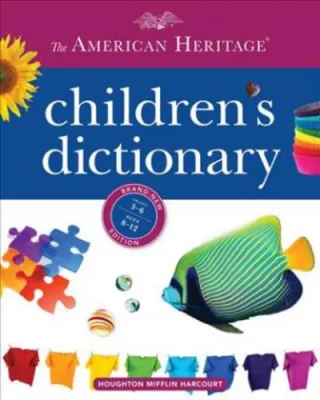
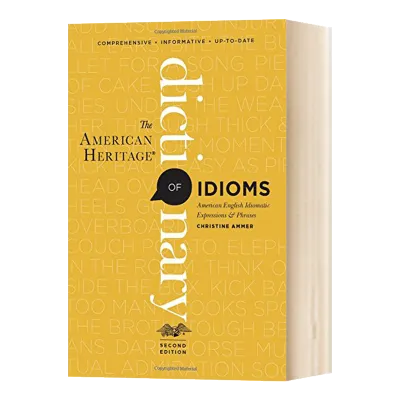
Prices are valid at publication and may change. Please refer to the product page for the latest price.
The american heritage dictionary, on the other hand, is not designed as an English as a Second Language (ESL) or English as a Foreign Language (EFL) textbook. Instead, it is a comprehensive, native-speaker dictionary designed primarily for those who already possess a strong, intuitive grasp of the English language. Rather than focusing on basic vocabulary acquisition, it specializes in deep etymological histories, highly detailed usage notes, and the preservation of American literary and cultural linguistic nuances.
While exposure to American English is incredibly high in Singapore through Hollywood films, streaming platforms, global technology companies, and international business communication, local learners must distinguish between passive exposure and active academic requirements. Choosing to purchase a specialized American reference tool should not be a default decision based on media consumption, but rather a deliberate choice aligned with specific, advanced learning objectives.
Signs an American English Dictionary Fits Your Goals
While the local standard is British English, several distinct scenarios make a high-quality American dictionary an invaluable asset. If your educational or career path diverges from the traditional local system, relying solely on British reference books can leave significant gaps in your comprehension and performance.

Preparing for US-Centric Standardized Tests
For students in Singapore planning to pursue higher education in the United States, standardized admissions tests like the SAT, ACT, GRE, or the TOEFL (Test of English as a Foreign Language) are critical milestones. These examinations are written, structured, and graded according to American English standards. Vocabulary questions, reading comprehension passages, and essay grading criteria all expect familiarity with American spelling, idiomatic expressions, and subtle word choices.
Using a dedicated American dictionary during your preparation allows you to internalize these conventions naturally. For instance, understanding the precise American usage of words that differ from British equivalents—such as “underground” versus “subway” or “biscuit” versus “cookie”—prevents confusion during high-stakes exams. The detailed vocabulary entries in a native-speaker American dictionary help test-takers master the register and tone expected by US examiners.
Engaging Deeply with American Media and Literature
American literature, journalism, and historical texts are rich with terms, idioms, and cultural references that are uniquely American. Standard British dictionaries often relegate these terms to brief, secondary entries marked simply as “US,” which frequently lack the depth of context required for true comprehension.
The american heritage dictionary is widely celebrated for its extensive usage notes, compiled with input from a dedicated panel of writers, scholars, and public figures. This panel provides clear guidance on how controversial or evolving words are perceived in contemporary American speech and writing. If you are reading classic American novels, analyzing historical documents, or keeping up with complex political journalism from publications like The New York Times or The New Yorker, having access to these deep cultural and historical explanations is indispensable.
Professional and Academic Alignment
Singapore is a global hub hosting thousands of multinational corporations, many of which are headquartered in the United States. Professionals working within these organizations frequently communicate with North American offices, write reports for US executives, and collaborate on projects governed by American business standards. In these environments, using American spelling and terminology is often preferred, if not mandatory, to maintain corporate consistency.
Similarly, researchers, academics, and students in fields heavily dominated by US-based journals—such as computer science, business administration, and certain branches of psychology—frequently write and publish in American English. A robust American reference book ensures that your manuscripts, presentations, and professional emails align perfectly with the expectations of your target audience, helping you navigate the subtle differences in corporate and academic jargon.
When a British or Learner’s Dictionary is the Better Choice
Despite the benefits of American reference tools for specific niches, there are major scenarios where purchasing a native-speaker American dictionary like the american heritage is counterproductive or inefficient for a learner in Singapore.
Navigating Singapore’s Local Education System
For primary, secondary, and junior college students preparing for national exams, strict adherence to the local syllabus is vital. The SEAB and Cambridge examiners expect consistency in spelling and grammar. Mixing American and British spelling conventions within a single essay can result in marks being deducted for spelling inconsistency.
Relying on an American dictionary as a primary study tool increases the risk of accidentally adopting American spellings (such as “defense,” “traveler,” or “analyze”) in schoolwork. For local academic success, a reputable British dictionary, such as those published by Oxford or Cambridge, or the specific wordlists recommended by your school, remains the safest and most practical choice. These resources ensure that your spelling, punctuation, and grammatical habits remain perfectly aligned with what local examiners are trained to grade.
Building Core Fluency as a Non-Native Speaker
If your primary goal is to build basic or intermediate English fluency, a native-speaker dictionary can feel overwhelming and unhelpful. Native-speaker dictionaries assume a high level of prior vocabulary and grammatical knowledge, often using complex, academic language in their definitions.
In contrast, an Advanced Learner’s Dictionary—such as the Oxford Advanced Learner’s Dictionary or the Cambridge Advanced Learner’s Dictionary—is specifically engineered for non-native speakers. These dictionaries restrict their defining vocabulary to a core set of simple words, ensuring that the definitions themselves do not require further lookups. Furthermore, learner’s dictionaries provide explicit grammatical codes, show common word pairings (collocations), and offer numerous natural example sentences. The american heritage dictionary, with its essay-style usage notes and deep historical etymologies, lacks these structural learning aids, making it far less practical for daily language acquisition.
What to Verify Before Purchasing Any Dictionary
Before spending money on any reference book, it is essential to perform several critical checks to ensure the product matches your practical needs and study environment. Dictionaries are significant investments, whether purchased as physical volumes or digital licenses.
First, verify the Edition and Version of the dictionary. Lexicographical works are published in various formats, ranging from massive, multi-volume unabridged editions to single-volume college editions, concise editions, and pocket-sized versions. Do not assume the level of detail or completeness based solely on the cover title. A “pocket” or “concise” edition will strip away the very etymologies, usage notes, and cultural context that make the american heritage unique, leaving you with simple definitions that you could easily find for free online. Always check the page count, publication date, and target audience specified by the publisher.
Second, consider Format and Device Compatibility if you are purchasing a digital version, mobile app, or e-book. If you plan to use a digital dictionary on your tablet, smartphone, or e-reader, verify the operating system requirements and check for offline access capabilities. Some digital dictionaries require an active internet connection to display full entries, which can be highly inconvenient during travel or study sessions in areas with poor connectivity. Additionally, check for regional restrictions on digital storefronts; certain dictionary apps or subscription services may not be licensed for download or activation in the Singapore region.
Third, pay close attention to the Phonetic Alphabet System used in the book. Most dictionaries designed for the international market use the International Phonetic Alphabet (IPA) to represent pronunciation. IPA is the standard system taught in Singapore schools and language centers. However, many traditional American dictionaries, including the american heritage, use their own proprietary pronunciation respelling systems. These systems rely on diacritical marks (such as macrons and breves) placed over standard English letters. If you are accustomed to reading IPA symbols, adapting to a proprietary American respelling system can be frustrating and may require a steep learning curve.
Making Your Final Decision
To determine your next steps, evaluate your current language learning stage and match it to one of the following practical pathways.
- Path 1: Maintain Your Current Tools
If your immediate focus is excelling in Singapore's school system (PSLE, O-Levels, A-Levels), preparing for the IELTS, or building general daily fluency, you should stick to your current British or international learner's dictionary. These tools are structurally designed to support your exams and daily communication needs without introducing confusing spelling variations. - Path 2: Add as a Supplementary Reference
If you are an advanced English speaker, a literature student, a professional working closely with US clients, or a candidate preparing for the SAT, GRE, or TOEFL, purchasing the american heritage dictionary as a secondary reference is highly recommended. It should not replace your primary British English guide, but rather serve as a specialized tool to consult when you encounter complex American idioms, cultural references, or subtle usage debates. - Path 3: Test Before Committing
Before purchasing a physical hardcover or a paid digital app, take advantage of free resources to test the dictionary's layout. You can access the free online version of the dictionary, check if your local National Library Board (NLB) branch has a physical copy available for reference, or download free trial versions of the mobile application. Spend some time reading the usage notes and checking the pronunciation keys to ensure you find the format comfortable and genuinely useful for your daily studies.
Frequently Asked Questions (FAQ)
Can I use the American Heritage Dictionary for IELTS preparation?
While the IELTS (International English Language Testing System) accepts both British and American English spelling and vocabulary, the test itself is jointly managed by British organizations, and its listening and reading materials heavily favor British and Commonwealth English. Using an American dictionary as your primary study tool can lead to confusion regarding spelling consistency and regional idioms. For IELTS preparation, an international learner’s dictionary based on British or global English standards is a much more effective and aligned primary reference.
Is the American Heritage Dictionary suitable for young learners in Singapore?
No, it is generally not suitable for young learners or primary school students in Singapore. Because it is a native-speaker dictionary, the definitions are written using advanced vocabulary, and the entries focus on complex linguistic concepts like etymology and historical usage. For young learners, it is far better to use illustrated dictionaries or simplified primary-level learner’s dictionaries that are specifically designed for children and aligned with the Ministry of Education (MOE) syllabus.
Community discussion
Share your experience or ask a question. Comments are reviewed before publication.